Jean-Pierre Chabloz and the Discovery of Chico da Silva
How Jean-Pierre Chabloz found Chico da Silva's murals in Fortaleza in 1943 and carried his gouaches to Europe, years before the Pirambu School.
Jean-Pierre Chabloz was a painter, musician and art critic born in Lausanne in 1910. The war brought him to Brazil: he drew posters for the service that recruited rubber workers for the Amazon, and the job left him in Fortaleza in 1943, in time for the city’s first Salão de Abril, as the Ceará painter Estrigas records in a 1993 text reprinted in the catalogue Chico da Silva vê Chabloz vê Chico da Silva (Secult, 2001).
A wall at Praia Formosa
Chabloz told the scene more than once, in his 1952 article for Cahiers d’Art and in Revelação do Ceará (Secult, 1993). On a late afternoon in 1943, walking along Praia Formosa, a fishing beach below the Passeio Público, he stopped in front of drawings in charcoal and chalk on the fishermen’s walls: large birds in elegant lines, somewhat monstrous fish, ghost ships. He asked who had made them; the neighbours knew only that a caboclo appeared, drew and left. Chabloz left his address on the beach. Months later a young man knocked at his door and introduced himself as “o Pintor da Praia”, the Painter of the Beach. The walls themselves are the subject of the murals of Praia Formosa.
Chabloz put his visitor’s age at 20 to 25 and added that precision was impossible for men born without a civil registry. The birth, on the Alto Tejo in Acre at some point between about 1910 and 1922, is discussed in the painter’s biography. The discovery itself is less tidy than the memoir suggests: Gerciane Oliveira (EdUECE, 2023) shows the surviving accounts disagreeing on who saw the walls first, Chabloz or the painters Aldemir Martins and Antônio Bandeira, and on where, Praia Formosa or Pirambu.
Bristol paper and a first commission
Chabloz commissioned works on paper and supplied everything: bristol sheets, gouache, India ink, pastel, coloured pencils, pens and brushes, with part of the payment in advance (the 2001 chronology lists the kit). The first delivery held two pastels he found timid and a smaller third sheet that convinced him to keep buying: a mother bird with four chicks set around her like spokes.
The mentorship had limits that Chabloz himself chose. He refused to teach oil painting, which he judged too heavy and opaque for the young painter’s visions; he refused drawing lessons; he talked Chico out of the human figure. Oliveira (2023) reads these refusals as purism, the wish to keep an “indien brésilien” untouched by academies. The refusals did not stop the repertoire: birds, fish, serpents and dragons, fixed in the 1940s gouaches and carried on for four decades.
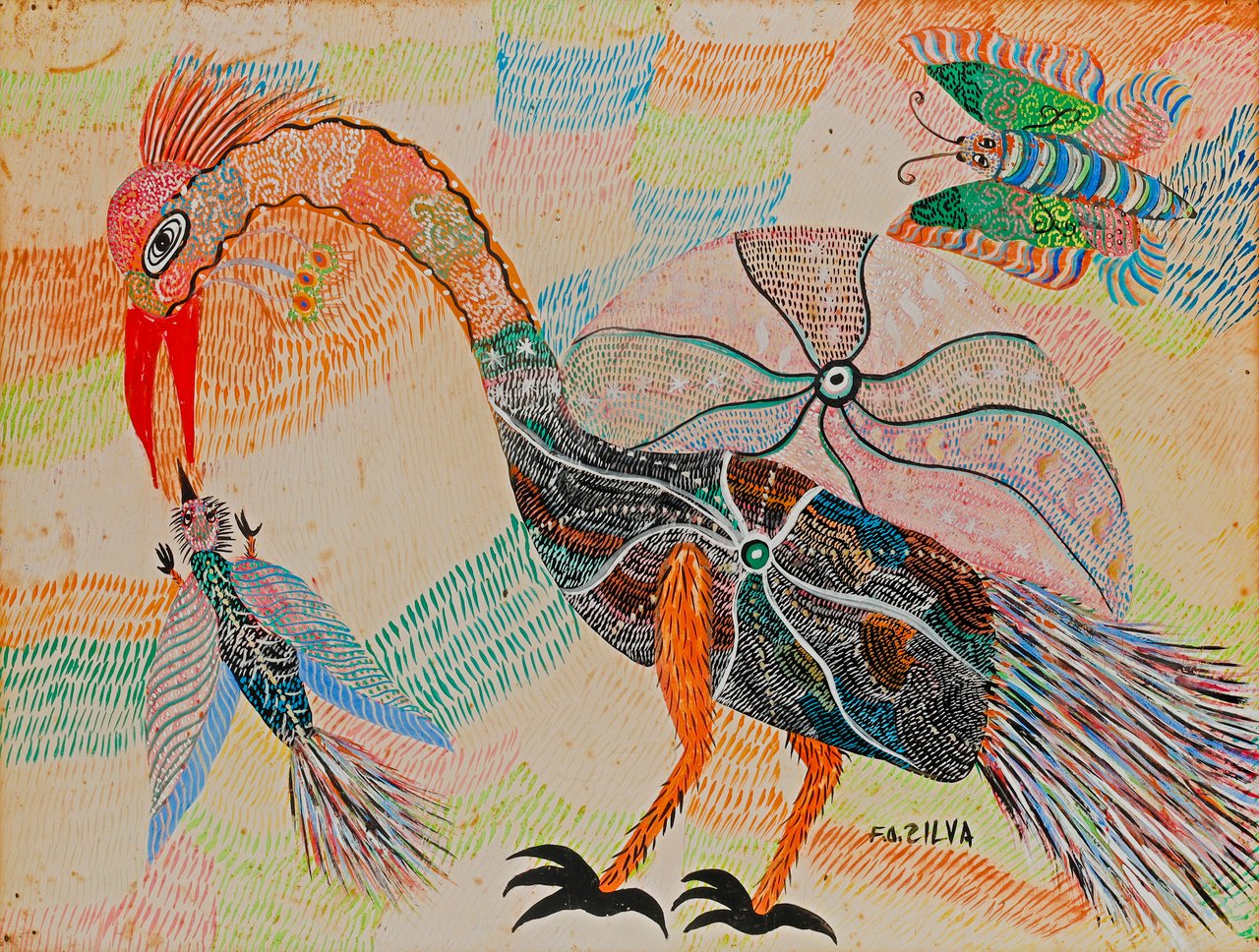
Aves Fantásticas e Borboleta (c. 1967), a gouache on paper in the João Cunha Collection, still runs on that first grammar: a mottled bird bends its long neck towards a chick under a wheel-like wing, a striped butterfly in the corner.
Geneva, Lausanne, Lisbon, Paris
The first public tests came fast. Chico’s gouaches entered the III Salão Cearense de Pintura in Fortaleza in 1944 and, in 1945, a show of Ceará artists at the Galeria Askanasy in Rio de Janeiro, the country’s first gallery devoted to modern art, per the sociologist David A. Silberstein (1977). There the critic Rubem Navarra, who signed the catalogue’s presentation, called the sheets serious art and the painter a Dalí in a state of nature.
The show met an immediate response in Ceará. Mário Baratta, a painter of Fortaleza’s modernizing group, told readers of his column in O Estado of his surprise at finding in the catalogue, which presented Chico as an “índio do Ceará”, two exhibitors beyond the expected: Feitosa and Francisco Silva. He disagreed with Navarra’s comparison, seeing in the gouaches “far greater affinities” with Raoul Dufy than with Dalí, and returned the jab to the author of the preface: Navarra, a Ceará man himself, knew only Bandeira.
By 1948 Chabloz owned some twenty gouaches from his two Ceará stays, 1943–45 and 1947–48 (2001 chronology), and he took them home. They were shown at the Salon Beauregard in Geneva in 1949, at the Galerie Pour l’Art in Lausanne in 1950, and at the Palácio Foz in Lisbon in 1951, beside Chabloz’s own work (Oliveira, 2023). Paris resisted: the Galerie Jeanne Bucher dropped a planned exhibition when Chabloz declined to hand over the right to sell the works, and the city got an article instead. In December 1952, Christian Zervos’s Cahiers d’Art printed Chabloz’s “Un indien brésilien ré-invente la peinture”, the text that placed Chico’s name in the European conversation about naïve art. André Malraux saw the gouaches and wrote that he warmly hoped walls would be entrusted to the painter (Oliveira, 2023). In 1956 works entered a show of Brazilian folk and popular art at the ethnographic museum of Neuchâtel, which bought pieces from Chabloz (Galvão; 2001 chronology).
Ten years of silence
Little of this reached the painter. When Chabloz sailed in 1948, Chico stopped painting. Roberto Galvão writes in Chico da Silva e a Escola do Pirambu that the pause lasted more than ten years; in Chico da Silva em três dimensões he adds that the gap misled part of the public into believing the career began only in the 1960s. The 2001 chronology gives the reason: lack of encouragement. Silberstein, writing in 1977, put the encouragement in economic terms: with no local market, the gouaches of the 1940s circulated as gifts to the city’s elite, and the pause was also a lack of buyers.
A reencounter at the university
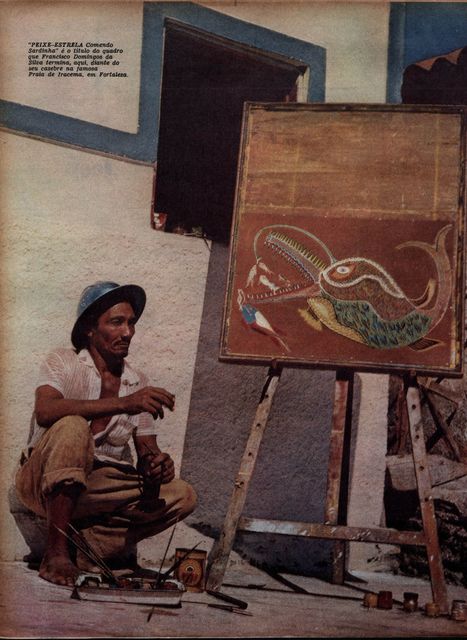
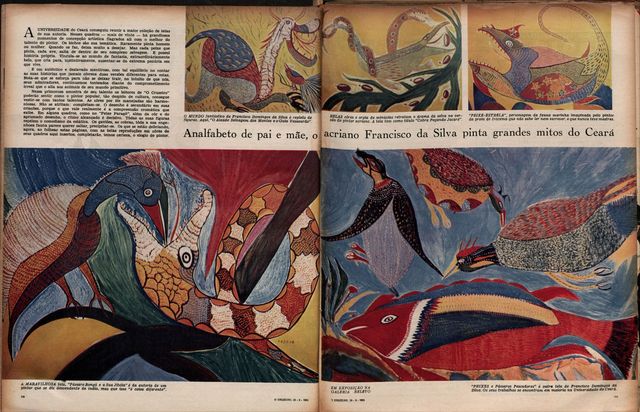
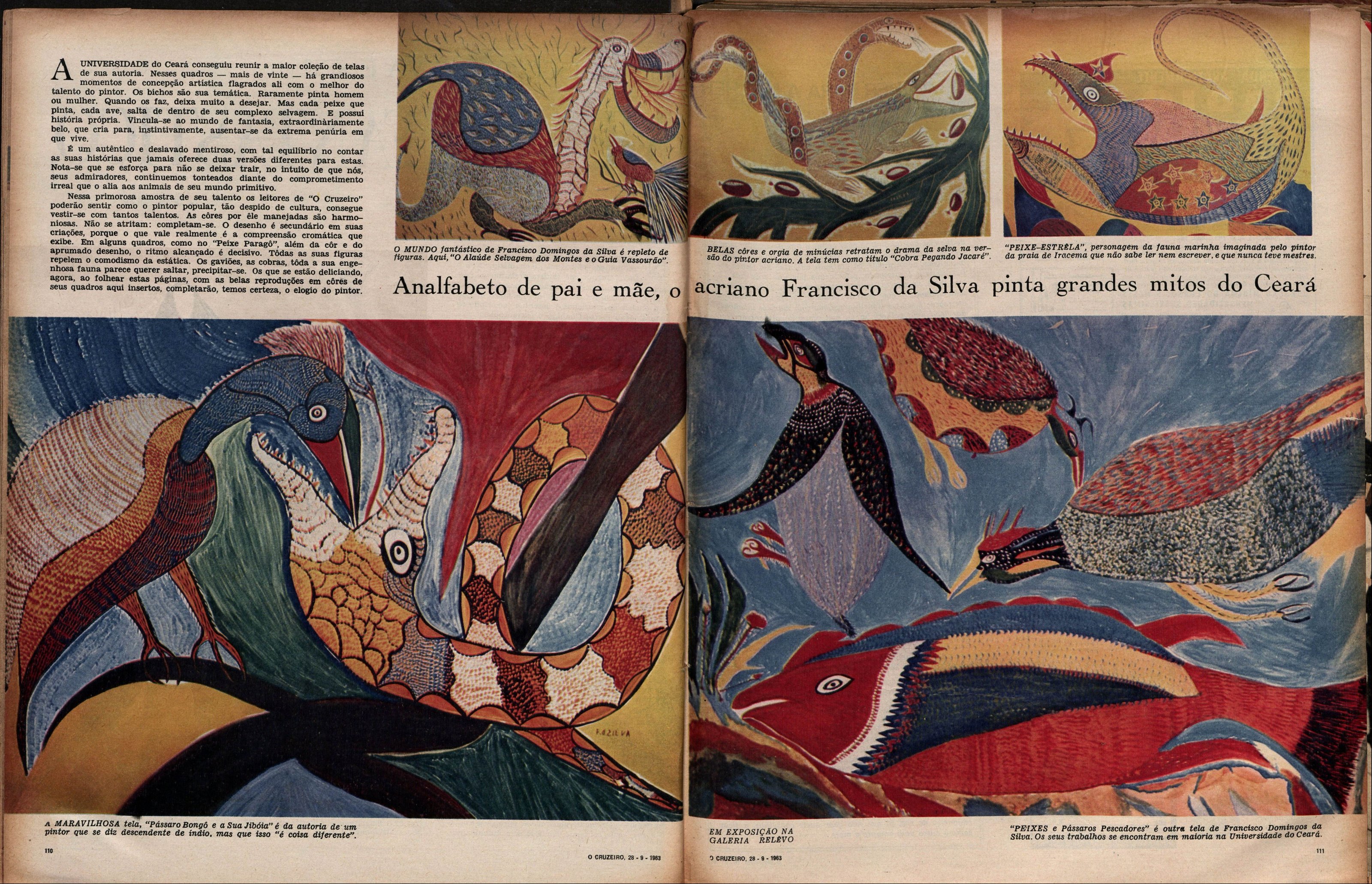
In November 1959 Chabloz returned to Fortaleza, sought Chico out and introduced him to Antônio Martins Filho, rector of the University of Ceará, then building its art museum, the MAUC. The university took him in, and the museum still holds a core of gouaches from those years (2001 chronology). The first solo show came in April 1961, at the Diários Associados headquarters in Fortaleza, with ten works and the sponsorship of Eduardo Campos, according to Estrigas; the painter, recalling the episode in 1972, counted seventeen works and the efforts of Manuelito Eduardo. The 1963 show at the Galeria Relevo in Rio de Janeiro, organized by Jean Boghici, still carried presentation texts by Chabloz and Aldemir Martins. And in early 1966, with the press questioning paintings sold under Chico’s name, the letter “Much Ado About Nothing”, which, according to Estrigas, Clarival do Prado Valadares sent to the critic Harry Laus of the Jornal do Brasil, answered that Chabloz had supported and guided the painter for years and made him known in Brazil and in Europe. Months later came the honourable mention at the 33rd Venice Biennale of 1966.

High-resolution viewer. Use the arrow keys to pan, plus and minus to zoom.
High-resolution viewer. Use the arrow keys to pan, plus and minus to zoom.
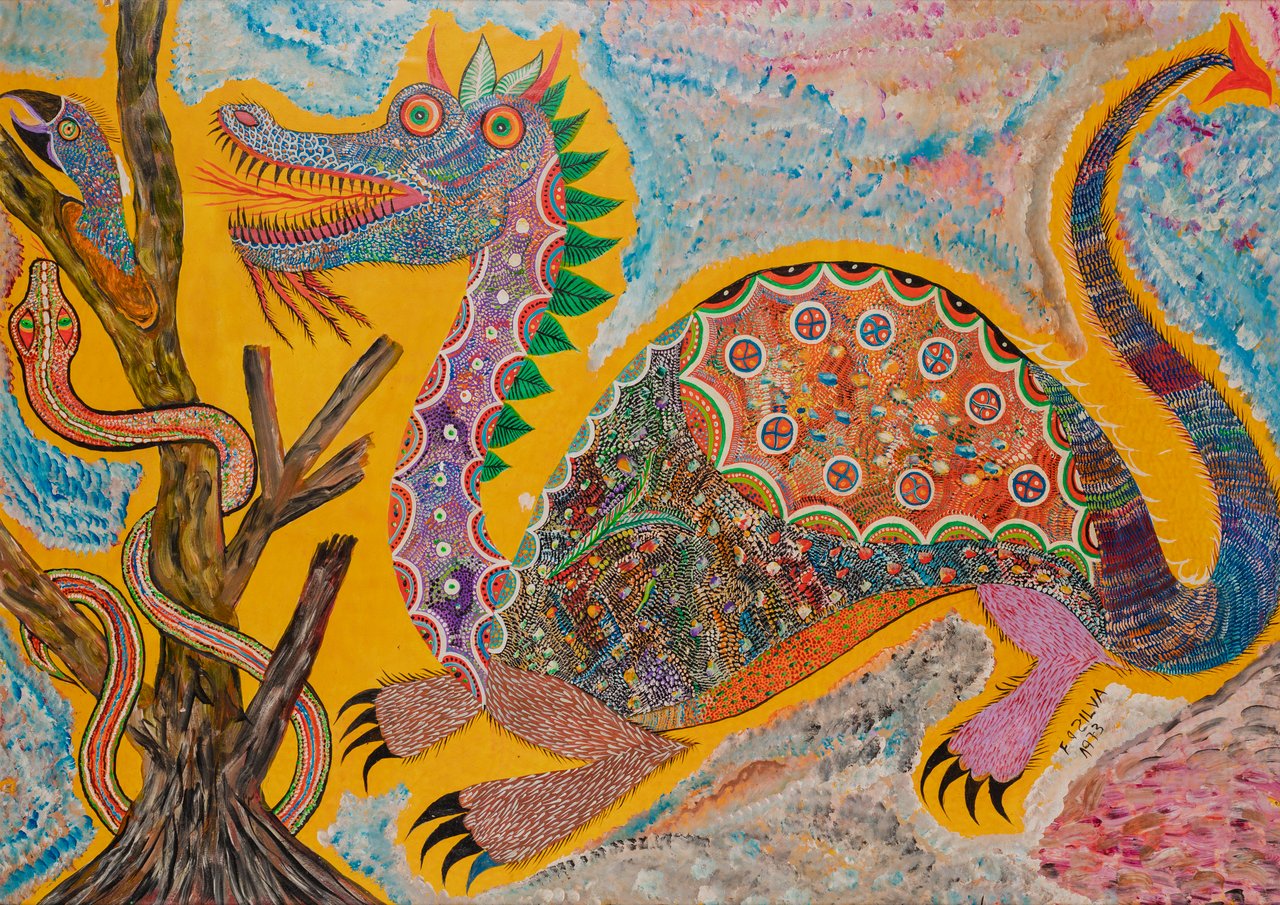
The friendship itself had already cooled. Back in Fortaleza in late 1962, Chabloz no longer looked for Chico, put off by exploits he saw as more worldly than artistic (Galvão records the phrase). By the end of the decade he was attacking, in the Fortaleza press, the workshop production of the circle known as the Pirambu School, which he named the “Fábrica de Quadros Chico da Silva Limitada” (Galvão). Chico kept painting, in materials his first patron had withheld. Dragão e Serpente (1973), an oil in the João Cunha Collection, measures the distance: a crested dragon in red scales under a branch where two striped snakes coil, in the medium Chabloz had refused to teach him thirty years earlier.
Chabloz chose Fortaleza in the end. He settled there and died in 1984; Chico died on 6 December 1985. Both are buried at the Parque da Paz cemetery, as the 2001 Secult catalogue registers. The works that frame their story can be followed among the paintings of the collection.