Motifs
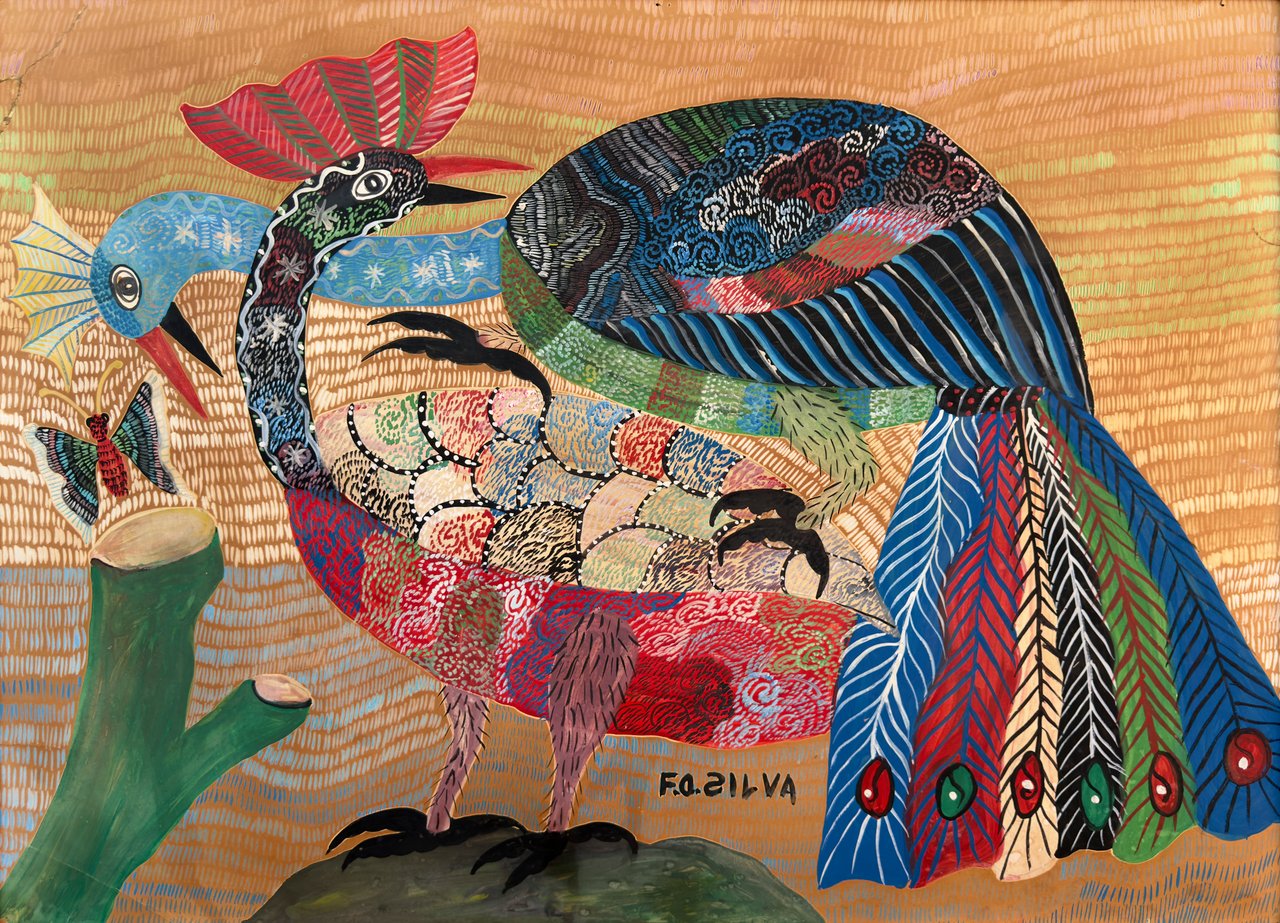
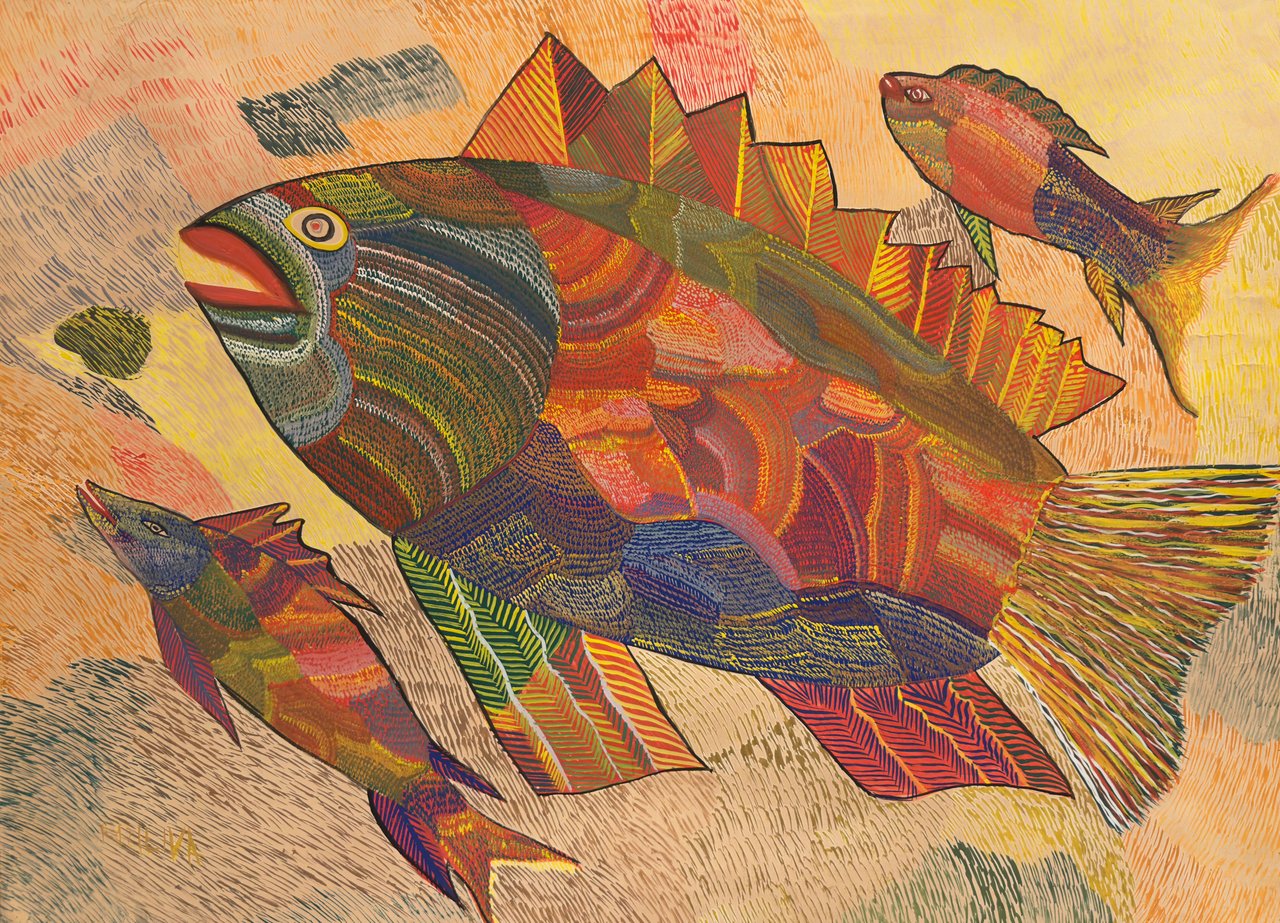
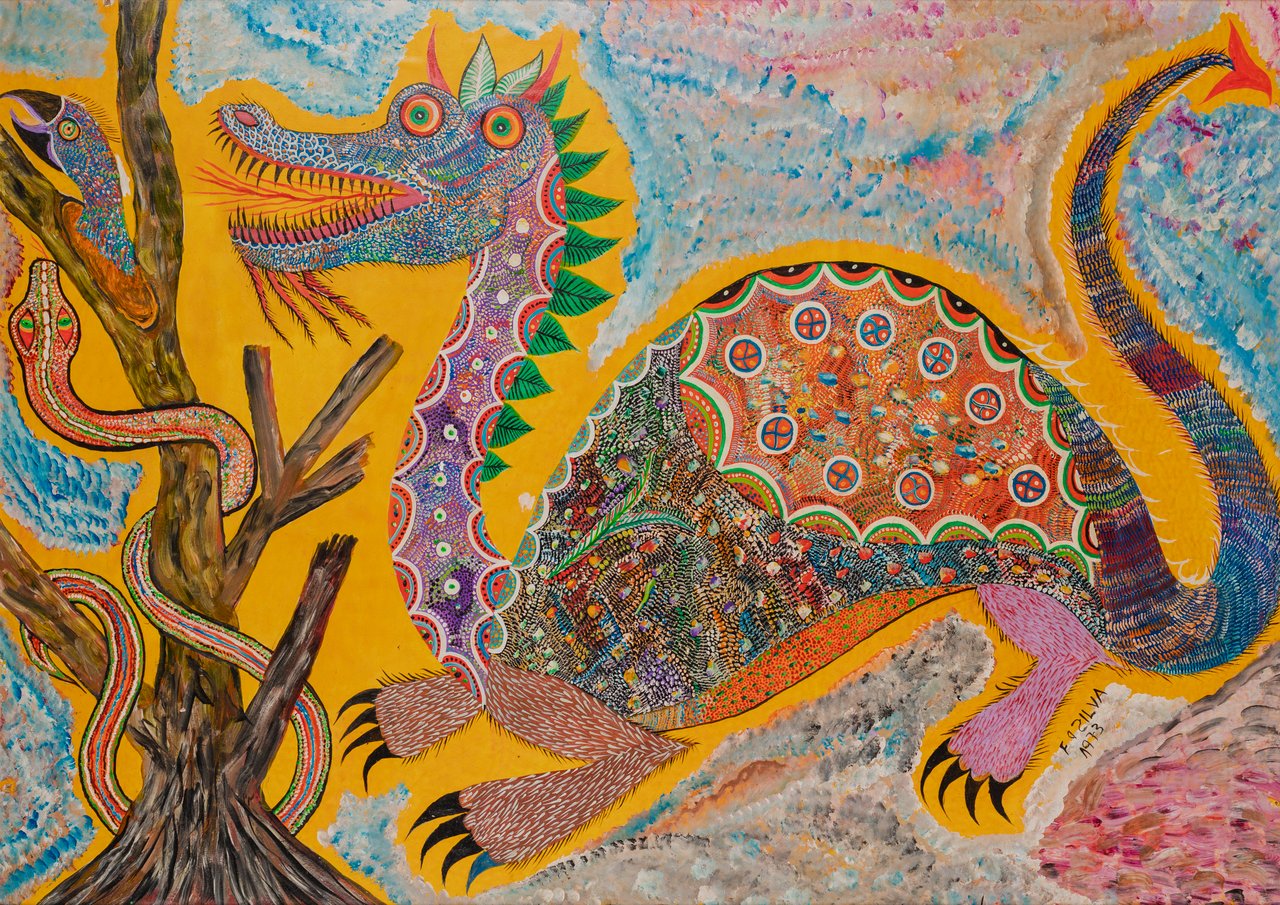
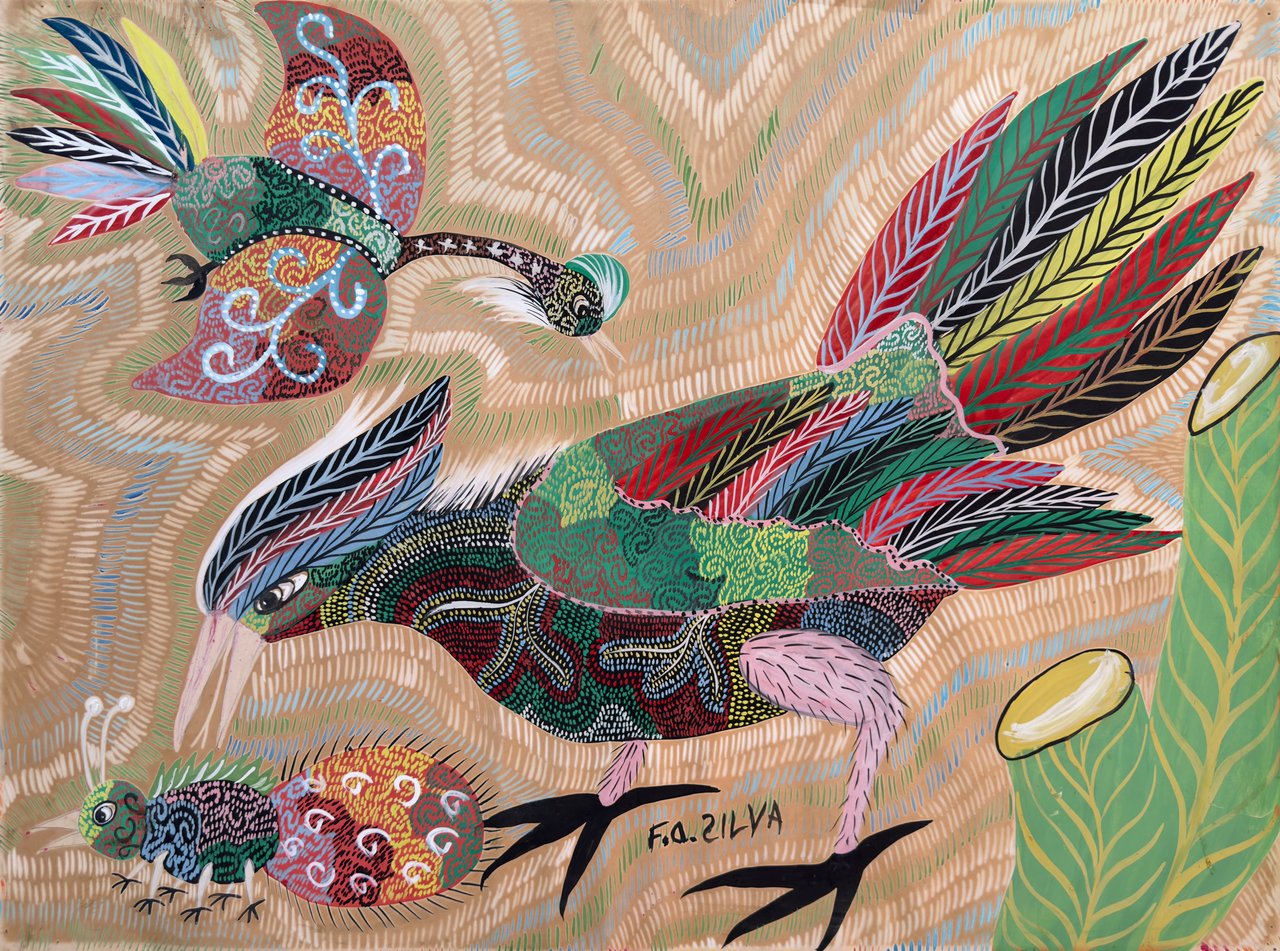
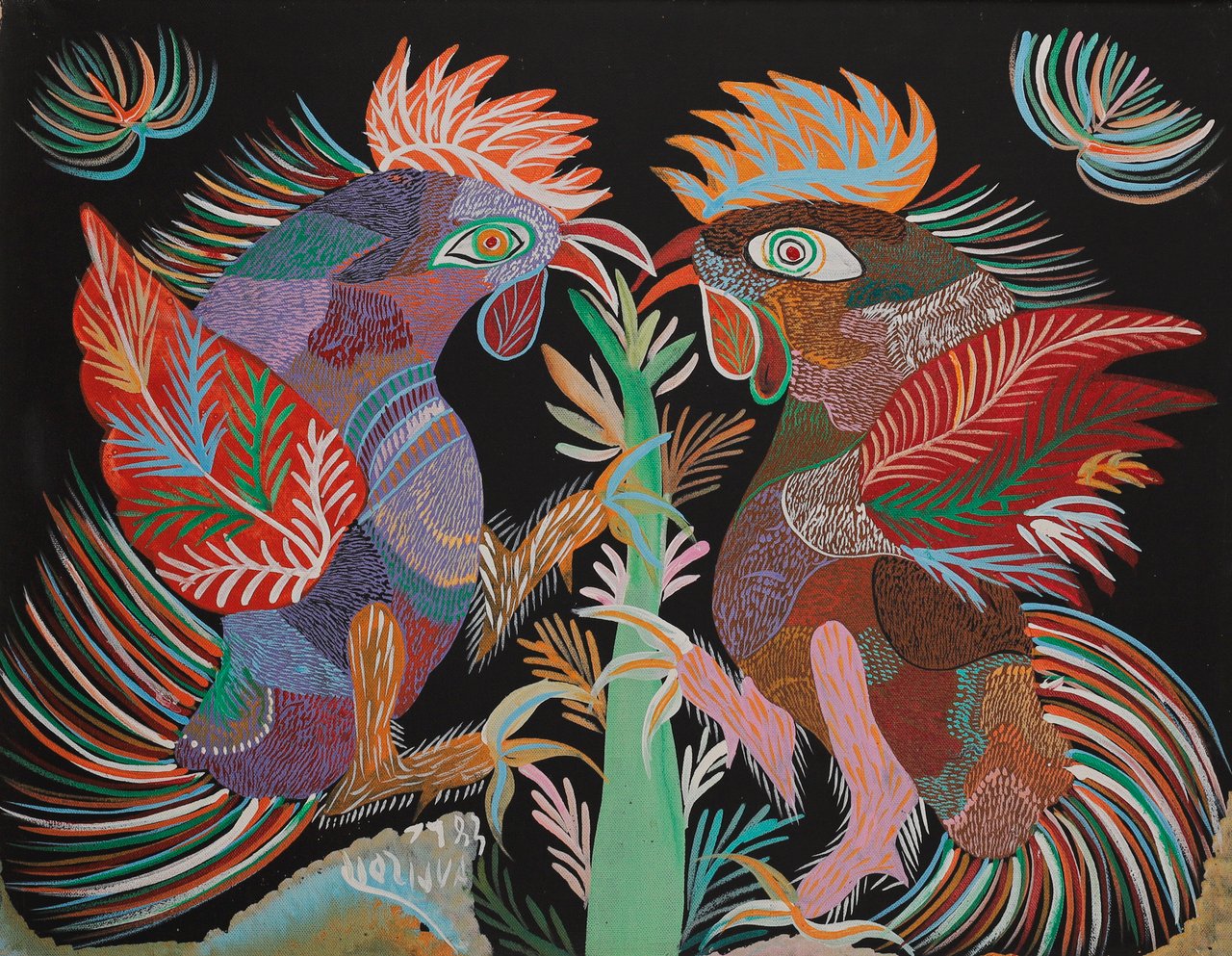
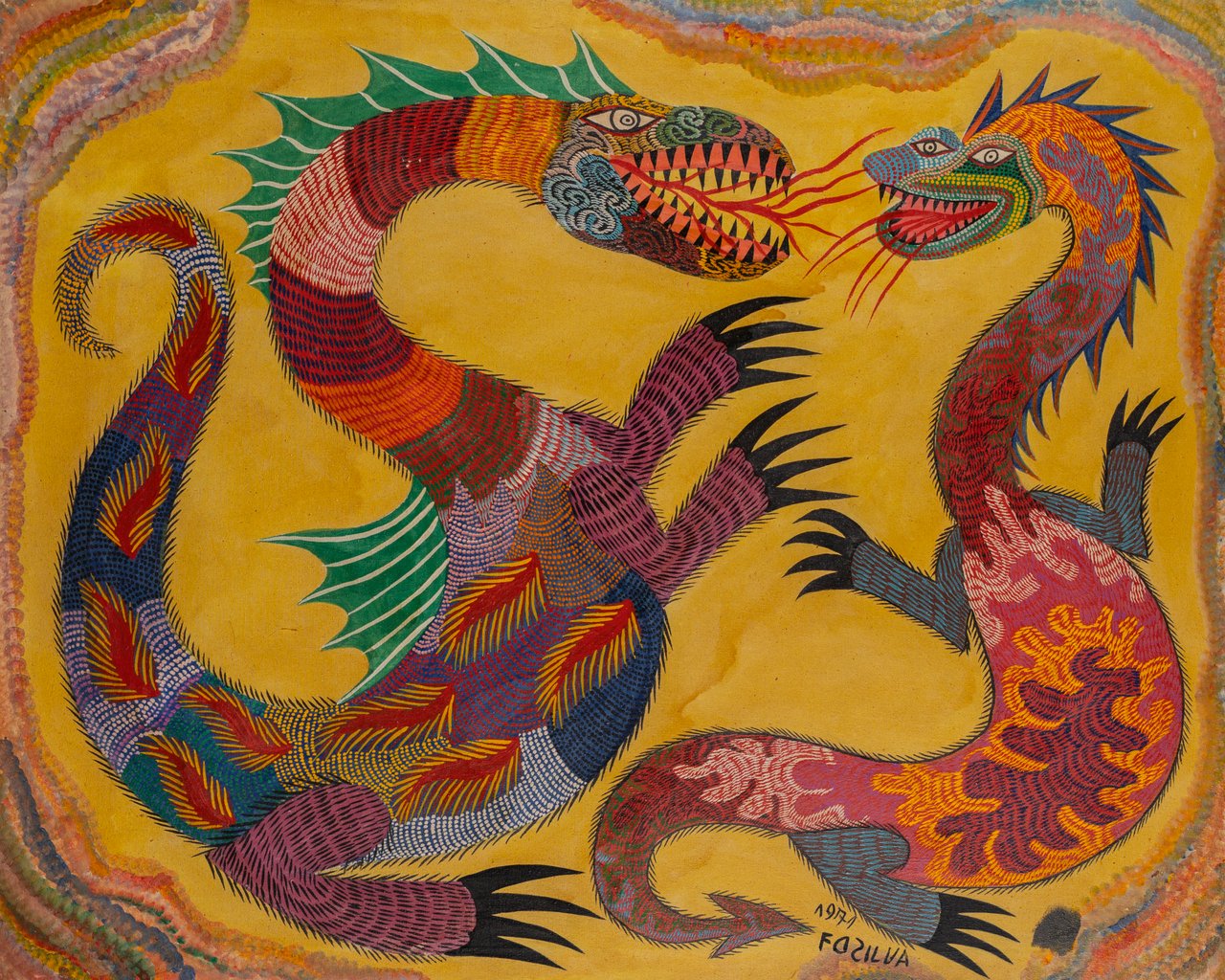
Dragons, birds, fish, snakes, roosters and insects: the repertoire that runs through the work of Chico da Silva and the Pirambu School, a vocabulary each disciple of the group expanded in their own way.
A repertoire of creatures
When Jean-Pierre Chabloz saw the walls at Praia Formosa, in 1943, the repertoire was already there: large birds in elegant lines, somewhat monstrous fish, ghost ships. Chabloz talked the painter out of the human figure, and the birds, fish, serpents and dragons fixed in the gouaches of the 1940s carried on through the next four decades. In 1973, when he spoke about his subjects, Chico still counted them by creature: the roosters, the “monstrous snakes”, the butterflies.
From the first review, in 1945, these creatures were read as memories of an Amazonian childhood, and in 1966 Clarival do Prado Valladares read them as one man’s fixing of an oral Amazonian mythology, an author’s work on a shared repertoire. Asked in 1972 whether those worlds came from his childhood, the painter refused: “this is called imagination, occult sciences, astronomy”. The monsters, he said, he had seen at the cinema. Depending on the decade, the painting was called primitive, naïve or indigenous, and none of the labels settled the question.
The Pirambu studio widened this universe from the mid-1960s. Chico supplied the fish, the birds, the dragons and the creatures in combat, and he accepted what the disciples proposed when it fitted the theme: “whatever we suggested and made up, he liked”, Garcia recalls. Claudionor settled types with a defined drawing, each with its own name, and brought the human figure into the pictures; Ivan de Assis brought the winged creatures of the mythology films; the rooster came at the buyers’ request. Then came egrets, jacanas, fighting snakes, owls, butterflies, flowers and insects.
Each page in this section groups the works in the collection by title, which names what is painted. A canvas enters as many motifs as its title names: Dragon Birds Fish and Snake, by Babá, is in four. In many catalogue entries, the Details section shows the creatures up close, one by one.