Roosters
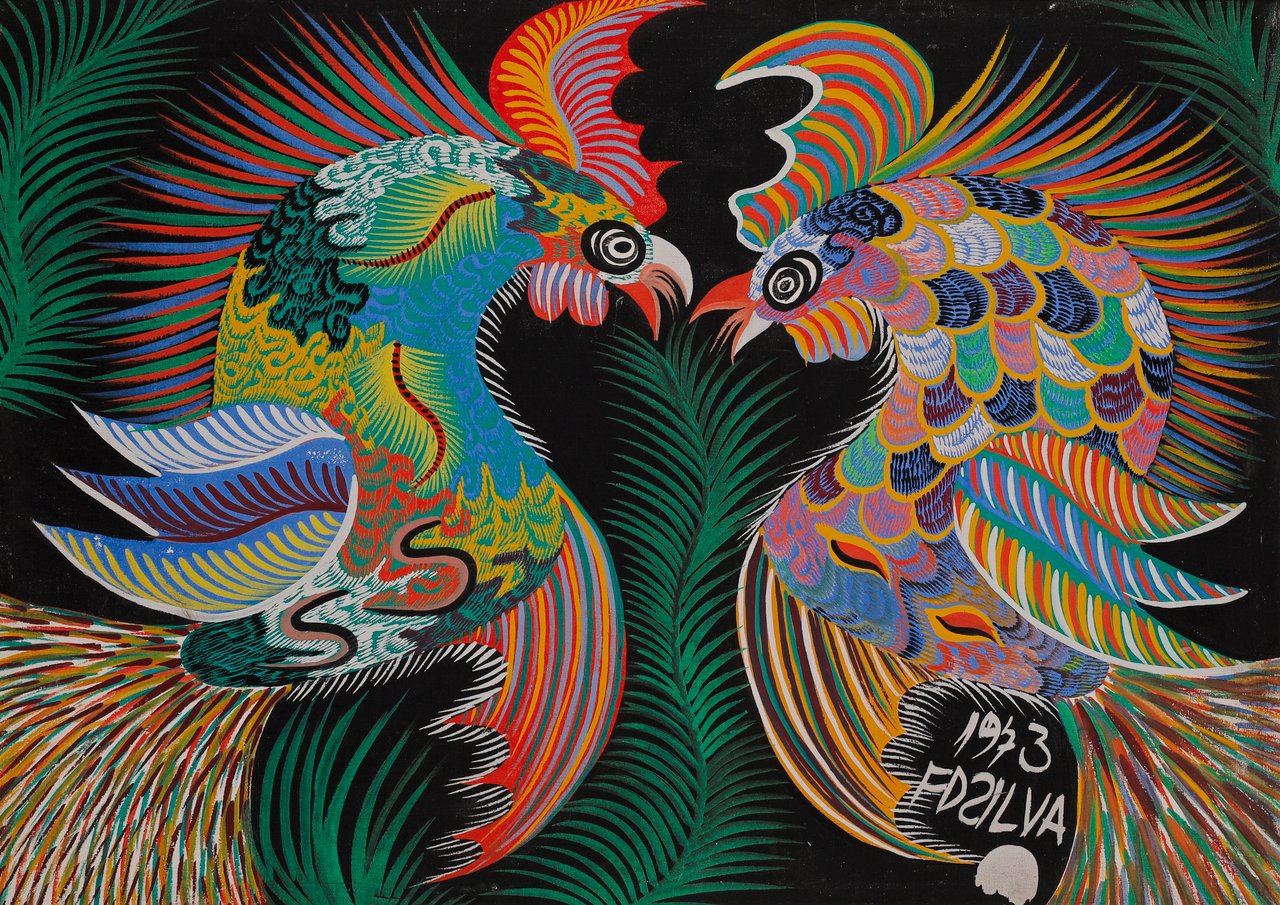
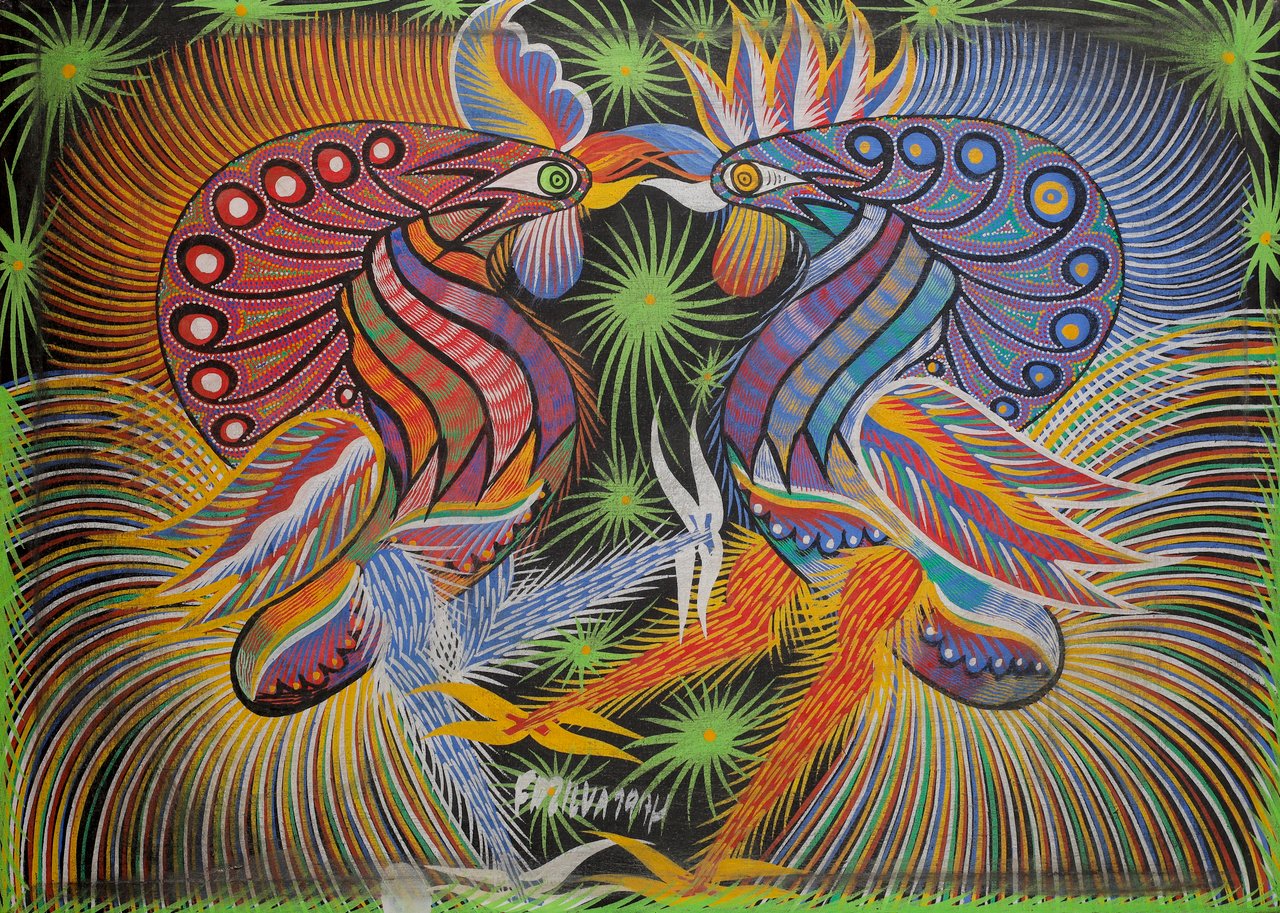
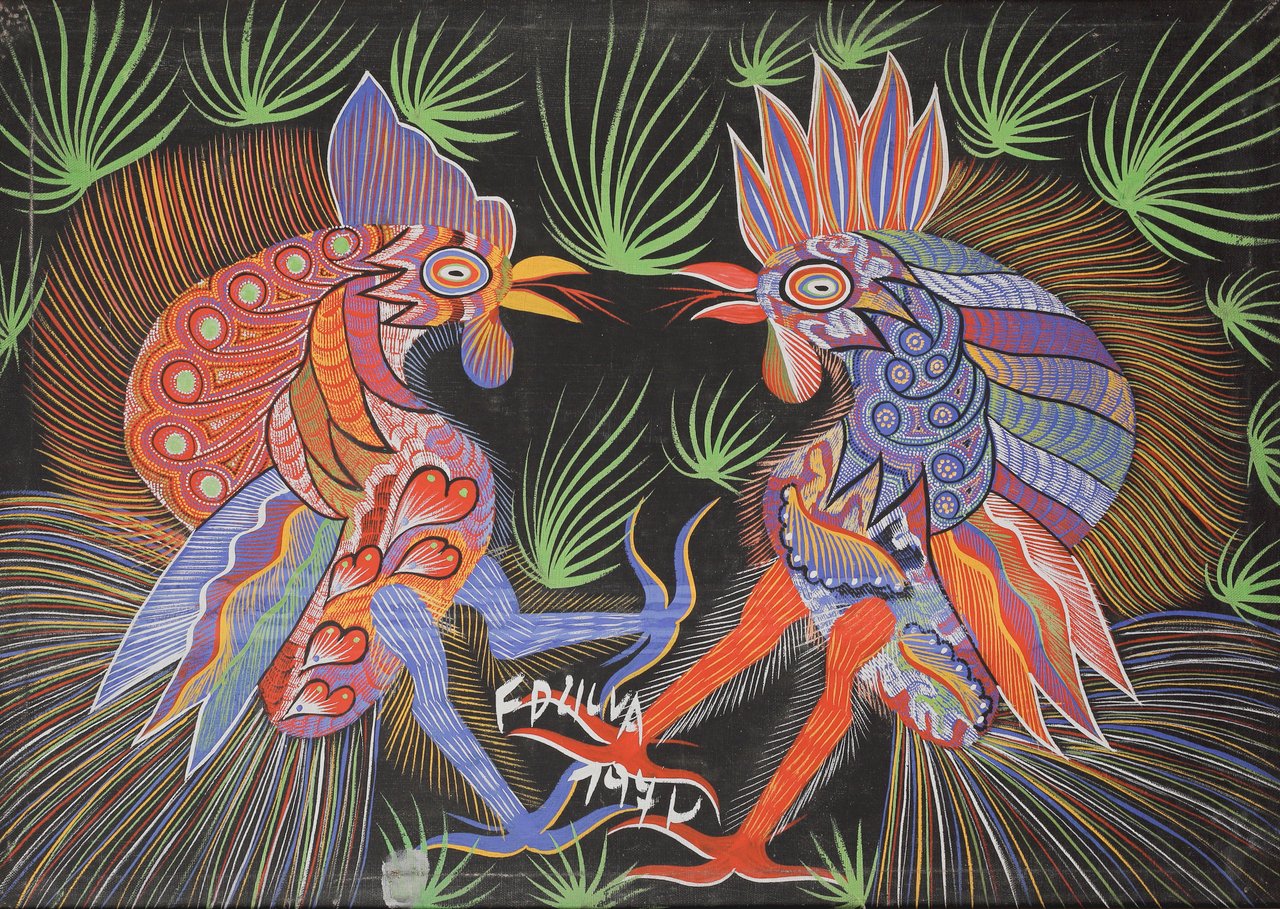
Two roosters face to face, their claws almost touching. The cockfight entered the work of Chico da Silva in the mid-1960s, at the buyers' request, and passed from hand to hand in the Pirambu studio, from gouache on a yellow ground to acrylic on a black one.
The cockfight
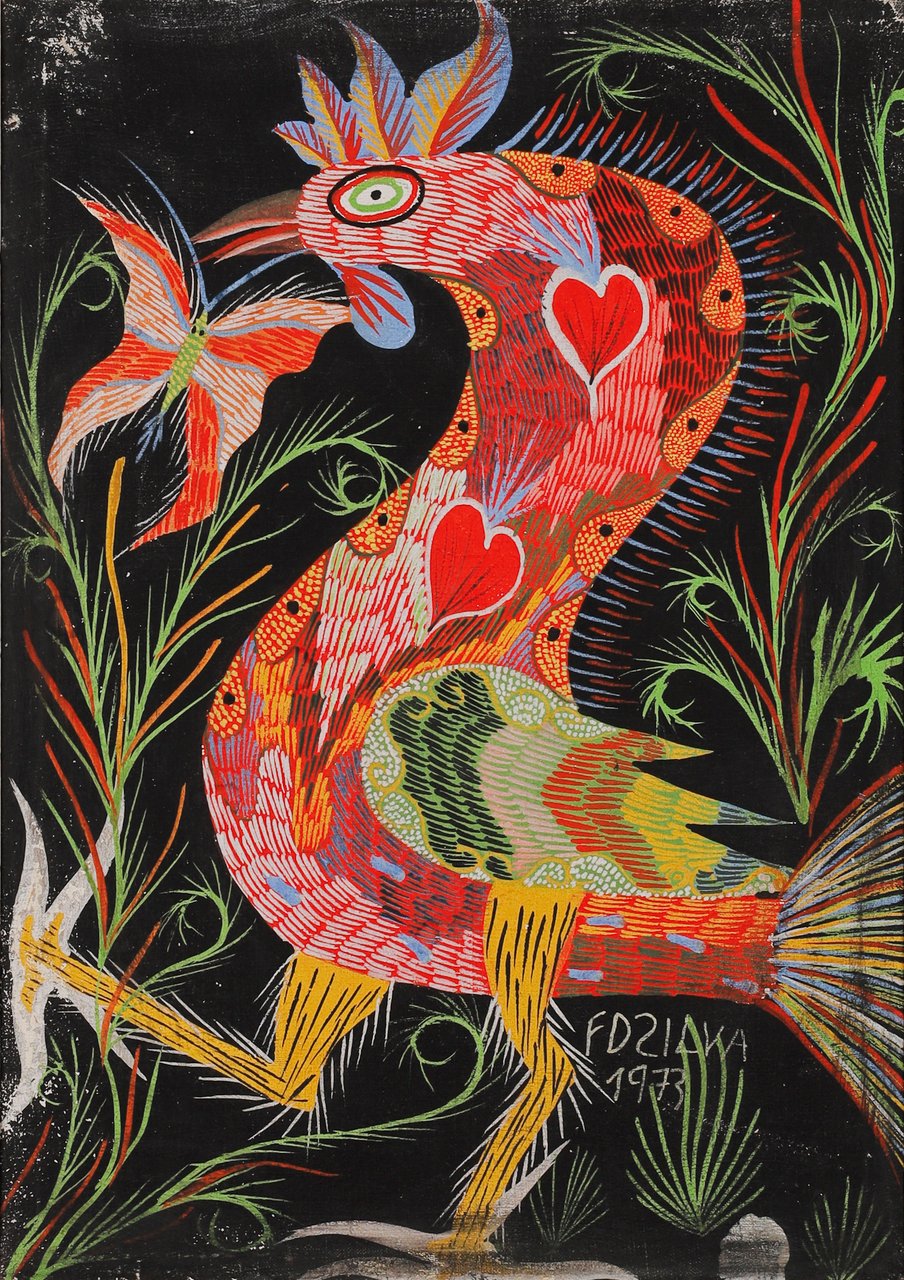
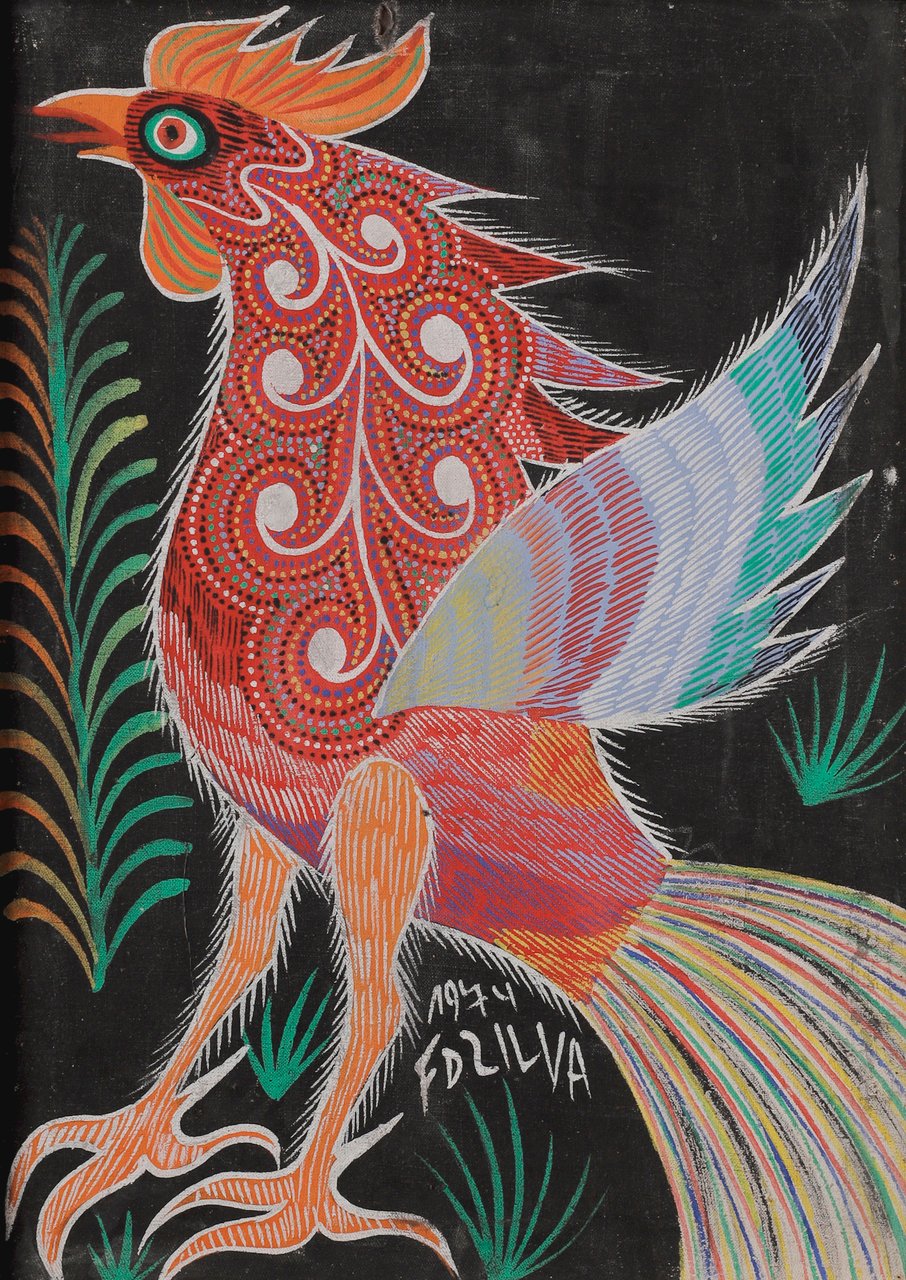
The rooster came from the buyers. They asked for something like Aldemir Martins’s roosters, then printed on a line of Goyana china, and Ivan de Assis drew the first one from the cover of a school exercise book. Claudionor drew others at Chico’s request, and everyone who painted cockfights afterward worked over the drawing of one of the two, sometimes cut out to serve as a stencil. In 1973 Chico himself listed roosters among his subjects.
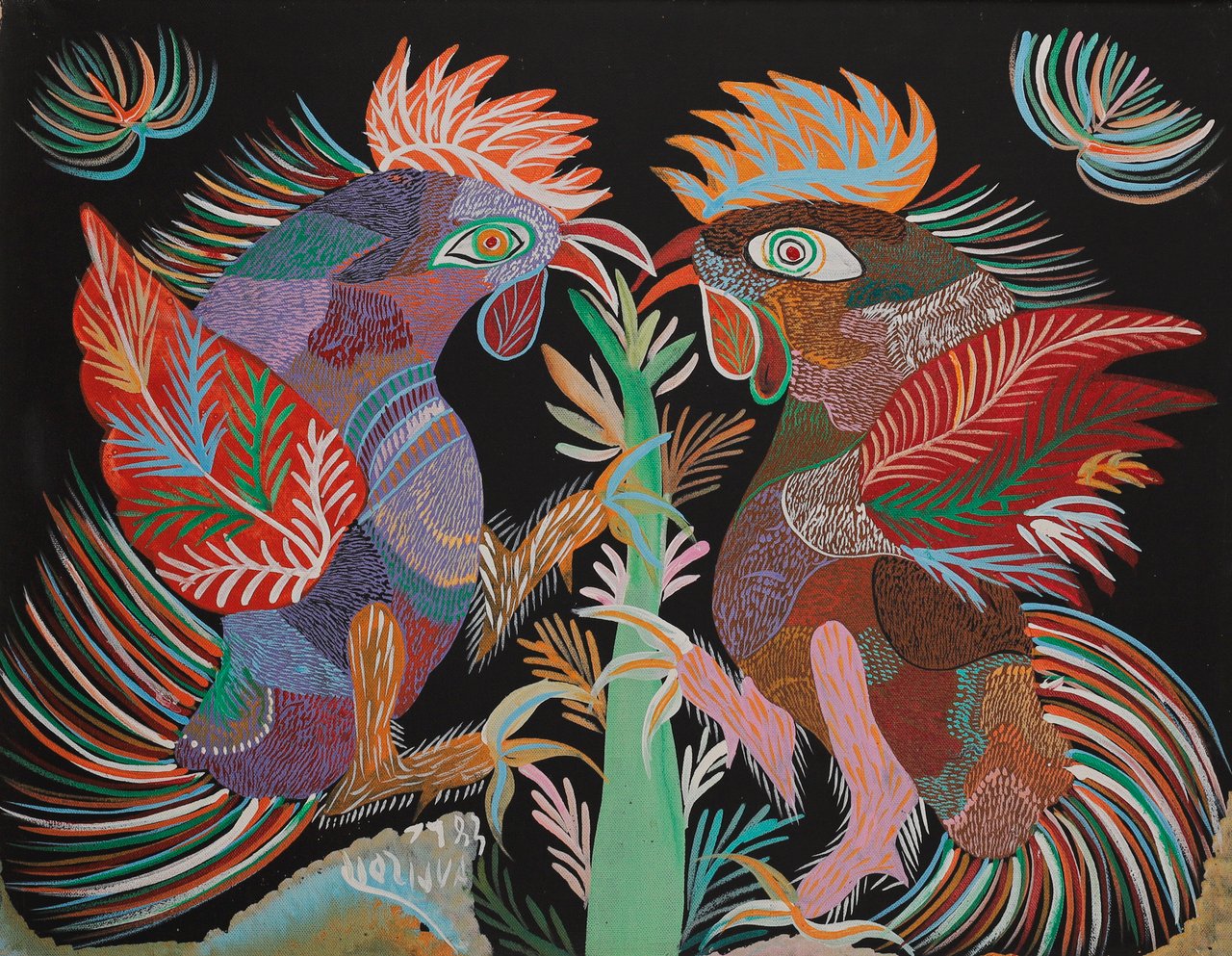
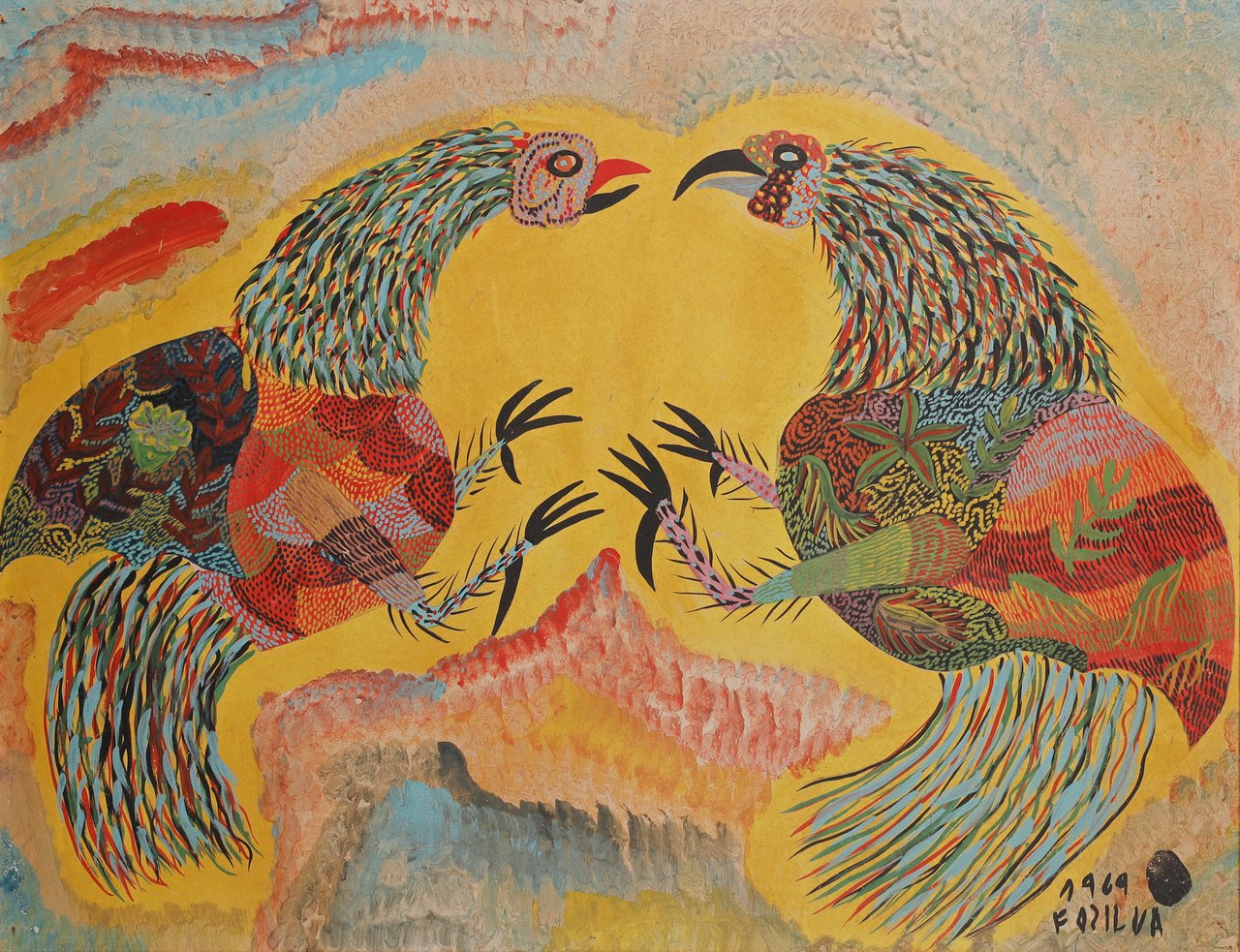
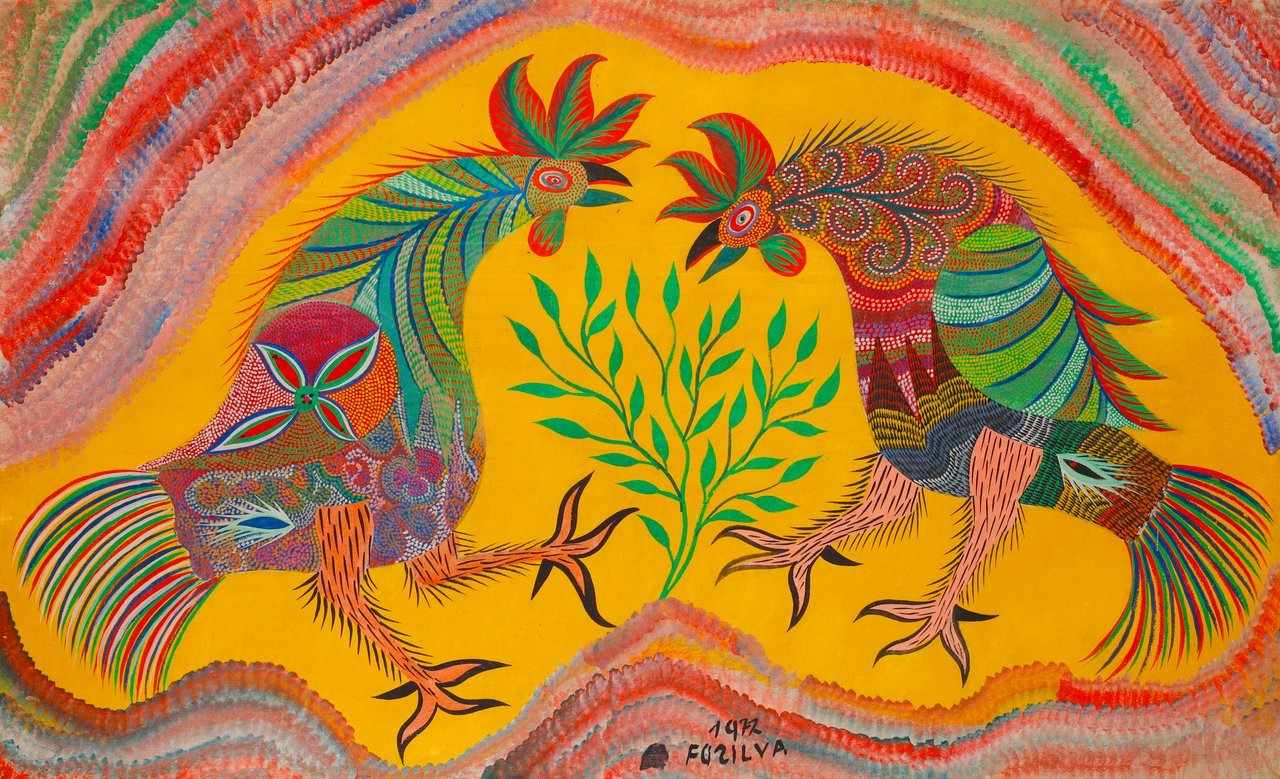
In the works in the collection, the composition hardly changes: the two fighting roosters mirror each other, with spiky combs, plumage in stripes and scales and an outlined round eye, and palm fronds close off the sides. What changes is the ground. In the gouaches, such as Cockfight (1969) and Cockfight (1972), it is a flat golden yellow. In the acrylics, such as Cockfight (1983), it is black. In 1977 the political scientist David Silberstein wrote that the studio’s output had narrowed to the brilliance and color of the fight on the black ground.
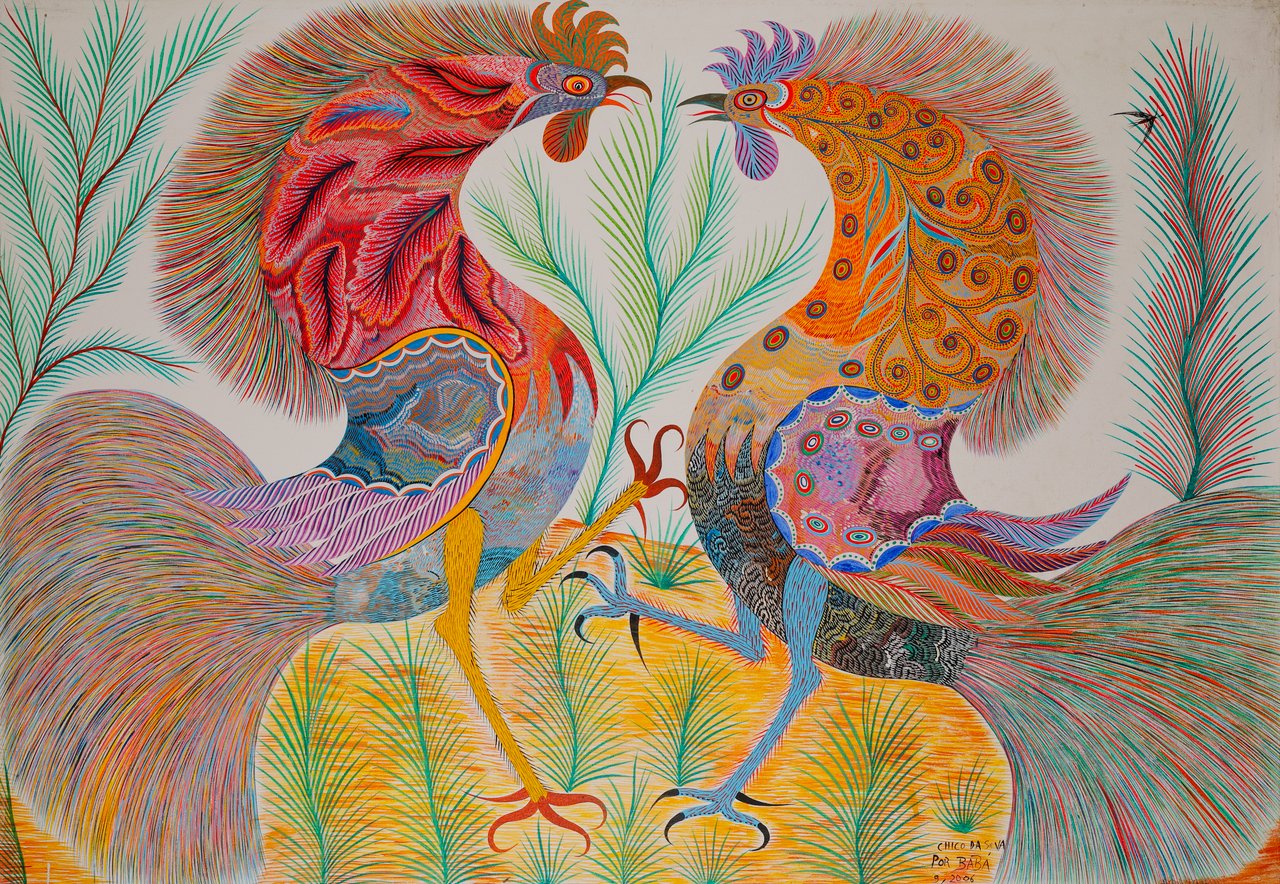
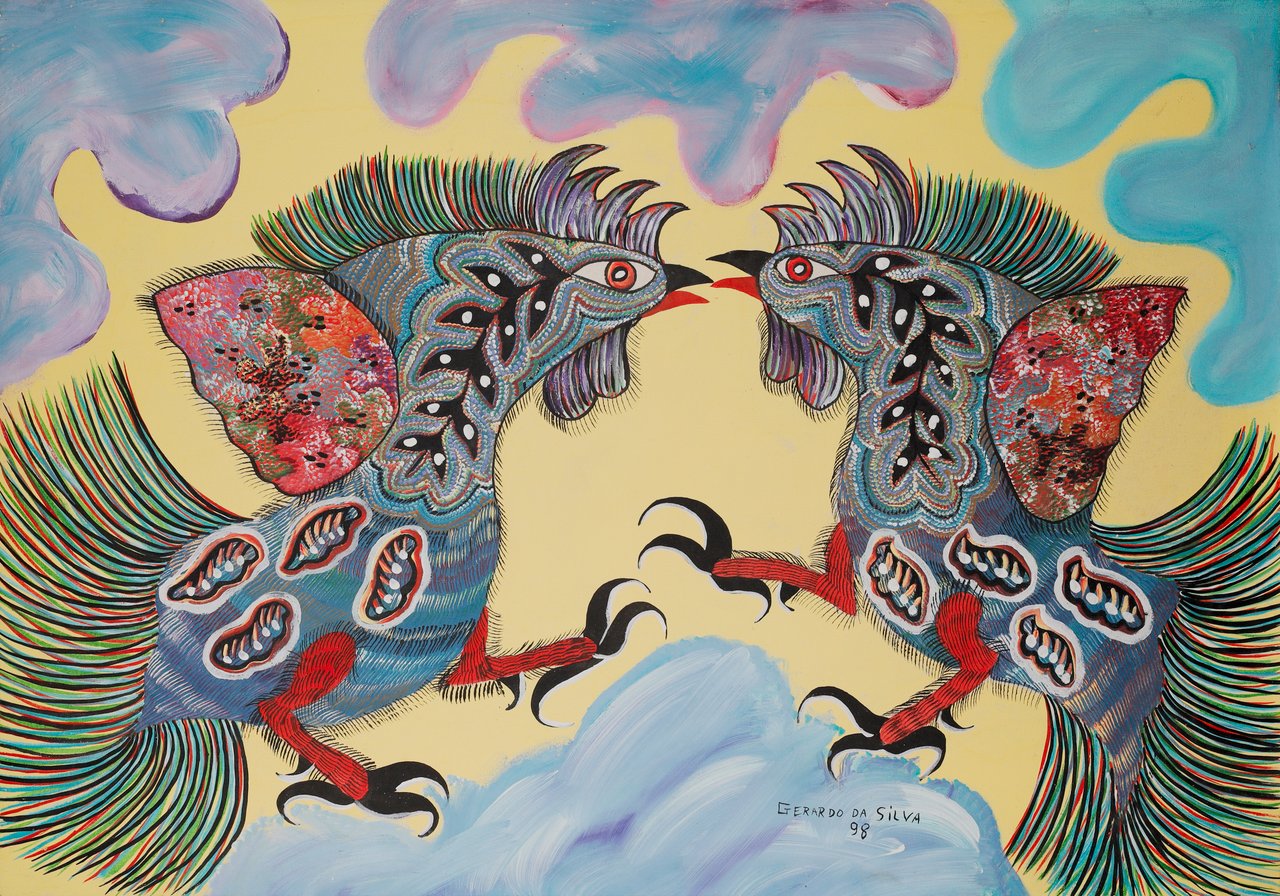
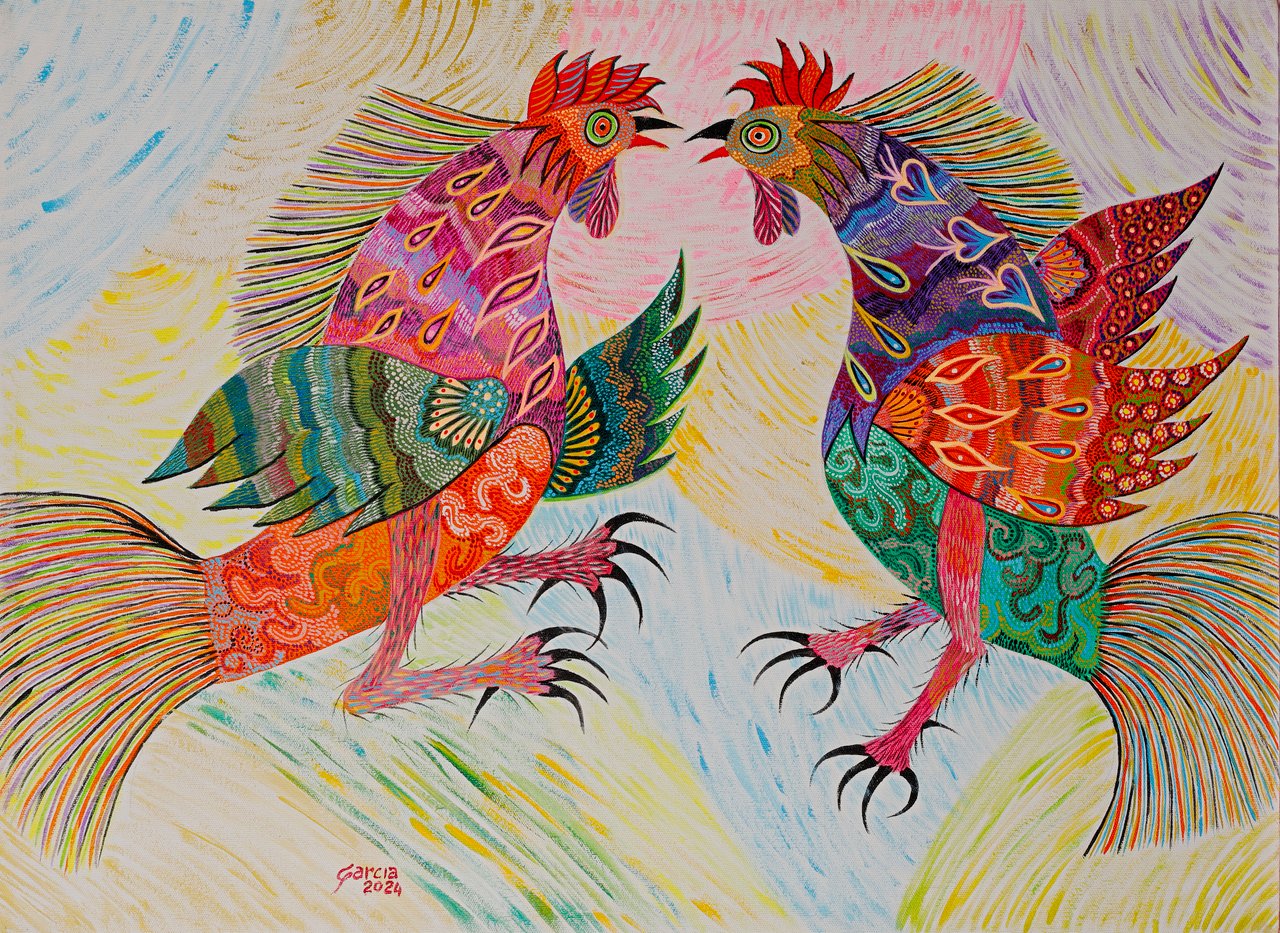
In 2024 the Rollins Museum of Art, in Florida, received Fighting Roosters, a 1974 gouache on canvas. In the collection, the fight goes on after the master: Gerardo da Silva, Chico’s grandson, painted Roosters in 1998, Babá painted Roosters in 2006, and Garcia painted Cockfight in 2024.