Dragons
Dragons with scaly bodies and mouths full of teeth have been in the work of Chico da Silva since his drawings on the walls of Fortaleza, before 1943. They fight among themselves and with serpents, and they continue in the canvases of the disciples of the Pirambu School.
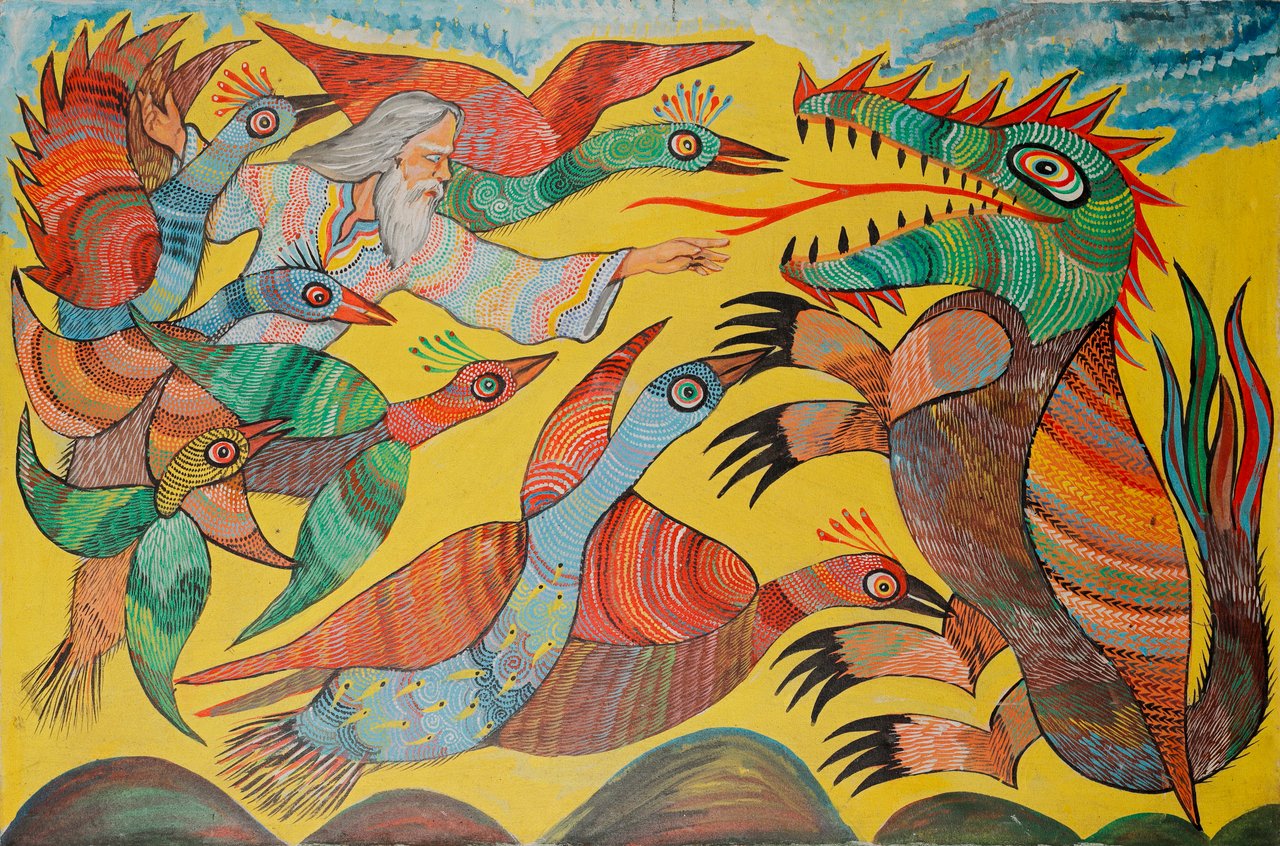
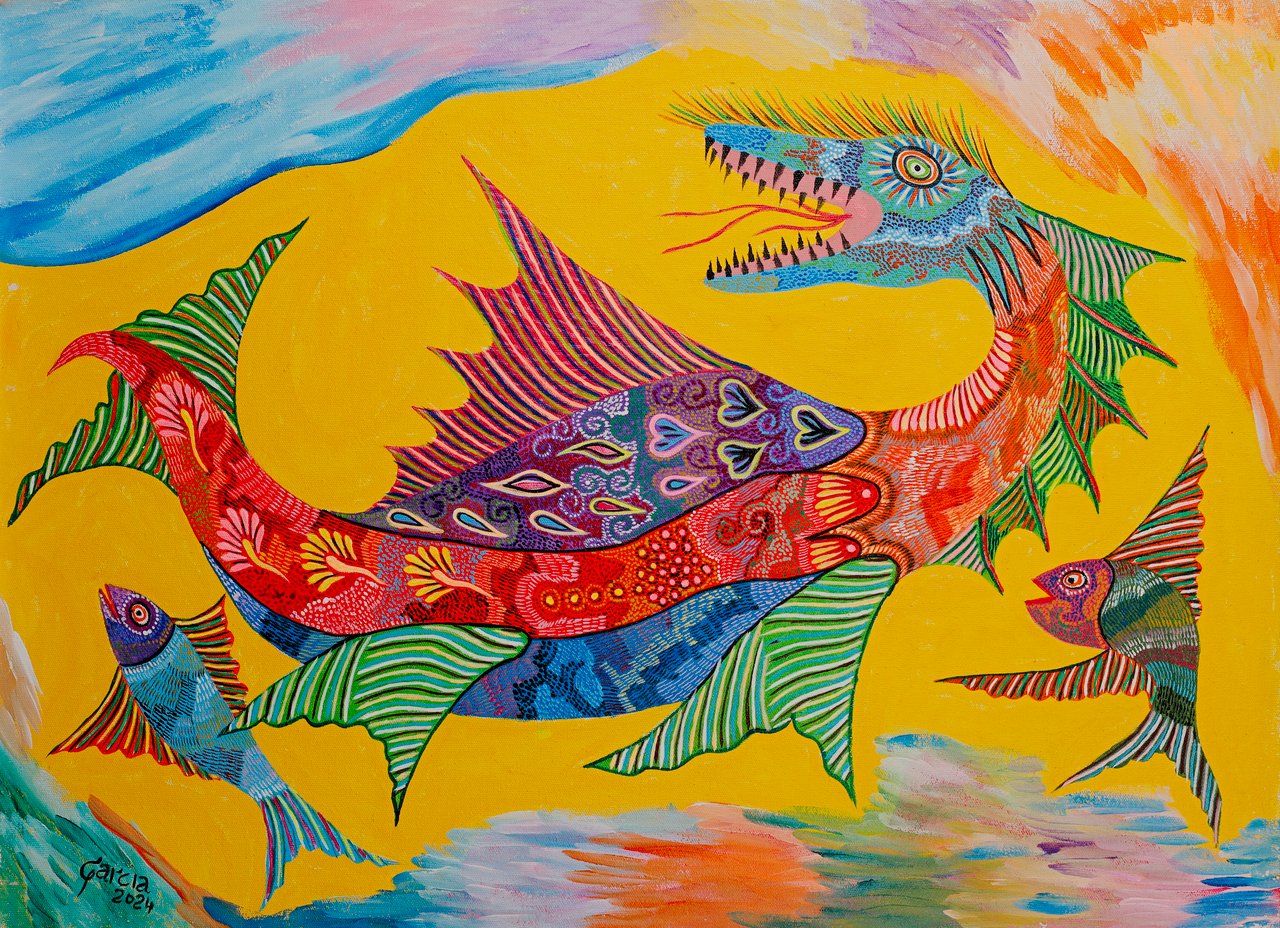
Dragons
The dragons go back to the beginning. Roberto Galvão and the critic Estrigas place them on the walls Chico drew on before he met Jean-Pierre Chabloz, and they carry on through the following decades: the Centre Pompidou, in Paris, holds Luta de dragões, a gouache of 1960. The critic Maria do Carmo Barreto saw in his dragons a rhythm less of fighting than of dancing.
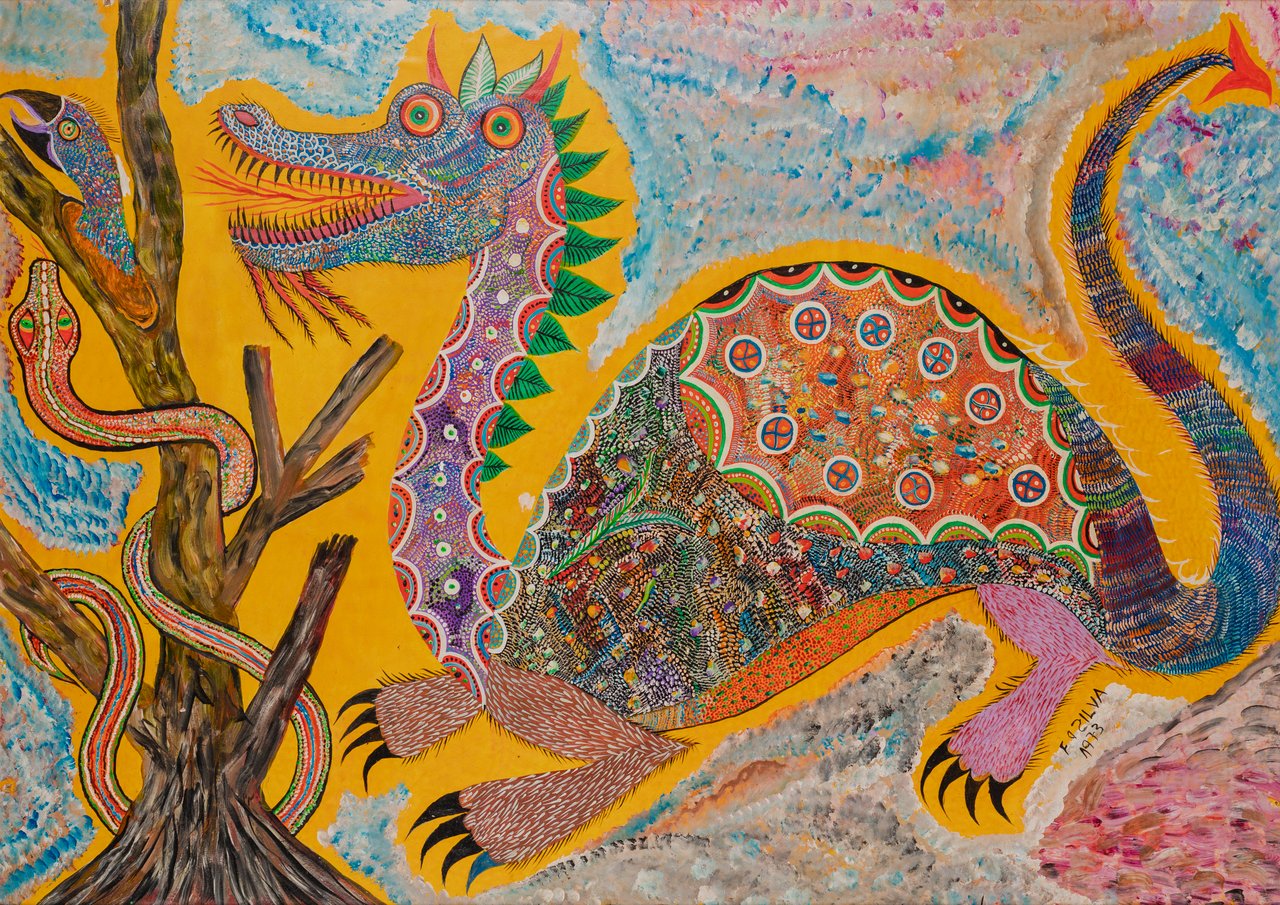
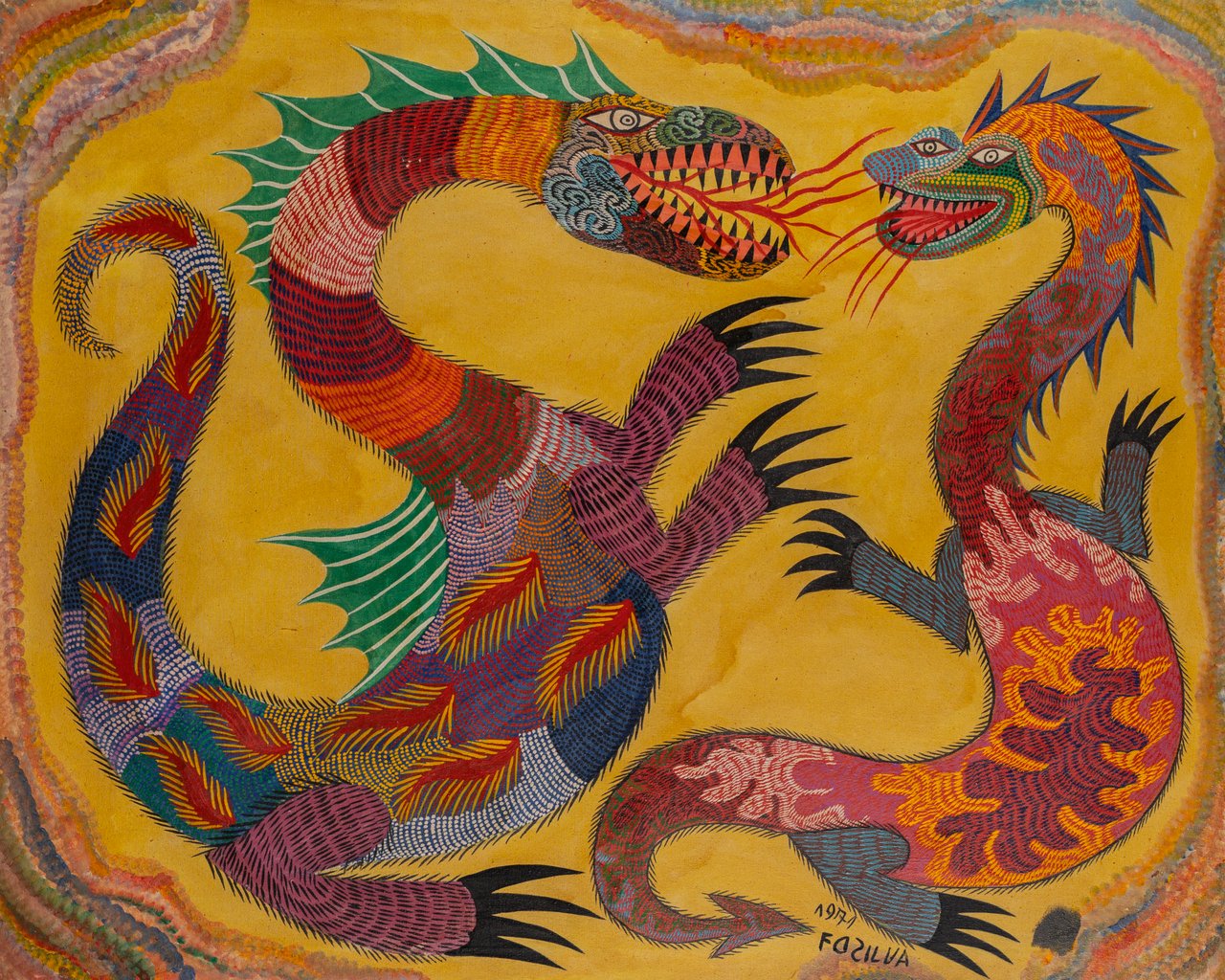
In the works in the collection, the dragon has a body covered in scales and curved like a serpent’s, and its open mouth lets out tongues of fire. In Dragons (1971), two dragons arch and intertwine on a yellow ground. In Dragon and Serpent (1973), the dragon, with a purple head and a round tail, shares the scene with two snakes on the branch above.
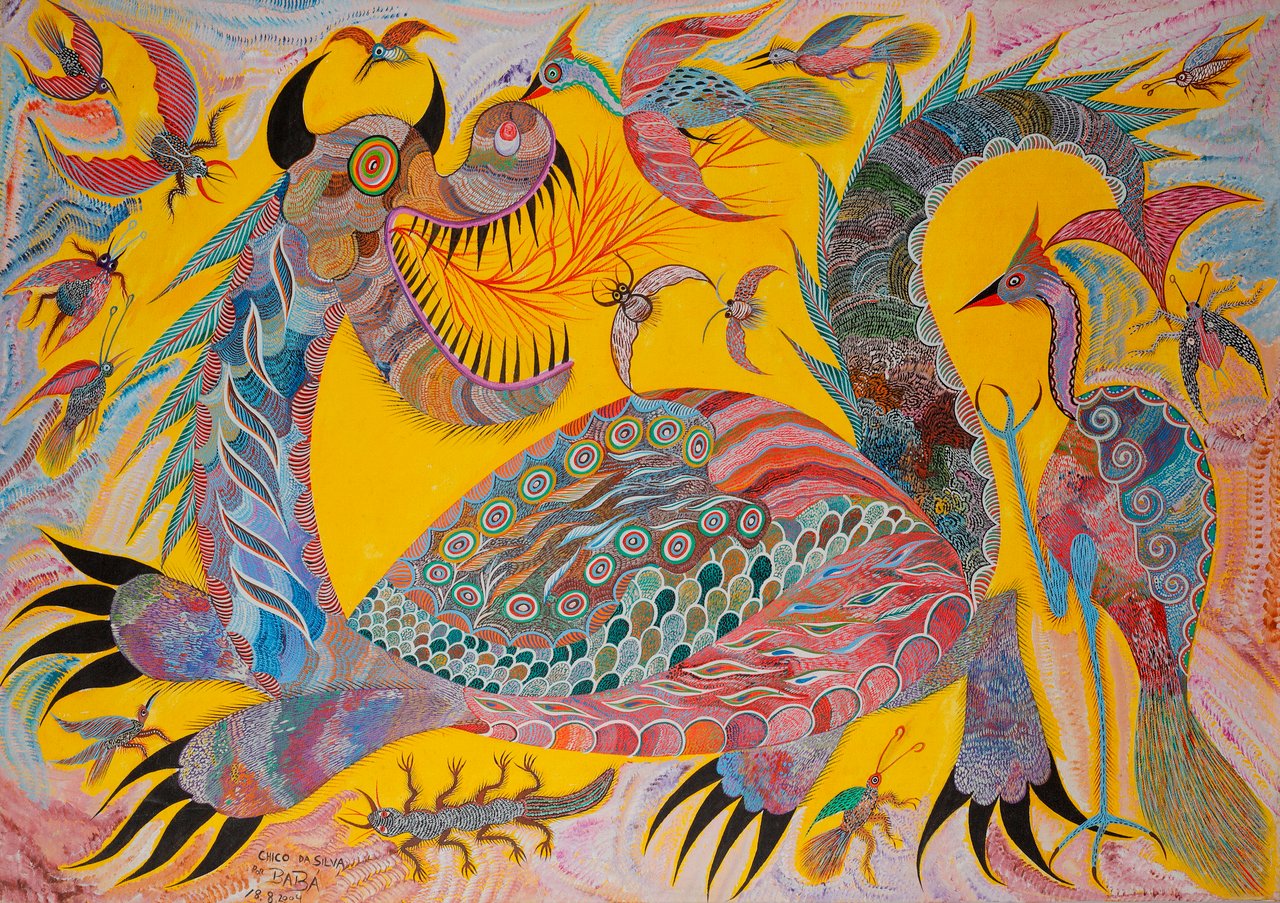
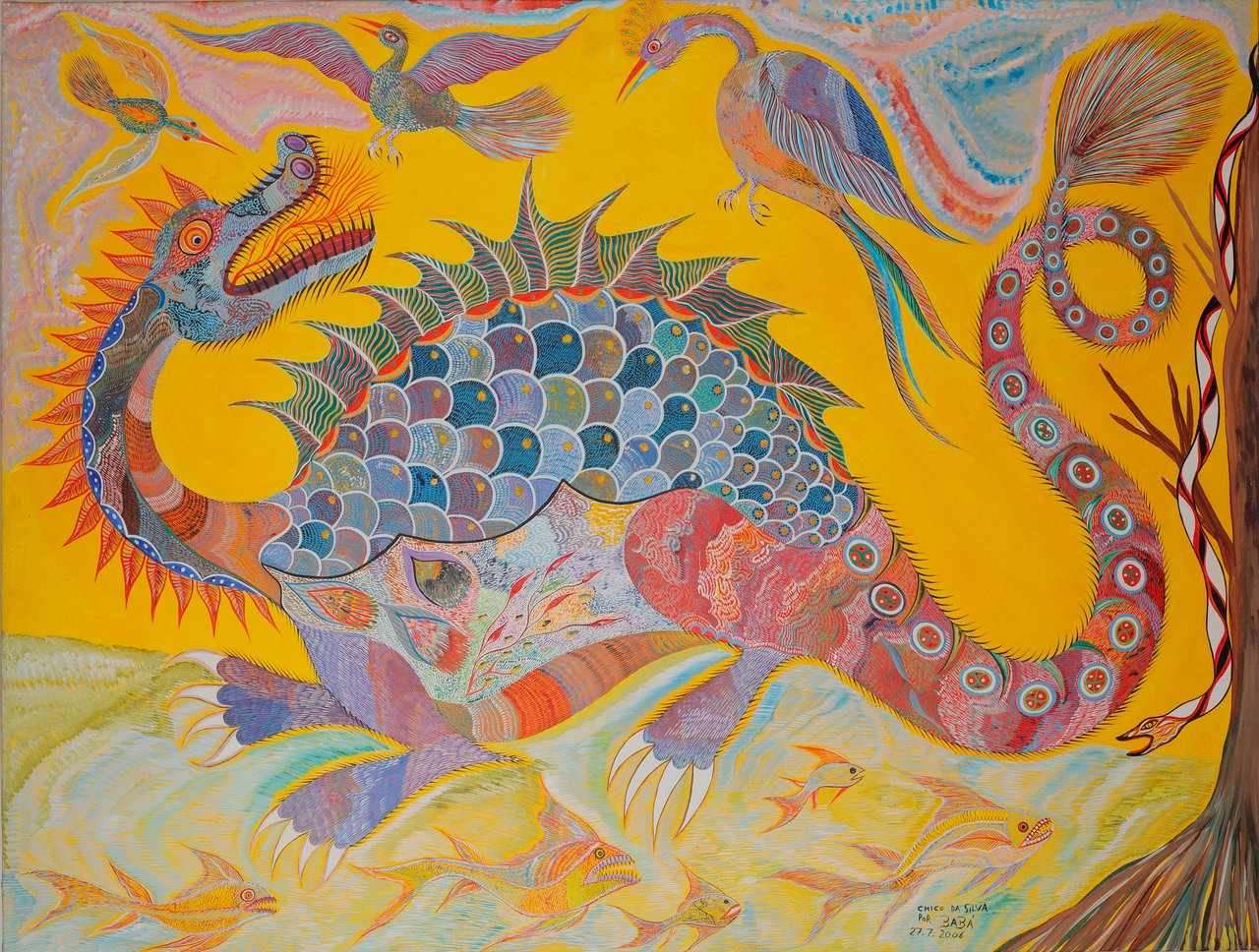
In the studio, Claudionor created his own type of dragon, taken from the alligator printed on cans of Querosene Jacaré, according to Estrigas. The dragons passed to Babá (Dragon Birds Fish and Snake), to Claudionor himself (Dragon Birds and Man) and to Garcia, who painted Dragon Fish in 2024.