Articles
Articles on Chico da Silva, Brazilian artists and painting, with analysis of works and references to books, museums and period sources.
Chico da Silva
The life
- 01The Caboclo of the Alto TejoChico da Silva's origins: a birth without records on the Alto Tejo in Acre, a childhood on the rivers, and the road to Fortaleza and the Pirambu School.
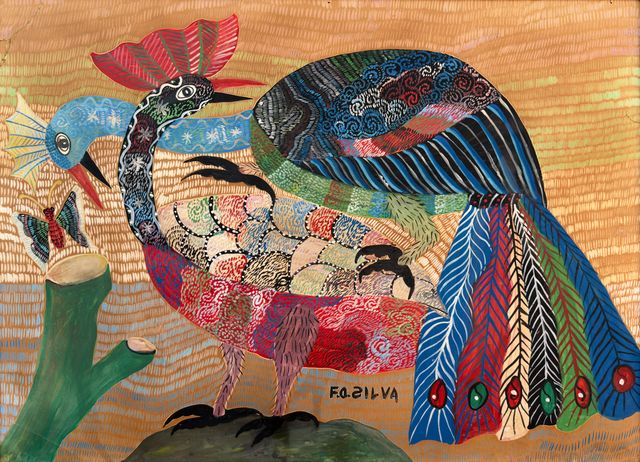
- 02The Murals of Praia FormosaFish, birds and ghost ships in charcoal on fishermen's walls in Fortaleza: how Chico da Silva's repertoire began before gouache and the Pirambu School.

- 03Jean-Pierre Chabloz and the Discovery of Chico da SilvaHow Jean-Pierre Chabloz found Chico da Silva's murals in Fortaleza in 1943 and carried his gouaches to Europe, years before the Pirambu School.

- 04Chico da Silva and the Art of Ceará in the 1940sFortaleza in the 1940s: the Salão de Abril, the SCAP, Antônio Bandeira, Aldemir Martins and where Chico da Silva stood in Ceará art, outside the academy.
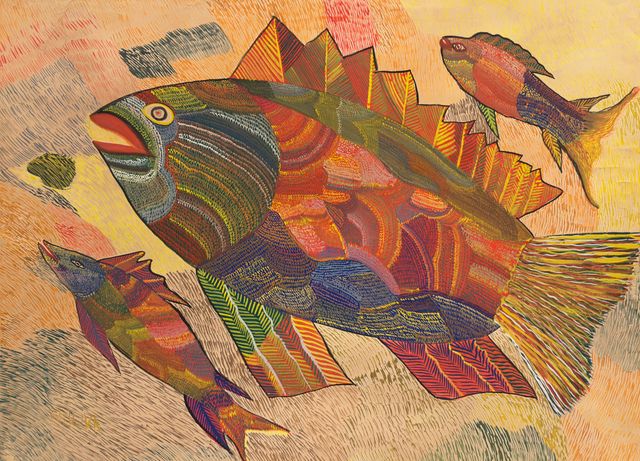
- 05The Pirambu SchoolChico da Silva's studio in Pirambu, Fortaleza: the five disciples, the work divided by stage, the parallel workshops and the collective panel of 1977.

- 06Venice, 1966Chico da Silva's honourable mention at the 33rd Venice Biennale (1966), the press, and the imaginary journeys of the Pirambu School painter of Fortaleza.

- 07The Painting FactoryHow Chico da Silva's Fortaleza studio became a painting factory: mass production, forgeries and the disputed marks of the Pirambu School, 1966–1972.

- 08The Final YearsThe final years of Chico da Silva (1970–1985): illness and hospitals in Fortaleza, late paintings, the Pirambu School dispute, his death on 6 December 1985.

The circle
- 09The Instituto Oboé and the Pirambu RevivalHow the Instituto Cultural Oboé reunited Chico da Silva's disciples in Fortaleza and revived the Escola do Pirambu in 34 canvases from 2004 to 2011.

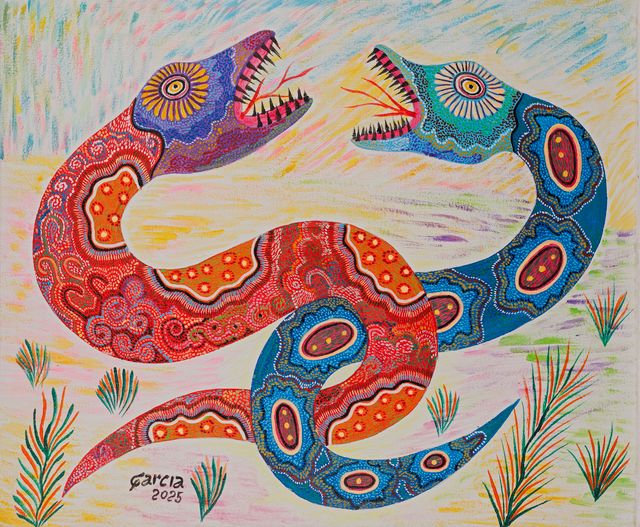
- 10Garcia, the Last DiscipleGarcia, last living disciple of Chico da Silva's Escola do Pirambu, retraces the school in two interviews recorded in Fortaleza, Ceará.
- 11Babá, the First DiscipleBabá (Sebastião Lima da Silva), the first disciple of Chico da Silva in Pirambu: Bluhm's workshop, the 1966 scandal and a signature of his own from 1977.

- 12Claudionor, the DraughtsmanJosé Claudionor Nogueira (1945–2010), who drew the creatures of Chico da Silva's Pirambu School: the Mercantil São José panels and the 2010 memoir.

- 13Chica da Silva, the Painter's DaughterChica da Silva (Francisca da Silva), daughter of Chico da Silva and the only woman in the core of the Pirambu School: her own name on the canvas in 1976.

- 14Ivan de Assis, the Cinema in the BestiaryIvan José de Assis, of the original core of the Pirambu School: he knew Chico da Silva before the fame and put winged animals and roosters in the repertoire.
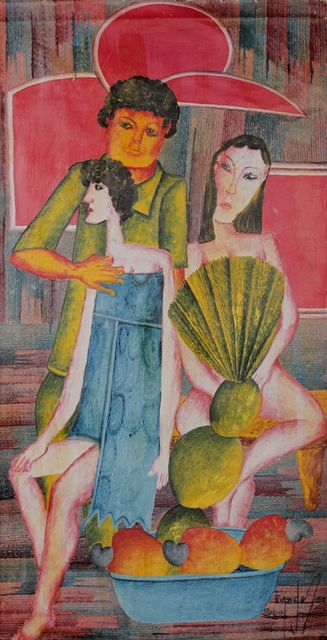
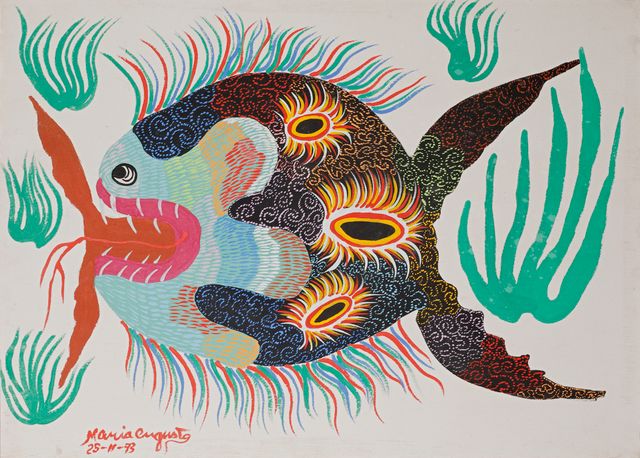
- 15Maria Augusta, the Girl Who SignedMaria Augusta do Carmo Moreira painted for Chico da Silva from 1965 and said so in public at fifteen: the 1969 newspapers and the canvas she signed in 1973.
The legacy
- 16Primitive, Naïve, IndigenousEighty years of criticism on Chico da Silva, from Rubem Navarra in 1945 to the curators of the 2020s: every generation swapped the label, none settled it.

- 17Chico da Silva and Brazilian Naïve ArtWhere Chico da Silva stands in Brazilian naïve art: the first primitive painters, the 1966 Venice mention and the naïve painter who became a school.
- 18Legacy and RediscoveryHow Chico da Silva returned to view after 1985: retrospectives in São Paulo and Fortaleza, the Escola do Pirambu debate, and a new market.
- 19Cataloguing Chico da Silva: What a Catalogue Raisonné Has to ResolveAt Pirambu, disciples painted and the master signed. What that asks of a catalogue raisonné of Chico da Silva, from the signature to the double attribution.
- 20Chronology of Chico da SilvaDates in the life of Chico da Silva and the Pirambu School, from his uncertain birth on the Alto Tejo, around 1910, to his rediscovery, each with its source.
Art and artists
- Anselme Boix-Vives: painting between the shop and the worldTwo gouaches by Anselme Boix-Vives reveal animals and figures shaped by reused paper, memories of Spain and images arriving through television.
- Naïve art, art brut and art singulier: differencesThe history and disagreements behind naïve art, art brut and art singulier, with paintings by Rousseau, Lesage, Séraphine Louis and Chico da Silva.
- Augustin Lesage: from the mine to painted architecturesHow Augustin Lesage built his paintings: mining, spiritualist networks, templates and the organisation of two canvases held at LaM.
- Baya: women, birds and instruments in her paintingsA dress houses birds; musical instruments grow like living beings. Three gouaches trace changes in Baya's painting from around 1947 to 1976.
- Where to see Brazilian naïve art in FranceThe MANAS in Laval and the Cérès Franco museum in Montolieu hold Brazilian naïve art. Works, catalogues and what to check before planning a visit.
- Collecting naïve art: looking at a painting and its historyHow to form a naïve art collection: start with looking, compare objects of different sizes and document the history of each painting with precision.
- Dreamlike painting: how artists invent a worldWhat makes a painting dreamlike? Rousseau's sofa and an animal encounter by Chico da Silva distinguish a narrated dream from visual strangeness.
- Fantastic bestiary: how painting invents an animalWings like flowers, feathers with eyes and fish with patterned skin: Chico da Silva, Gustave Moreau and Maria Augusta invent their animals in paint.
- Unica Zürn: drawings, anagrams and changing facesIn Unica Zürn's drawings, a line can belong to several faces. Three works reveal how eyes, empty spaces and ink turn one creature into another.
- Djanira: workers, colour and geometryLook at four paintings by Djanira: a flower seller, a seamstress, a flour mill and sawyers, where work takes shape through colour and geometry.
- Heitor dos Prazeres: paintings, samba and everyday lifeHeitor dos Prazeres through three paintings: St. John's Day, Moenda and O artista, with samba, work and Black daily life in Rio de Janeiro.
- Henri Rousseau: jungles imagined in ParisHenri Rousseau imagined his jungles in Paris. See how he brought observed plants, animal images and a sofa together in three paintings.
- J. Borges: how woodcuts tell storiesHow J. Borges's woodcuts tell stories: their roots in cordel poetry, the move from woodblock to paper, and animals and people in three prints.
- José Antônio da Silva: paintings of rural BrazilLook at four paintings by José Antônio da Silva, from cotton harvesting and rural workers to Rosinha's portrait and the fields of São Paulo's interior.
- Maria Auxiliadora: paintings, texture and life in São PauloLook at Maria Auxiliadora da Silva's paintings through Umbanda, Capoeira, Três mulheres and Velório da noiva: fabric, raised surfaces and life in São Paulo.
- Mestre Vitalino: everyday scenes in claySee how Mestre Vitalino tells stories with clay figures: a barber, a surveyor, a nurse giving an injection and a group returning from the fields.
- Séraphine Louis: flowers and trees in an imagined worldSee how Séraphine Louis turns flowers and fruit into imaginary trees, from pomegranates against a blue background to the large canvases of the 1920s.