Chica da Silva, the Painter's Daughter
Chica da Silva (Francisca da Silva), daughter of Chico da Silva and the only woman in the core of the Pirambu School: her own name on the canvas in 1976.
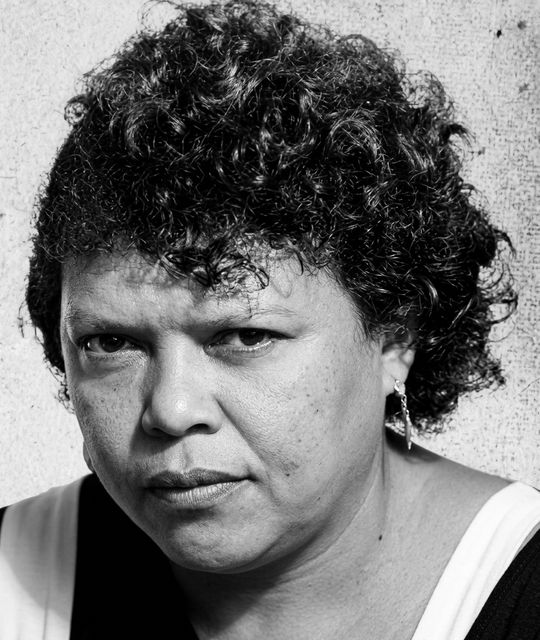
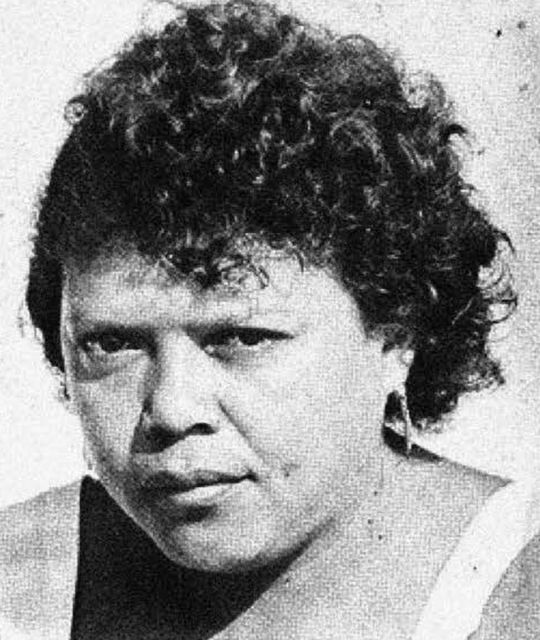
Francisca da Silva signed her paintings Chica da Silva. Daughter of Chico da Silva, she was the only woman in the original core of the Pirambu School and the one name her father repeated every time the press asked him who his pupils were. The name is shared with an eighteenth-century figure from Minas Gerais, and the two divide the search results; this Chica da Silva lived in Pirambu, in Fortaleza, and learned to paint on the sheets of card her father pinned to the wall at home. She left one account of her own, published in the catalogue of the exhibition “Os Pintores do Pirambu” in 1977, and it is the longest record in her own voice: Roberto Galvão quotes it in Chico da Silva e a Escola do Pirambu (1986) and Estrigas transcribes it in full in A Saga do Pintor Francisco Domingos da Silva. The rest comes from Galvão’s monograph, from the volume A Escola do Pirambu: um legado de Chico da Silva (ed. Flávia Muluc, 2024), from the sociologist Gerciane Oliveira and from the Fortaleza papers.
Ten years old, on a Friday
“When I started painting with my father, I was ten years old,” the account begins. Galvão dates that start to 1965, filling in the colours, and the 2024 volume places her in the studio after Garcia and Babá and before Ivan and Claudionor, which matches what she says herself: when she arrived, the others were already there. He painted on sheets of card pinned to the wall, and one day he told her she should learn his trade. Her answer was a practical question: “Papai, seguir a sua arte não tem broca não?”, father, is there no hunger in following your art? Broca, in Ceará, is hunger. On a Friday he called her over and set her to work on a sheet of card; it took about five days, but the picture came out. Chico sold it for a hundred cruzeiros and gave her thirty. She remembered the sum because of what she did with it: she bought a dress.
The same account tells the rest in a few sentences. She kept painting, helping him, “until one day he told me to sign my own name”; that is when she began putting “Chica da Silva” on the pictures. Her brother Roberto came later, also through the filling, with their father drawing the outline for him to fill in. By then she had painted panels too. In 1972, in an interview with the journalist Luiz Ernesto Kawall, her father summed up the family and the school in one sentence: “I had 12 children, 5 are alive and only Chica da Silva paints like me.” In the same conversation he said he acknowledged as pupils only her and Manuel, a boy he raised and treated as a nephew. In 1979, to O Povo, he denied there was any school at all: “I never taught anybody anything, except my children Roberto and Chica, who by their own effort went about trying to imitate the old man.” She knew what that cost: she wanted to find a way to help her father and the family, she said in her account, “because he himself is always putting my name into everything”.
Her hand in the picture
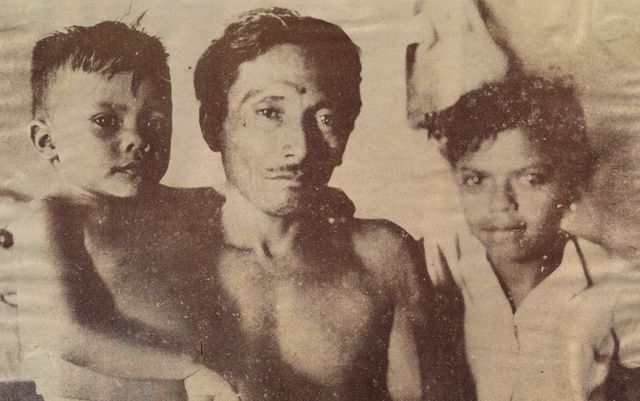
Galvão describes how the work was divided in the studio: Ivan and Claudionor drew, Garcia, Babá and Chica filled the fields of colour, and Chico kept for himself the finishing, the varnish, the signature and the selling. Gilberto Brito, a restorer who spent part of his youth in the house, gives the version closest to the floor. In the morning Chico would pin five or six drawings to the wall with cobbler’s tacks, and those who painted, besides him, were “basically Garcia and Chica, his daughter”. The same account carries the least heroic and most plausible detail of the lot: Francisca, who was just starting, was “a little careless” and was forever being called back to work by her father or her mother. She was a child.
The group’s repertoire also carries her hand. In the list where Galvão credits each painter with what they brought to that vocabulary, Chica appears with the rosettes. The next clause is the source of a confusion: the black grounds sit next to the nickname of another painter on his own roll, Soldadinho, and across the reprintings of the passage the punctuation separates the name-and-contribution pairs the same way. Lucas Dilacerda’s essay in the 2024 volume, which imagines the school with a staff of teachers, makes the black ground her lesson: “teacher Chica taught that the black ground was a dark ocean of possibilities”. The volume itself, pages earlier, explains the black ground with no author at all, through the market: it stayed in the repertoire because it sold. Garcia, who painted beside her and has told the school’s story in two interviews, attributes the ground to no one.
”My father’s little school is the two of us”
On 7 June 1976, with the painter in hospital, O Povo published another report on what it called the babel of Chico’s paintings, and in it the household stands against the neighbourhood. The painter Heloísa Juaçaba spoke of a little school with 28 professionals in Pirambu; the painter’s agent denied that it existed. Francisca asked to speak and answered, indignant: “My father’s little school is the two of us, me and Roberto. And nobody else.” Gerciane Oliveira reads the scene as market strategy: reduced to blood, permission to paint in Chico’s manner became a monopoly of his children, and canvases came to be classified by the hand that made them, a Chico produced by Chico, a Chico produced by Chica.
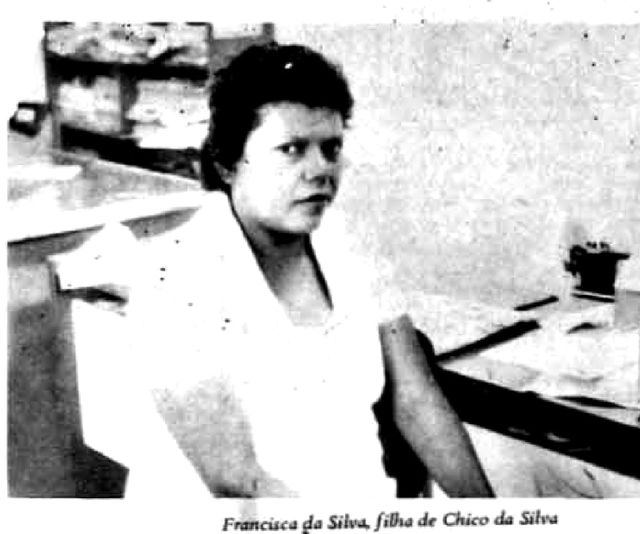
The same page carries a subheading in capitals, FRANCISCA VAI ASSINAR, Francisca will sign. “From now on, I am going to paint under my own name,” she said; Juaçaba thought she had a great deal of talent. This was June 1976, almost a year before the group as a whole began to sign. The report also records who was living in the Casa de Chico da Silva while the painter was in hospital: his son Carlos Roberto, Francisca Domingos da Silva and her two young sons.
High-resolution viewer. Use the arrow keys to pan, plus and minus to zoom.
Os Pintores do Pirambu
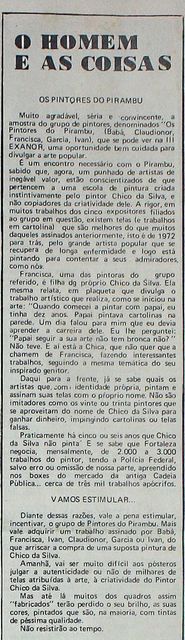
In March 1977 the study group formed by Hélio Rôla, Gilberto Brito and David Silberstein took the five to the third EXANOR as “Os Pintores do Pirambu”, with a publication that gives her name as Francisca Silva; the history of that group is in the article on the Pirambu school. It was from that show’s catalogue that the account quoted here came. On the 16th, the column “O Homem e as Coisas” in the Correio do Ceará advised readers to buy a work signed by Babá, Francisca, Ivan, Claudionor or Garcia rather than risk buying a supposed Chico da Silva.
High-resolution viewer. Use the arrow keys to pan, plus and minus to zoom.
The following month, at the 27th Salão de Abril, the five painted before the public at the Casa de Cultura Raimundo Cela the panel Homens Trabalhando, four metres by two. Chico left hospital to work with them and signed the piece at the end. Claudionor, in the memoir his family published in 2024, names who was there: himself, Babá, Garcia, Ivan “and Chica, Chico’s daughter”. Marcus Vale and João Vale filmed it all on Super-8, and the canvas entered the collection of the Art Museum of the Federal University of Ceará in 2023.
The canvases she signed
The 2024 volume reproduces untitled canvases signed by her, dated 1973, 1979 and 1984, all in Hélio Rôla’s collection; the 1973 one predates the year she announced her own name in the paper. One work of hers reached the state by another route. When Ceará acquired, in 2001, what remained of the collection Jean-Pierre Chabloz had formed from her father’s gouaches, the lot included, alongside the sixteen Chicos and Chabloz’s own work, a painting by Chica da Silva; the catalogue Chico da Silva vê Chabloz vê Chico da Silva (Secult, 2001) records it in a single line.
The market’s verdict on those signatures came quickly. In March 1978 the magazine Arte Hoje went to the studio in Pirambu, found the house under the guard of the painter’s agent and nobody willing to talk. “Even Chica refuses to speak,” wrote the reporter André Papi. The piece explains that the paintings were finished by other hands and signed by Chico to raise their value, says that nobody ever made a secret of this, and sums up what buyers wanted in a question: “Who would trade Chico’s signature for a Claudionor, a Babá, Garcia, Ivan or Chica?”
What came after her
Chica died before 2024: the volume of that year names Garcia as the only one of the core still alive, and dedicates itself to Chico, Babá, Claudionor, Chica, Ivan and Garcia. None of the sources gathered here gives the date of her death. Painting continued in her family. Claudionor writes that she married and that her husband “had a go at being a painter” too. The two names tied to her on the roll of painters Galvão compiled, Geraldo and Neto, are the ones O Povo listed in 1976 as the two young sons living with her, Gerardo Filho and Francisco Domingos Filho Neto. The first is Gerardo da Silva, born in 1972, who took first place at the Bienal Naïf in 2004 and exhibited at the Louvre in 2007 (Oliveira, 2015). Of the second, Galvão records that he was Chico da Silva’s grandson; in the 1977 account she calls him her brother, ten years old and already wanting to paint from watching the work at home.
The João Cunha Collection holds no canvas signed by her. It holds one by her son Gerardo da Silva, whom Garcia and Maria Augusta also name as Chico’s grandson and who, according to Garcia, was the person who introduced the school’s painters to the Instituto Cultural Oboé, the cycle that has an article of its own, the Instituto Oboé. His canvas is in the index of paintings, among the school’s works.

Of the five in the core, she is the one who left the faintest trail: half a page of testimony, a few lines of newspaper speech, a portrait from 1976, the canvases that stayed with one collector and a painting in the holdings of the state of Ceará. That is where the search for the rest begins.