Ivan de Assis, the Cinema in the Bestiary
Ivan José de Assis, of the original core of the Pirambu School: he knew Chico da Silva before the fame and put winged animals and roosters in the repertoire.
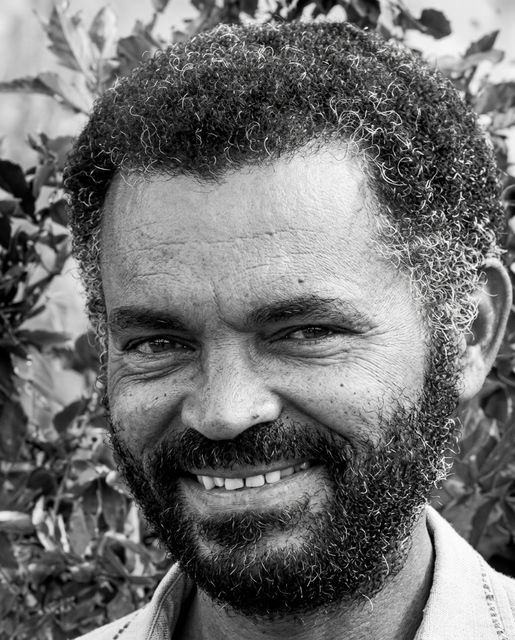
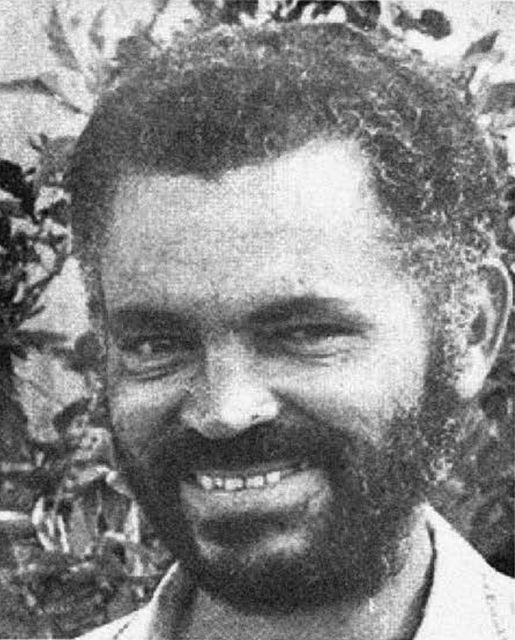
Ivan José de Assis is listed among the painters of the Pirambu School as Ivan, and signs his canvases Ivan de Assis. He was one of the five of the original core, and the one who arrived already knowing how to draw. He was also the only one who had known Chico da Silva before there was anything to know him for: a neighbour from the years when the painter was still mending old umbrellas and making tin stoves to sell. Most of what is recorded about him comes from two places, and both are his own voice: the interviews Roberto Galvão took for Chico da Silva e a Escola do Pirambu (1986), and a statement he gave to the 1977 campaign to rescue the painter, printed by the Ceará critic Estrigas in his 1988 biography. Ivan died in 2003. The João Cunha Collection holds one canvas of his, painted three years before that.
The neighbour who knew him first
Almost nothing survives of Chico da Silva before Jean-Pierre Chabloz found him. Galvão says so plainly in 2024, and names his sources for the Fortaleza years: vague spoken accounts given to him by Claudionor and Ivan de Assis, both by then dead, both neighbours in Pirambu who had lived alongside the painter before the Swiss arrived. That places Ivan on the earliest ground of this story, and his own statement fills in what the neighbourhood saw. He met Chico, he says, long before the man surfaced as a primitive painter, when he made his living mending old umbrellas and making tin stoves to sell. Chico used to show him the work, moved by it every time. “Daí surgiu o meu despertar para a pintura”, he wrote: that is where the painting in him woke up.
The same statement gives the order of the apprenticeship in one line: he began to draw, and to fill the figures with paint, so that Chico could do the pigmentation. “Foi assim que aprendi a pintar e pinto até hoje”, he ends, writing in 1977, thirteen years after he started. It also preserves something no one else bothered to write down. Chico, at the parties Ivan went to, would recite in his own plain way, and one quatrain stayed in the disciple’s memory: Me chamo Chico da Silva / De fala branda e macia / Passo na água, não molho, / Piso na folha e não chia.
From the drawing to the pigment
Galvão dates the first helpers to the end of 1963 or the beginning of 1964, and names four: Babá, Claudionor, Garcia and Ivan. The invitation reached Ivan at a particular moment. He was drawing figures out of Greek mythology, under the influence of the American films then in the cinemas of Fortaleza, when Chico asked him to come and work. He started on the drawings alone. Then he moved to the flat colour that served as a base for the stippling the master kept for himself, and some time later, in 1964, he was doing that too, the decorative work the group called pigmentação.
That path matters because of where it ends. When Galvão sets out how the core divided the labour, Ivan is the only name on both sides of the line: Claudionor, Ivan and rarely Chico himself did the drawings; Babá, Ivan and Garcia took charge of the colour and the pigmentation. Chico kept the finish, the coat of varnish sprayed with a flit pump, the signature and the sale. How the studio worked, and what it became, is the subject of the Pirambu school.
Ivan is also the witness Galvão uses to leave the question of precedence open. Asked who drew for Chico first, he answered that before him Chico turned up with pads of paper already drawn on, and that he did not know whose they were: “Eu creio que esses desenhos eram de Claudionor porque depois que eu conheci Claudionor os seus traços eram bem parecidos com o dos desenhos que eu via na casa de Chico.” The hand he recognized, years later, was Claudionor’s.
The cinema in the bestiary
The strongest claim the sources make for Ivan is about what he put into the work. Claudionor, Galvão writes, developed a world of fixed types with defined outlines, characteristics and names of their own; Ivan de Assis added to Chico’s imagery a whole set of new elements, winged animals caught somewhere between his own unconscious and the cinema screens showing Hollywood films on Greek and Roman mythology. The sociologist Gerciane Oliveira, of the Federal University of Ceará, follows the same thread further: those figurative elements, she writes, were taken up by Chico da Silva himself in the individual work he produced in 1970. The apprentice’s Hollywood ended up inside the master’s own painting.
The cockfight has the same origin, and a smaller and better story. Customers began asking for roosters like the ones Aldemir Martins was painting. Ivan satisfied them by taking a rooster off the cover of a school drawing notebook, and out of it composed the fight, which was absorbed at once into the repertoire. Claudionor tells it from his side in the memoir his family published in 2024: Chico proposed the cockfight drawing to him, and it was also drawn by Ivan de Assis, his workmate; everyone who later painted cockfights, he adds, worked on his drawing or on Ivan’s. Garcia, interviewed in 2024 and again in 2026, credits the fight to Claudionor. The motif came out of the group, and the group has never agreed on whose hand moved first.

The curator Lucas Dilacerda, writing the school in 2024 as though it had a teaching staff, gives Ivan the subject that fits: he is the master of dramatization, the one who taught how to build unlikely scenes that look now like fights, now like parties of dancing animals.
Maurício Xerez’s workshop
In 1967 the dealer Maurício Xerez set up the second workshop parallel to Chico’s studio, and its whole output came out of Ivan’s hands, from the drawing to the pigmentation. The other two divided the labour: in Henrique Bluhm’s the painting was Babá’s, with the dealer’s wife, Di Caura, also working on the pictures, and Valentin Mickaliuck bought sheets that carried only the drawing and hired a sign painter to fill them. The arrangement had the master’s knowledge: Chico posed beside the finished pictures for photographs that served as authentication documents, and turned up at the openings. Xerez’s workshop is also where the material changes. Canvas came in because it was quicker to paint than card and worth more on sale, and the whole trade followed. What that market did to the painting, and to the painter, is told in the painting factory.
Two sentences from those years survive because Ivan repeated them. One is the dealer’s. Xerez, he told Galvão, was fond of saying “Depois de mim, o Dilúvio”, after me the Flood, which is what the trade around Chico was doing and knew it was doing; Galvão would title his 1989 book Chico da Silva: do delírio ao dilúvio. The other sentence is Ivan’s own, and it is not modest: the people of Aldeota, the wealthy district that bought most of the paintings, could not tell his work from Chico’s. Galvão quotes it and disagrees with the reasoning, noting that those buyers had never seen a painting Chico made alone, so they had nothing to compare it with.
His own name on the canvas
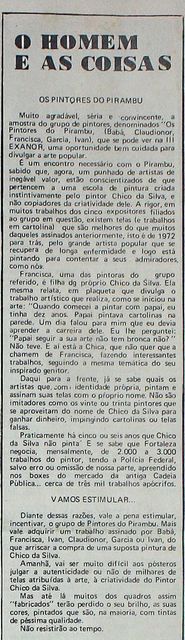
In March 1977 the study group formed by the artist Hélio Rôla, the restorer Gilberto Brito and the political scientist David Silberstein put the five of them into the third EXANOR as “Os Pintores do Pirambu”. The Correio do Ceará welcomed the show as a necessary encounter with the neighbourhood, and put the point in the terms the group wanted: a handful of artists of undeniable worth, now aware that they belong to a school of painting created instinctively by Chico da Silva, and not copiers of his creativity. From that show onwards they signed their own names.
High-resolution viewer. Use the arrow keys to pan, plus and minus to zoom.
The following month, at the 27th Salão de Abril, the five painted the panel Homens Trabalhando in public, and Chico left hospital to work beside them and sign it at the end. Ivan closed his statement to the campaign on the same practical note: showing his own work, he wrote, was his share of the effort to put Chico back on his feet.
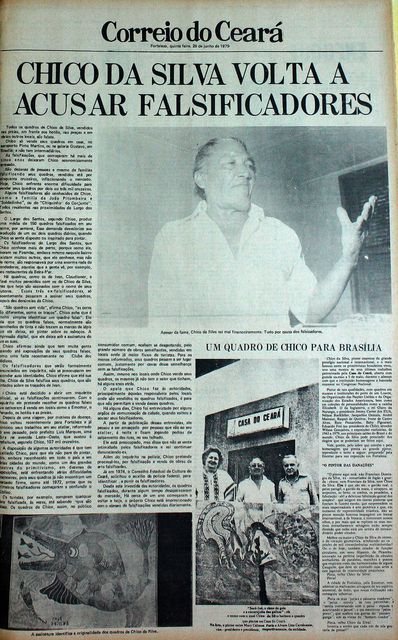
Two years later the master was calling him something else. In June 1979, in the report where he listed the marks that made a painting his, Chico told the Correio do Ceará that there were pictures by Ivan, Claudionor and Vavá very like his own, but signed now with the names of their authors, and called the three of them former forgers who had only recently started signing. In the same conversation he said his daughter Chica was faking his paintings, and that she painted them over Ivan’s outlines. The 2024 volume on the school reproduces two untitled canvases Ivan signed in that same 1979, from Hélio Rôla’s collection.
High-resolution viewer. Use the arrow keys to pan, plus and minus to zoom.
Women and Fruit, 2000
The canvas in this collection was painted in 2000 and has no dragon, no rooster and no winged animal in it. Three figures sit close together behind a pale blue basin of cashew fruit; round green fruits are stacked at the right under a fan of leaves; the ground behind them is brushed in vertical stripes of pink, slate and wine red, cut by two broad crimson arches. The faces are long and heavy-lidded, the limbs modelled in pink and white. It is the school’s palette used on a subject the school never painted.
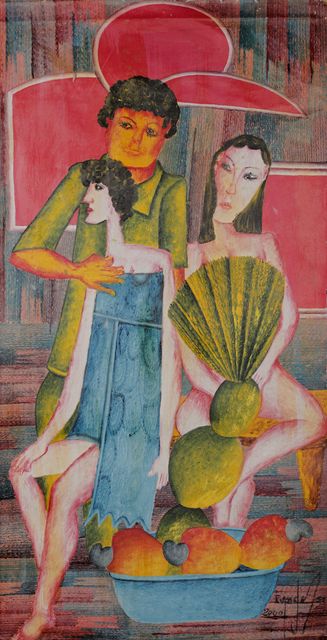
This is what Galvão means when he says, in an interview recorded for the 2024 exhibition, that anyone who looks at a work by Ivan de Assis and takes it for a Chico da Silva is mad. The remark is usually read as connoisseurship, a warning about the market. Read beside this canvas it says something simpler: a painter who spent the 1960s drawing other people’s monsters had a subject of his own, and painted it whenever he signed for himself.
The picture left the studio as a present to the painter’s sister and came from her, in 2026, into the João Cunha Collection, which is the whole of its history. Galvão, who interviewed Ivan for the 1986 monograph, has said he no longer holds the recording. What is left of that voice is what other people wrote down, and one canvas, in the index of paintings.