Garcia, the Last Disciple
Garcia, last living disciple of Chico da Silva's Escola do Pirambu, retraces the school in two interviews recorded in Fortaleza, Ceará.
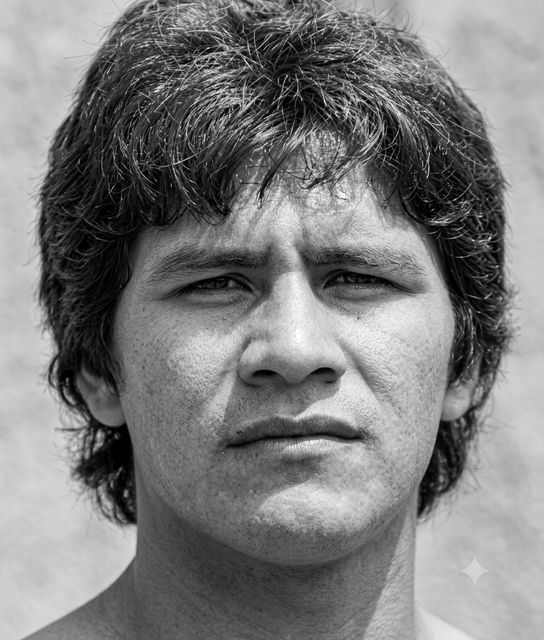
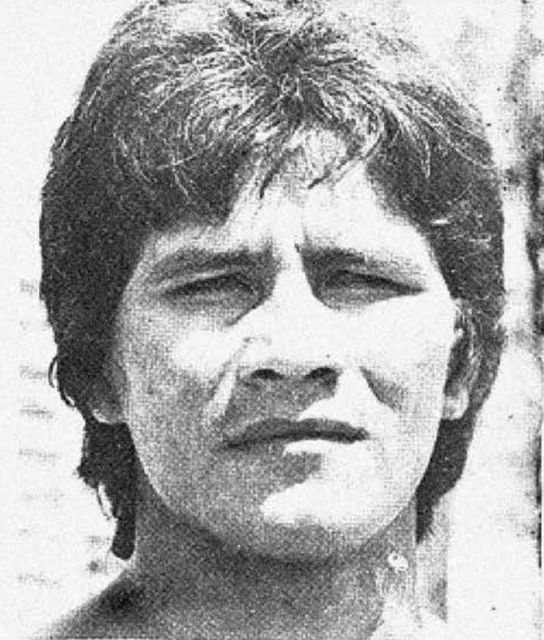
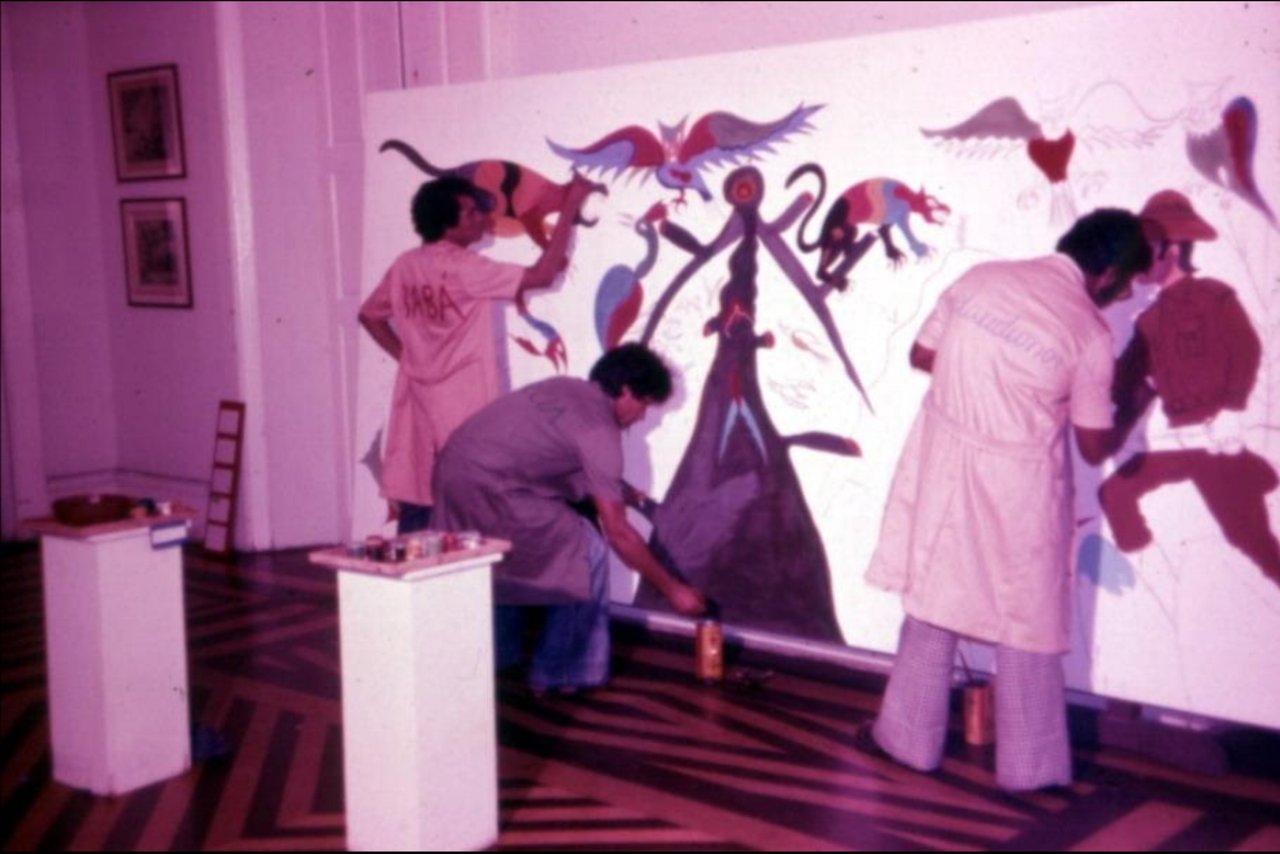
José dos Santos Gomes signs his paintings Garcia. Of the original core of the Escola do Pirambu, the circle that painted around Chico da Silva in Fortaleza, he is the last painter alive and still at work: when the collective panel Homens Trabalhando (1977) went to the Federal University of Ceará in 2023, the Fortaleza daily O Povo called him the group’s only living artist. He told the story twice on camera: the first episode of the documentary series Memória e Imaginário (2024) and an interview with the Fortaleza channel TVDD in February 2026. Almost everything here comes from his voice.
The name a clerk cut
The family came from Serra Grande, in the interior of Ceará. When his father moved to Fortaleza and went to register the children, Garcia told TVDD, the clerk ruled that four names were too many: José Garcia de Santos Gomes left the office as José dos Santos Gomes. The lost name was the one the family used; it survived at home, at church and, in the end, on the paintings. At the butcher counters where he later worked he was Santos; in painting, always Garcia.
Backyard against backyard
Garcia lived one street over from Chico, backyard against backyard. Coming home from school around five, he stopped to watch the drawings until the day Chico asked whether he wanted to learn. He places his start between eleven and fourteen, depending on the interview, and anchors it around 1965. The apprenticeship went by stages: first filling the fields inside the drawn line, Chico pointing out which part went blue and which red. What held him, he says in the documentary, was colour; unlike the colleagues who built styles of their own, he chose to stay inside Chico’s manner, where he remains. The workshop and its disputes have their own article, the Pirambu school. One memory is his alone: the boys went along when Chico delivered and collected, because money not taken on the spot was gone by morning.
The years away
Painting for Chico did not pay enough to marry on. In 1973 Garcia left for São Paulo, learned the butcher’s trade in a supermarket, and in 1975 came back to Fortaleza to the same work. He told TVDD how a homage to Chico, then still alive, put him on the midday news: a workmate at the Pão de Açúcar counter said a painter on television looked just like him, and Garcia let it pass. The return came around 2000, at fifty. He left canvases at the Mercado Central; a Portuguese collector found his phone number on the back of one and bought for three years running. Gerardo da Silva, a grandson of Chico, brought him to the gallery whose story is told in the Instituto Oboé. In the pandemic he sold nearly all his forty-odd stored canvases through Instagram. Since the Pinacoteca de São Paulo showed the school, he told TVDD, a finished canvas of his sells at once.
What his memory keeps
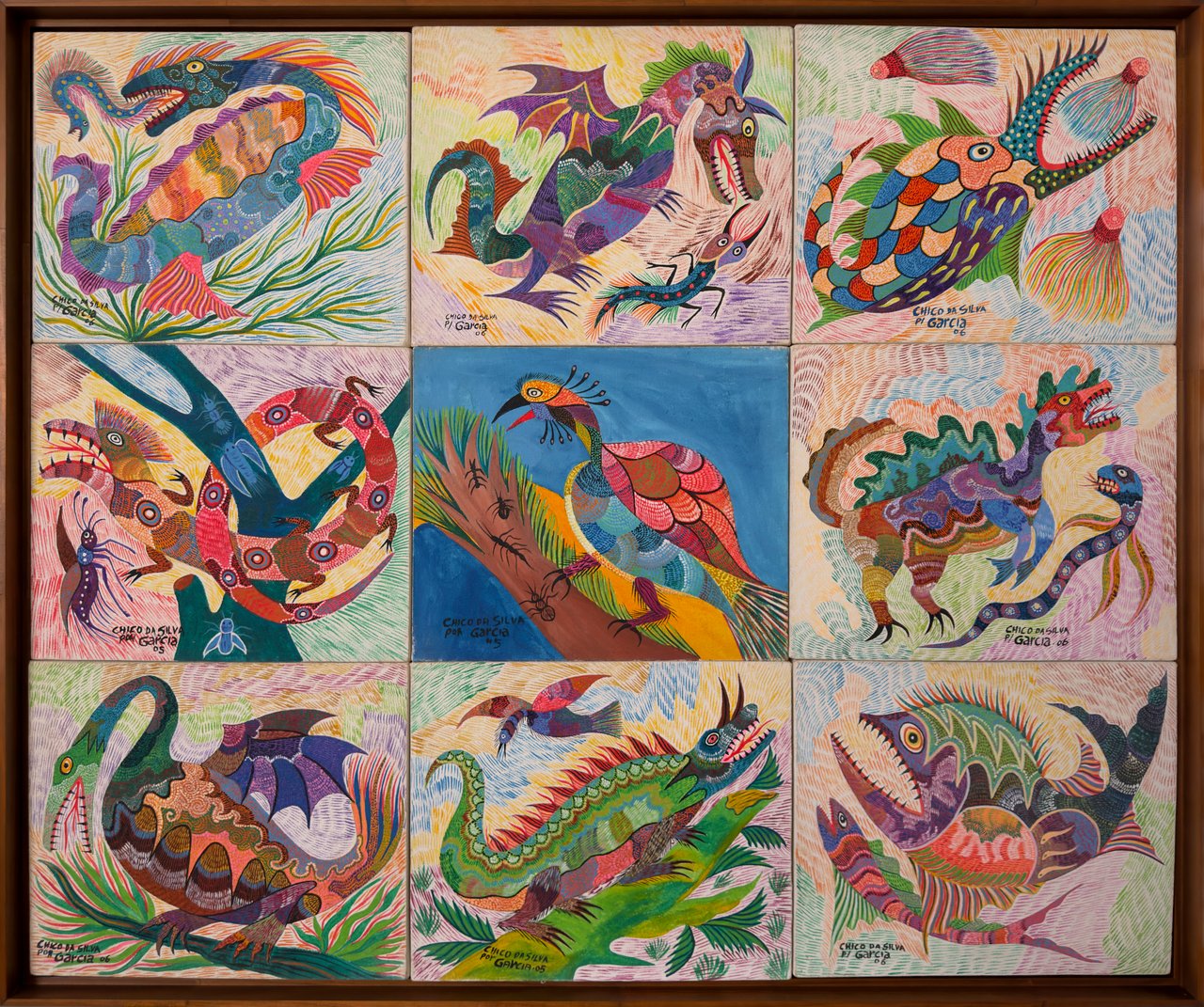
Garcia is a primary source, and period documents confirm more than one detail of his memory. On material: the school painted gouache on card, later acrylic on canvas, never oil; the oil look was varnish applied with a little pump, and a school painting in oil is, for him, false. On the signature: the D and the S written backwards, and a 1972 report by the critic Luiz Ernesto Kawall already described fake canvases sold at Fortaleza hotels with the “reversed D”. On the fingerprint Chico began pressing into the paint when told of forgeries, soon copied by forgers too: the critic Lélia Coelho Frota noted, in 1977, the “supposed fingerprint” on paintings that circulated without his hand. And on the bestiary: he describes a great fish with a rod growing from its head that lures smaller fish into its mouth, named by Chico “o caniço original”. The motif survives in the João Cunha Collection: Estranho Caniço Original, a 2005 canvas by his fellow disciple Babá.
On authorship he does not hesitate: everything painted in Chico’s house, under his eye and with his signature, he counts as Chico’s; the press campaigns of the period he reads as an attempt to bring the painter down. Chico died in Fortaleza on 6 December 1985. The reason Garcia gives for still painting, at the documentary’s close, is that he does not want this story to die; the paintings in this catalogue keep it in view.
What he paints now
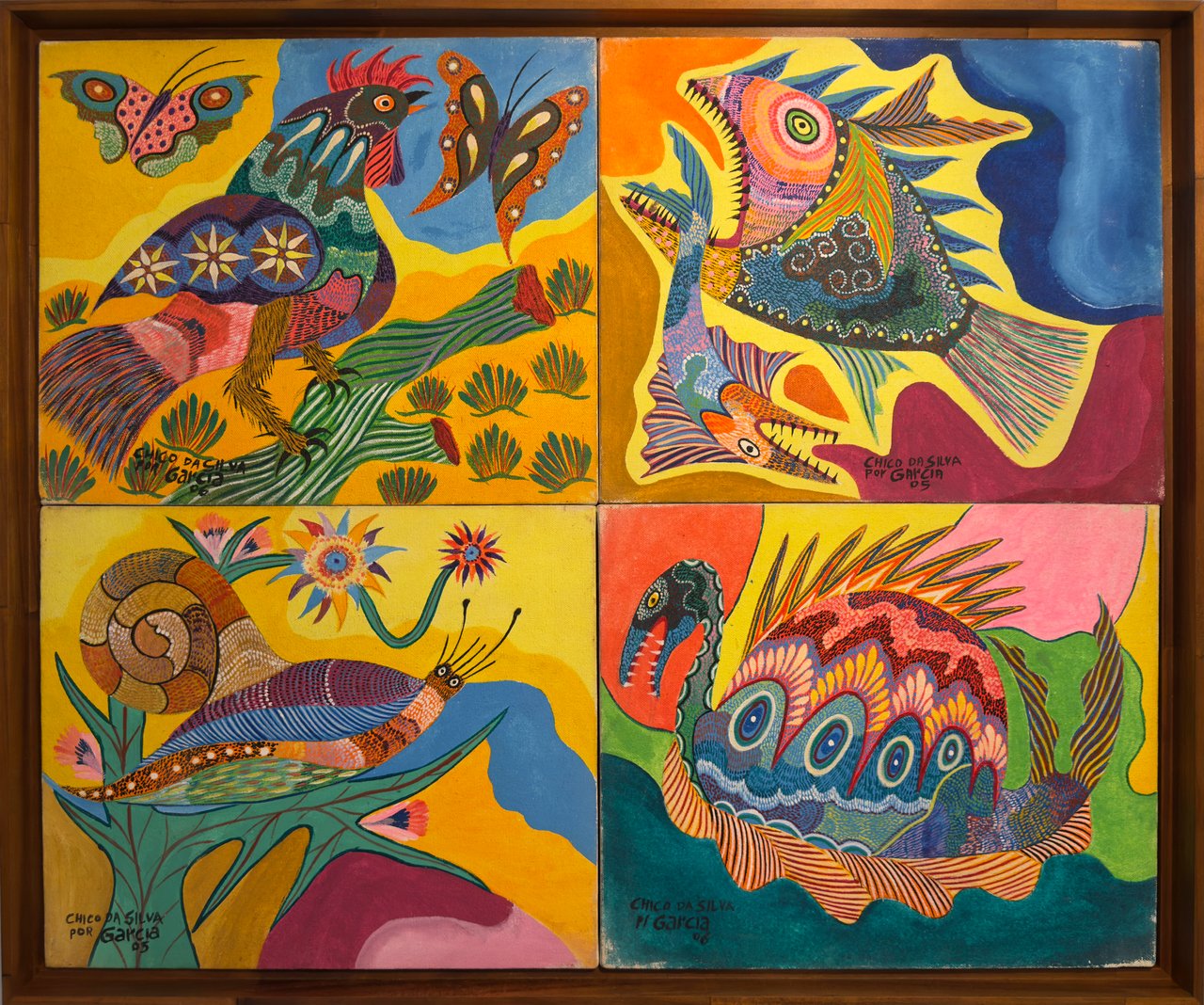
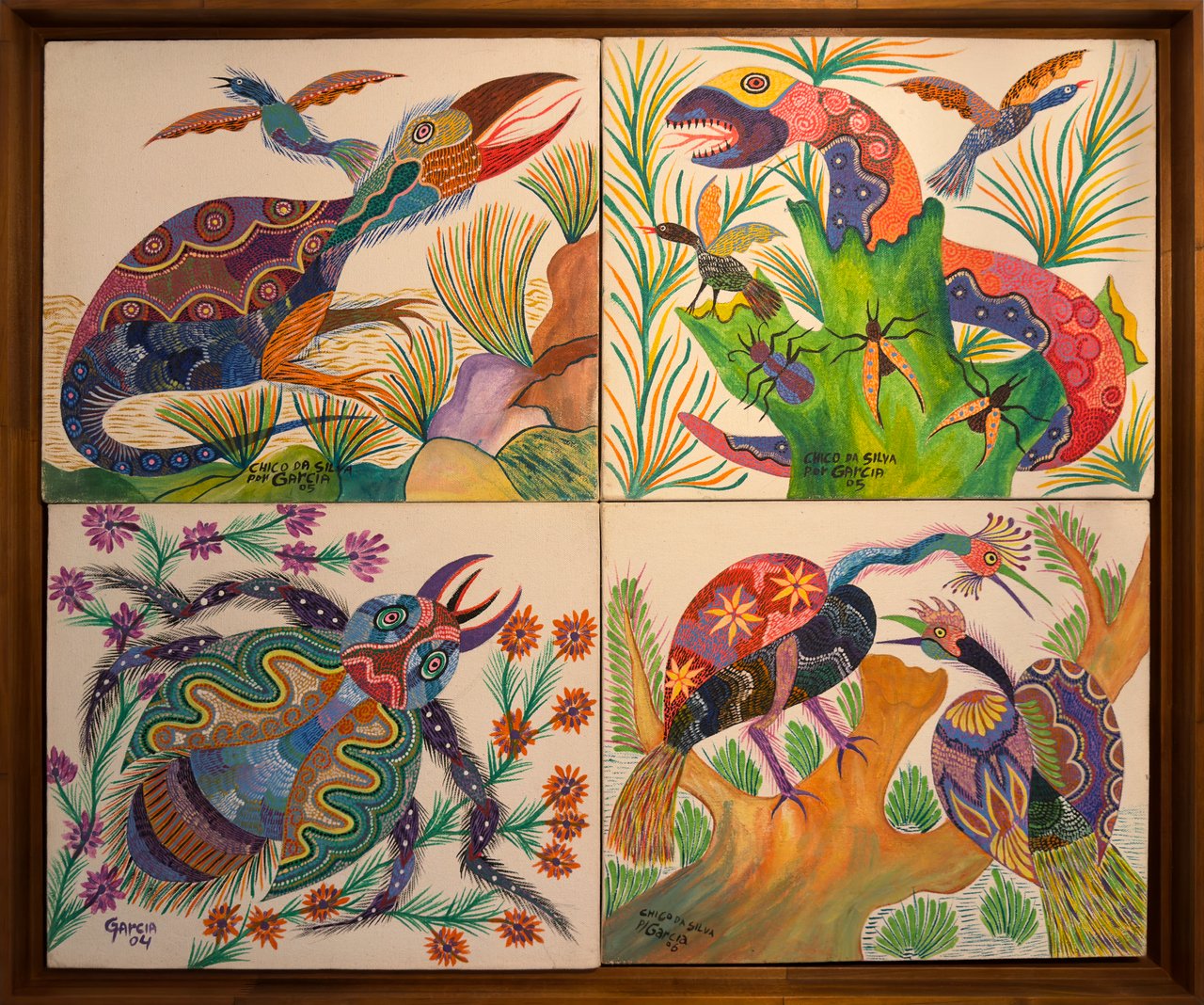
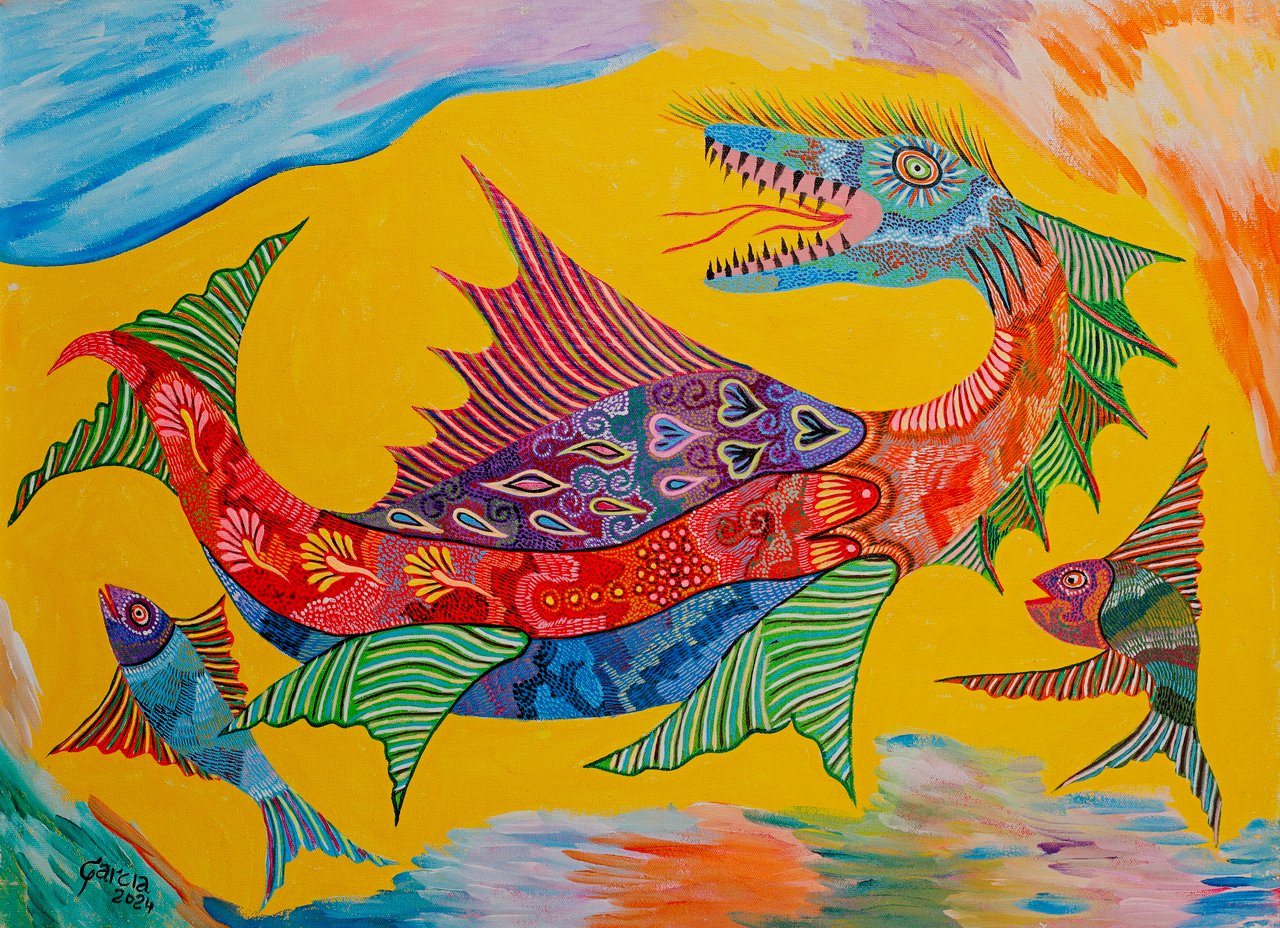
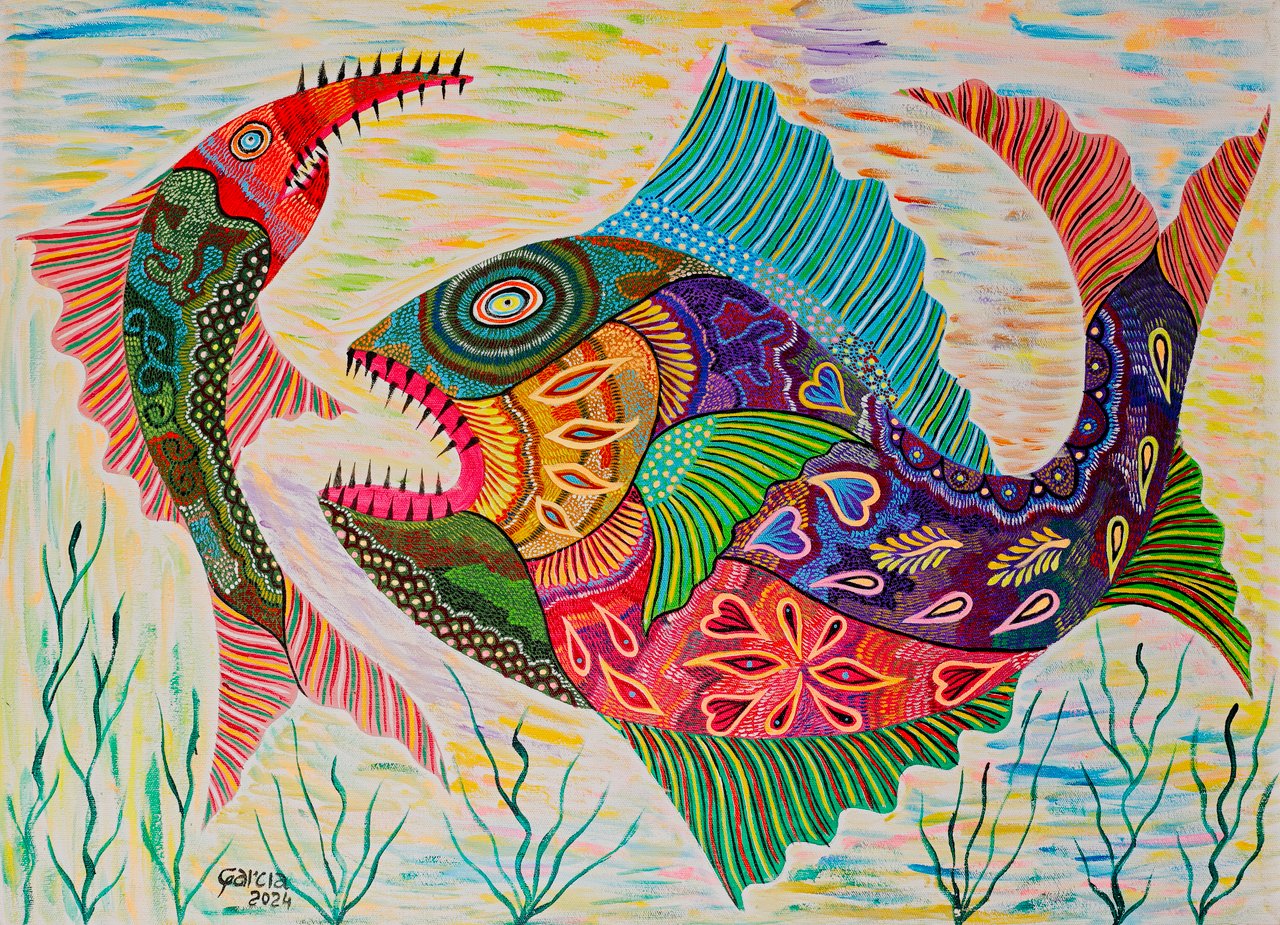
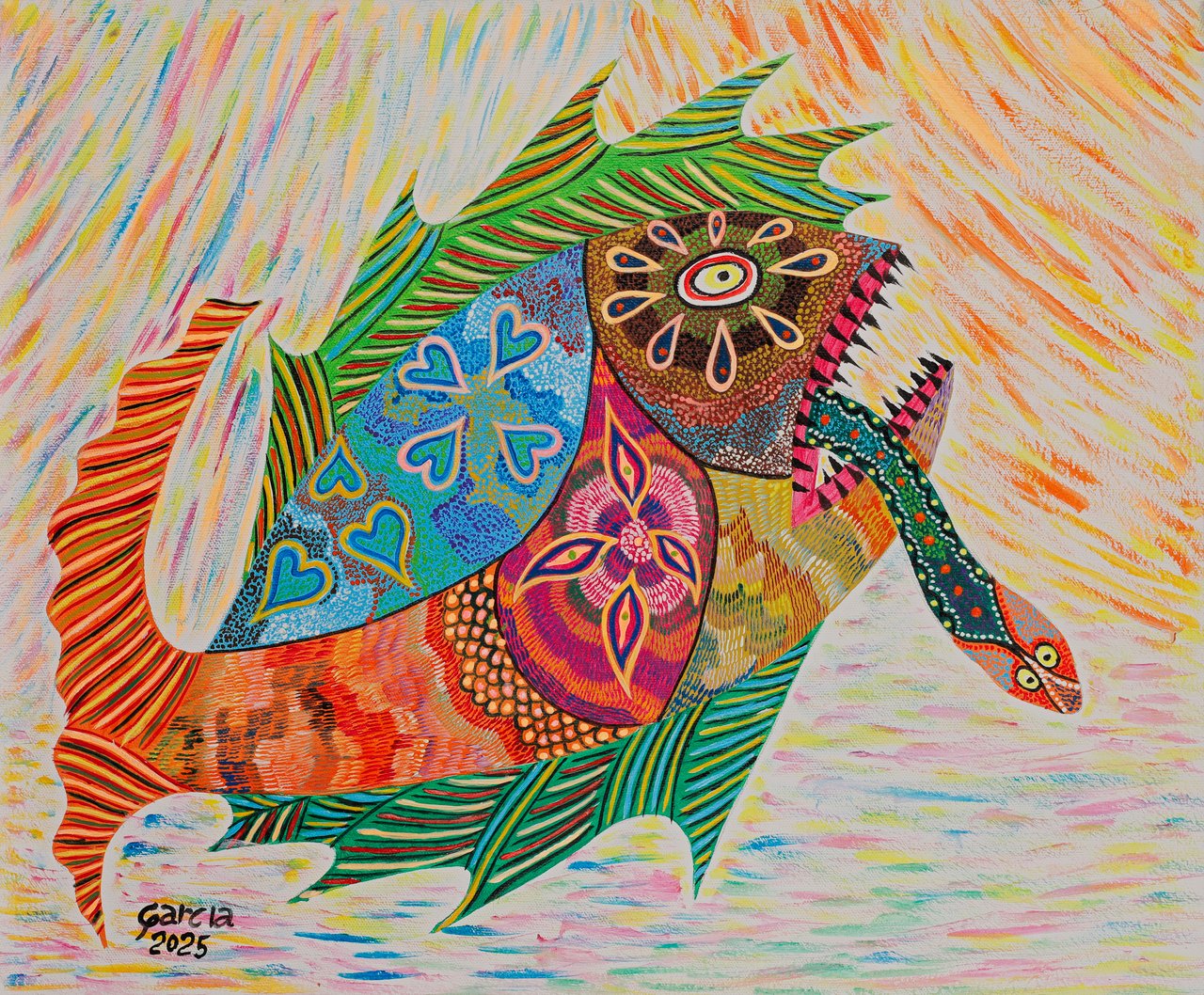
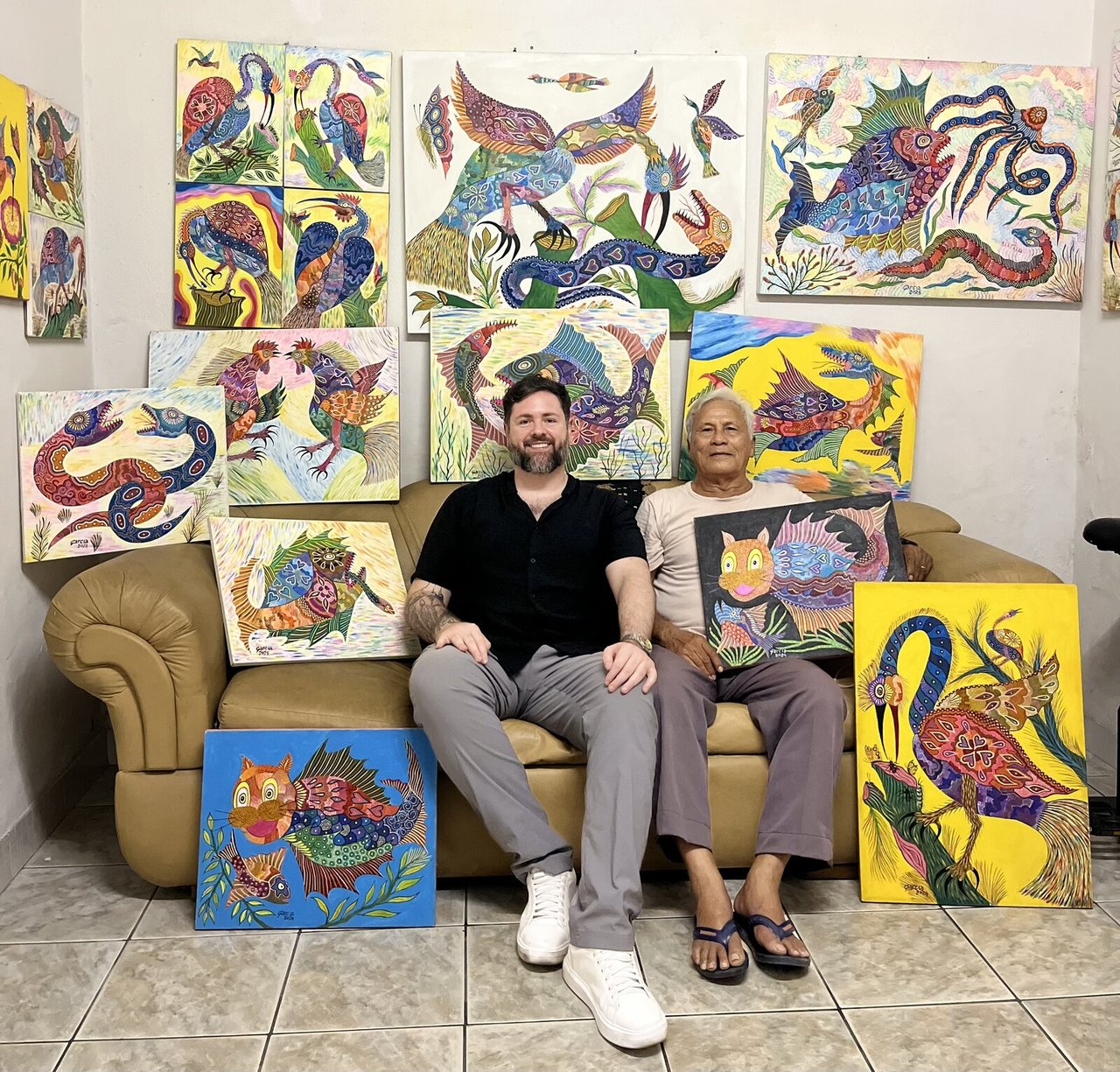
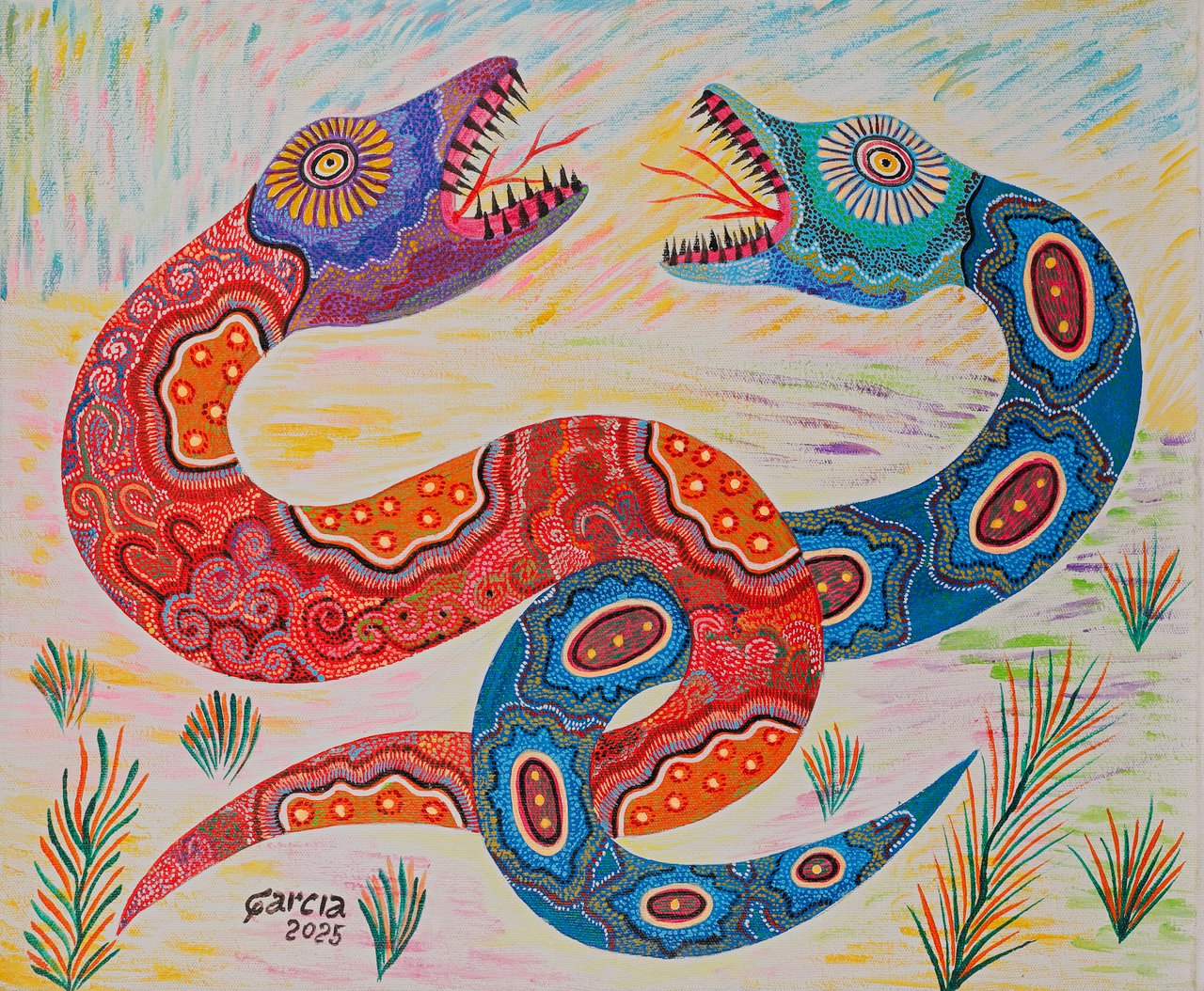
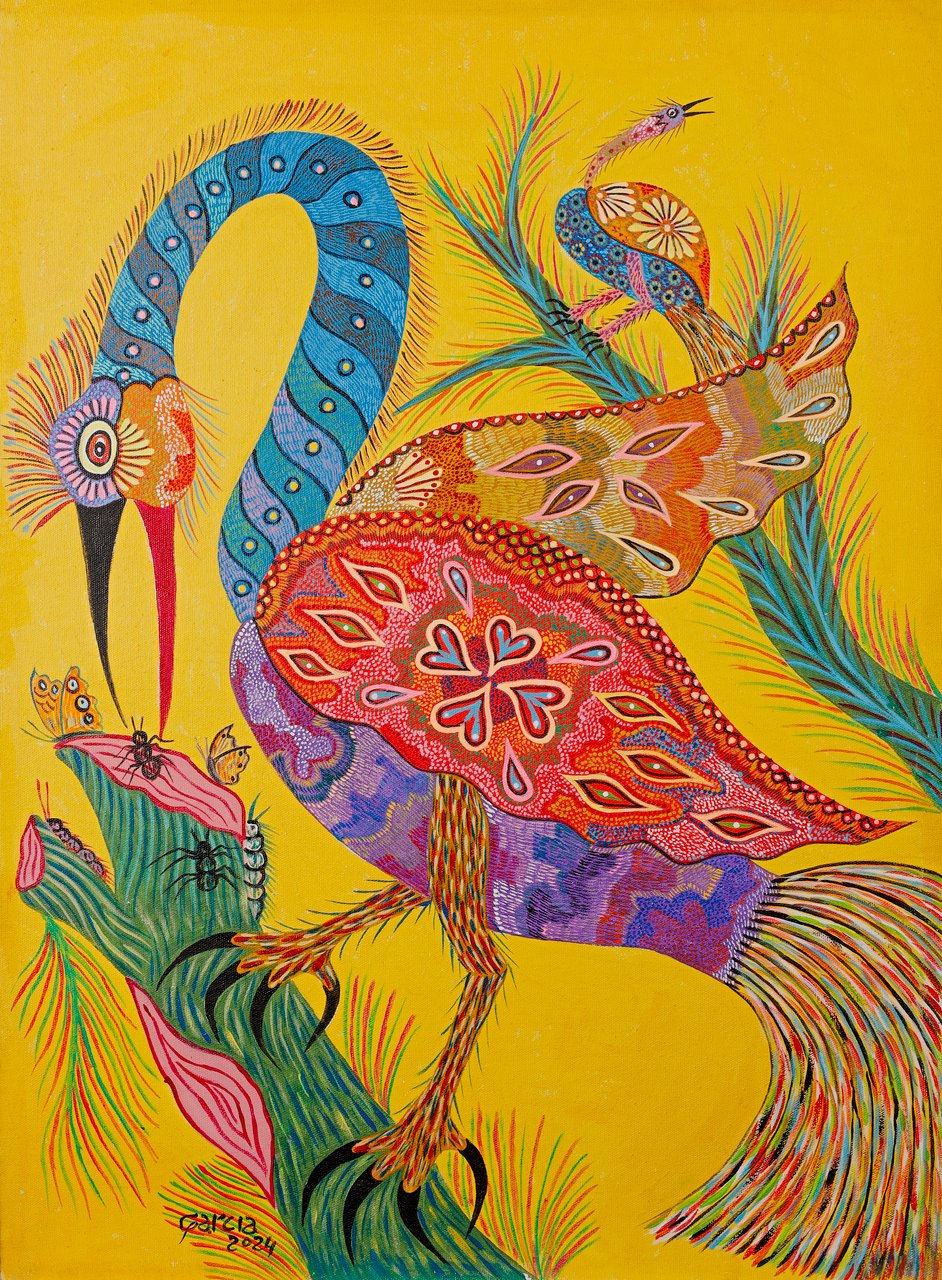
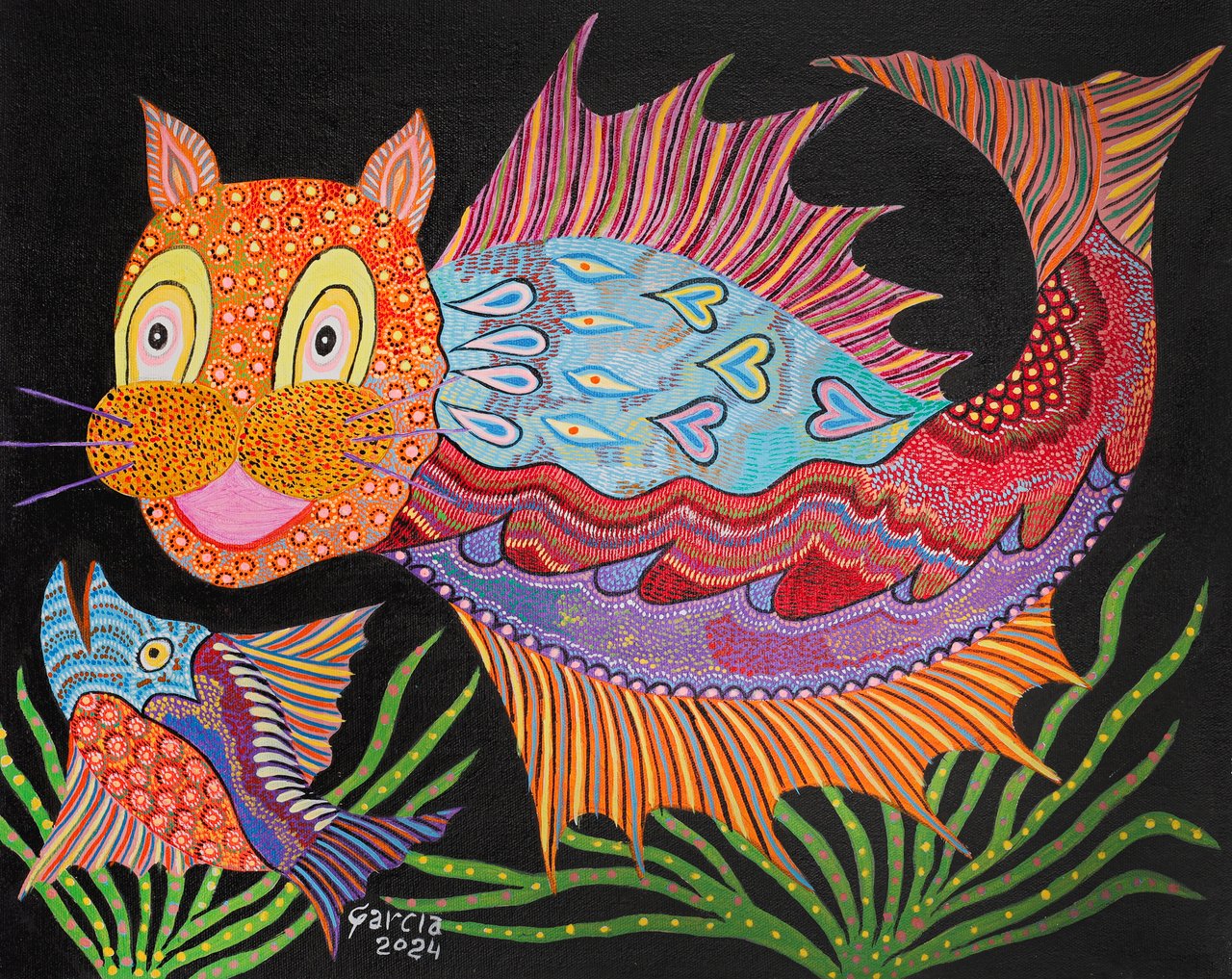
The canvases Garcia painted in 2024 and 2025 are in this collection, the only ones in it painted in the 2020s. The bestiary is the one he learned in Chico’s house: roosters that meet with their claws up, fish that open jaws lined with teeth, serpents knotted against each other.
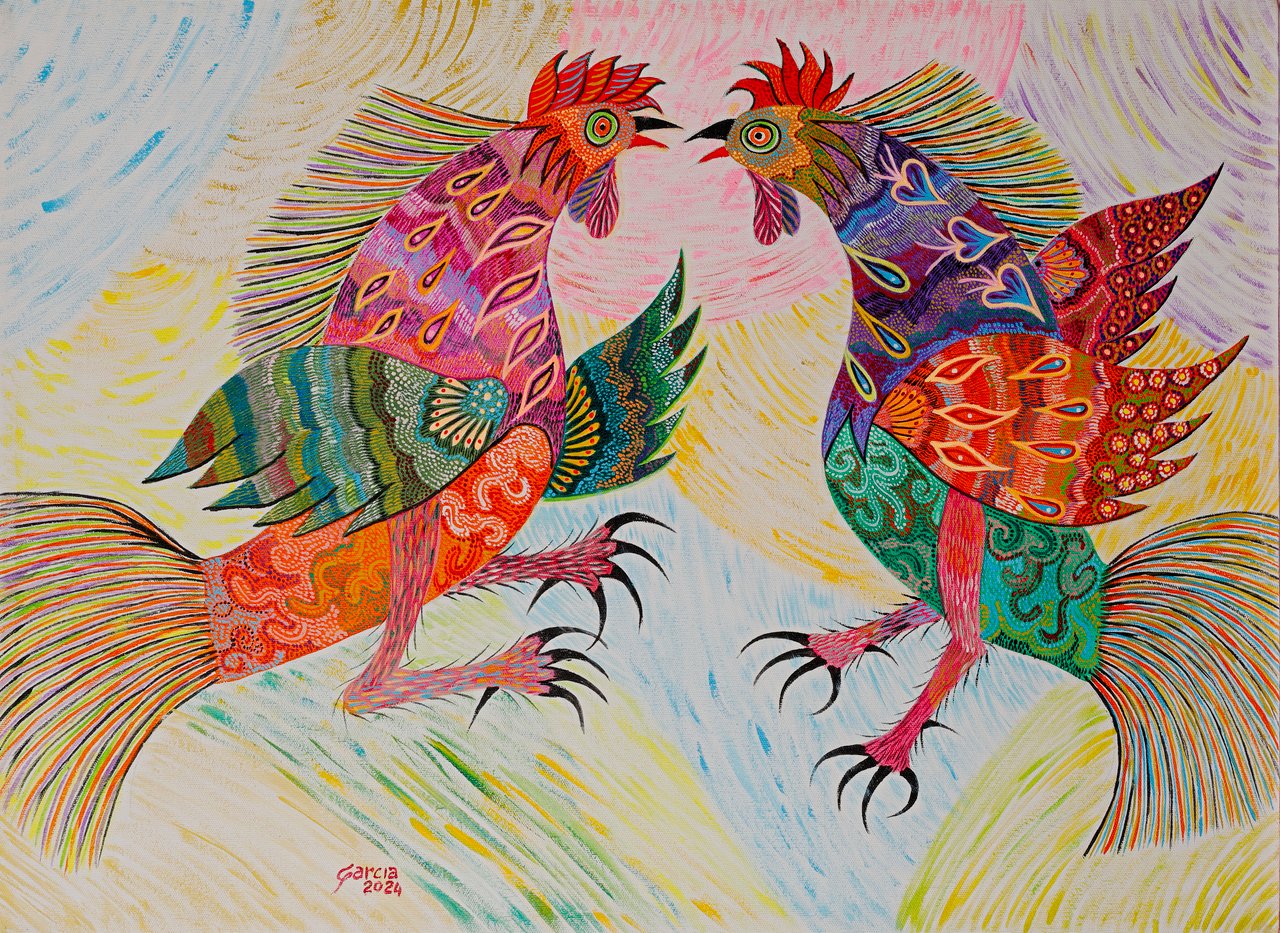
The colour that held him as a boy is still the subject. A bird stands against flat yellow, its neck curved down to the ground, ants and a caterpillar working the leaves at its feet.
And the fish keep changing shape. One canvas sets a cat’s head, whiskers and all, on a fish’s body, against black.
The others close the catalogue of paintings.
Tapioca and coffee
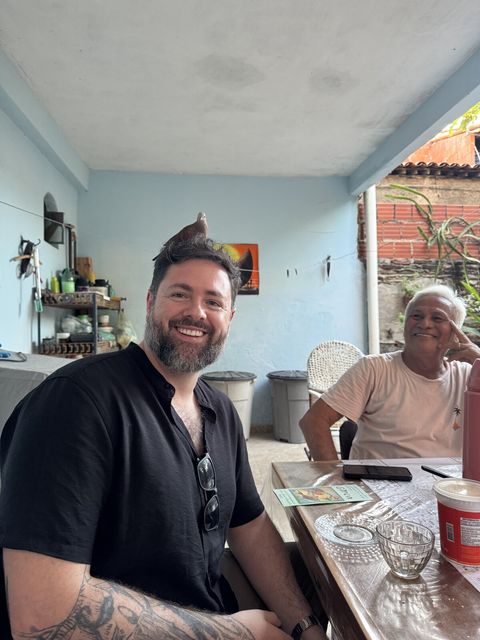
In October 2025, the collector João Cunha visited Garcia in Fortaleza; he was received with tapioca and coffee and with warmth from Garcia, his wife, his children and his granddaughters. The conversation left him knowing more about the history of the Pirambu school and of Chico, and he came away with several canvases signed by Garcia for the João Cunha Collection. One of them was later donated to the CPDOC do Pirambu.
Around the sofa, next to the canvases that already had an owner, stood the ones Garcia keeps for himself: paintings that, he says, are not for sale.
At another point in the visit, a pet bird belonging to the family landed on João’s head, to everyone’s amusement.