Chronology of Chico da Silva
Dates in the life of Chico da Silva and the Pirambu School, from his uncertain birth on the Alto Tejo, around 1910, to his rediscovery, each with its source.
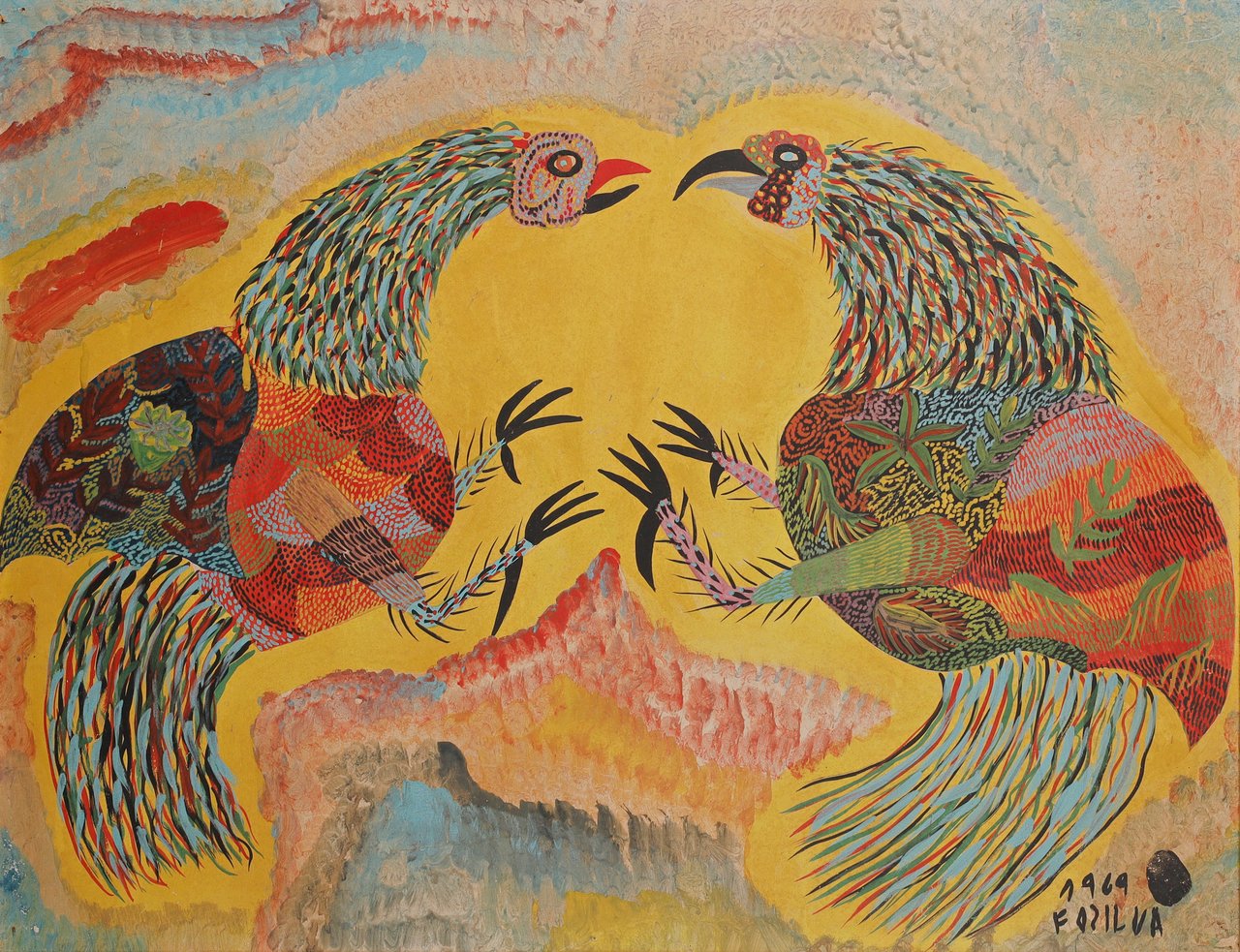
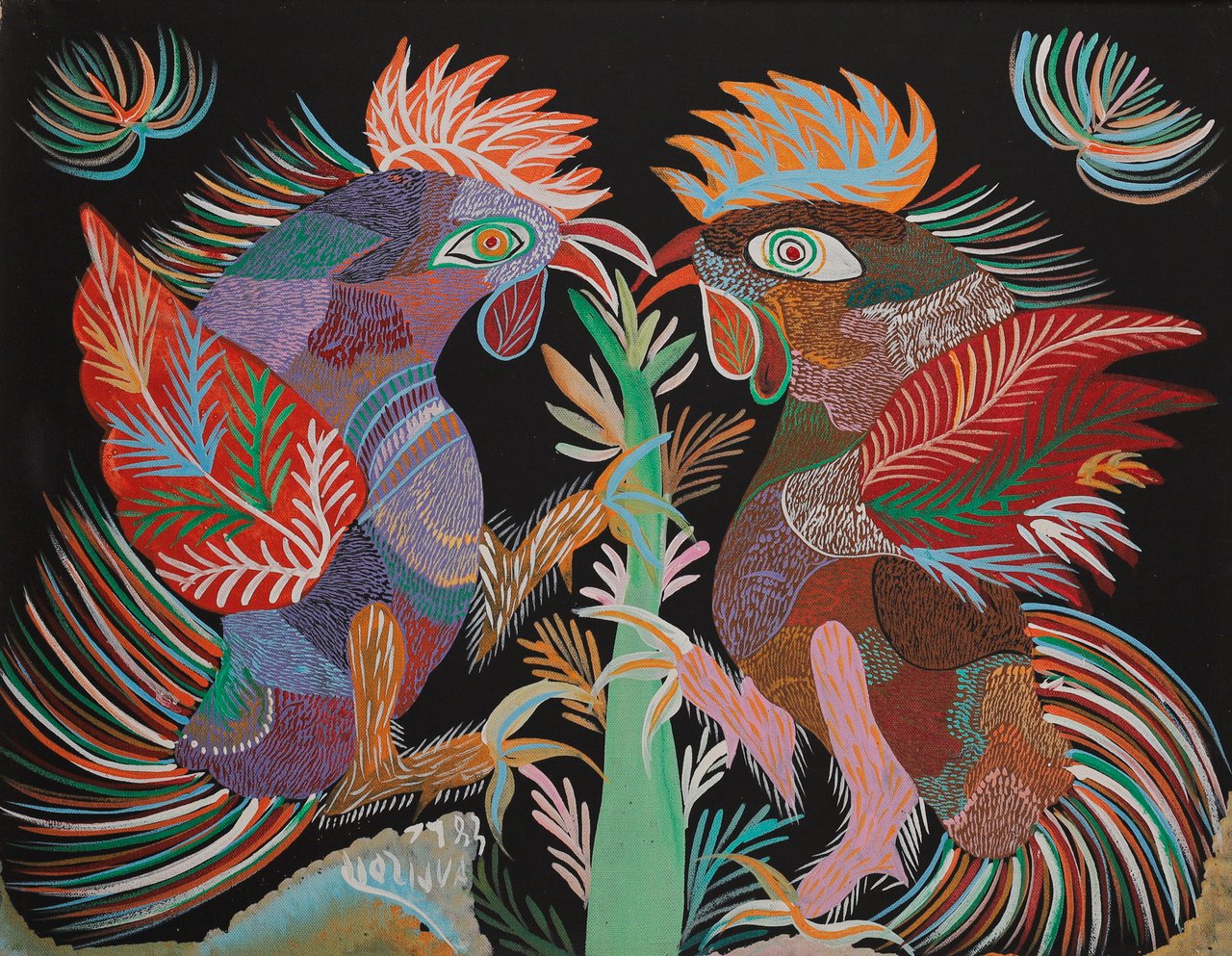
Chico da Silva was a Brazilian painter. He was born around 1910 on the Alto Tejo, in what was then the Acre Territory, and died in Fortaleza on December 6, 1985. The year of his birth is uncertain: he had no birth certificate, and the sources give 1910, 1922, 1923, 1926 or 1928. He began drawing on the walls of Praia Formosa, in Fortaleza, around 1937, was discovered by the Swiss painter Jean-Pierre Chabloz in 1943 and received an honorable mention at the 33rd Venice Biennale, in 1966. Between 1963 and 1964 he began painting with boys from Pirambu, the neighborhood where he lived, and the studio became known as the Pirambu School.
Each item gives the date, the place and the fact, with the source in a note. Where the sources disagree, the item gives the disputed dates and the note says who states each one. The biography tells this life at length, and the link in each item leads to the part of the biography, or to the article, that covers the subject. Of the exhibitions, the ones included here are those that changed his course; the full list is in the biography.
Origins on the Alto Tejo
- c. 1910, Alto Tejo, Acre Territory: he is born on the banks of the Tejo river, near the border with Peru, on land that then belonged to Cruzeiro do Sul and today is part of the municipality of Marechal Thaumaturgo.1 The year is uncertain. His identity card and most catalogs say 1910; he gave March 16, 1922, to the magazine O Cruzeiro in 1963, and 1928 to the Correio da Manhã in 1966 and to the critic Luiz Ernesto Kawall in 1972; Estrigas argued for 1922 or 1923, and the paper Movimento gave 1926.23456
- Date uncertain, Ceará: still a boy, he leaves Acre with his family and goes to the home state of his mother, Minervina Félix de Lima, a woman from Ceará. His father, a Peruvian caboclo of probable Kampa origin, dies in Quixadá, bitten by a rattlesnake.7
- Date uncertain, Fortaleza: he reaches the city after passing through Quixadá and the hills of Guaramiranga, where he works on a smallholding. His age on arrival ranges from six to seventeen, depending on the source.78
The walls of Praia Formosa
- c. 1937, Fortaleza: he begins drawing on the whitewashed walls of the shacks at Praia Formosa, near the Passeio Público and the Poço da Draga, with charcoal, chalk and shards of brick and roof tile.9
- 1937, Fortaleza: the year he gave as the date of the first picture he painted, Um Dragão Comendo Arraia (A Dragon Eating a Ray).210
- 1942, Fortaleza: he makes his first known sale, a picture for 1,500 cruzeiros, according to Estrigas, the only source to record it.11
Chabloz and Europe
- 1943, Fortaleza: the Swiss painter Jean-Pierre Chabloz, in the city on assignment for the Rubber Campaign, sees the drawings on the walls of Praia Formosa. The two meet only months later.1213
- 1943-1945 and 1947-1948, Fortaleza: during Chabloz’s two stays, he paints gouaches on commission for him, and Chabloz supplies the materials and pays in advance. Chabloz gathers some twenty of them.1415
- 1944, Fortaleza: the first gouaches enter the city’s salons, the III Salão Cearense de Pintura, organized by Chabloz, and the II Salão de Abril.16
- 1945, Rio de Janeiro: gouaches of his go to the group show of Ceará artists at the Galeria Askanasy. In the catalog presentation, the critic Rubem Navarra calls them “something very serious.”1718
- 1945-1947, Fortaleza: with Chabloz in Europe, he stops painting until Chabloz returns.19
- August 1948, Fortaleza: Chabloz sails back to Europe with the collection, and Chico puts down the brushes.20
- Fall 1949, Geneva: Chabloz shows the gouaches at the Salle Beauregard. Estrigas dates the show to 1950.2119
- 1950 or 1952, Lausanne: solo show at the Galerie Pour L’Art. Galvão and the O Povo obituary give 1950; Estrigas and the galleries that represent the work today give 1952.192223
- 1951, Lisbon: gouaches of his are included in Chabloz’s exhibition at the Palácio Foz, held at the invitation of António Ferro.1924
- December 1952, Paris: Christian Zervos’s magazine Cahiers d’Art publishes Chabloz’s essay “Un indien brésilien réinvente la peinture,” a Brazilian Indian reinvents painting.25
- November 1955 to February 1956, Neuchâtel, Switzerland: works of his are in “Le Brésil,” the show of Brazilian art with which the Musée d’ethnographie opens its exhibition hall, and the museum acquires pieces from the collection. Estrigas dates the show to 1959.2627
The years of silence
- 1948-1959, Fortaleza: he hardly paints and lives by manual trades. Roberto Galvão counts more than ten years of pause, long enough for part of the public to believe his career had begun in the 1960s.28
The university and the market
- November 1959, Fortaleza: Chabloz returns, finds Chico not painting and introduces him to the rector Antônio Martins Filho, who was setting up the art museum of the University of Ceará, the MAUC. Once hired, Chico paints on the museum’s own premises, and out of that comes the group of some forty gouaches that is still the core of the MAUC’s holdings of his work.29
- April 10, 1961, Fortaleza: first solo show, at the headquarters of the Diários Associados, presented by governor Parsifal Barroso.30
- June 25, 1961, Fortaleza: he shows six gouaches in the inaugural exhibition of the university museum.30
- c. 1963, Fortaleza: Henrique Bluhm, a German opera singer who owns a snack bar downtown, becomes his first dealer.3132
- September 1963, Rio de Janeiro: solo show at the Galeria Relevo, organized by Jean Boghici, which opens the Southeast market to him.33
- September 28, 1963: the magazine O Cruzeiro publishes the color feature “Francisco da Silva e seu Mundo Fantástico,” which carries his name to newsstands across the country.2
Venice, 1966
- January 1966, Fortaleza: the critic Clarival do Prado Valladares sets aside twelve gouaches from the MAUC collection for the Brazilian delegation to the 33rd Venice Biennale.34
- 1966, Venice: four gouaches are hung at the Biennale: Serpente della serra luminosa, Uccello e pesce “roni”, Drago con serpente and Tronco d’albero con serpente.35
- 1966, Venice: the jury grants him an honorable mention, although the Brazilian commission refused to support the distinction. Valladares describes it as unprecedented for a primitive painter in the history of the show.36
- 1967, São Paulo: he takes part in the IX Bienal de São Paulo.37
The Pirambu School and the studio
In the studio years, the master’s signature on a canvas does not by itself identify the hand that painted it. The work was divided by stage between him and the disciples, and he kept the finish and the signature for himself.38 The article Cataloguing Chico da Silva deals with what this demands of anyone who dates and attributes these works.
- Between the end of 1963 and the start of 1964, Pirambu, Fortaleza: he begins working with helpers, boys from the neighborhood aged twelve to eighteen. The original core of the Pirambu School has five names: Babá, Claudionor, Garcia, Ivan de Assis and Chica, the painter’s daughter.3940
- 1965, Fortaleza: Henrique Bluhm sets up a workshop of his own, where Babá paints and Chico comes by at the end of the day to sign.41
- February 8, 1966, Rio de Janeiro: first public authorship scandal. The Jornal do Brasil reports Chico’s accusation that the Galeria Relevo is selling pictures Bluhm commissioned from Babá, and Bluhm replies that the painter was allegedly “industrializing his art.”42
- 1967, Fortaleza: the dealer Maurício Xerez sets up the second workshop and hires Ivan de Assis.41
- June 12, 1969, Fortaleza: Maria Augusta do Carmo Moreira, fifteen years old, tells the Gazeta de Notícias that for almost five years she painted pictures that Chico signed and sold.43
- June 18, 1969, Rio de Janeiro: O Globo puts the “fish test” on its front page, in which the girl paints dragons, fish and birds in front of reporters.44
- June 1969, Fortaleza: Chabloz breaks publicly with the painter and calls the studio the “Chico da Silva Picture Factory Ltd.”45
- 1973, São Paulo: Garcia leaves the studio and goes to São Paulo, because what it pays is not enough to live on.46
- May 10, 1975, Fortaleza: the Tribuna do Ceará runs “Pirambu: todos pintam ‘Chico da Silva’” (Pirambu: everyone paints “Chico da Silva”) on its front page, with the estimate of five hundred people in the neighborhood living off the sale of these pictures.47
- March 1977, Fortaleza: at the III Exanor, the five disciples exhibit as “Os Pintores do Pirambu” and begin signing the pictures with their own names.4048
- April 1977, Fortaleza: before the public and over seven days, they paint with the master the panel Homens Trabalhando (Men Working), four meters by two, entered in the XXVII Salão de Abril. Chico leaves the hospital to work on the piece and signs it at the end.49
- 1979, Fortaleza: he is back in the papers accusing forgers, begins denying in public that the School exists and asks the police for an inquiry. The court appoints Henrique Barroso and Roberto Galvão as experts, and the case goes no further.5051
Last years and death
- End of 1974, Fortaleza: the public authorities give him a house and studio on Avenida Leste-Oeste, presented as a guarantee of provenance: whoever bought there, bought authentic.5253
- 1975, Pirambu, Fortaleza: Pedro Jorge de Castro shoots the short film Chico da Silva, awarded best film on the visual arts in October 1976 at the I Mostra Nacional do Filme Documentário, in Curitiba.54
- May 4, 1976, Fortaleza: he is rushed to the hospital with cirrhosis aggravated by tuberculosis, and O Povo runs “Chico da Silva está na miséria” (Chico da Silva is destitute).5556
- September 1976, Fortaleza: after a relapse, he is moved to a nursing home under a diagnosis of alcoholic psychosis and spends almost a year there.5758
- December 1976, Fortaleza: artists and intellectuals launch a movement for a foundation to protect his name, with plans to catalog the authentic works by number.5960
- August 1977, Fortaleza: he leaves the clinic and announces he will not go back to Pirambu.6158
- 1978, Fortaleza: he returns to the house on the Leste-Oeste, renovated by the city, and has the words “Vou terminar minha vida pintando” (I will end my life painting) written on the facade.62
- 1978, São Paulo: he receives the Anchieta Medal from the São Paulo city council. Some chronologies give 1977.63
- 1979 and February 1981: two thromboses paralyze his right side. Left-handed, he goes on painting.64
- From 1981, Fortaleza: he sells about three pictures a week from a stall at the Pinto Martins airport, obtained through Luíza Távora, then first lady of the state.65
- June 1983, Ceará: a state law grants him a lifetime pension of twice the minimum wage.66
- March 28, 1984, Fortaleza: governor Gonzaga Mota presents him, at the house where he lives, with the Medalha da Abolição, the highest decoration of Ceará.6768
- June 10, 1984, Fortaleza: Jean-Pierre Chabloz dies.69
- December 6, 1985, Fortaleza: Chico da Silva dies at 3:20 a.m. at the Policlínica, of a stroke arising from chronic pulmonary emphysema, and is buried the same day in the Parque da Paz cemetery.2270
After 1985
- 1986, Fortaleza: Roberto Galvão, one of the experts of 1979, publishes Chico da Silva e a Escola do Pirambu.71
- 1989, Fortaleza: retrospective “Do Delírio ao Dilúvio,” at the Espaço Cultural do Palácio da Abolição, with a catalog by Galvão.72
- 2001, Fortaleza: the government of Ceará acquires the remaining gouaches of the collection Chabloz had taken to Europe, sixteen by the painter and one by Chica, and shows them in “Chico da Silva vê Chabloz vê Chico da Silva.”15
- From mid-2004, Fortaleza: Claudionor, Garcia and Babá paint together again under the Instituto Cultural Oboé, of the businessman Newton Freitas.7346
- October 18, 2010, Fortaleza: Claudionor dies.73
- 2020, Fortaleza: it is the “Chico da Silva Year,” established by a city government decree of December 27, 2019, and the 71st Salão de Abril pays him tribute.74
- March 4 to May 28, 2023, São Paulo: the retrospective “Chico da Silva e o ateliê do Pirambu” shows 124 works to 88,881 visitors at the Pinacoteca de São Paulo and moves on to the Pinacoteca do Ceará, where it is called “Chico da Silva e a Escola do Pirambu.”75
- 2023, Fortaleza: an agreement at the Federal Public Prosecutor’s Office makes the panel Homens Trabalhando part of the collection of the MAUC, the museum where the painter worked in the 1960s.76
- 2023, New York: the David Kordansky Gallery gives him his first solo show in New York, and the New York Times publishes a feature on the rediscovery.7778
- November 14, 2023, New York: Sotheby’s sells Serpente da serra luminosa, a gouache of about 1966 that had been at the Venice Biennale, for US$330,200, the artist’s auction record.79
- March 23 to May 16, 2024, Shanghai: solo show at the BANK gallery, presented as his first in Asia.80
- 2024, Fortaleza: the Centro Cultural Belchior presents “Escola do Pirambu: Um Legado de Chico da Silva,” and Flávia Muluc edits the book of the same name, which records Garcia as the only one of the five in the core still living.8182
- June 6 to September 13, 2026, Nottingham, United Kingdom: “And the soul is for the birds,” at Nottingham Contemporary, his first institutional solo show in Europe.83
Bibliography
Books, catalogs and studies cited in short form in the notes; the period press is cited in full in each note.
- Chico da Silva em três dimensões. Exhibition catalog, Centro Cultural Banco do Nordeste. Fortaleza, 2005.
- Chico da Silva vê Chabloz vê Chico da Silva. Exhibition catalog, Centro Cultural da Abolição. Fortaleza: Secretaria da Cultura do Estado do Ceará, 2001.
- Estrigas [Nilo de Brito Firmeza]. A saga do pintor Francisco Domingos da Silva. Fortaleza: Tukano, 1988.
- Le Brésil: arts primitifs indigène, afro-brésilien, populaire; arts modernes. Exhibition catalog. Neuchâtel: Musée d’ethnographie, 1955.
- Galvão, Roberto. Chico da Silva e a Escola do Pirambu. Fortaleza: Secretaria de Cultura e Desporto do Ceará, 1986.
- Galvão, Roberto. Chico da Silva: do delírio ao dilúvio. Exhibition catalog. Fortaleza: Costa Gráfica, 1989.
- Muluc, Flávia, ed. A Escola do Pirambu: um legado de Chico da Silva. Fortaleza: Gráfica LCR, 2024.
- Oliveira, Gerciane Maria da Costa. Chico da Silva: a emergência de um talento artístico. Fortaleza: EdUECE, 2023.
- Oliveira, Gerciane Maria da Costa. “É ou não é um quadro Chico da Silva?”. PhD thesis, Universidade Federal do Ceará, 2015.
- Oliveira, Gerciane Maria da Costa. “Quando um estilo artístico individual se torna uma maneira de pintar? O caso do artista naïf Chico da Silva”. Crítica Cultural 12, no. 2 (2017): 305-313.
- Oliveira, Gerciane Maria da Costa. “Chico da Silva, o pioneiro da arte indígena? A dinâmica de reclassificação do artista acreano em recentes exposições”. MODOS: Revista de História da Arte 8, no. 2 (2024): 706-726.
- Silberstein, David A. “Colonialismo e cultura popular: o caso de Chico da Silva”. Revista de Ciências Sociais 8, no. 1-2 (1977): 219-232.
Notes
Notes
-
Estrigas, A saga do pintor; Oliveira, A emergência de um talento artístico; the Tejo river and the present-day municipality of Marechal Thaumaturgo, chronology of Chico da Silva vê Chabloz vê Chico da Silva. ↩
-
Eduardo Campos, “Francisco da Silva e seu Mundo Fantástico”, O Cruzeiro, September 28, 1963, pp. 110-111, Hemeroteca Digital Brasileira. The feature gives the birth as March 16, 1922, and the first picture as 1937. ↩ ↩2 ↩3
-
“Pintor diz que sua arte é explorada por dono de galeria”, Correio da Manhã, June 12, 1966, p. 13, Hemeroteca Digital Brasileira. ↩
-
Luiz Ernesto [Machado Kawall], “No Ceará, a glória e a dor do primitivo Chico da Silva”, A Tribuna (Santos), October 22, 1972, p. 4, Hemeroteca Digital Brasileira. ↩
-
Estrigas, A saga do pintor, which argues for 1922 or 1923 and attributes the 1910 to an error in Roberto Pontual’s Dicionário. ↩
-
Luiz Carlos Antero, “Um ‘índio’ entre os mercadores”, Movimento, no. 85, February 14, 1977, p. 16, Hemeroteca Digital Brasileira. ↩
-
Oliveira, A emergência de um talento artístico, on the father of probable Kampa origin, the mother Minervina Félix de Lima, the father’s death in Quixadá and the route to Fortaleza. ↩ ↩2
-
Edmar Morel, “A Máfia destruiu Chico da Silva”, O Povo, June 1, 1976, p. 5. ↩
-
Galvão, Chico da Silva e a Escola do Pirambu; the 1937 marker is the consensus of the sources, repeated by the painter himself. ↩
-
“4 séculos de arte industrializada”, Jornal do Brasil, June 25, 1969, Caderno B, p. 25, Hemeroteca Digital Brasileira. ↩
-
Estrigas, A saga do pintor; the detail appears only in that book. ↩
-
Jean-Pierre Chabloz, “Francisco Silva ou a ingenuidade perdida”, Jornal do Brasil, August 23, 1969, Caderno B, p. 25, Hemeroteca Digital Brasileira. ↩
-
Silberstein, “Colonialismo e cultura popular”, p. 222. ↩
-
Oliveira, A emergência de um talento artístico, on the commission method; the materials and the advance payment, Chico da Silva vê Chabloz vê Chico da Silva. ↩
-
Chico da Silva vê Chabloz vê Chico da Silva, presentation text: the collection had twenty works from the 1943-45 and 1947-48 phases; sixteen, plus one by Chica da Silva, returned to Ceará in 2001. ↩ ↩2
-
Galvão, Chico da Silva e a Escola do Pirambu; on Chabloz’s organization of the III Salão, “O culto da Arte”, O Nordeste, January 24, 1944, p. 14, Portal da História do Ceará. ↩
-
Silberstein, “Colonialismo e cultura popular”, p. 222. ↩
-
Galvão, Chico da Silva e a Escola do Pirambu, p. 12: the pause from 1945 to 1947, Geneva in 1949, Lausanne in 1950 and Lisbon in 1951. ↩ ↩2 ↩3 ↩4
-
“Letras & Artes”, O Nordeste, August 13, 1948, p. 1, Portal da História do Ceará. ↩
-
“Société mutuelle artistique (Salle Beauregard)”, Journal de Genève, October 5, 1949, p. 5, Le Temps Archives; the “fall of 1949” in Oliveira, A emergência de um talento artístico, p. 64. Estrigas, A saga do pintor, p. 95, dates the Salle Beauregard show to 1950. ↩
-
“Chico da Silva deixa no tempo a criatividade da arte ingênua”, O Povo, December 7, 1985, Segundo Caderno, p. 1, with the box “Frases de Chico da Silva”, by Roberto Galvão. ↩ ↩2
-
Estrigas, A saga do pintor, p. 95, list of exhibitions outside Ceará; the institutional CVs of Gomide&Co (São Paulo, 2026) and David Kordansky Gallery (New York/Los Angeles, 2026) also give 1952. ↩
-
Oliveira, A emergência de um talento artístico, p. 64, on the Palácio Foz in 1951 and António Ferro’s invitation. ↩
-
Jean-Pierre Chabloz, “Un indien brésilien réinvente la peinture”, Cahiers d’Art (Paris), December 1952, according to Estrigas, A saga do pintor, and Oliveira, A emergência de um talento artístico. ↩
-
Le Brésil: arts primitifs indigène, afro-brésilien, populaire; arts modernes, exhibition catalog (Neuchâtel: Musée d’ethnographie, 1955); Galvão, Chico da Silva e a Escola do Pirambu, p. 13. Estrigas dates the show to 1959. ↩
-
Galvão, Chico da Silva e a Escola do Pirambu; the Neuchâtel presence is also recalled in Walter Sotomayor, “Chico da Silva”, Correio Braziliense, October 28, 1976. ↩
-
Galvão, Chico da Silva e a Escola do Pirambu; also Chico da Silva em três dimensões. ↩
-
Galvão, Chico da Silva e a Escola do Pirambu, p. 13; the count of some forty gouaches in the core comes from the reference books, with variation up to 43. ↩
-
Estrigas, A saga do pintor, which details the solo show of April 10, 1961, and the museum’s inaugural group show of June 25. ↩ ↩2
-
Oliveira, “É ou não é um quadro Chico da Silva?”, pp. 149-150. ↩
-
Estrigas, A saga do pintor, p. 43 (“cantor de músicas eruditas”, and the Di Caura snack bar); Silberstein, “Colonialismo e cultura popular”, p. 225. ↩
-
Galvão, Chico da Silva e a Escola do Pirambu, on the Galeria Relevo and the presentations by Chabloz and Aldemir Martins. ↩
-
Galvão, Do delírio ao dilúvio; the January 1966 date for the selection, Estrigas, A saga do pintor. ↩
-
Francisco Domingos da Silva, ASACdati database, Archivio Storico delle Arti Contemporanee, La Biennale di Venezia, records of the four works from the 33rd Biennale (1966), accessed August 12, 2026. ↩
-
Letter from Clarival do Prado Valladares to Haroldo Juaçaba, September 23, 1966, transcribed in Galvão, Do delírio ao dilúvio. ↩
-
Galvão, Chico da Silva e a Escola do Pirambu; Galvão, Do delírio ao dilúvio. ↩
-
Galvão, Chico da Silva e a Escola do Pirambu, on the division of labor and the staged apprenticeship. ↩
-
Galvão, Chico da Silva e a Escola do Pirambu; Oliveira, “É ou não é um quadro Chico da Silva?”. ↩
-
“Os Pintores do Pirambu”, Correio do Ceará, March 16, 1977, p. 4, Portal da História do Ceará. ↩ ↩2
-
Oliveira, “É ou não é um quadro Chico da Silva?”, pp. 149-150; Gilberto Andrade Machado, “Calidoscópio: história do ensino de artes plásticas em Fortaleza” (PhD thesis, Universidade Federal do Ceará, 2008), pp. 57-58. ↩ ↩2
-
“Silva diz que Relêvo está vendendo no Rio imitações das suas telas primitivas”, Jornal do Brasil, February 8, 1966, p. 10, Hemeroteca Digital Brasileira. ↩
-
Gazeta de Notícias (Fortaleza), June 12, 1969, according to Galvão, Chico da Silva e a Escola do Pirambu, and Estrigas, A saga do pintor. ↩
-
“O teste dos peixes”, O Globo, June 18, 1969, p. 1, and “Teste aprova menina que acusa o pintor”, p. 7. ↩
-
“Chabloz descreve: ascensão e queda de Chico da Silva”, O Povo, June 30, 1969, p. 5; Galvão, Chico da Silva e a Escola do Pirambu, p. 20, dates the statements to June 18 and records the nickname. ↩
-
TVDD #arte, interview with Garcia (José dos Santos Gomes), video, February 19, 2026. ↩ ↩2
-
Graça Magalhães, “Pirambu: todos pintam ‘Chico da Silva’”, Tribuna do Ceará, May 10, 1975, p. 1, apud Oliveira, “Quando um estilo artístico individual se torna uma maneira de pintar?”, 307. ↩
-
Frederico Morais, “No Ceará tem gravura, rabiscos e arte conceitual”, O Globo, March 30, 1977, p. 36. ↩
-
Galvão, Chico da Silva e a Escola do Pirambu; Galvão, Do delírio ao dilúvio. ↩
-
“Chico da Silva volta a acusar falsificadores”, Correio do Ceará, June 28, 1979, pp. 1 and 13, Portal da História do Ceará. ↩
-
Galvão, Chico da Silva e a Escola do Pirambu, p. 27, on the inquiry and the experts appointed by the judge of the 2nd Criminal Court of Fortaleza. ↩
-
“Fortaleza dá casa a Chico Silva”, Jornal do Brasil, December 30, 1974, p. 18. ↩
-
Luciano Diógenes, “Casa para Chico Silva”, Correio do Ceará, August 13, 1974, p. 7; “Casa de Chico Silva no ‘Ano da Cultura’”, Correio do Ceará, January 2, 1975, p. 5. ↩
-
“Curtas premiados no Paraná”, O Estado de S. Paulo, October 21, 1976, p. 10; official letter 48/76-GT of the I Mostra Nacional do Filme Documentário, Curitiba, November 8, 1976. ↩
-
“Chico da Silva está na miséria”, O Povo, May 13, 1976, p. 6. ↩
-
Galvão, Chico da Silva e a Escola do Pirambu, p. 24: admitted on May 4, 1976, he received the anointing of the sick the next day. ↩
-
“Recuperado, Chico volta aos quadros”, O Estado de S. Paulo, August 14, 1976, p. 12. ↩
-
Galvão, Do delírio ao dilúvio; Estrigas, A saga do pintor; the release from the clinic in early August 1977, Galvão, Chico da Silva e a Escola do Pirambu, p. 26. ↩ ↩2
-
“Uma instituição para zelar o nome Chico da Silva”, O Povo, December 19, 1976, Caderno B, p. 4. ↩
-
“Artistas lutam para preservar nome e obra de Chico da Silva”, O Estado de S. Paulo, February 19, 1977, p. 9, Acervo Estadão. ↩
-
“Estou vendendo saúde e não vou voltar mais ao Pirambu”, O Povo, August 31, 1977, p. 12. ↩
-
“Chico da Silva volta ao seu ‘atelier’ na Av. Leste-Oeste”, O Povo, August 13, 1978, p. 9. ↩
-
Galvão, Chico da Silva e a Escola do Pirambu; Estrigas, A saga do pintor; the year swings between 1977 and 1978 in the chronologies, and 1978 is the date of most sources. ↩
-
Galvão, Do delírio ao dilúvio. ↩
-
Galvão, Do delírio ao dilúvio; the pace of sales, chronology of Chico da Silva vê Chabloz vê Chico da Silva. ↩
-
State law no. 10.807, Diário Oficial do Ceará, June 28, 1983; Galvão, Do delírio ao dilúvio. ↩
-
“Sofrimento e miséria na arte, mas com medalhas em vida”, O Povo, March 28, 1984, Caderno Z, p. 15. ↩
-
“Chico da Silva é condecorado em Fortaleza”, O Estado de S. Paulo, March 29, 1984, p. 24. ↩
-
Estrigas, A saga do pintor, which gives Chabloz’s death in Fortaleza on June 10, 1984. ↩
-
“Ceará perde Chico da Silva e poucos vão ao cemitério”, O Povo, December 7, 1985, p. 1. ↩
-
Galvão, Chico da Silva e a Escola do Pirambu; the expert examination, p. 27. ↩
-
Galvão, Do delírio ao dilúvio, catalog of the 1989 retrospective. ↩
-
Claudionor Nogueira, “João Clôud, O Leão Pantera”, autobiographical text, in Muluc, A Escola do Pirambu, pp. 58-71; Erika Cavalcanti’s presentation dates the reunion with Garcia and Babá to mid-2004 and Claudionor’s death to October 18, 2010. ↩ ↩2
-
Muluc, A Escola do Pirambu, on the municipal decree and the tribute of the 71st Salão de Abril; decree no. 14.574, of December 27, 2019, in Oliveira, “Chico da Silva, o pioneiro da arte indígena?”, 715. ↩
-
“Chico da Silva e o ateliê do Pirambu”, Pinacoteca de São Paulo, March 4 to May 28, 2023, curated by Thierry de Freitas; attendance and work count in “Pinacoteca do Ceará abre maior exposição já realizada sobre o artista”, Pinacoteca do Ceará, July 7, 2023 (accessed August 12, 2026). ↩
-
Muluc, A Escola do Pirambu, pp. 72-75; “Painel artístico da Escola do Pirambu será da UFC após acordo”, O Povo, May 31, 2023, opovo.com.br; “UFC assina acordo no MPF”, mauc.ufc.br. ↩
-
Hilarie M. Sheets, “A Visionary Brazilian Artist Is Rediscovered”, The New York Times, October 19, 2023. ↩
-
“Artista indígena, Chico da Silva é redescoberto e ganha mostra em Nova York”, O Estado de S. Paulo, November 21, 2023, p. C3, Acervo Estadão; translation of the New York Times article. ↩
-
“Serpente da serra luminosa”, lot 243, Modern Day Auction, Sotheby’s, New York, November 14, 2023; result in the official report of the November sales (accessed August 12, 2026). The lot record lists the work in the “XXXIII Biennale Internazionale d’Arte Venezia”, 1966. ↩
-
“Chico da Silva: Amazônian Legend”, BANK, Shanghai, March 23 to May 16, 2024, curated by Simon Watson; the opening text presents it as the painter’s first solo show in Asia (accessed August 12, 2026). ↩
-
Muluc, A Escola do Pirambu, published in the wake of the Centro Cultural Belchior exhibition of the same name (2024). ↩
-
Muluc, A Escola do Pirambu, which names Garcia as the only one of the core still living and dedicates the volume to Chico, Babá, Claudionor, Chica, Ivan and Garcia. ↩
-
“Chico da Silva: And the soul is for the birds”, Nottingham Contemporary, June 6 to September 13, 2026, curated by Salma Tuqan and Niall Ó Faircheallaigh (accessed August 12, 2026). ↩


