Birds
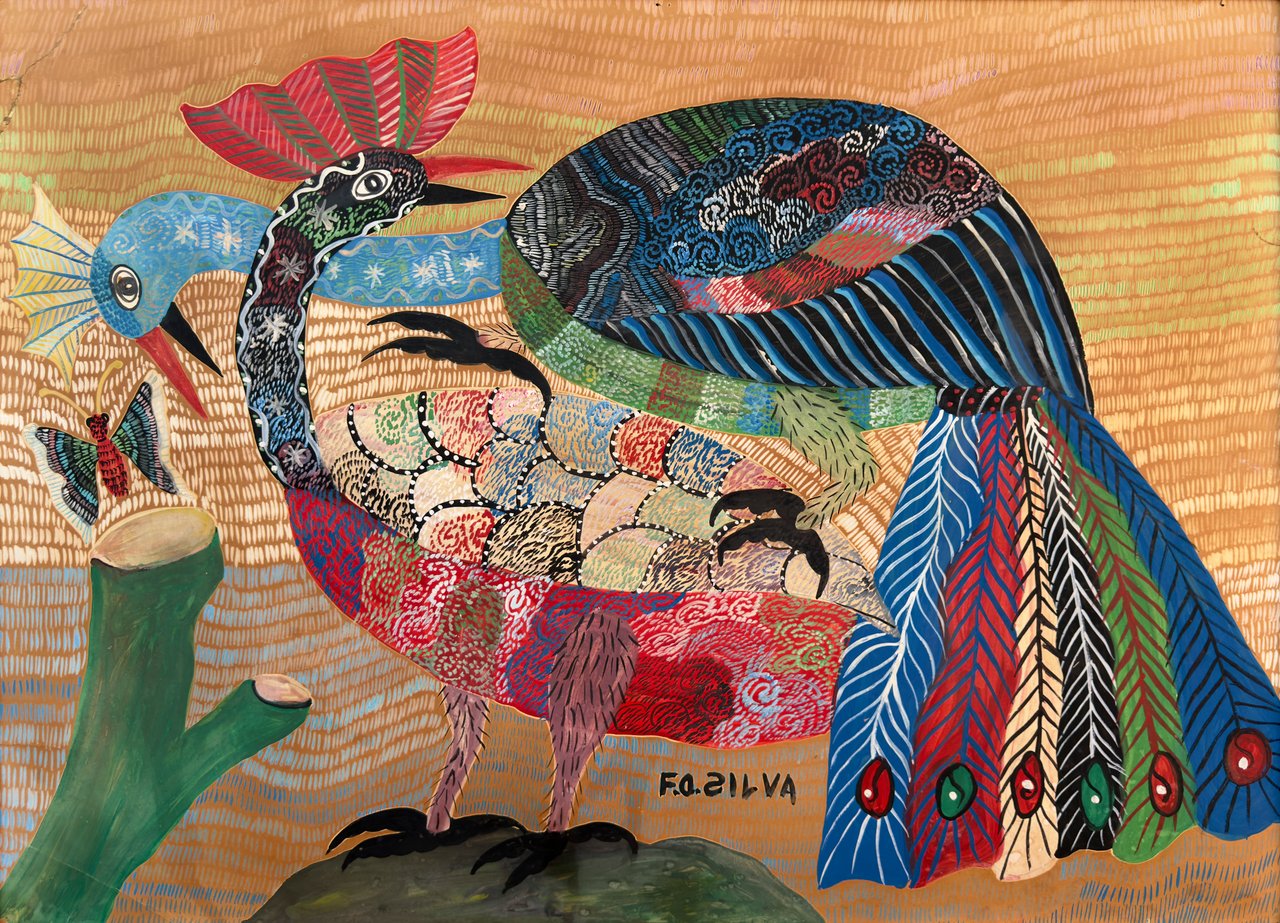
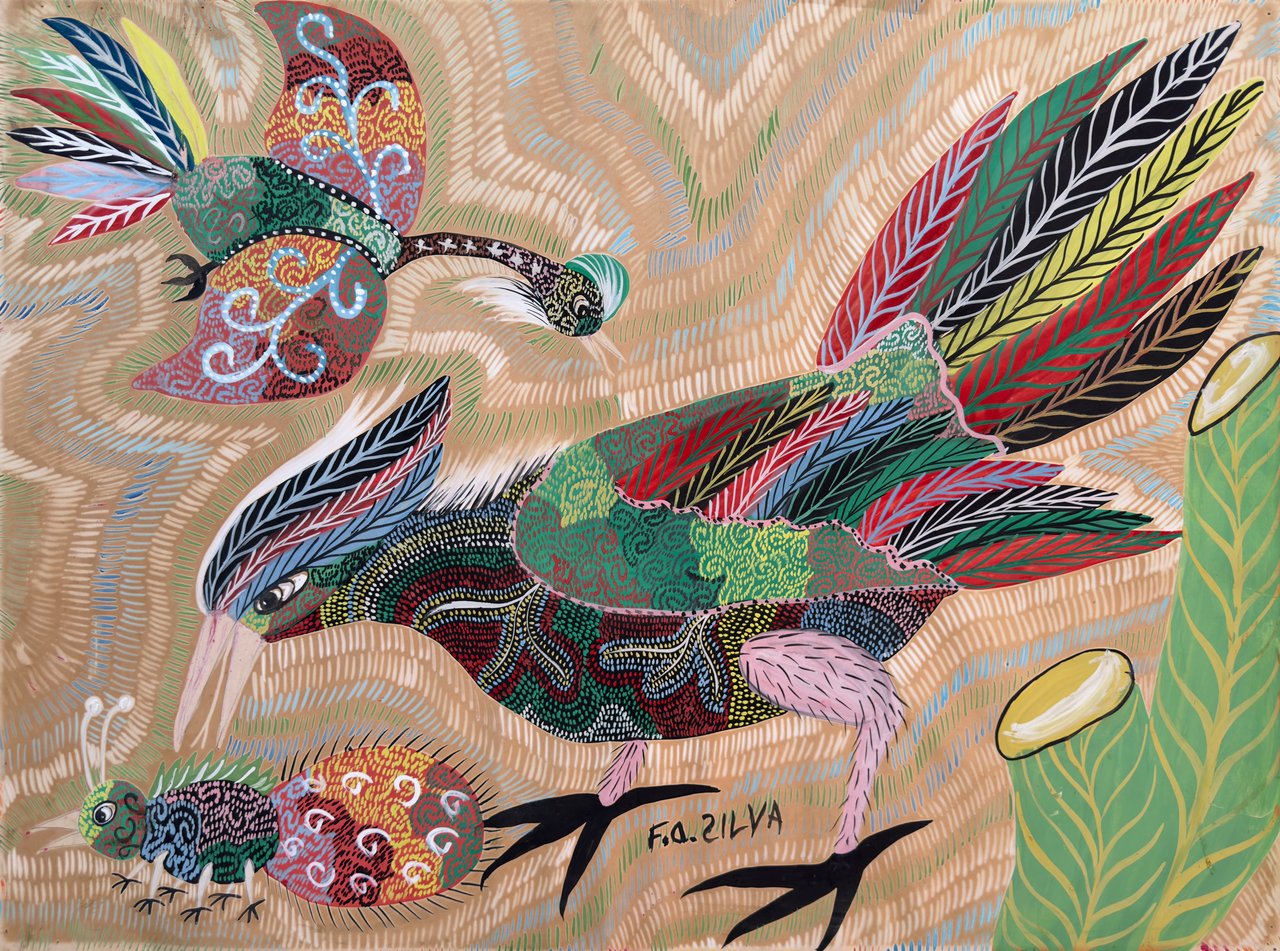
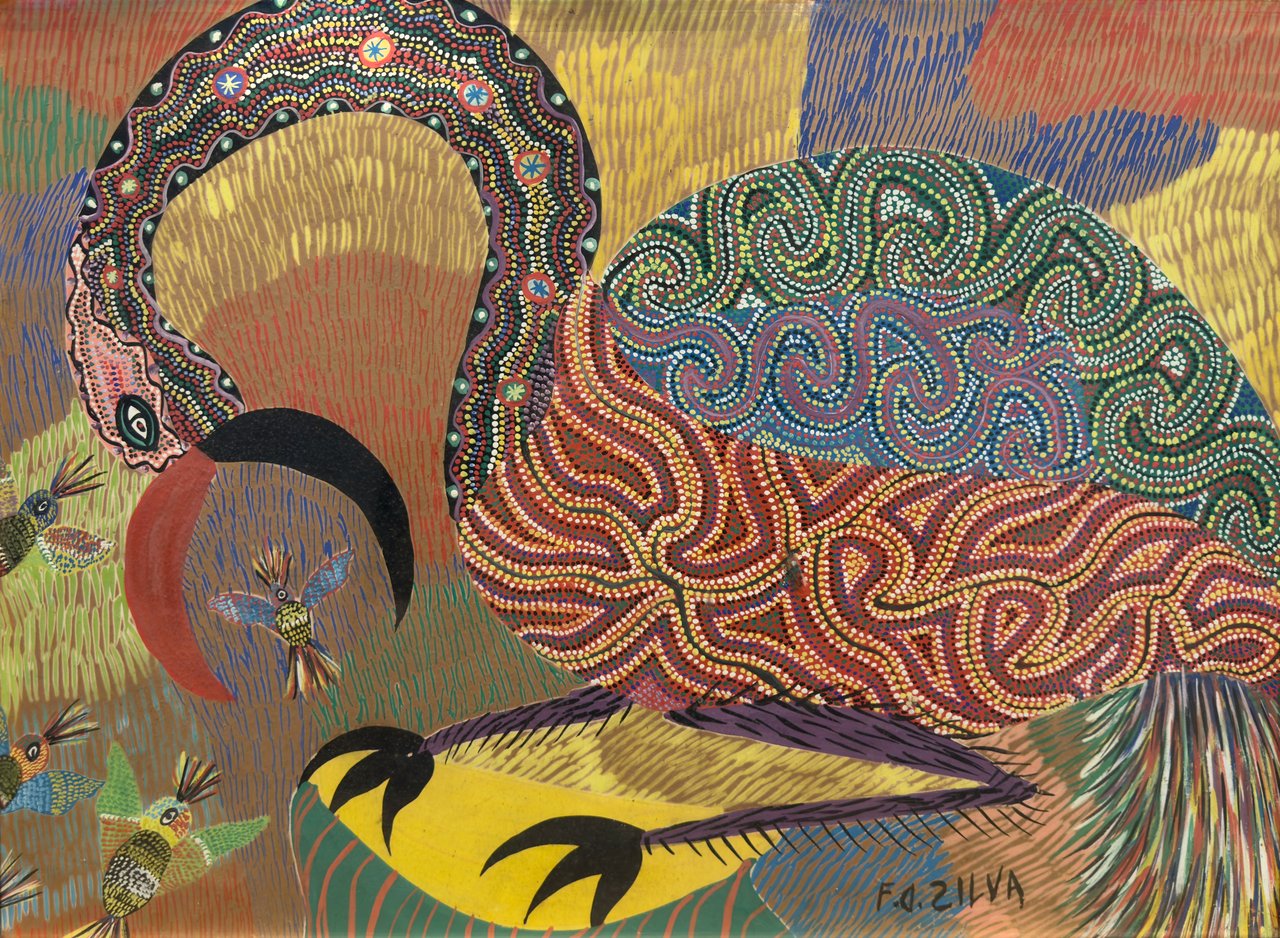
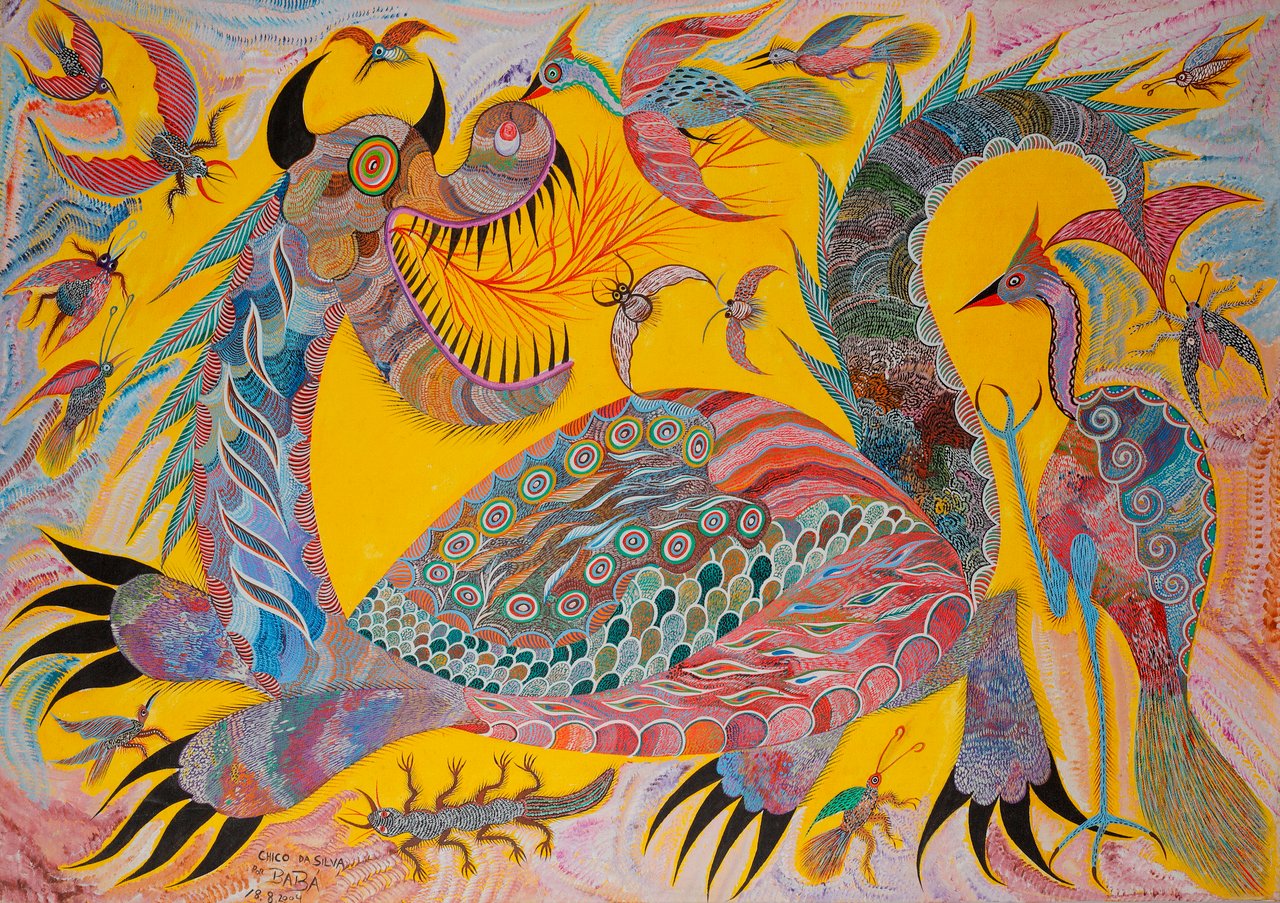
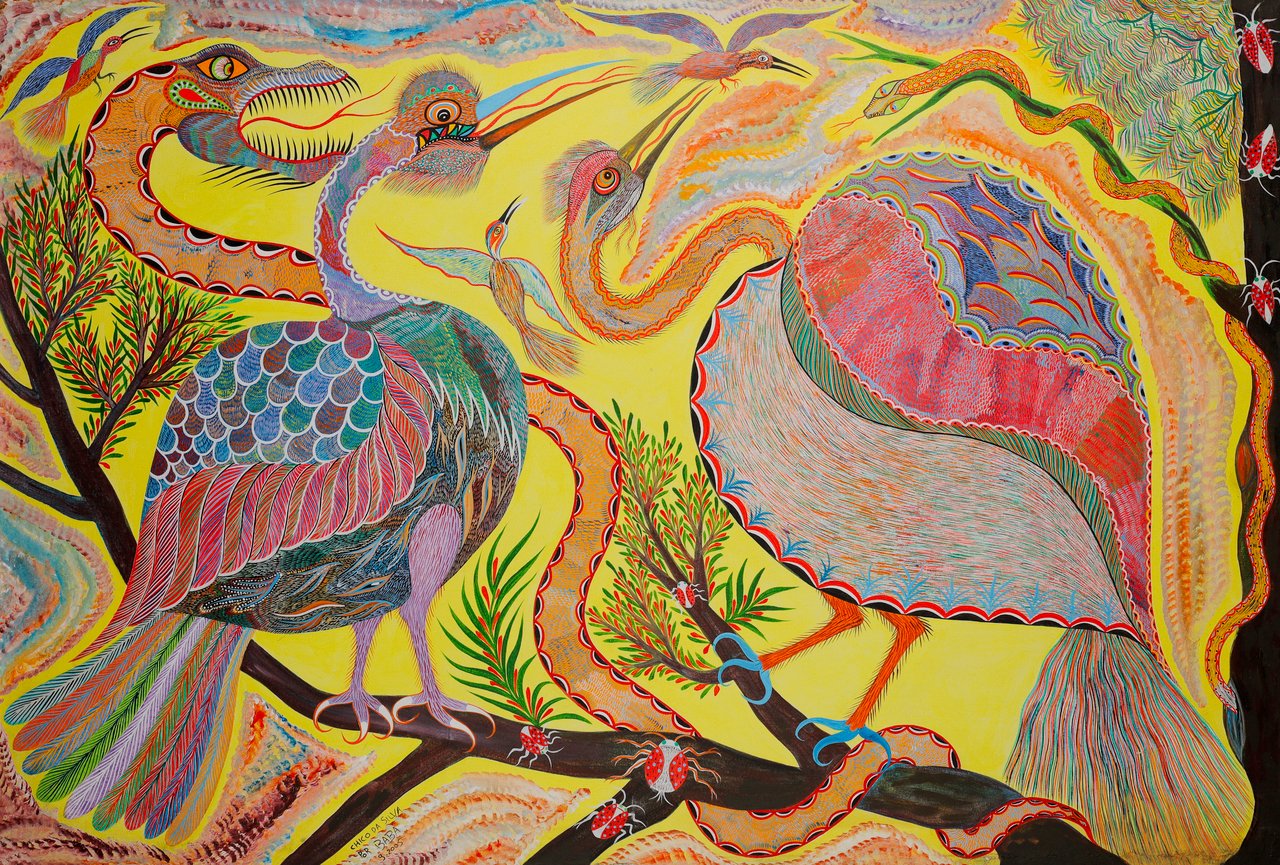
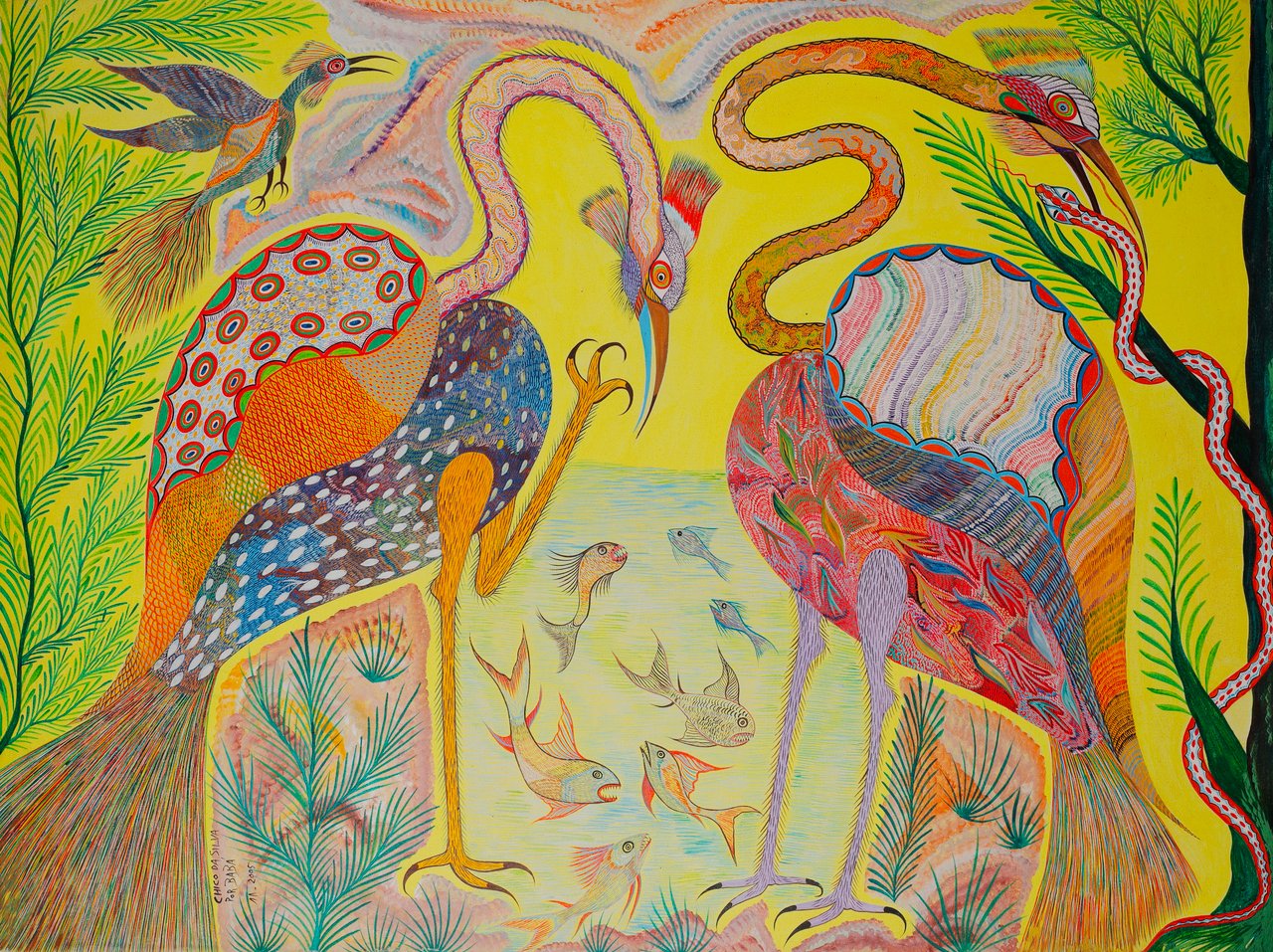
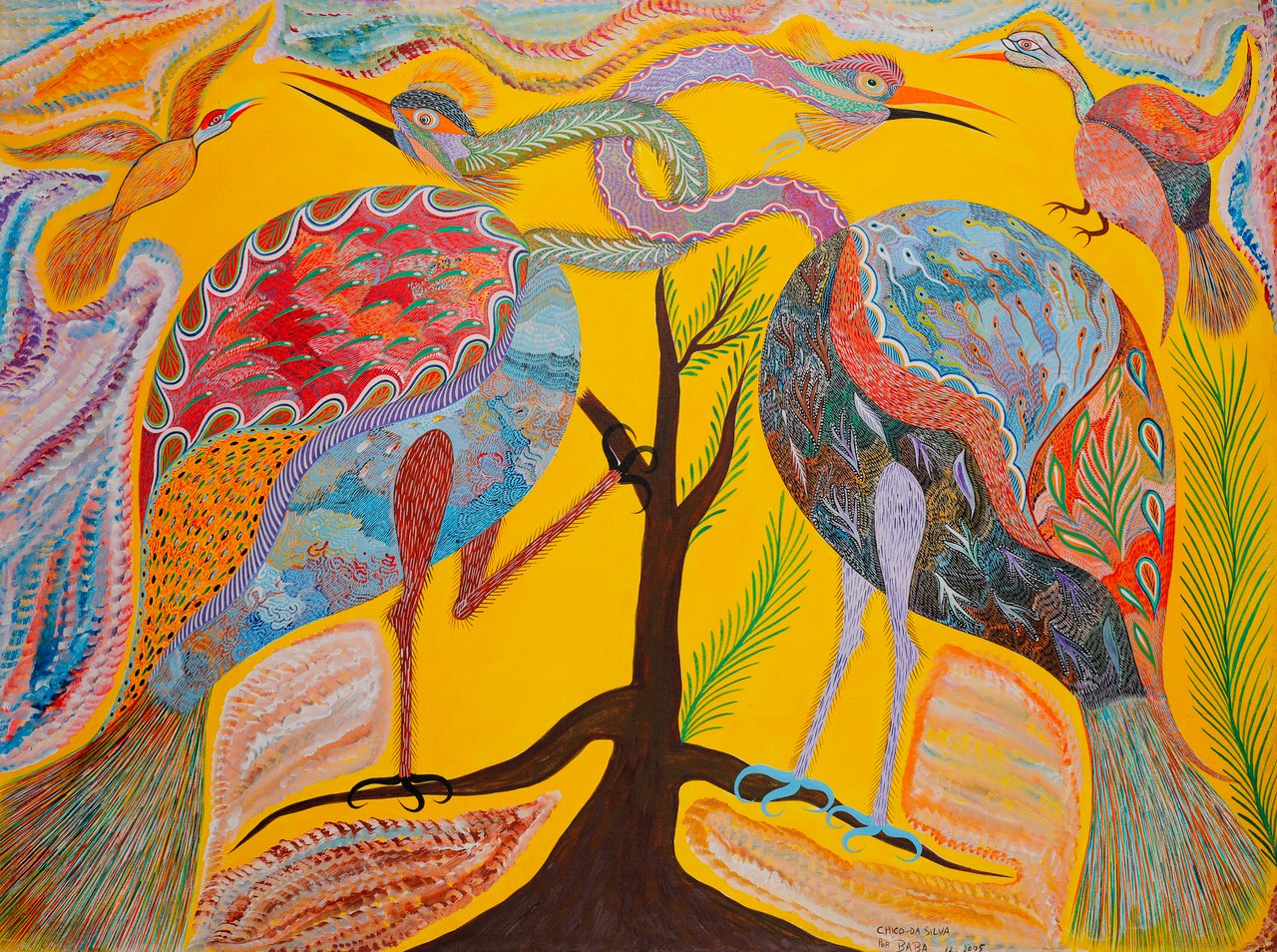
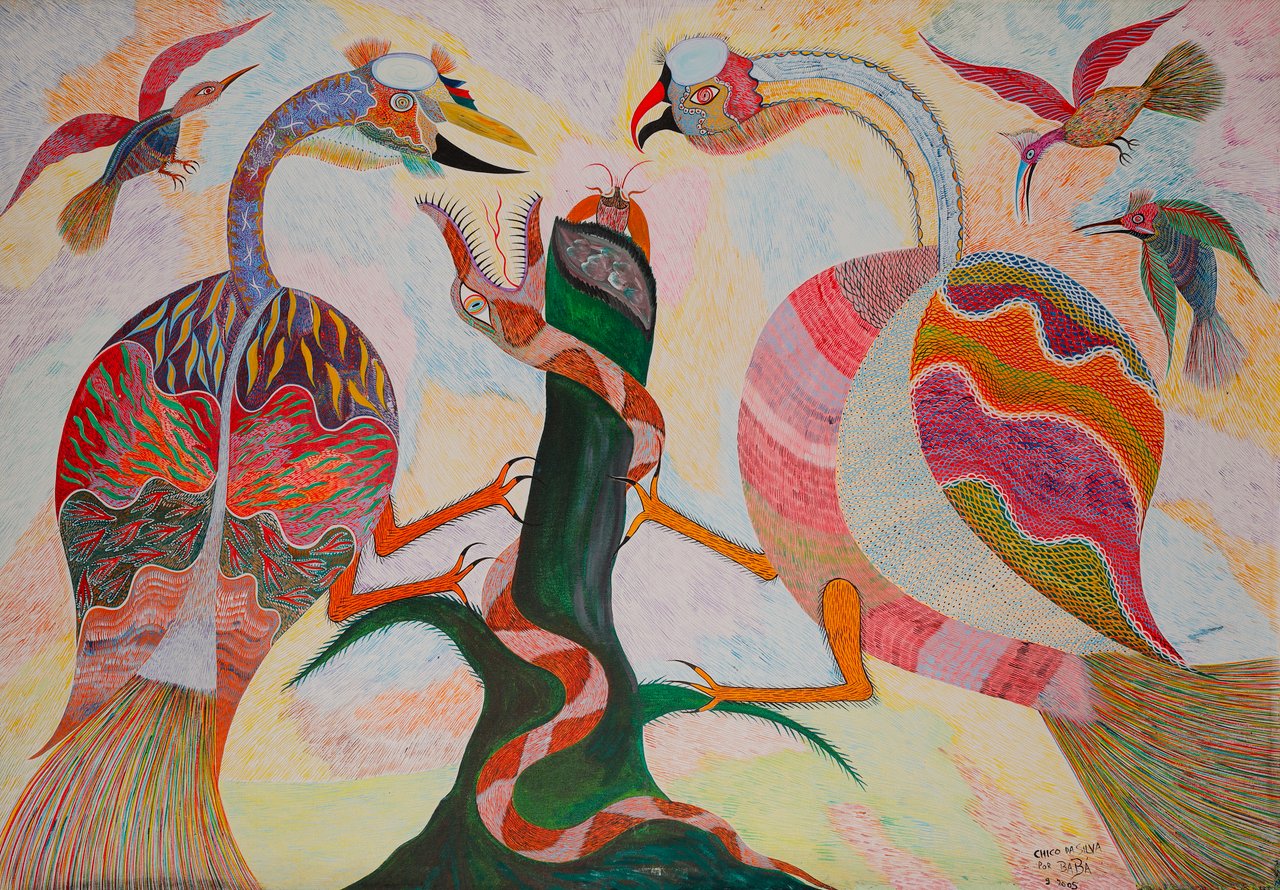
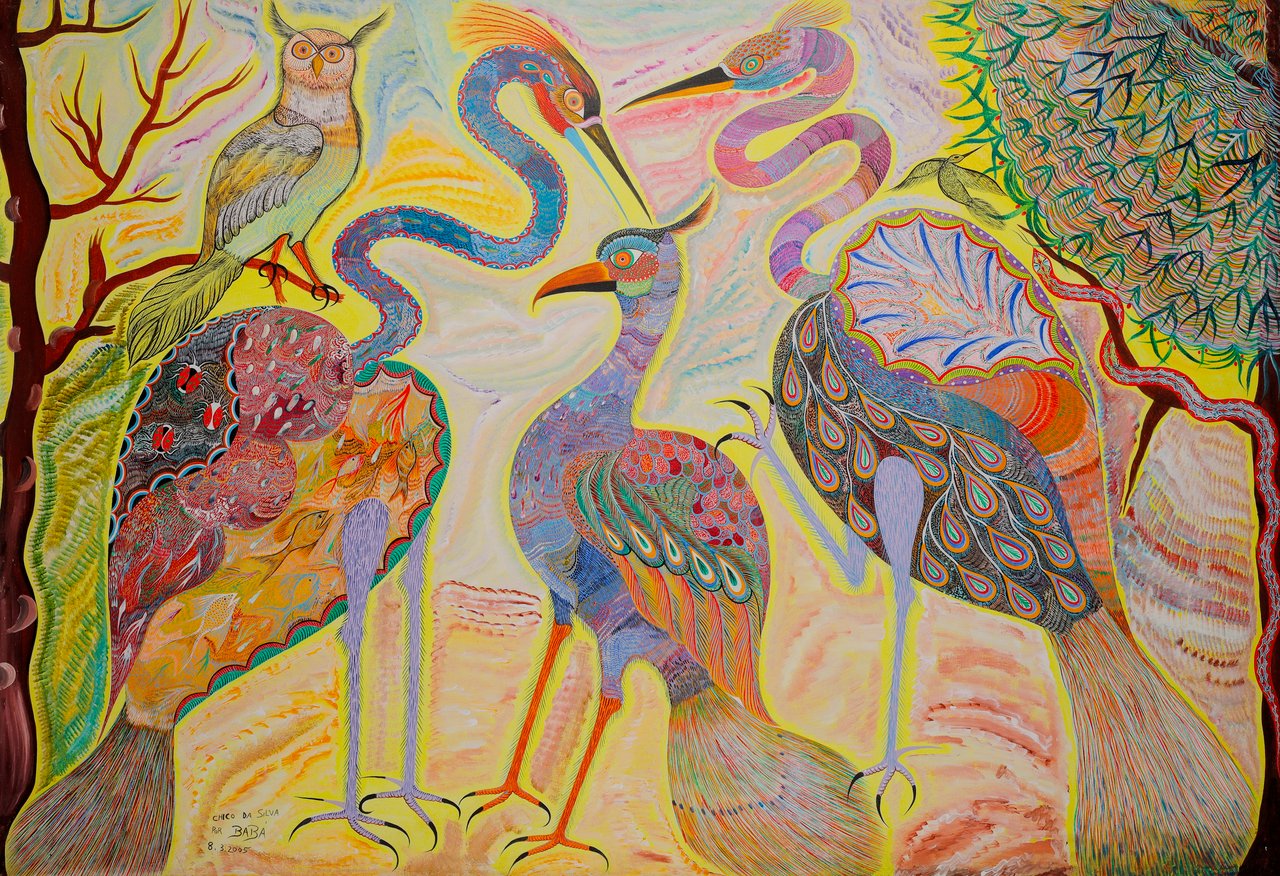
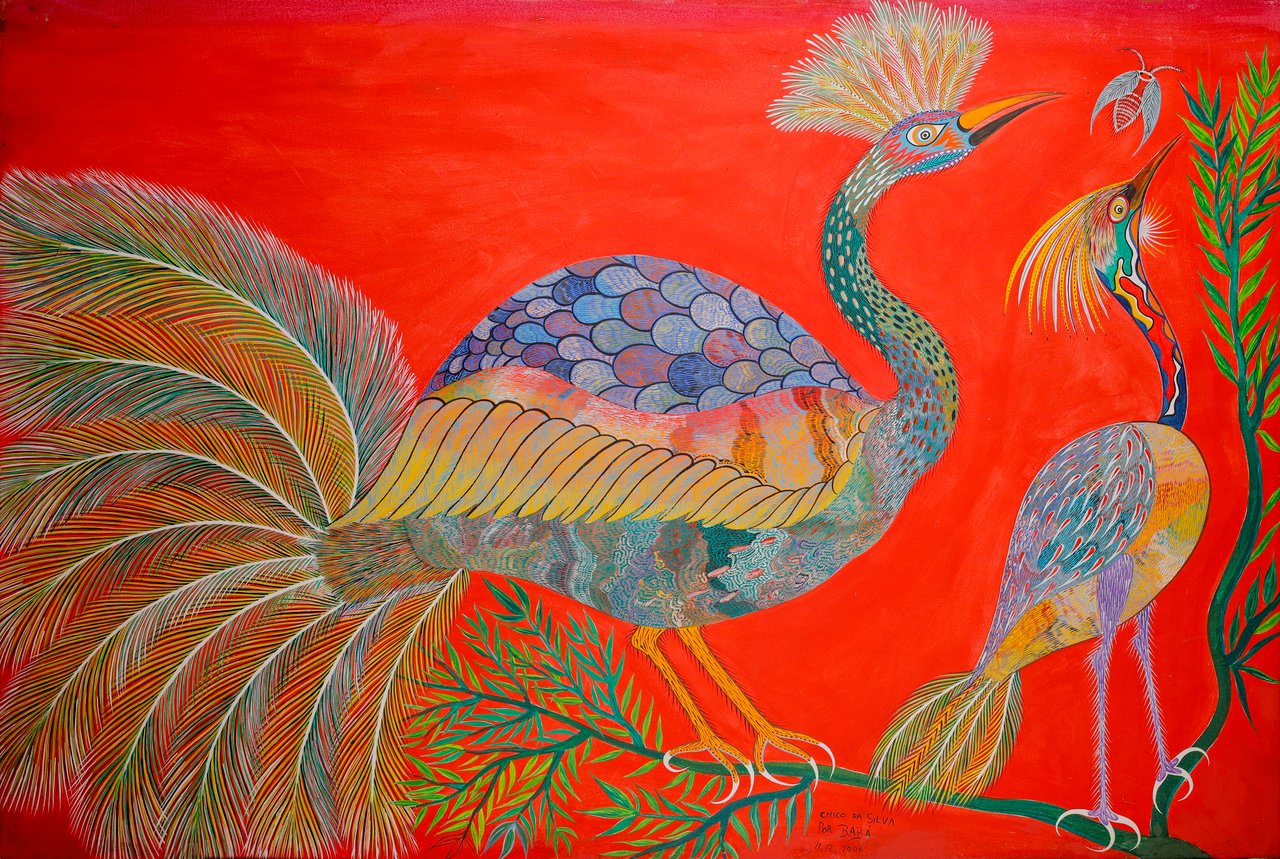
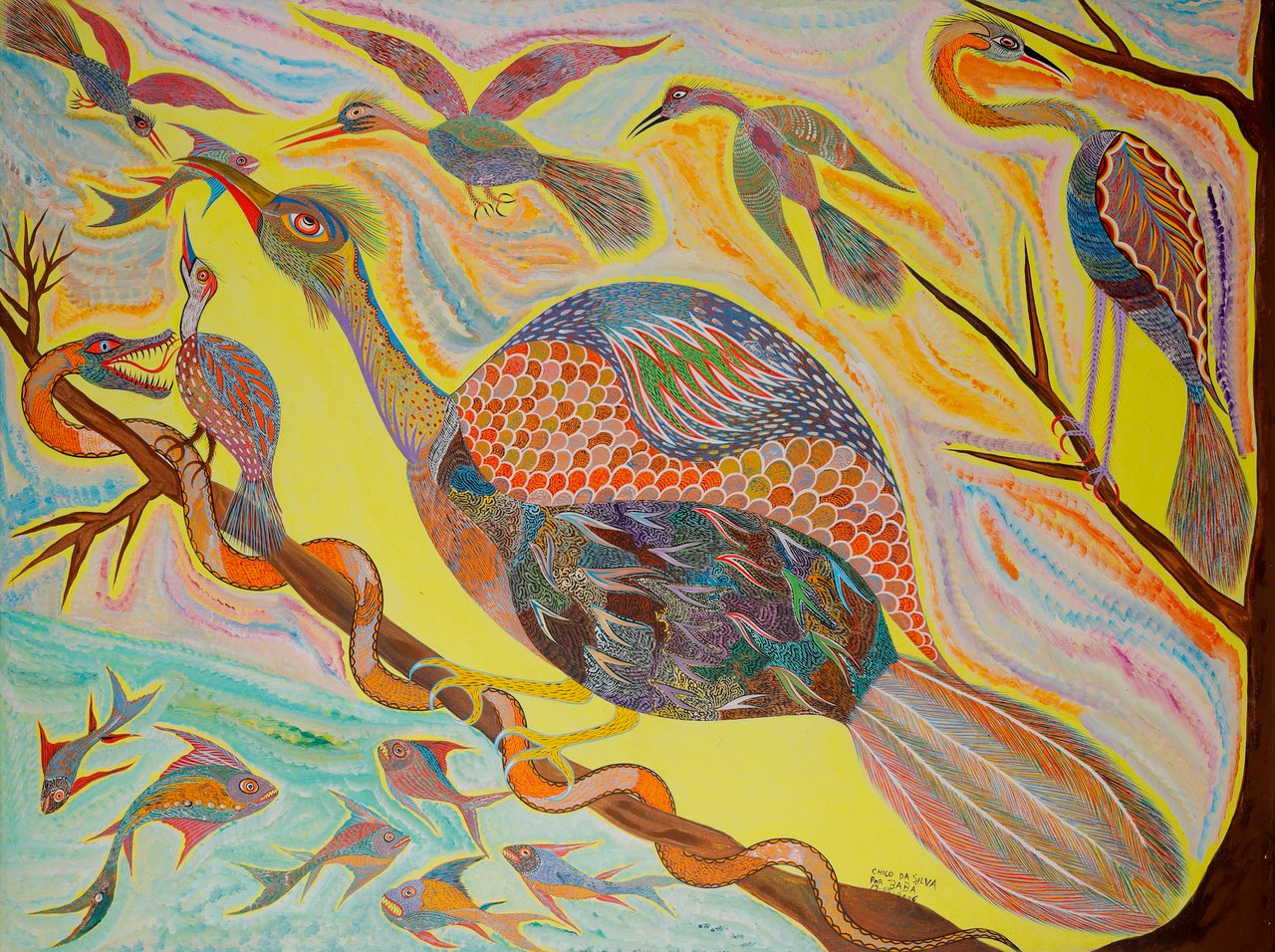
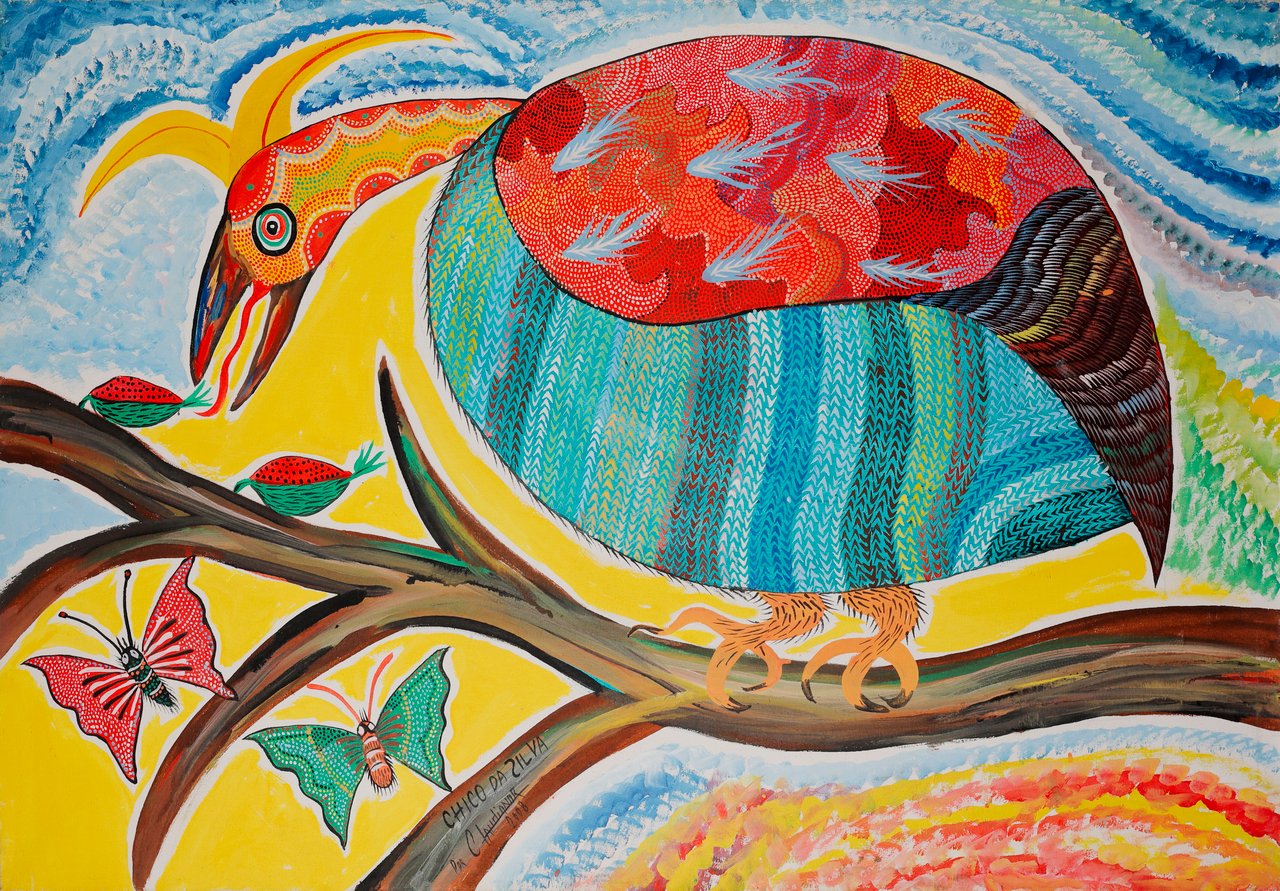
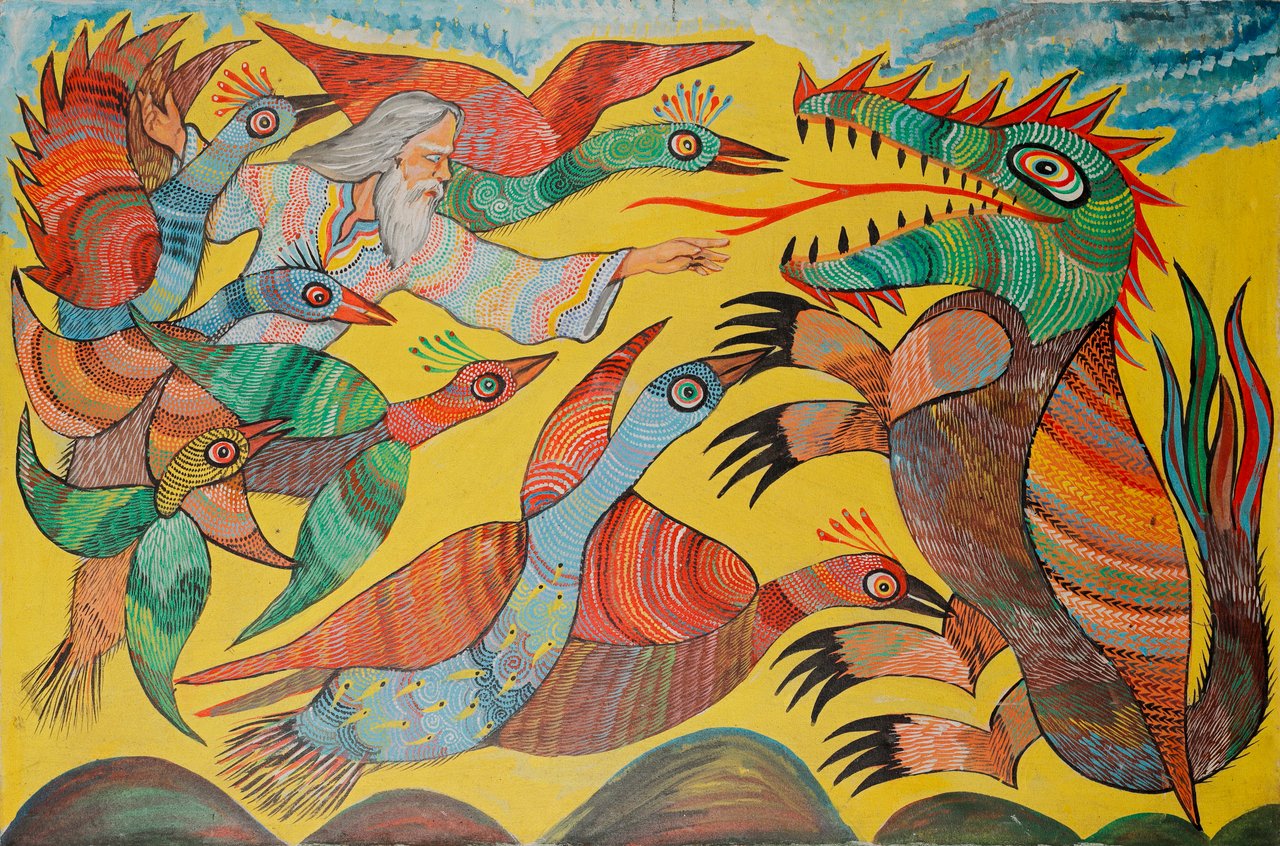
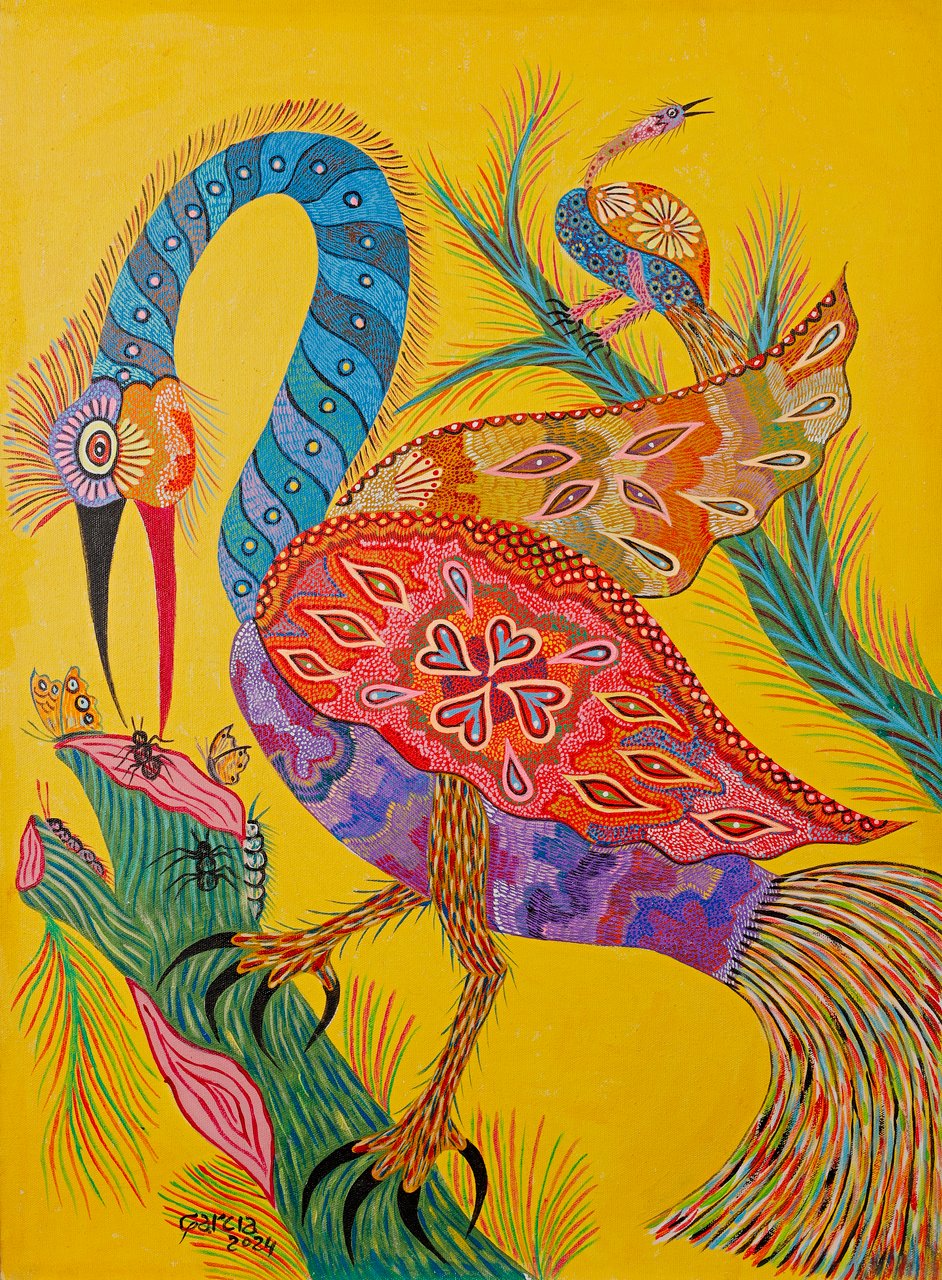
Long-necked birds, peacocks, egrets and owls run through the work of Chico da Silva from beginning to end. They were on the walls at Praia Formosa that Jean-Pierre Chabloz saw in 1943, and they continue in the canvases of the disciples of the Pirambu School.
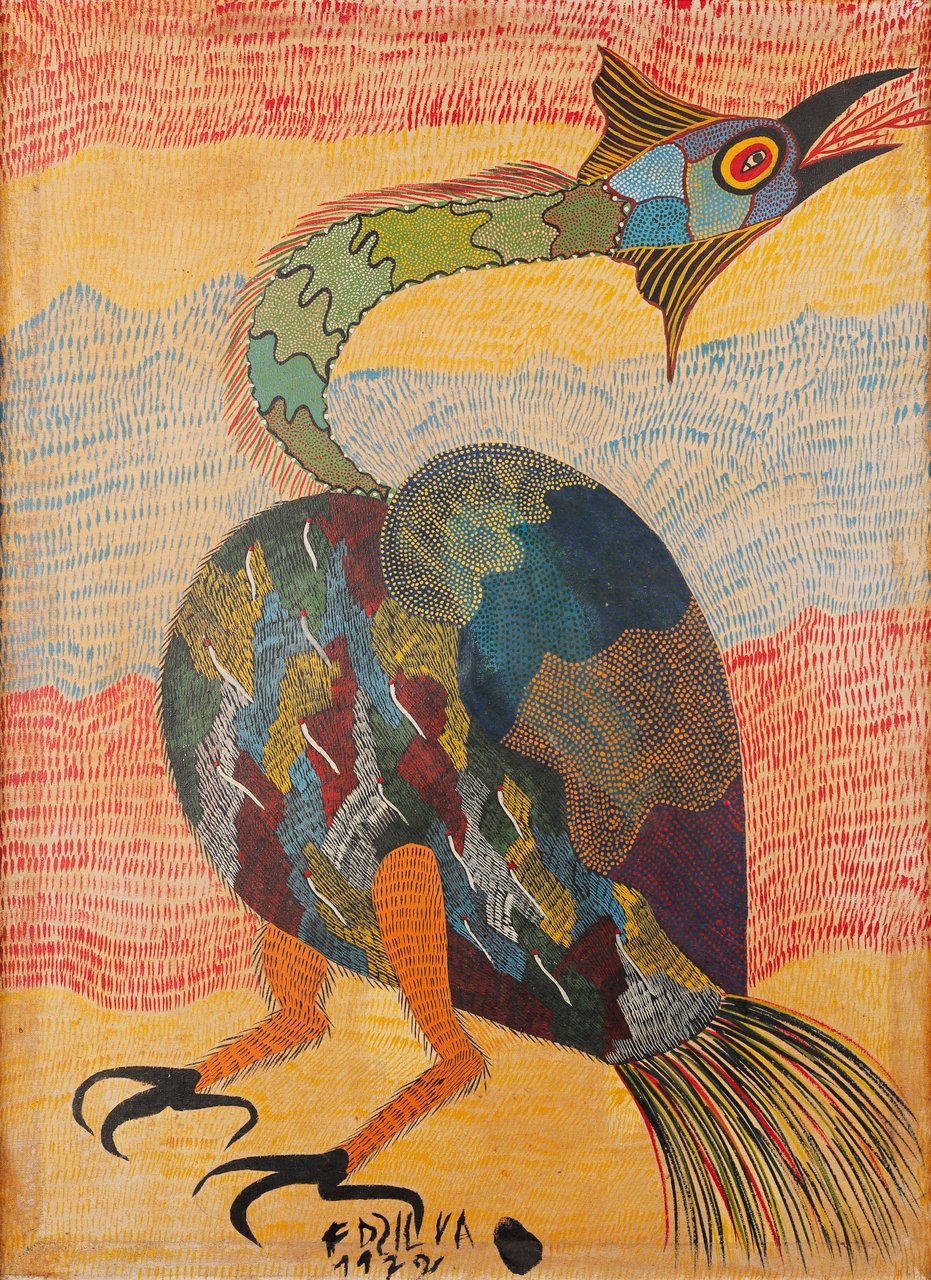
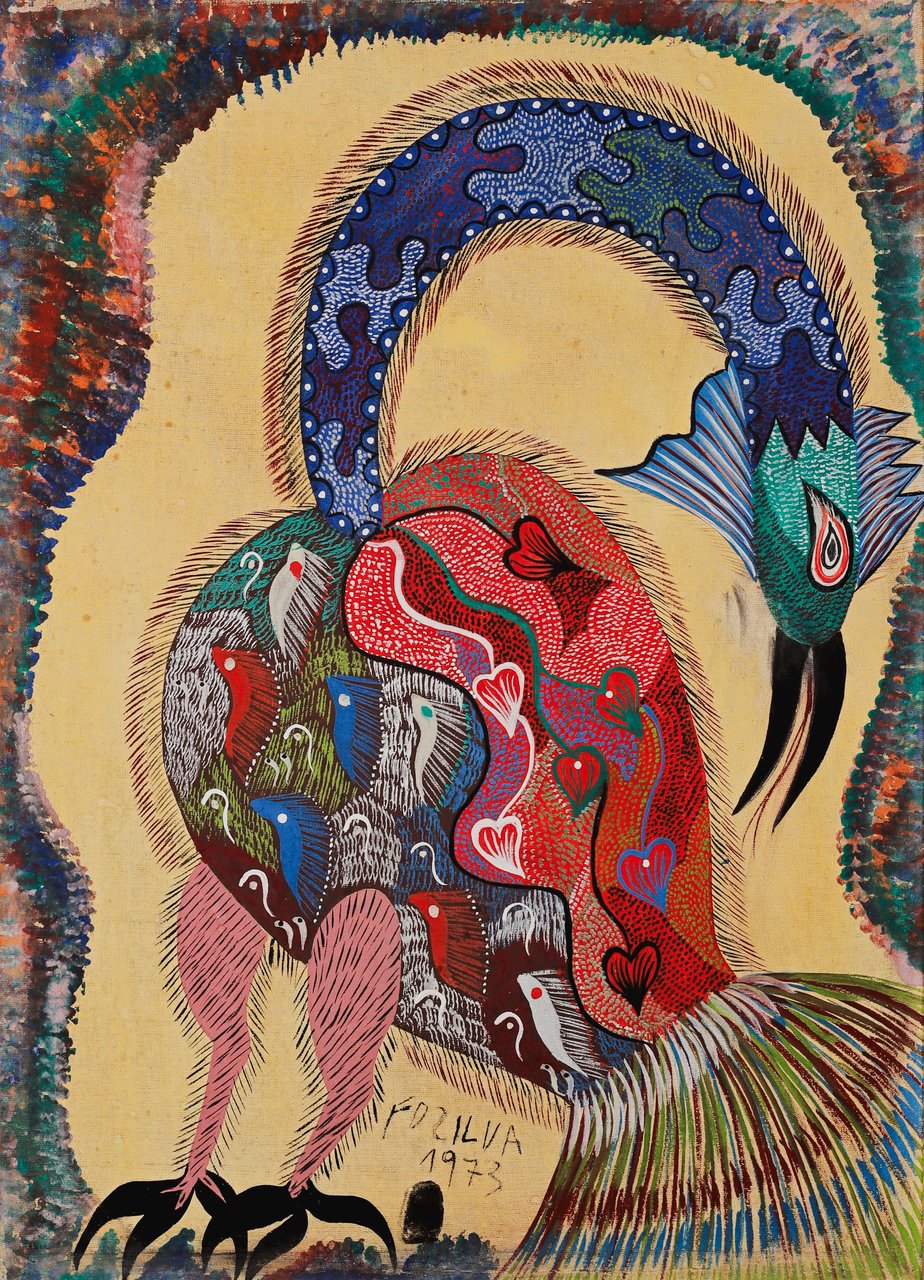
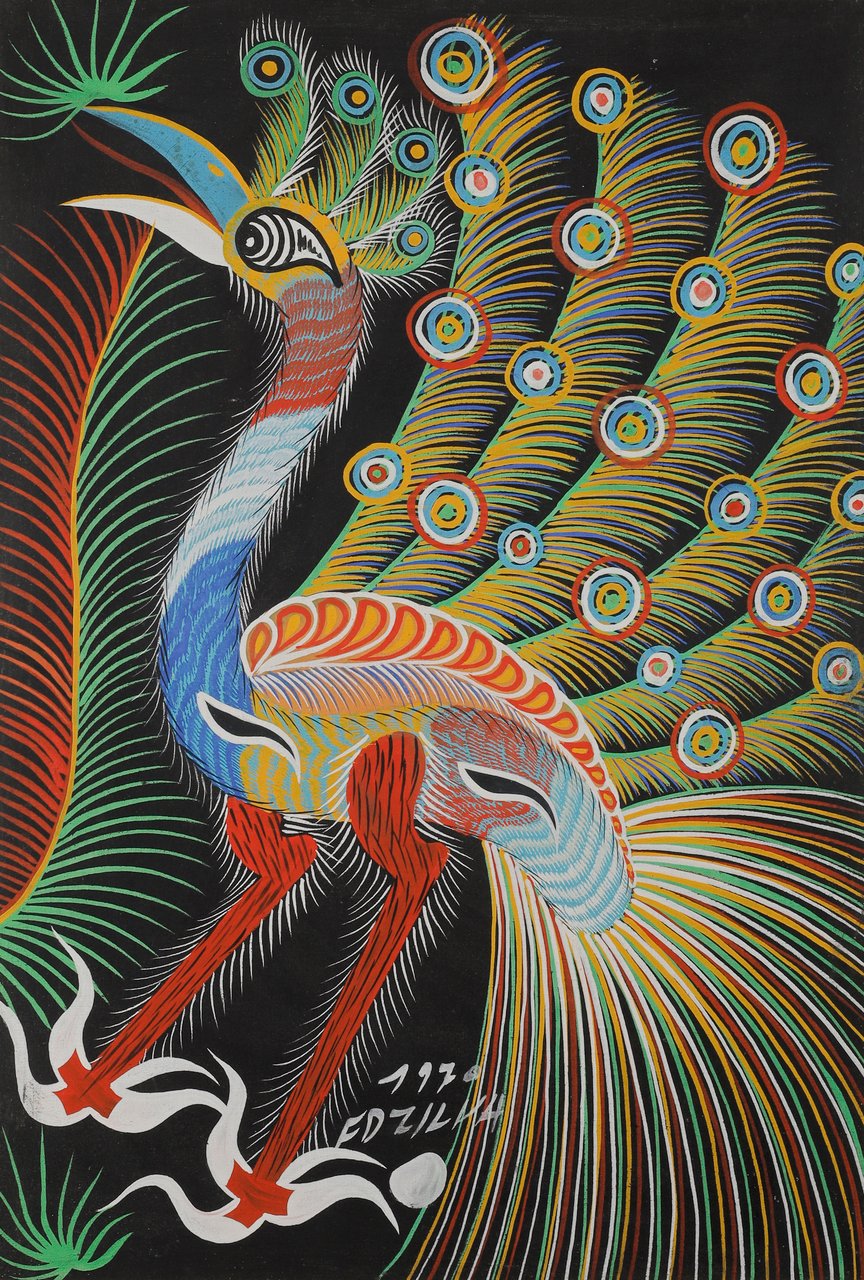
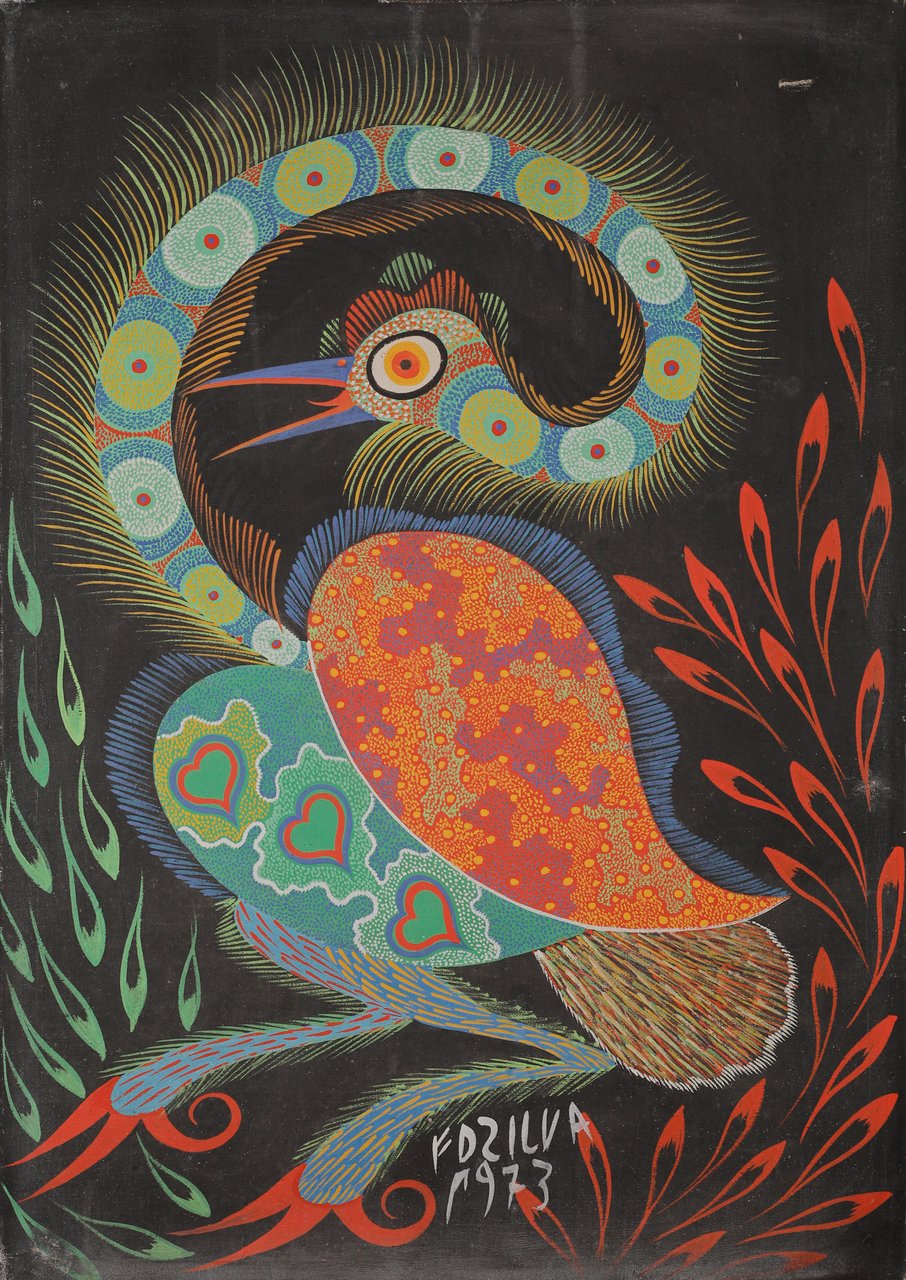
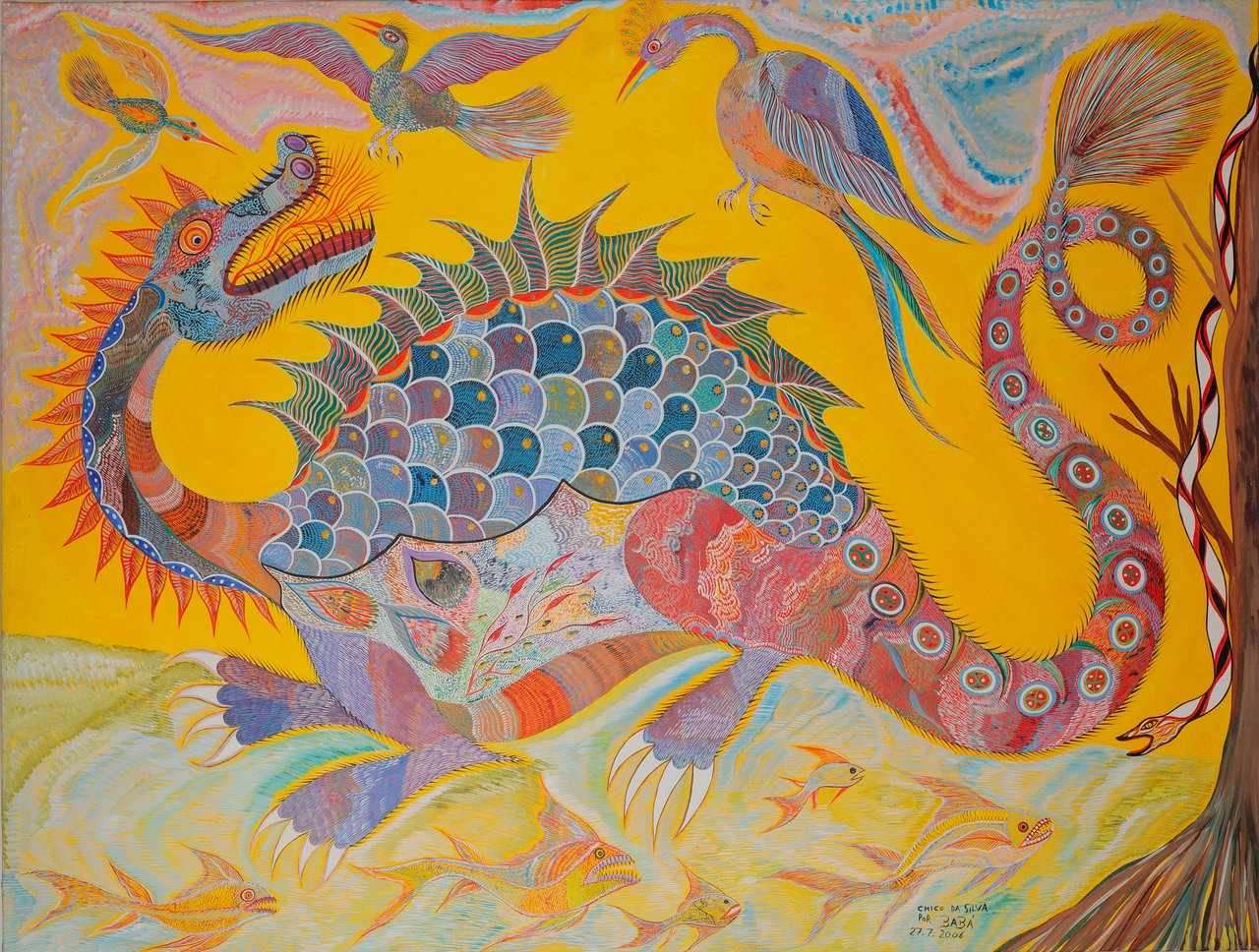
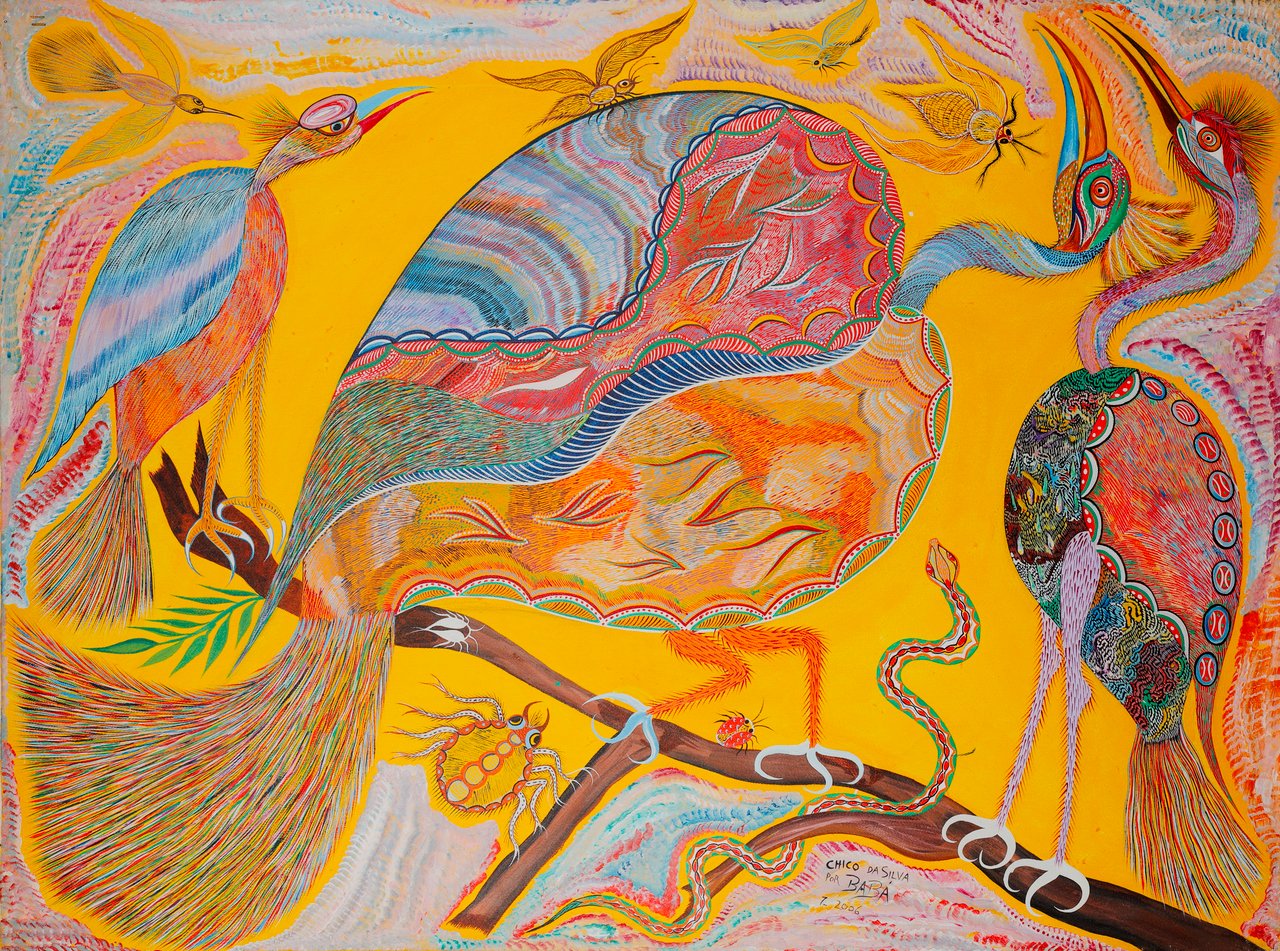
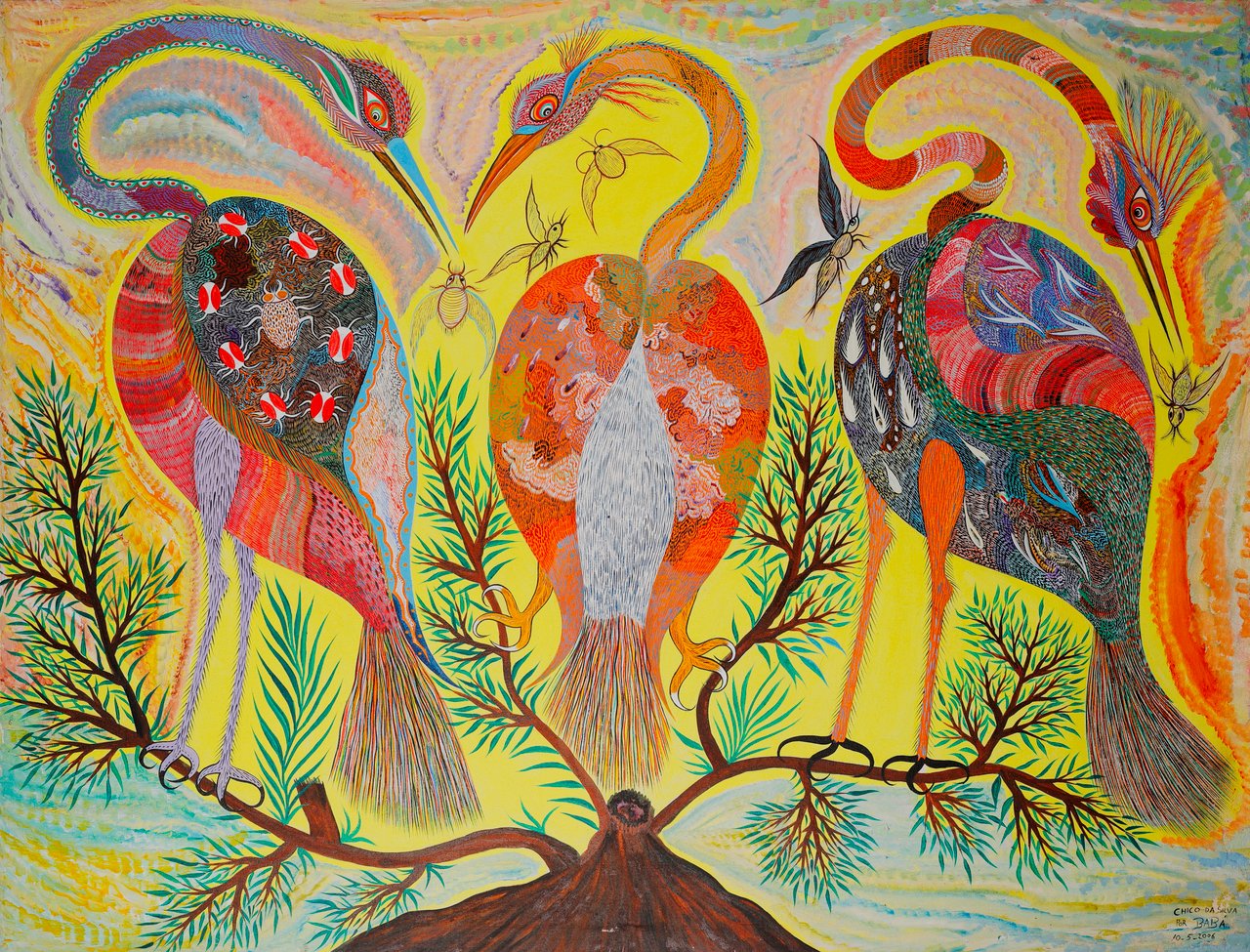
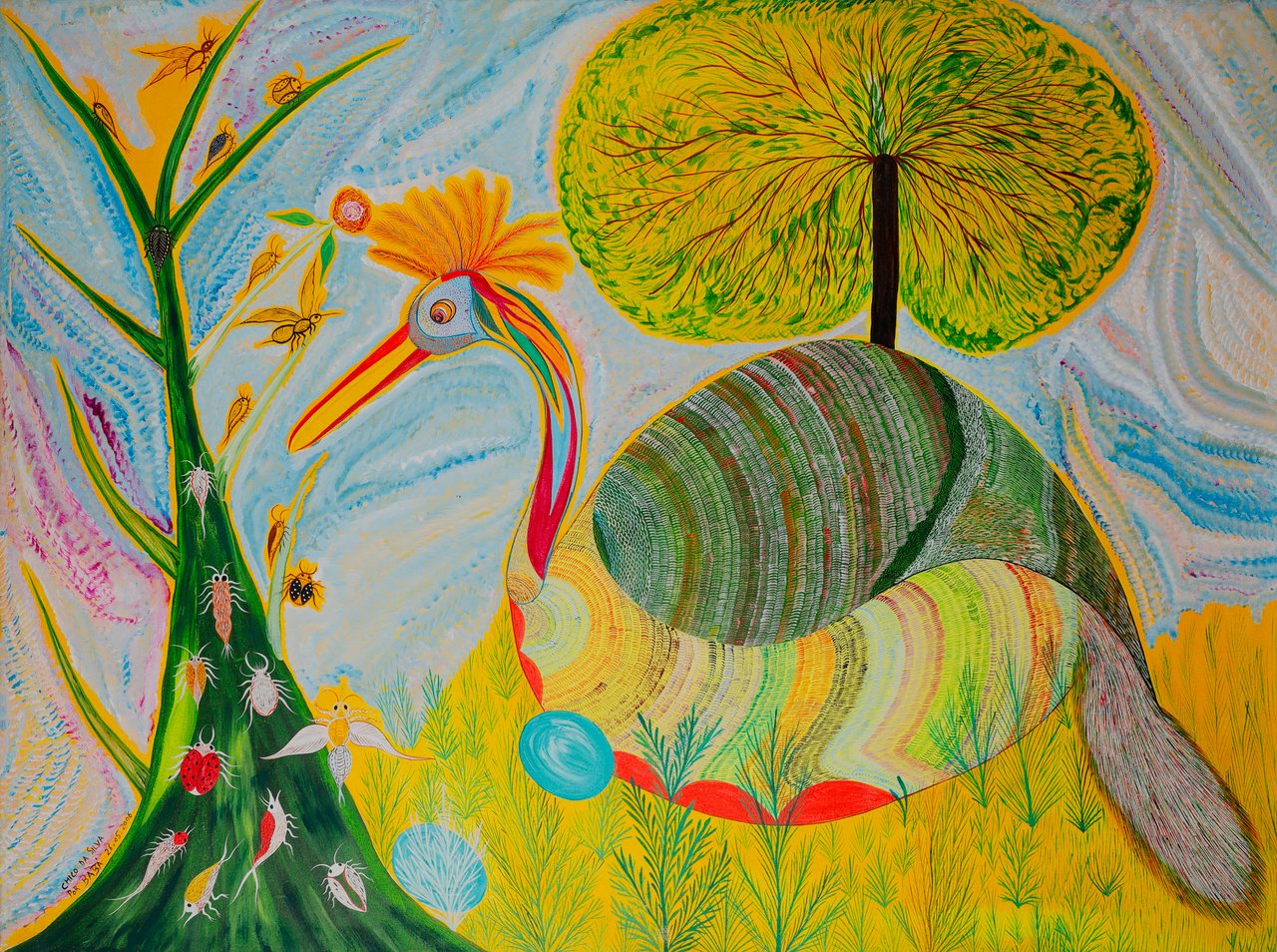
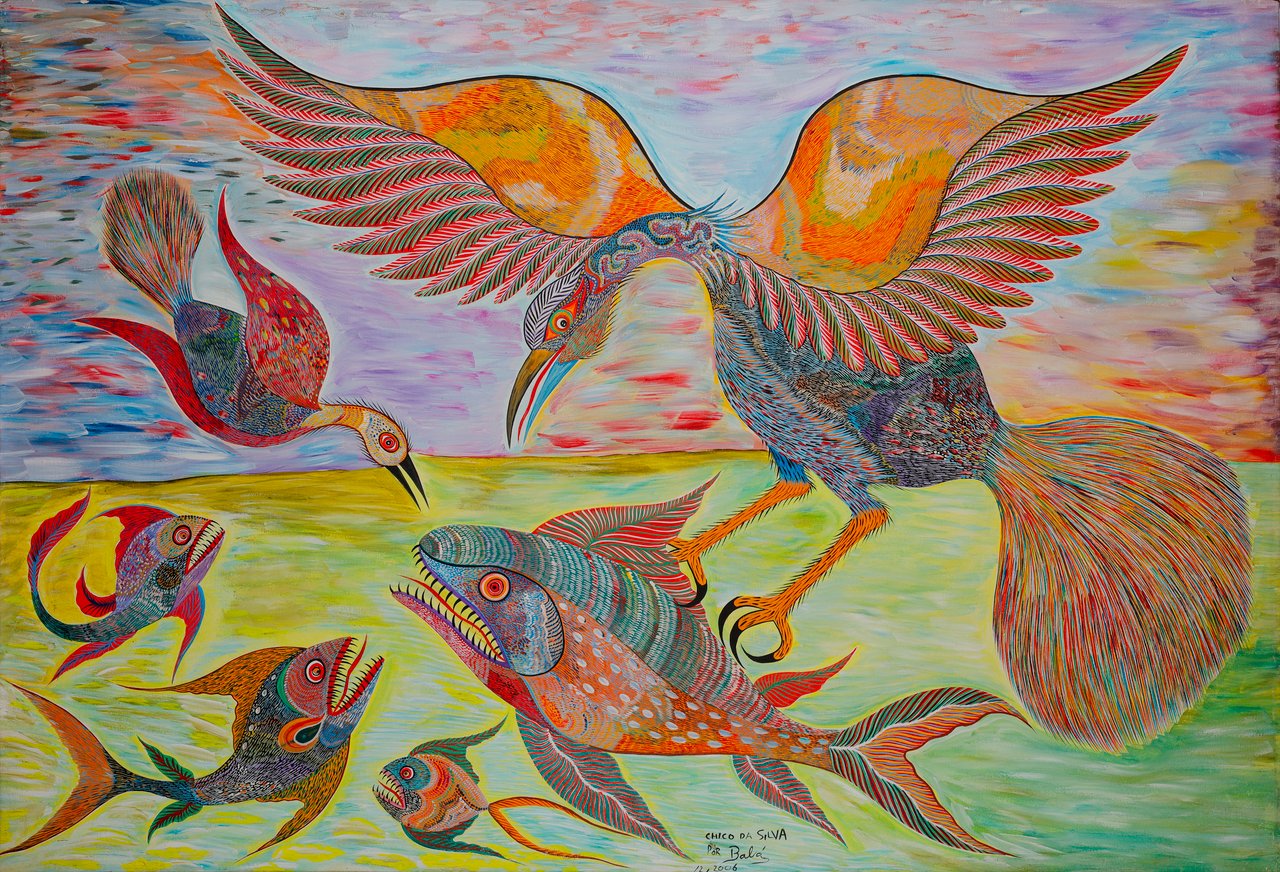
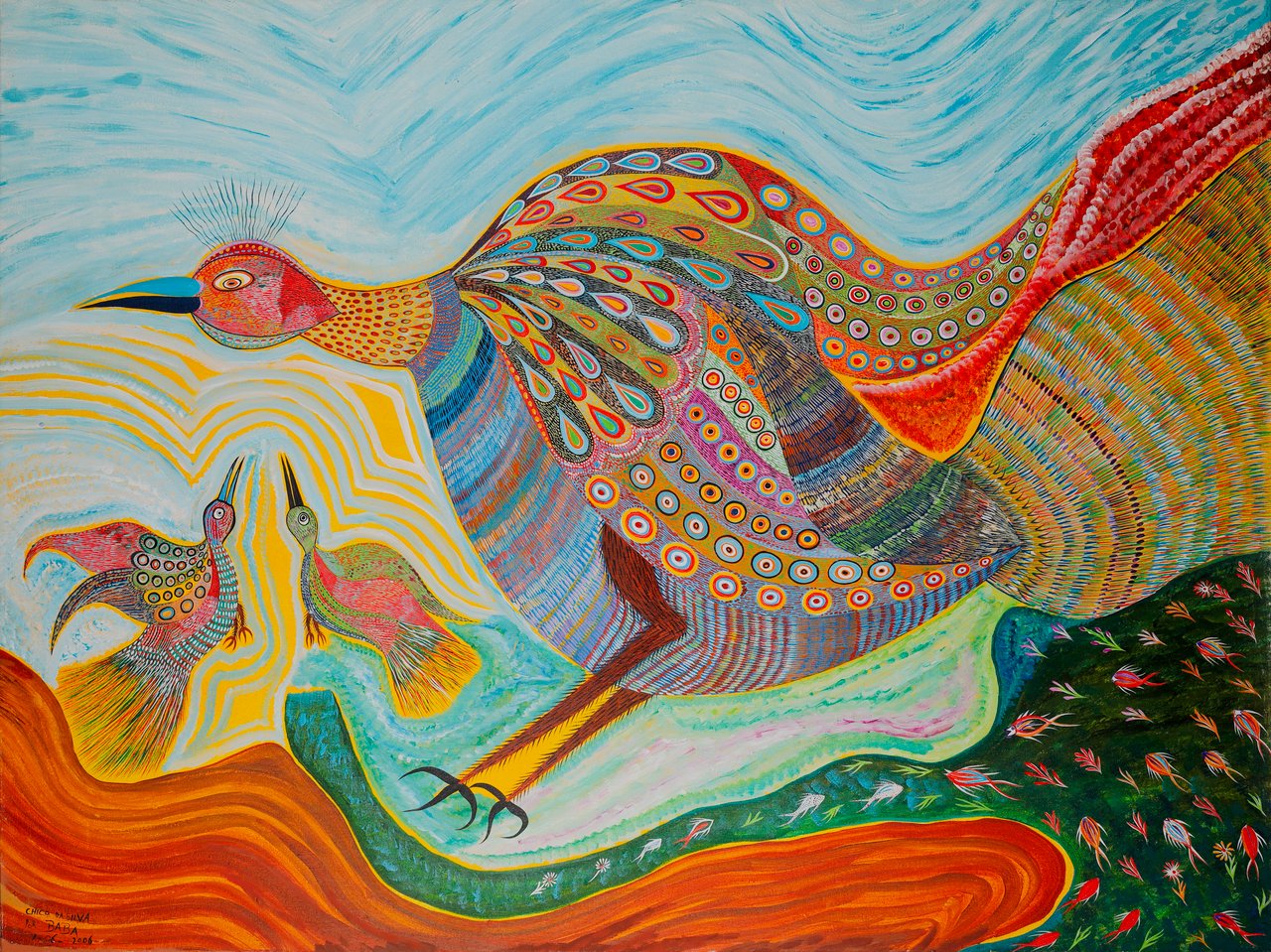
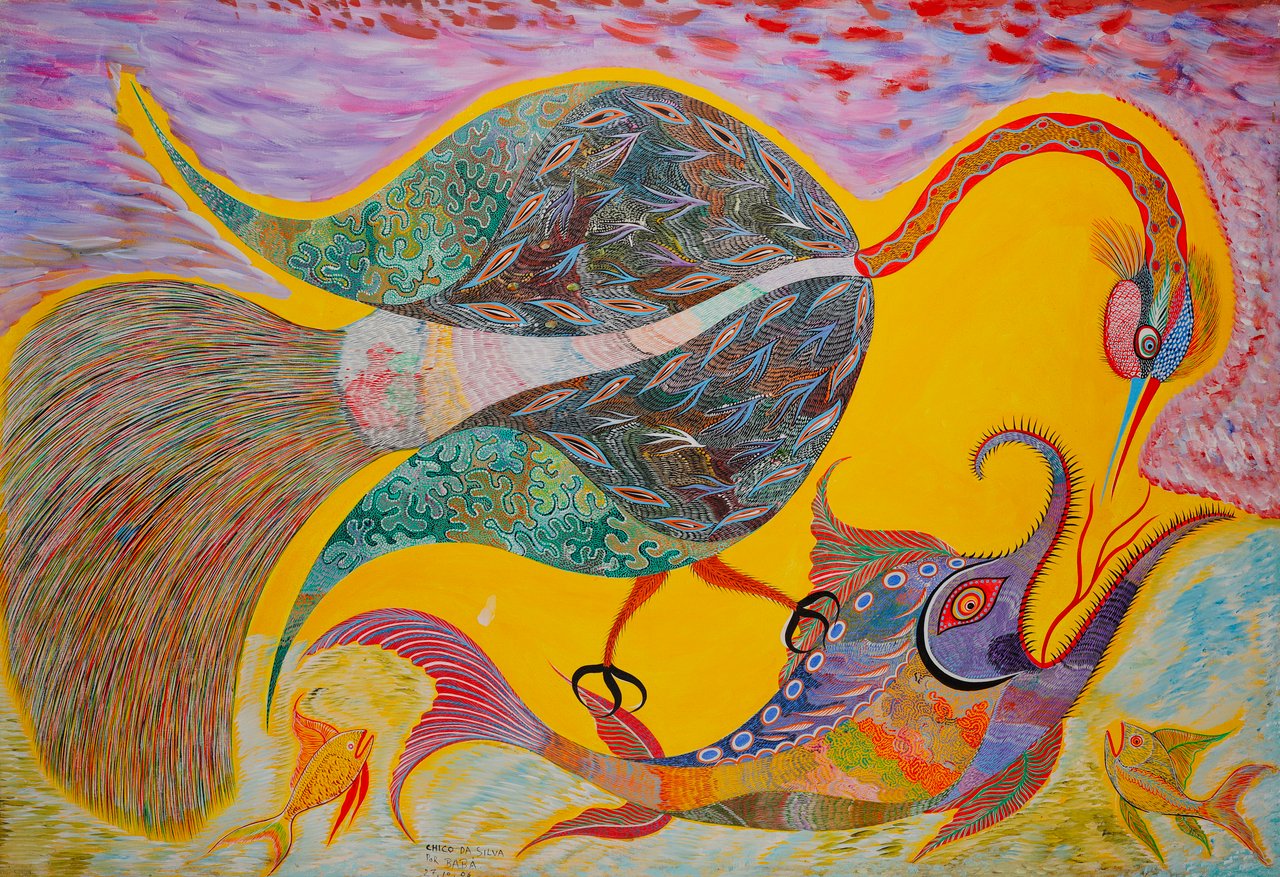
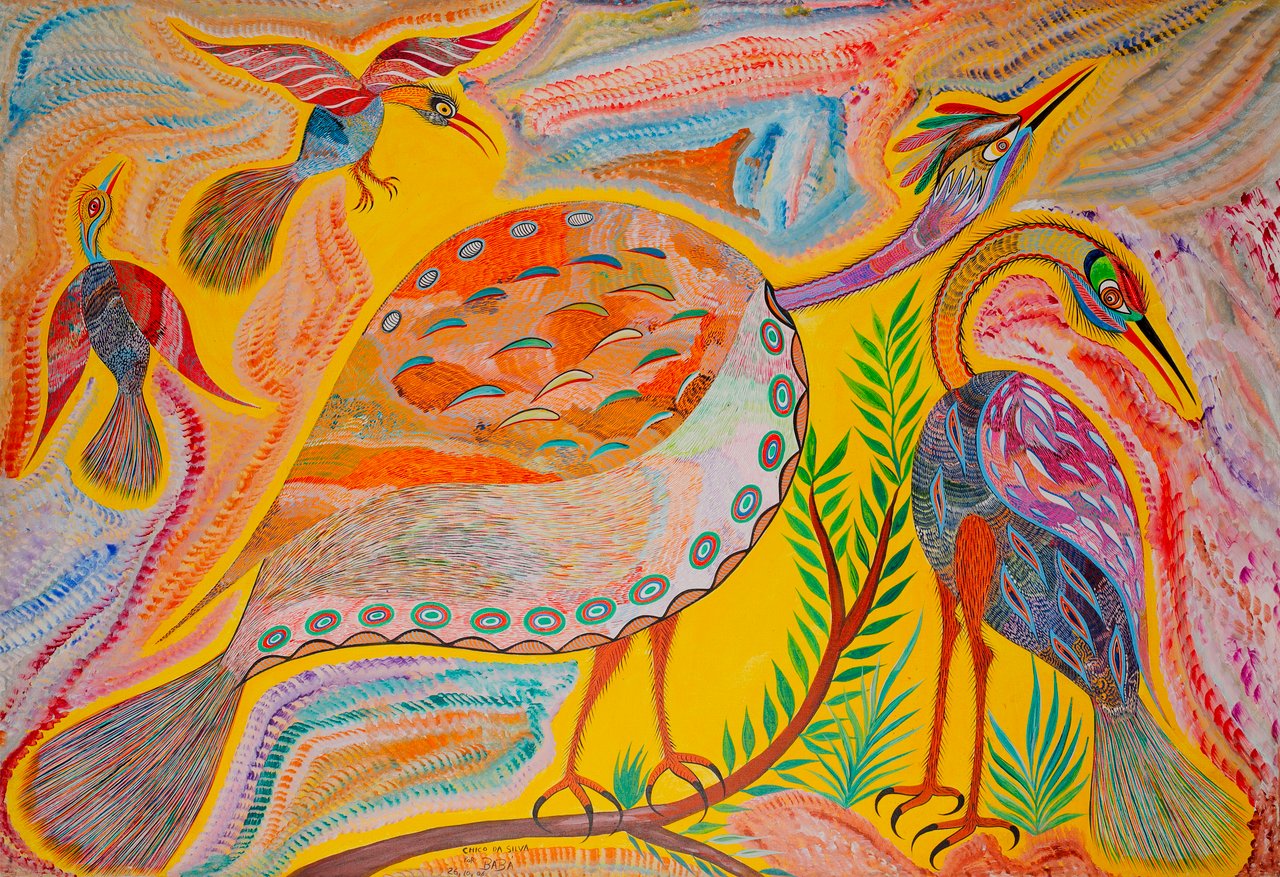
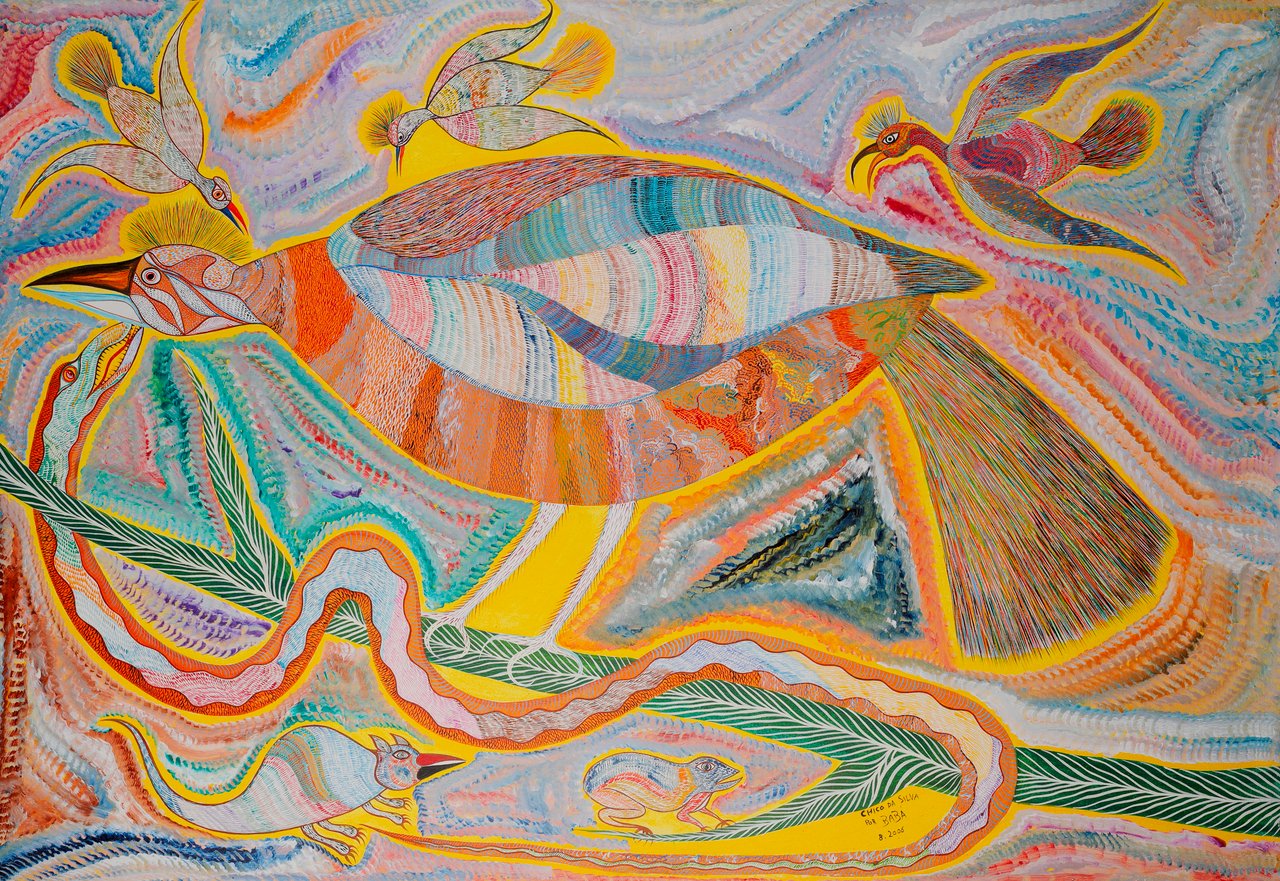
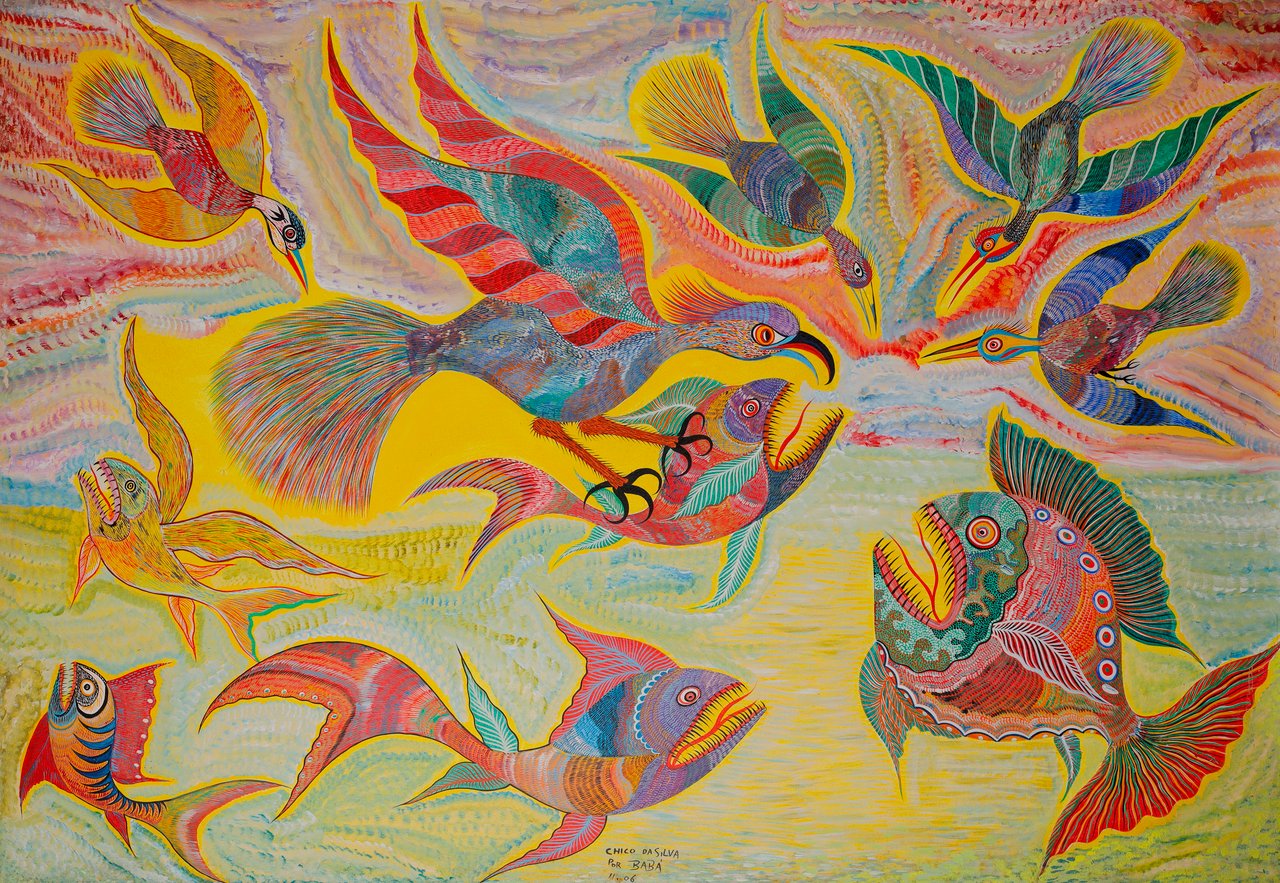
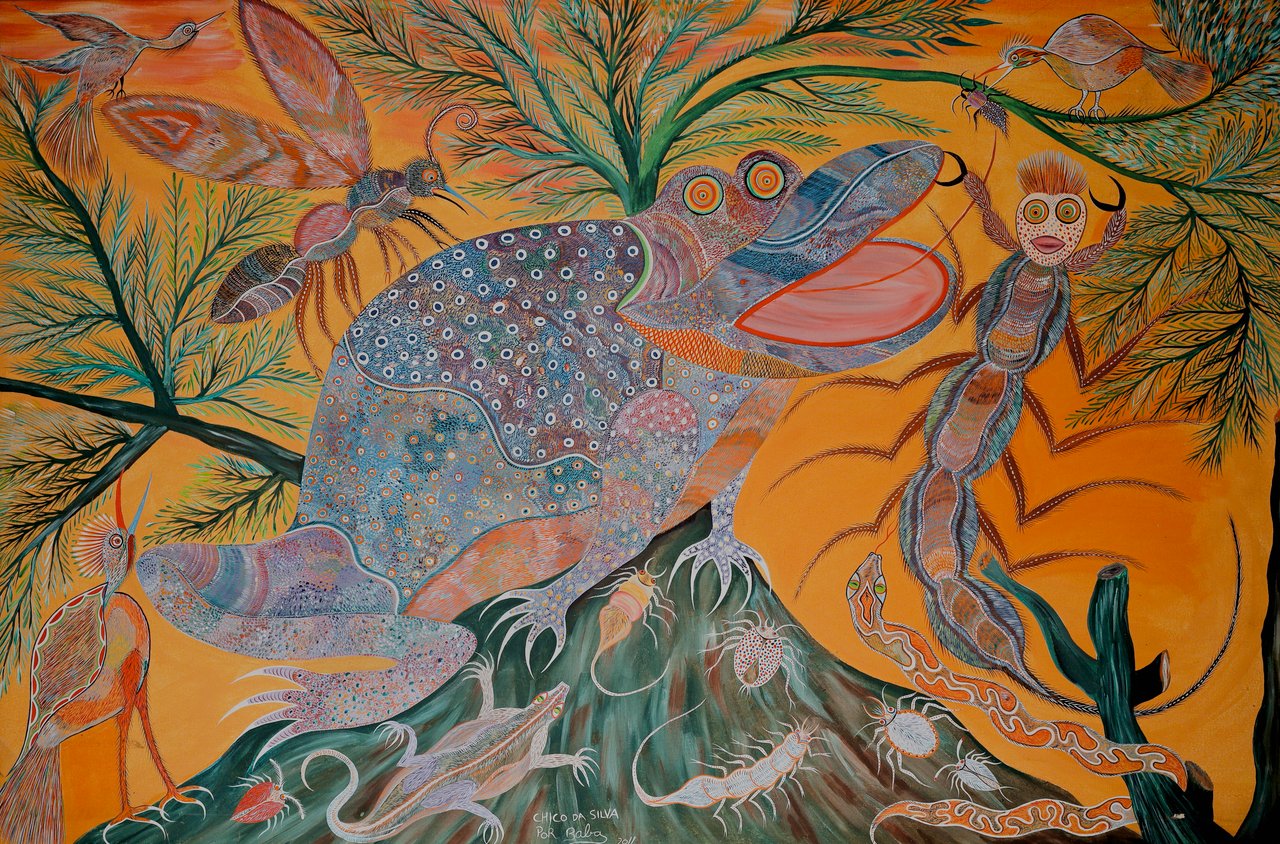
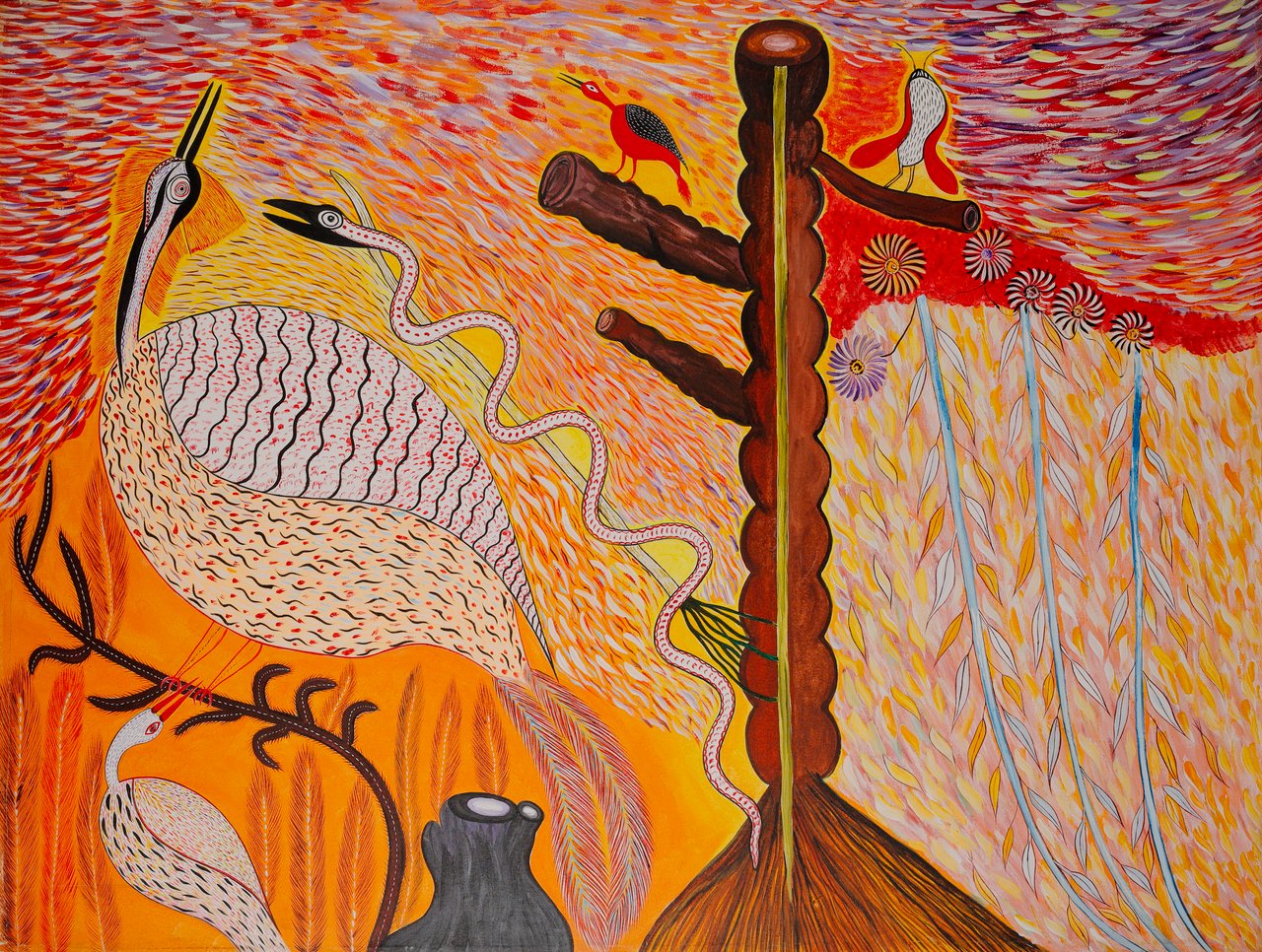
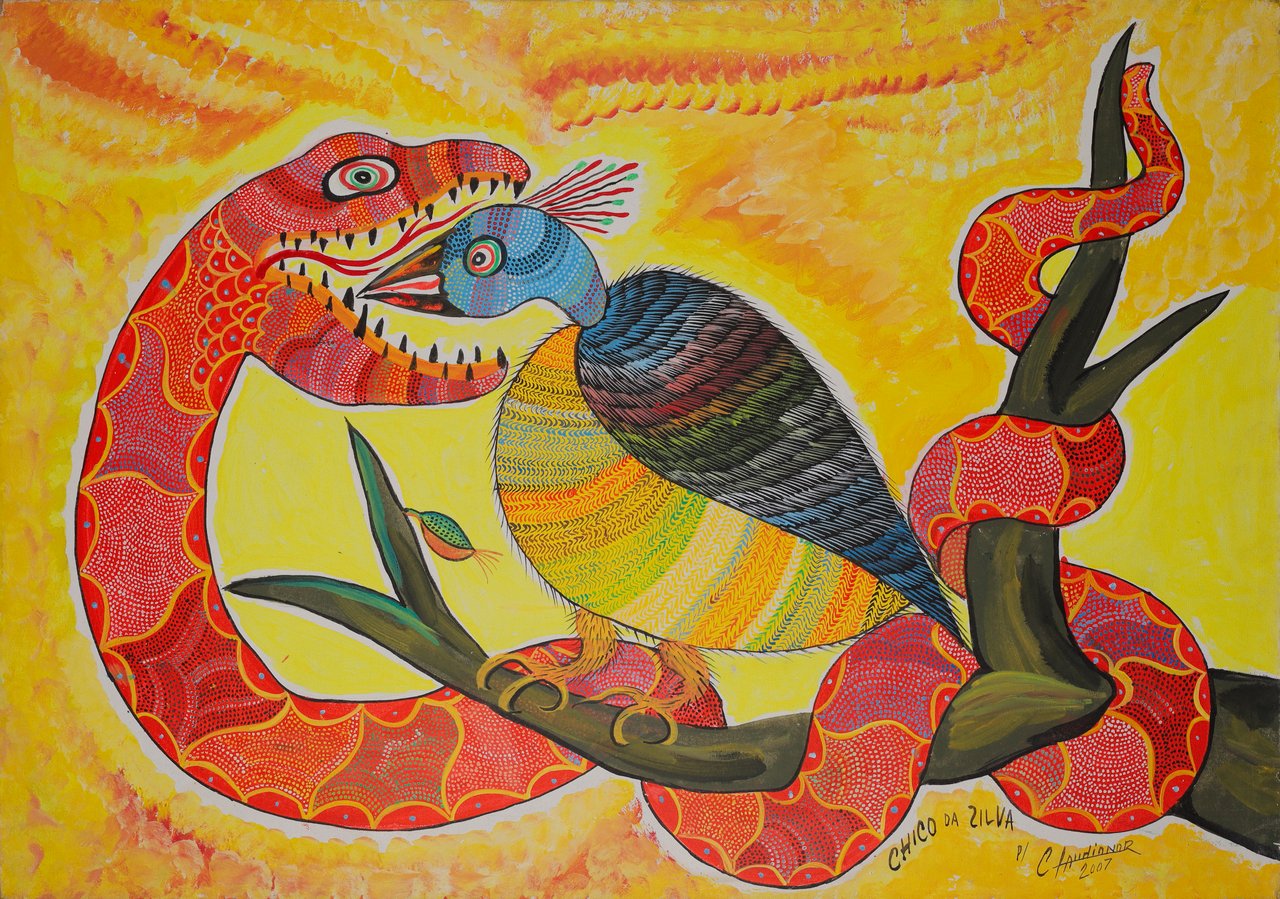
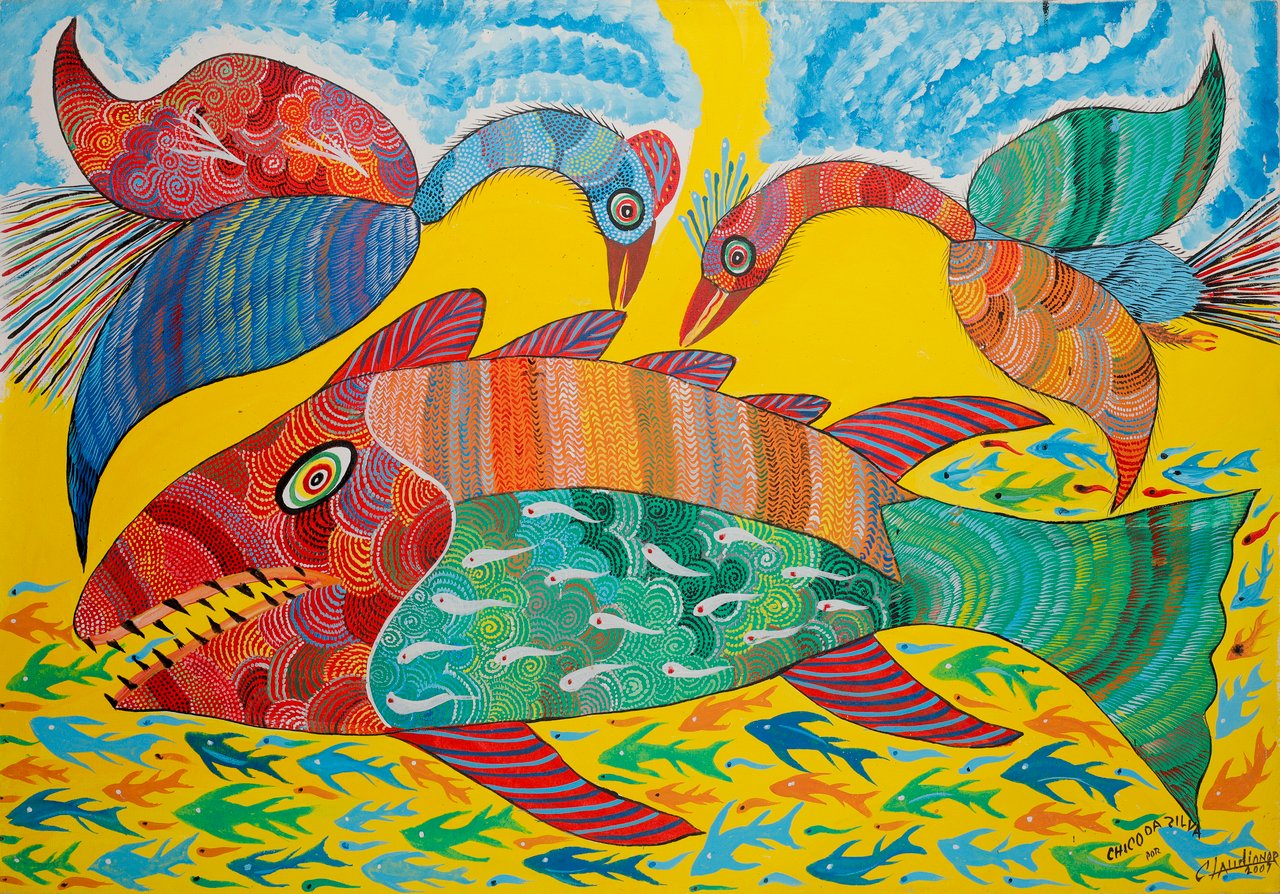
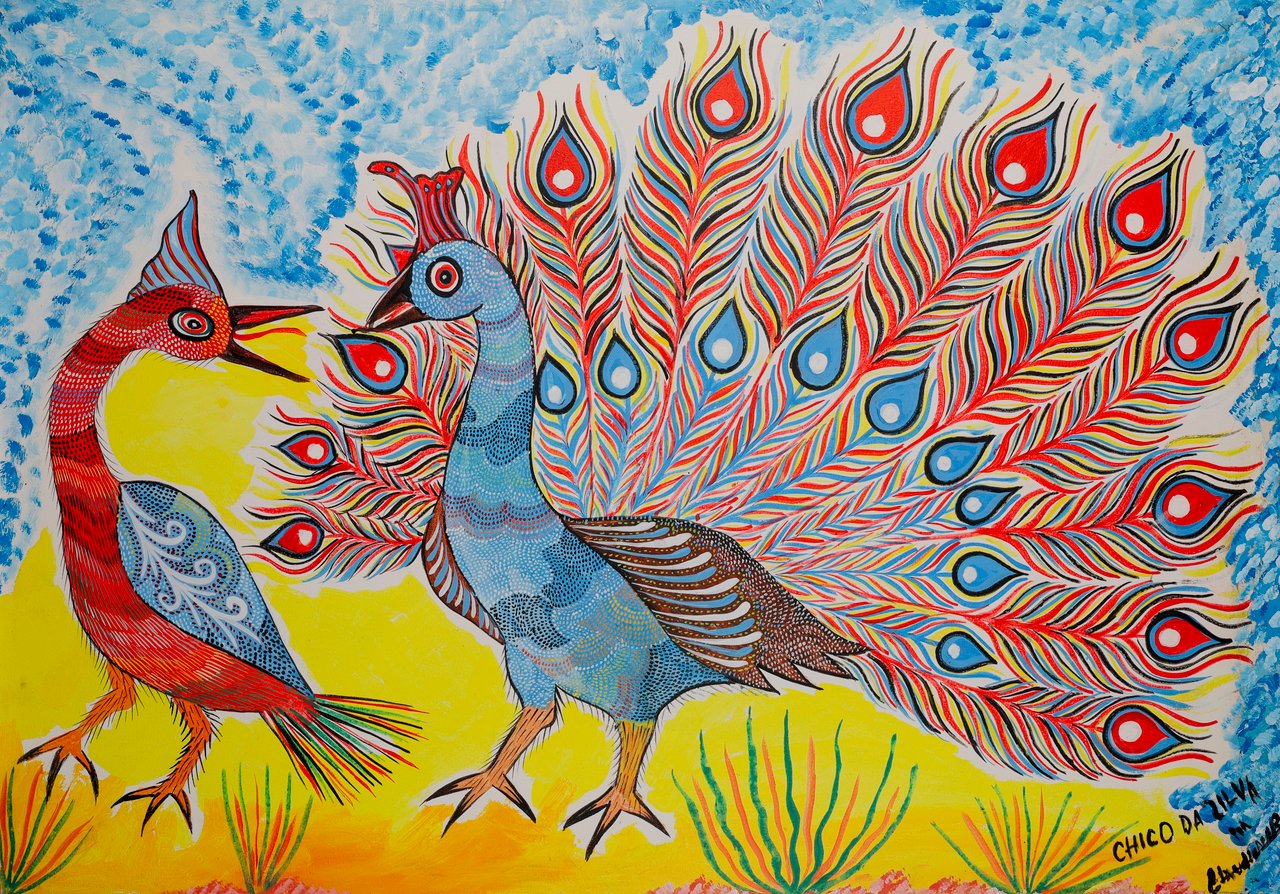
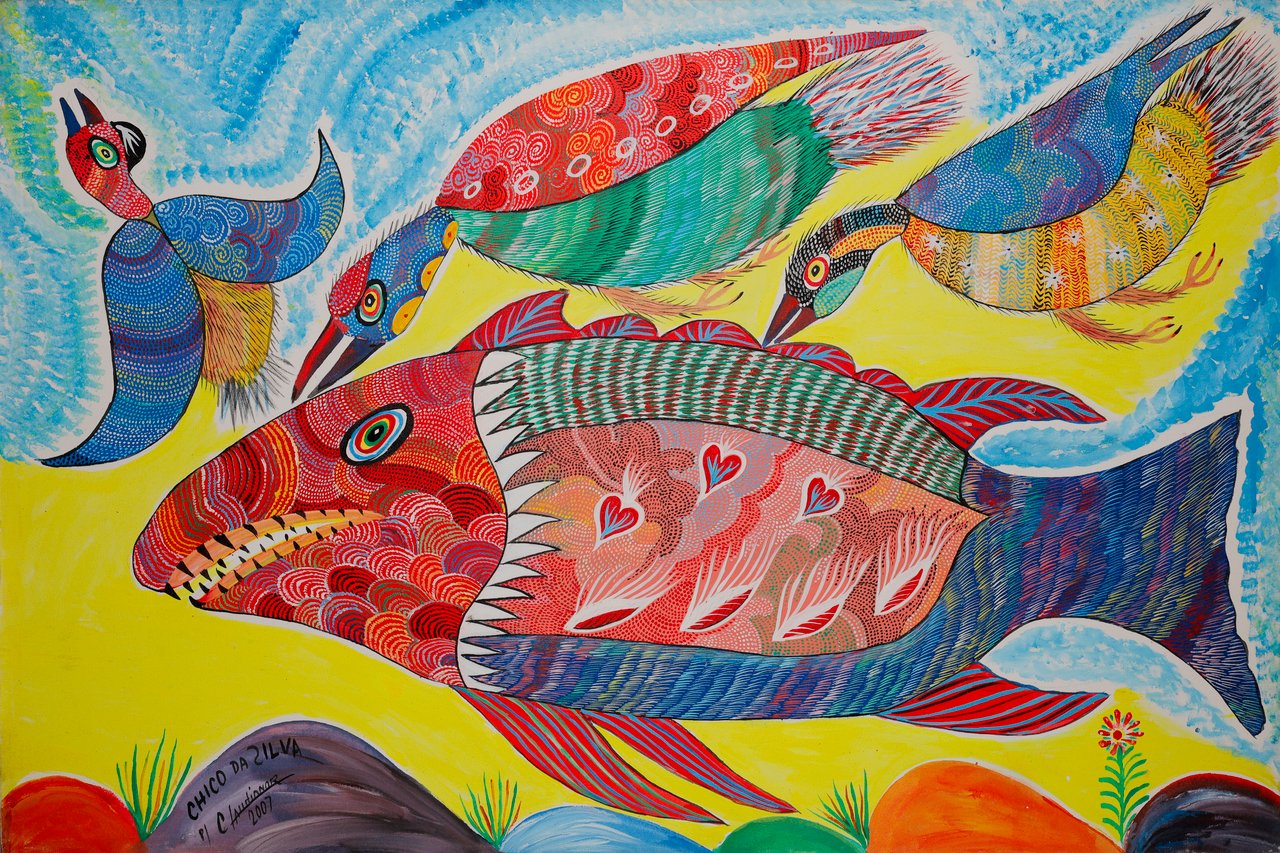
Fantastic birds, from wall to canvas
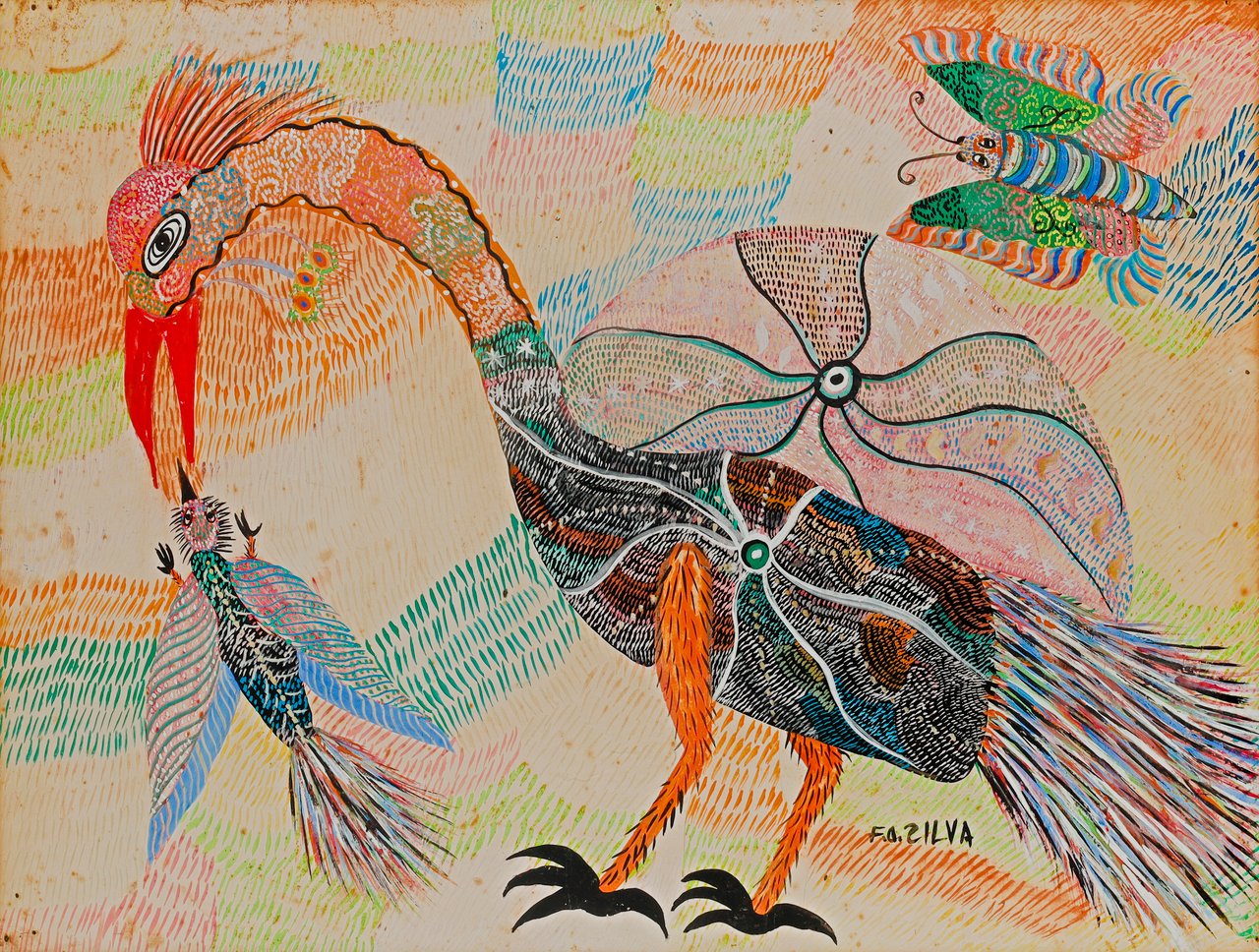
On a late afternoon in 1943, Chabloz stopped in front of drawings in charcoal and chalk on the walls of the houses at Praia Formosa: large birds in elegant lines, somewhat monstrous fish, ghost ships. When he began commissioning works on paper, the sheet that convinced him to keep buying was a mother bird with four chicks set around her like spokes. In the 1960s birds were already giving works their names, as with Gavião Real and O Uirapuru, shown in 1961. Tate, in London, has The Great Bird, a 1966 gouache on plywood, on loan.
The master’s bird can be recognized from a distance. The long neck arches over a small head with a round eye, and the body is divided into zones, each with its own pattern: rows of dots, scales overlapping like roof tiles, hearts. It looks this way in Fantastic Bird (1973) and in Peacock (1970), whose open tail is set with colored eyes. The subject of the first sheet Chabloz bought, the bird with its chicks, returns in Fantastic Bird and Fledglings.
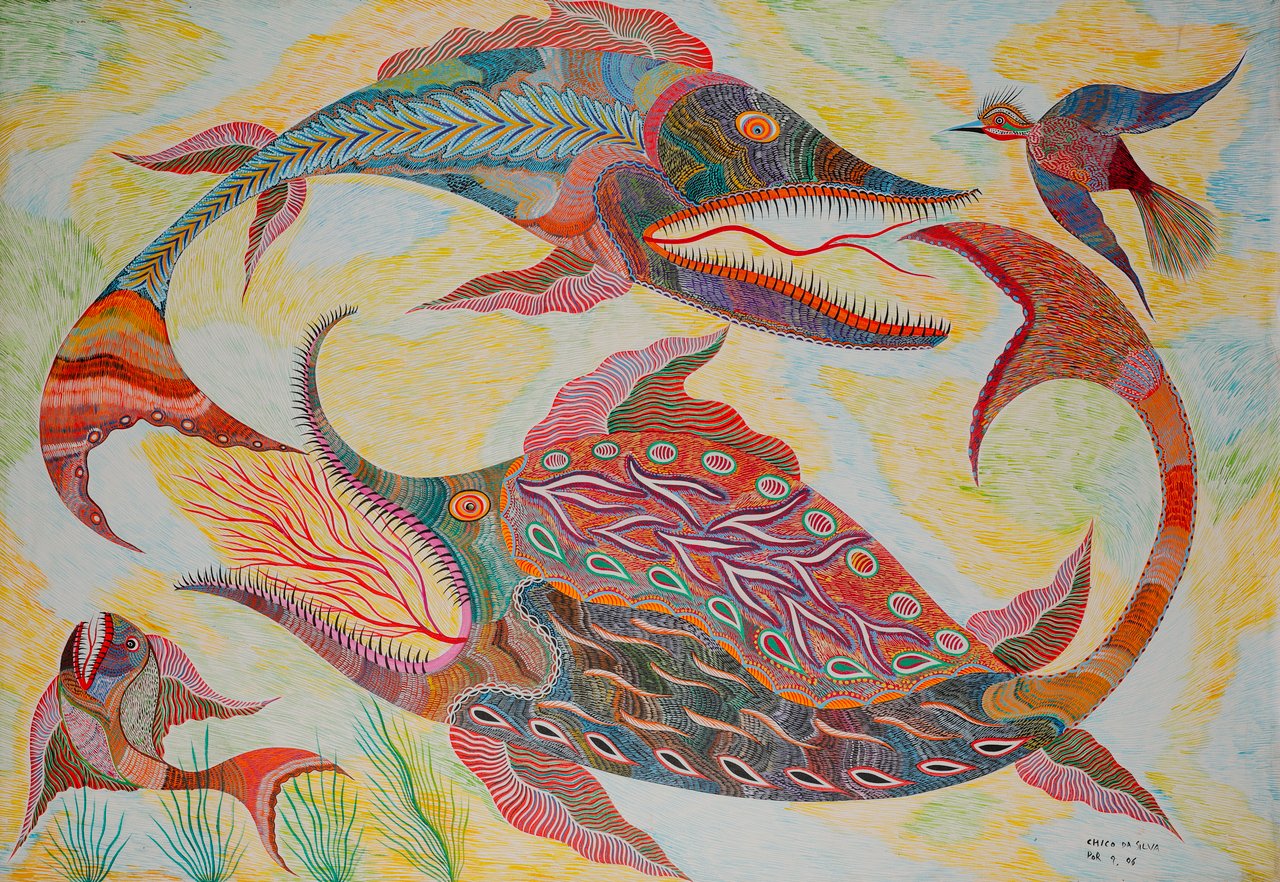
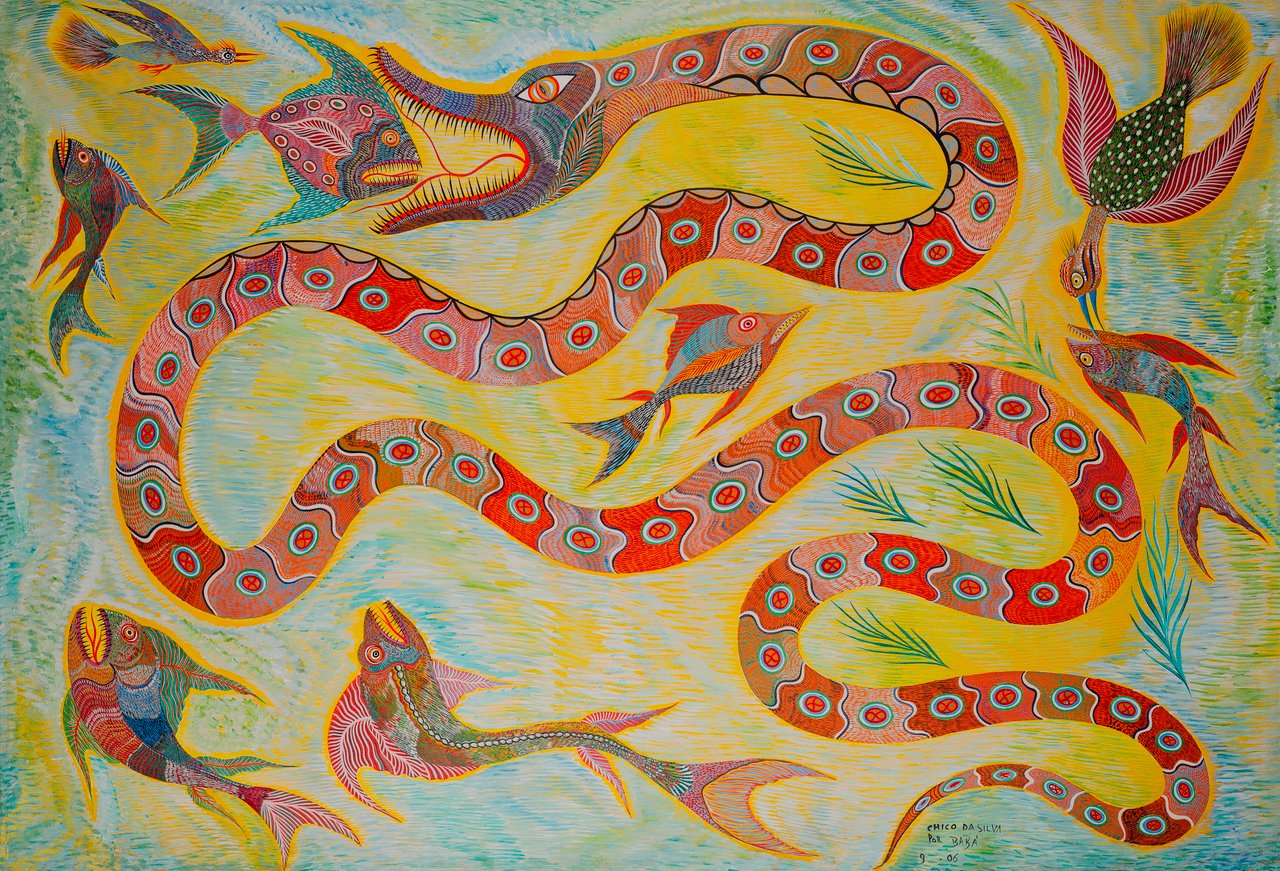
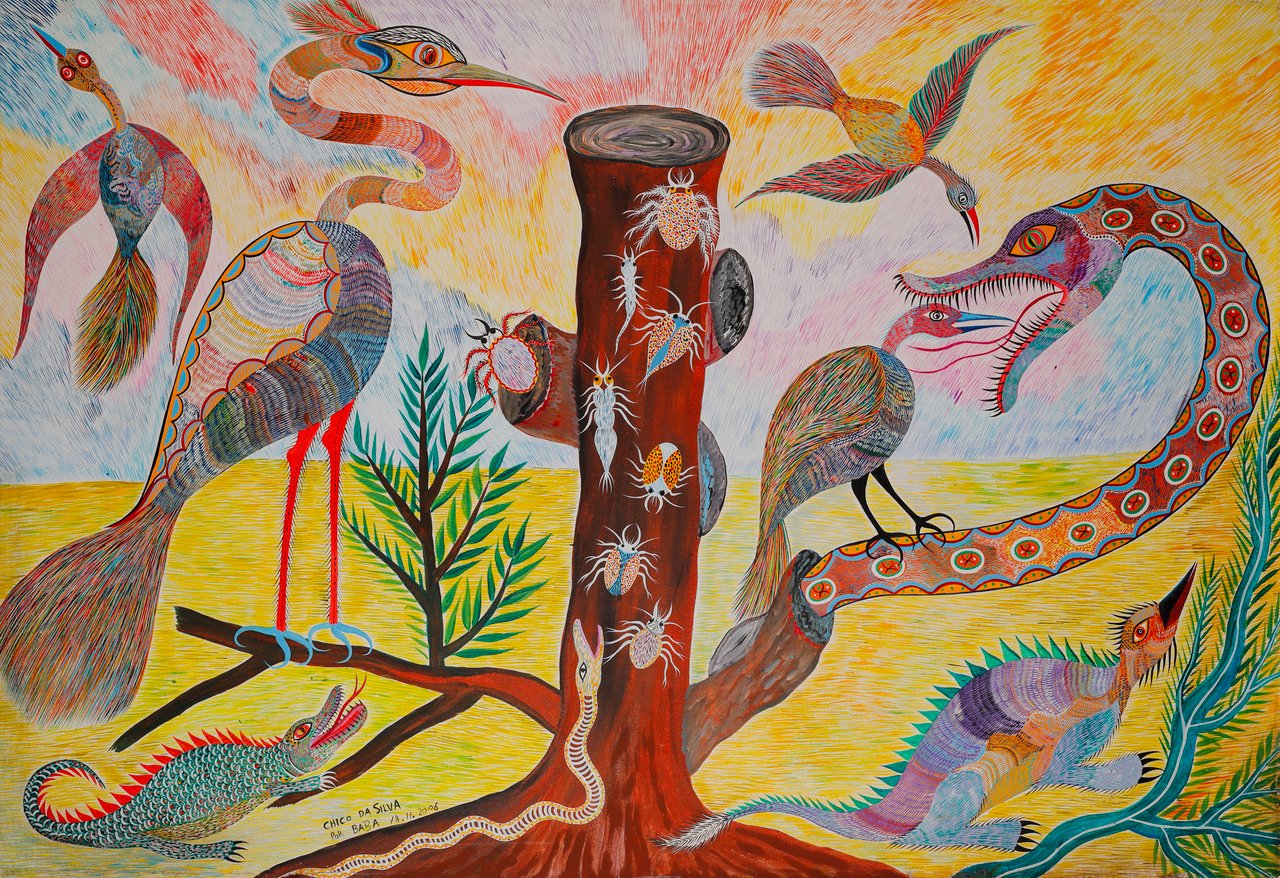
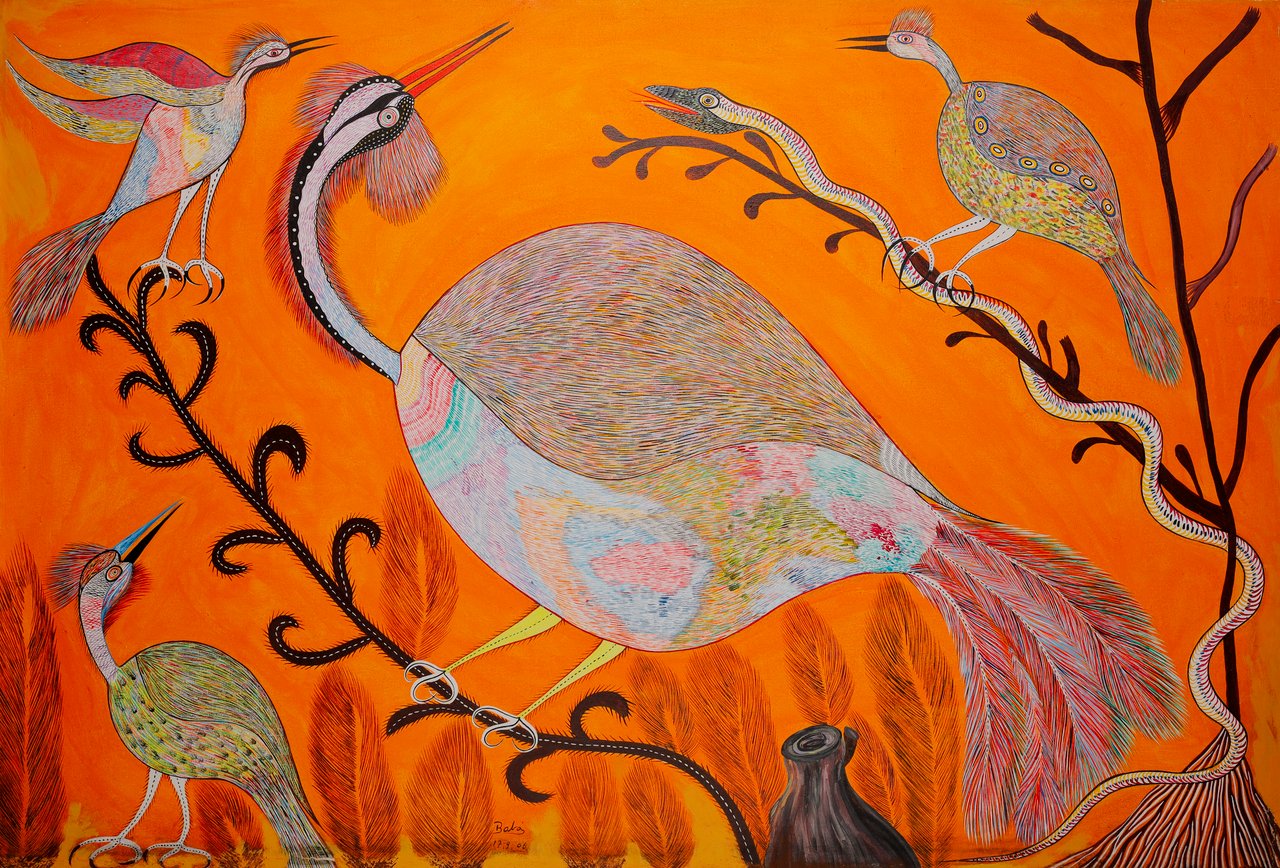
Egrets, jacanas and owls entered the repertoire with the Pirambu studio, from the mid-1960s on. In the canvases Babá painted for the Instituto Oboé between 2004 and 2011, the birds appear in pairs, one on each side of a tree, or in flocks that share the picture with snakes and fish, as in Birds Snake and Owl, which has an owl among the birds.