Acrylic
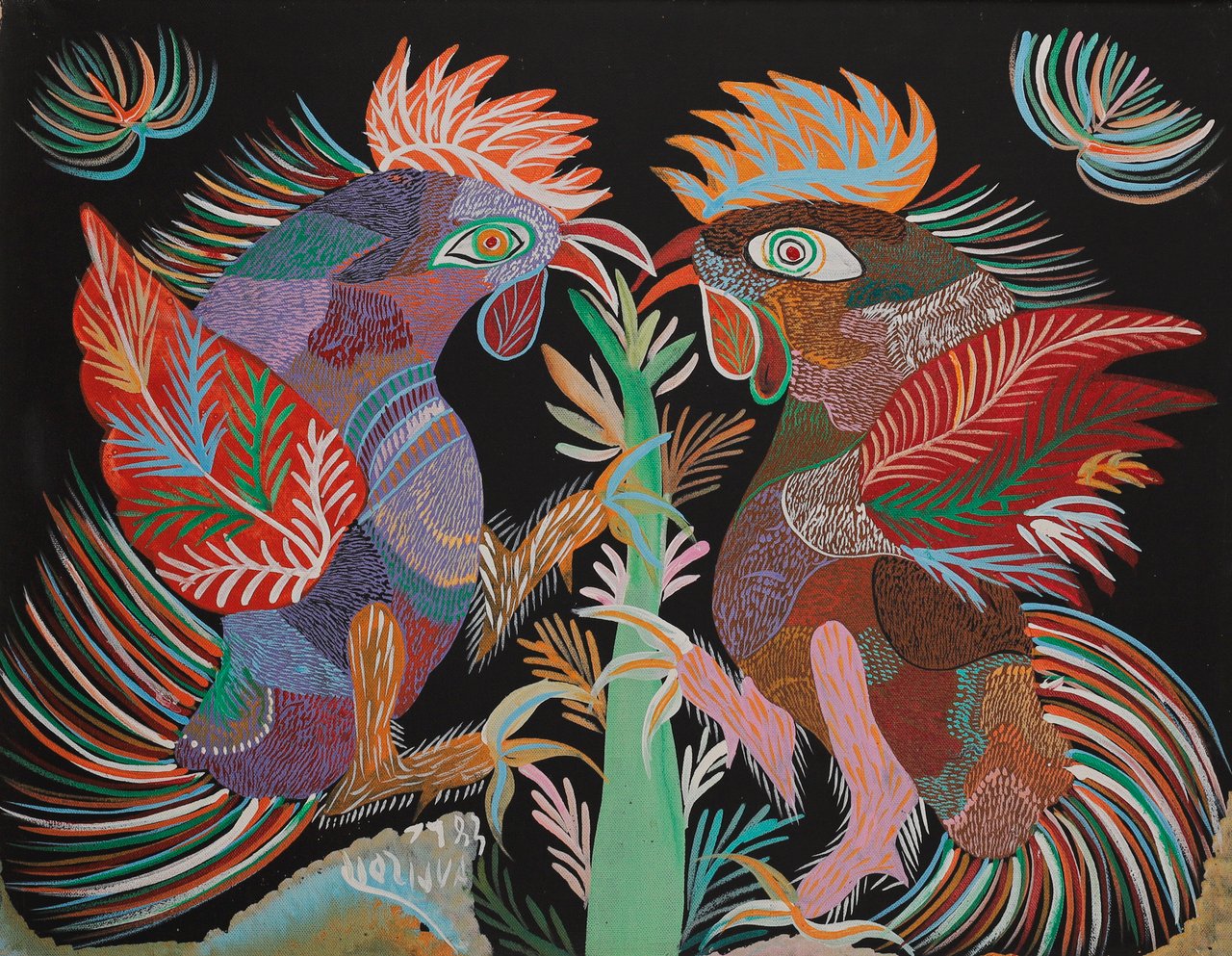
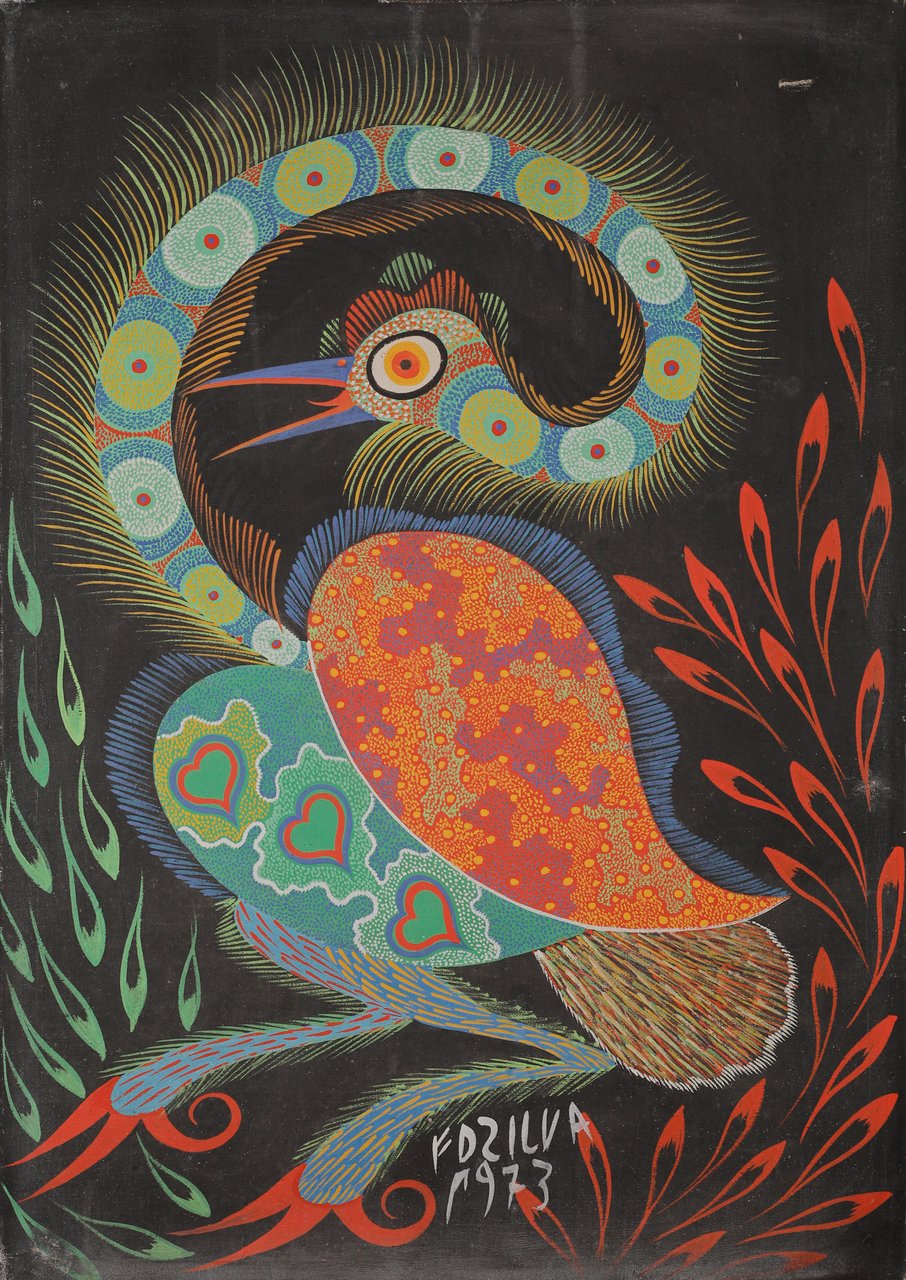
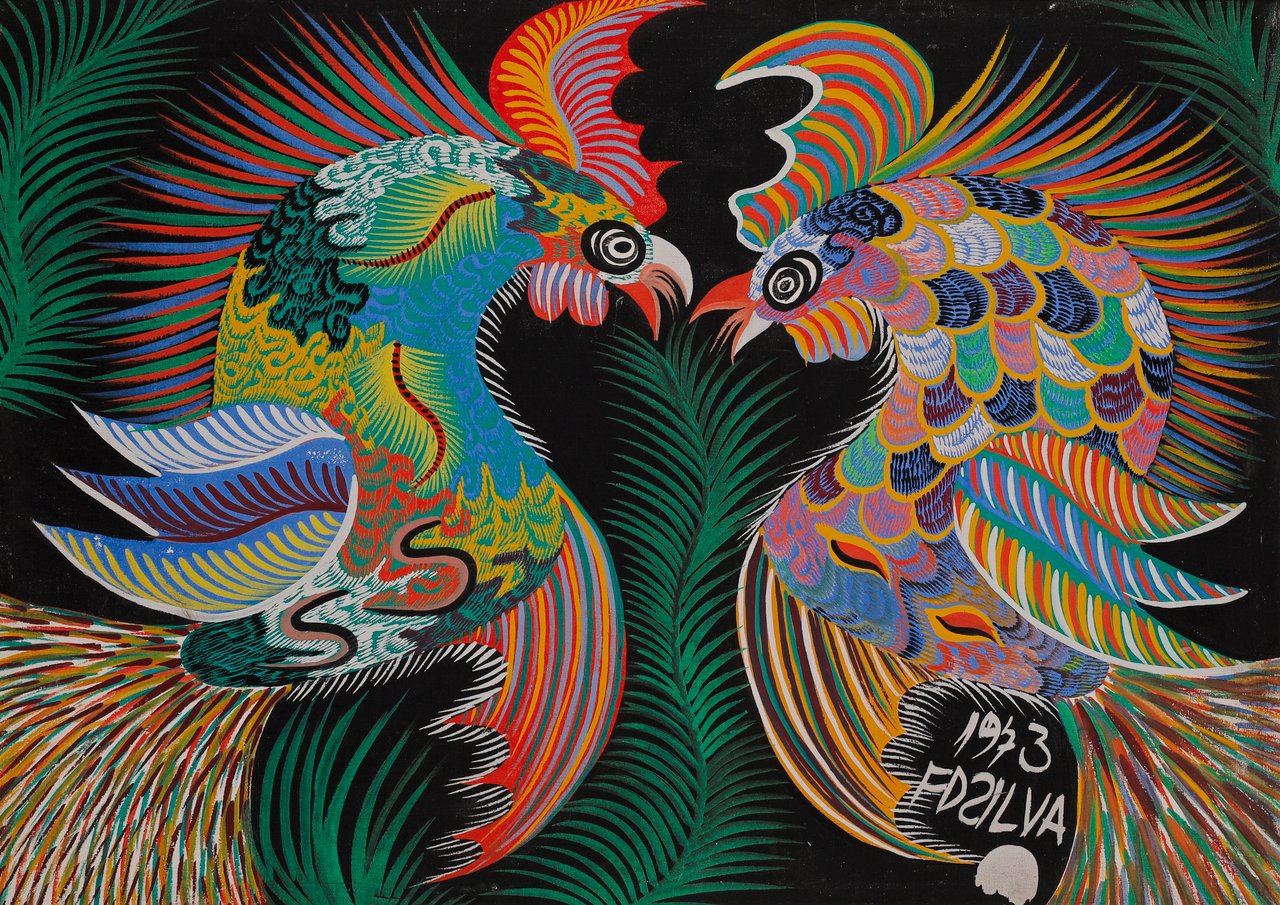
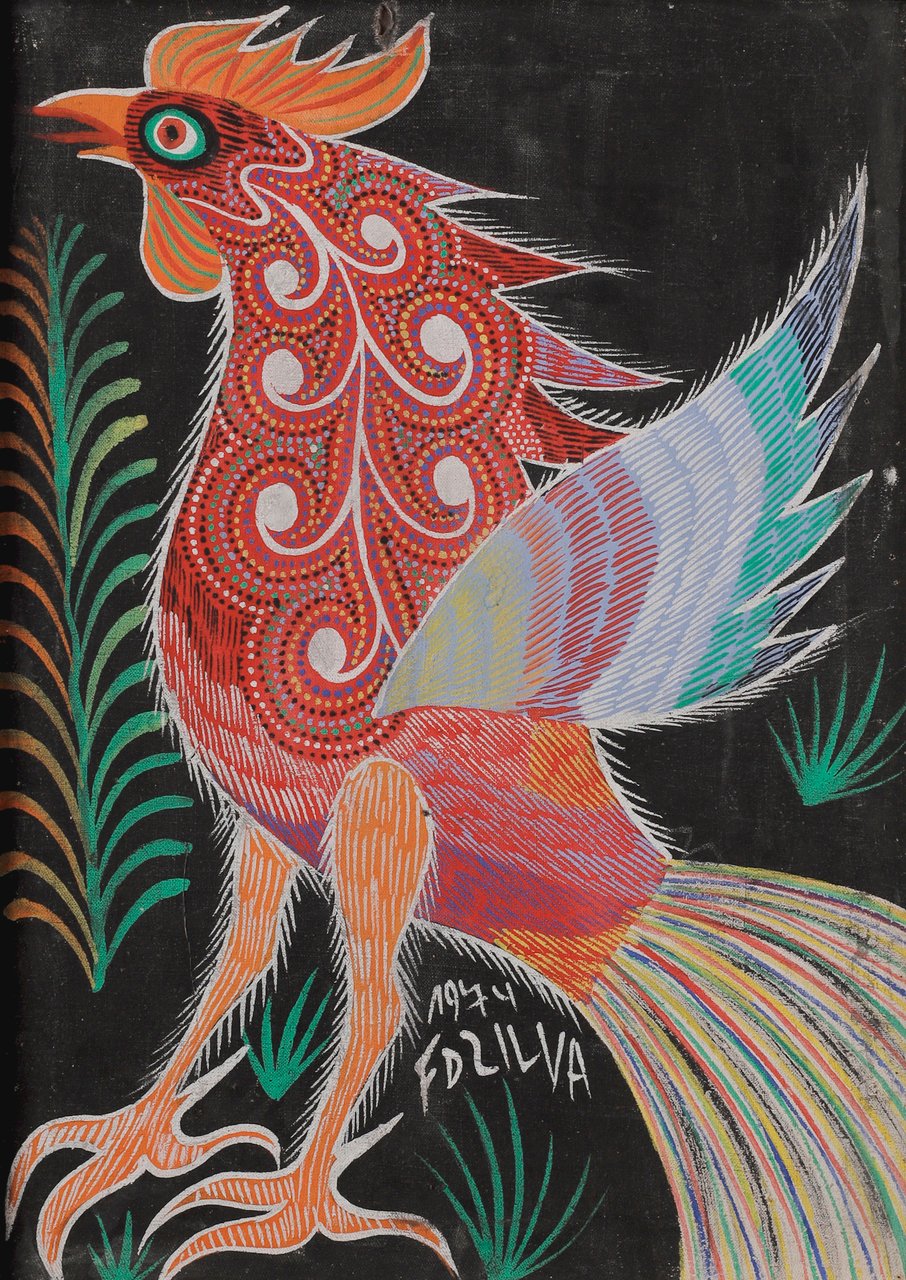
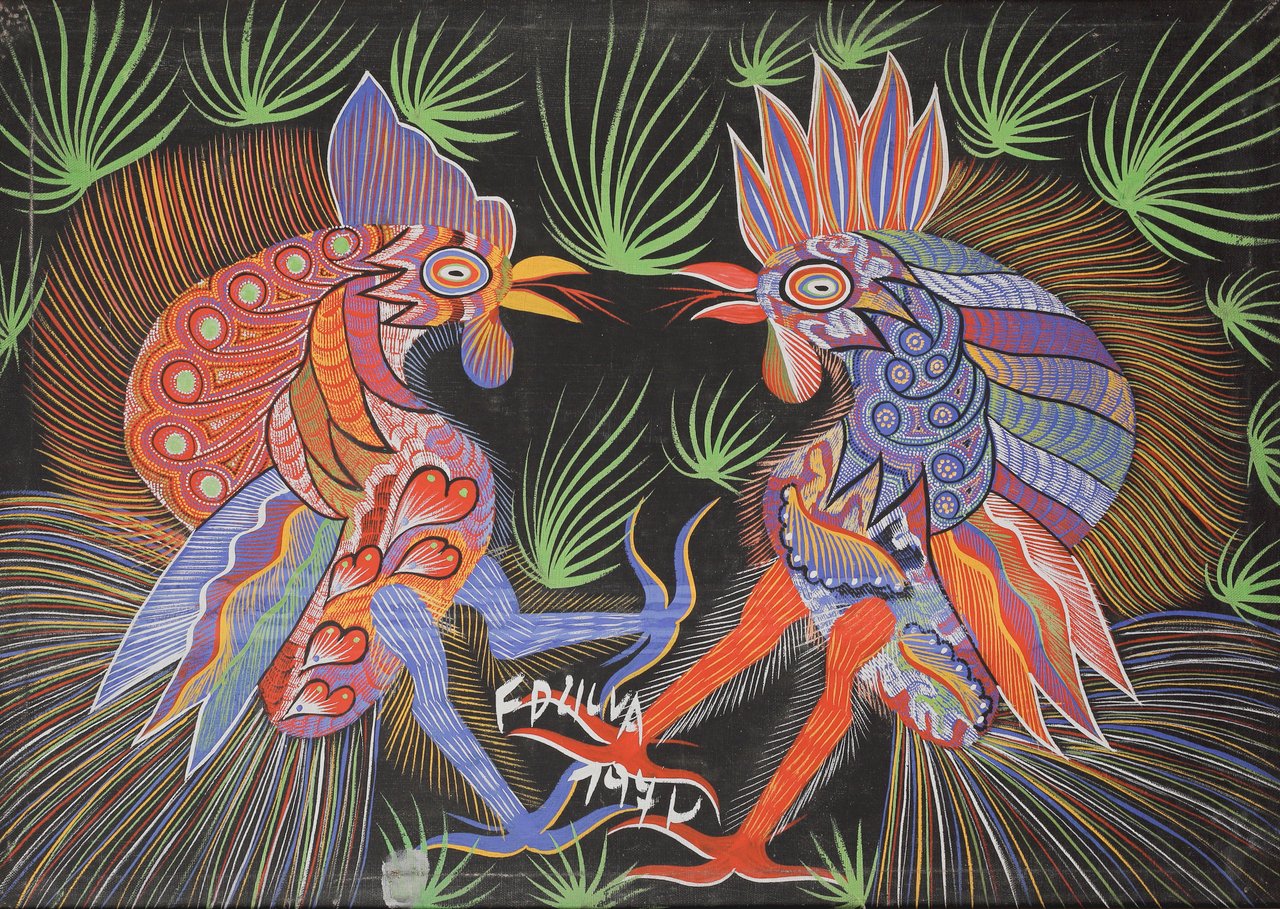
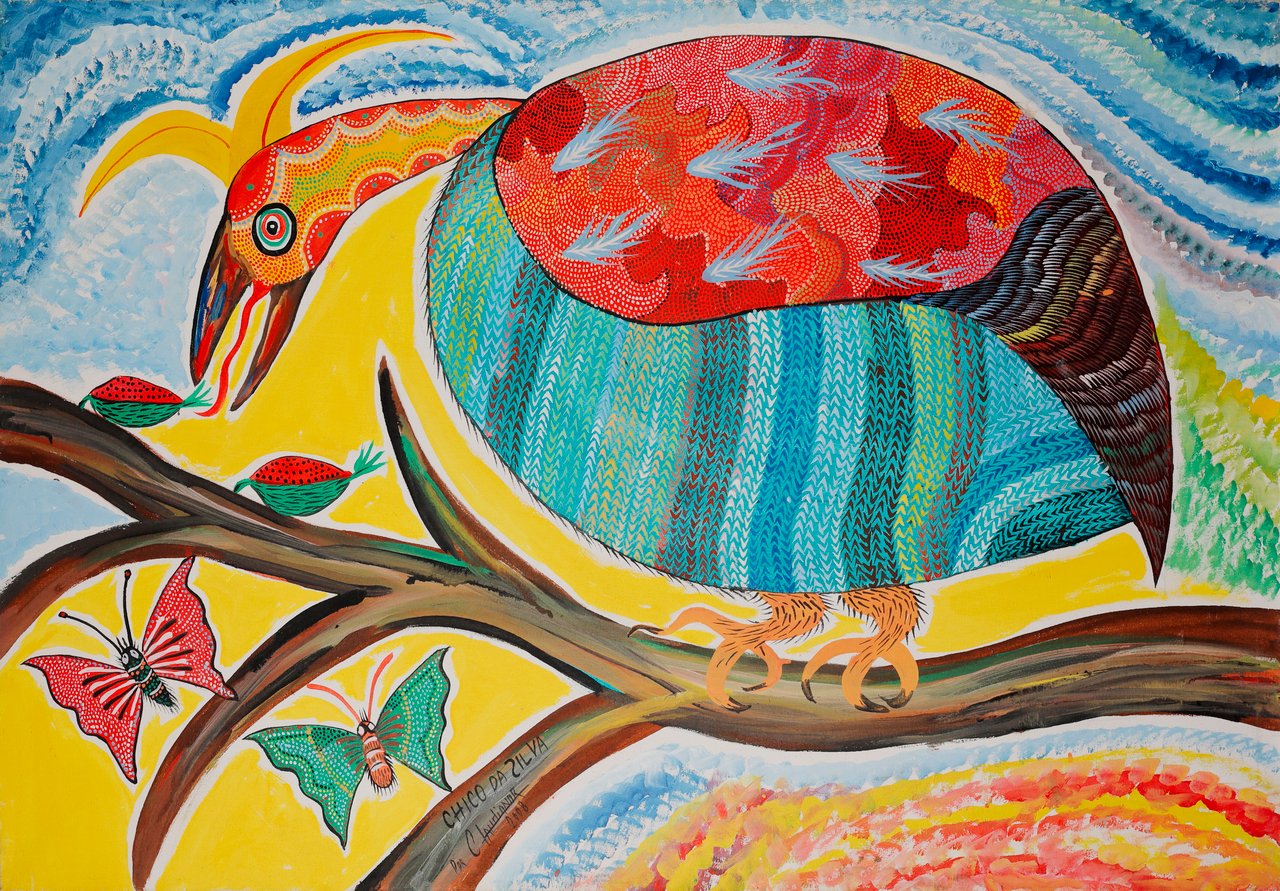
Acrylic came into the work of Chico da Silva around 1970, together with canvas, and from then on it was the paint of the Pirambu studio: from the cockfights on black grounds to the canvases the disciples painted in the twenty-first century.
Acrylic and the studio
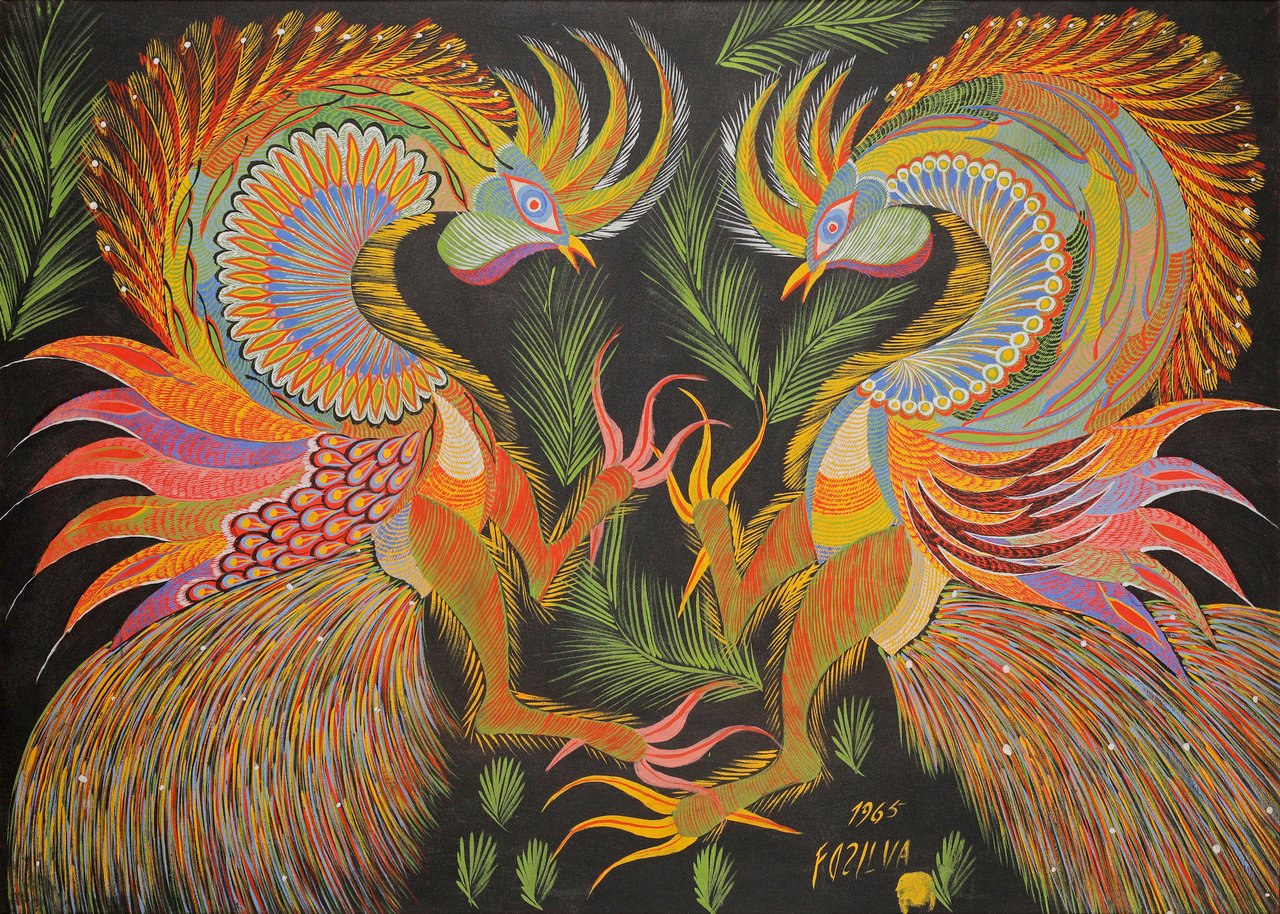
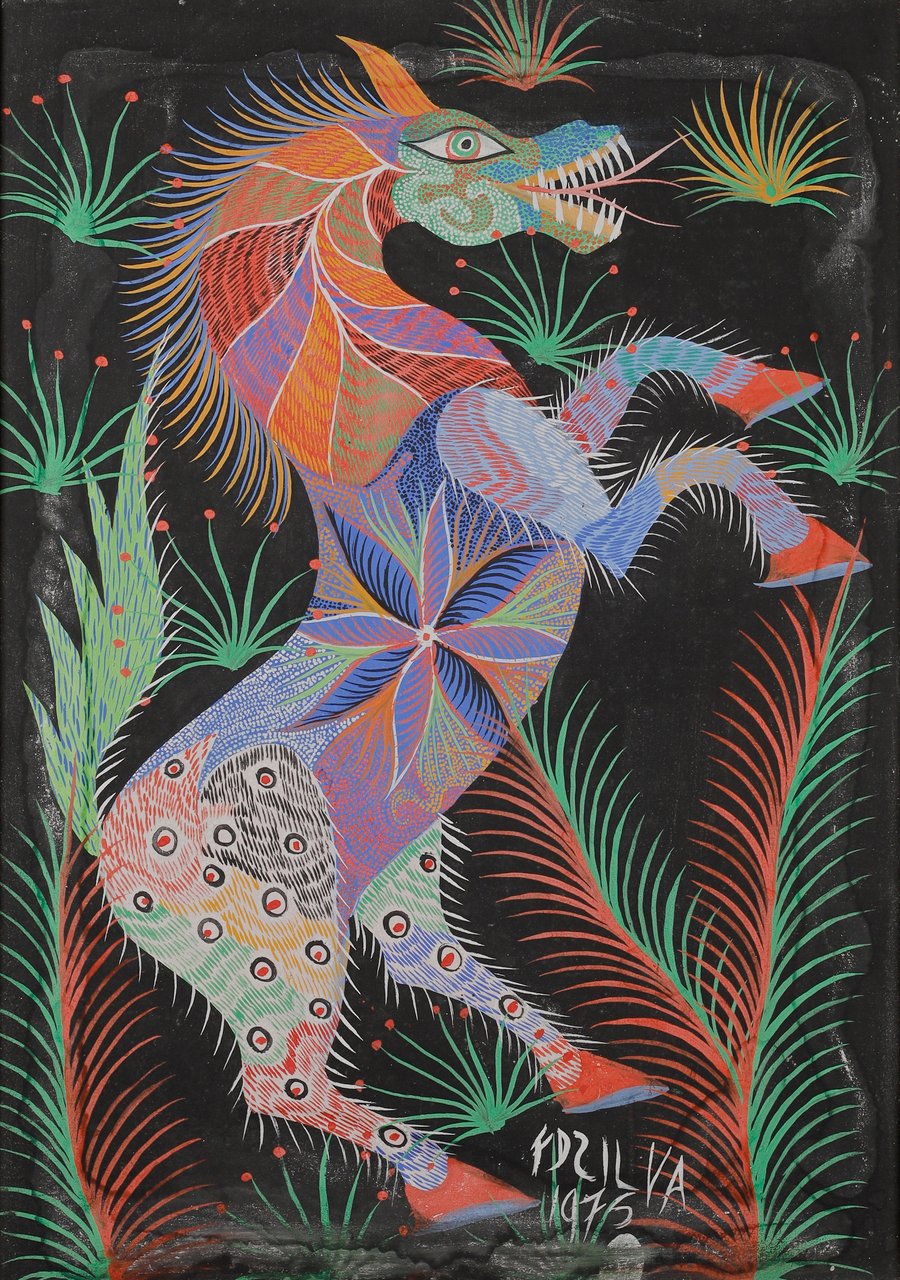
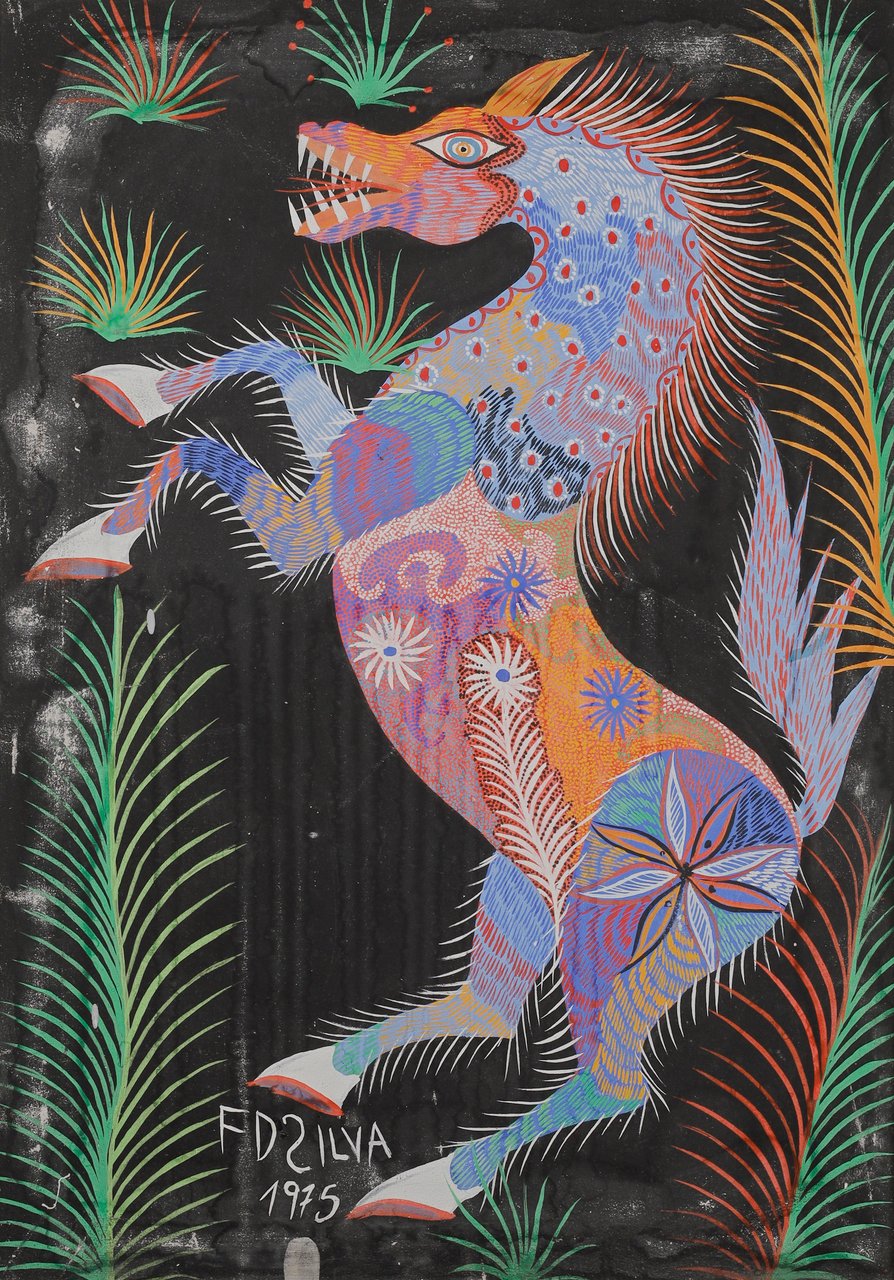
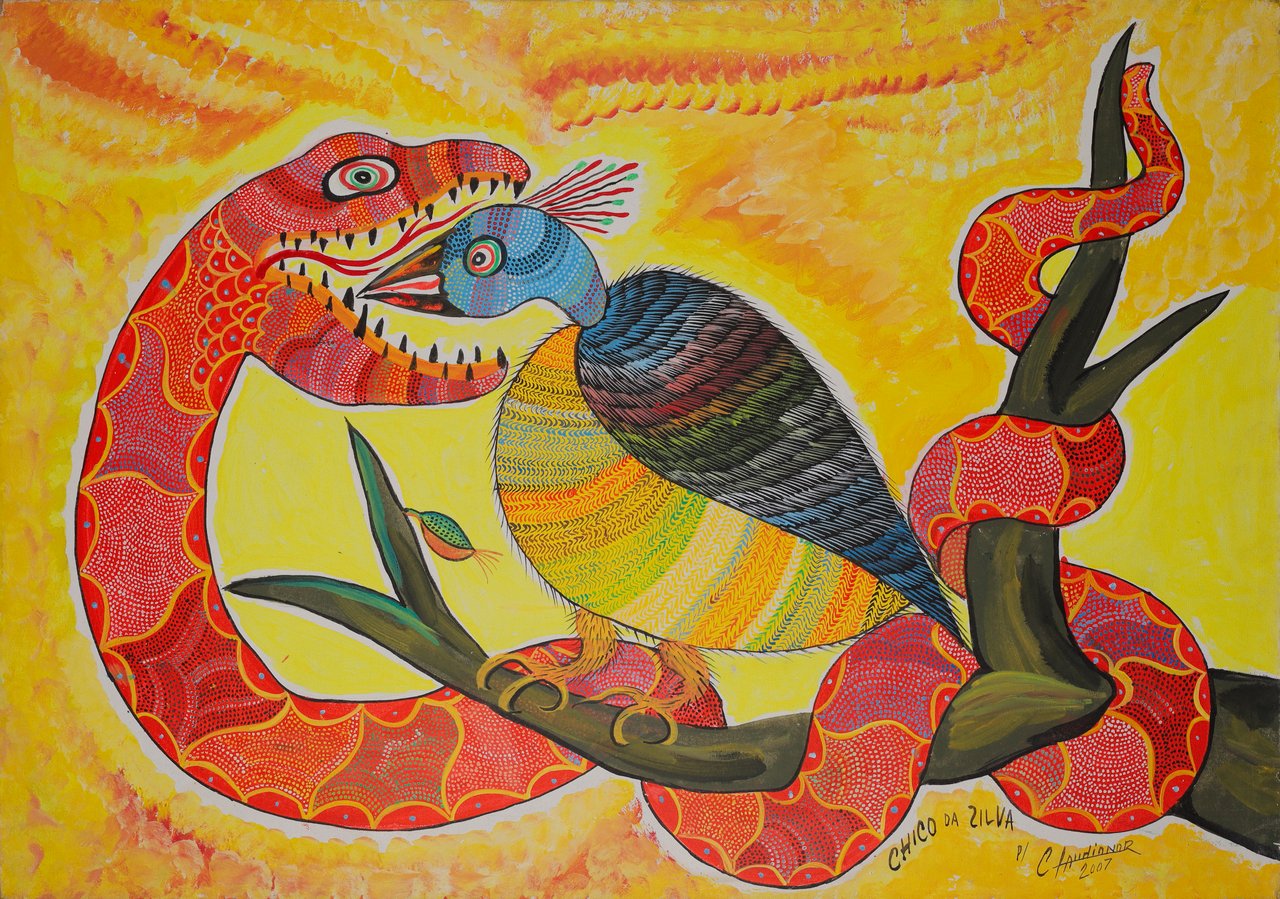
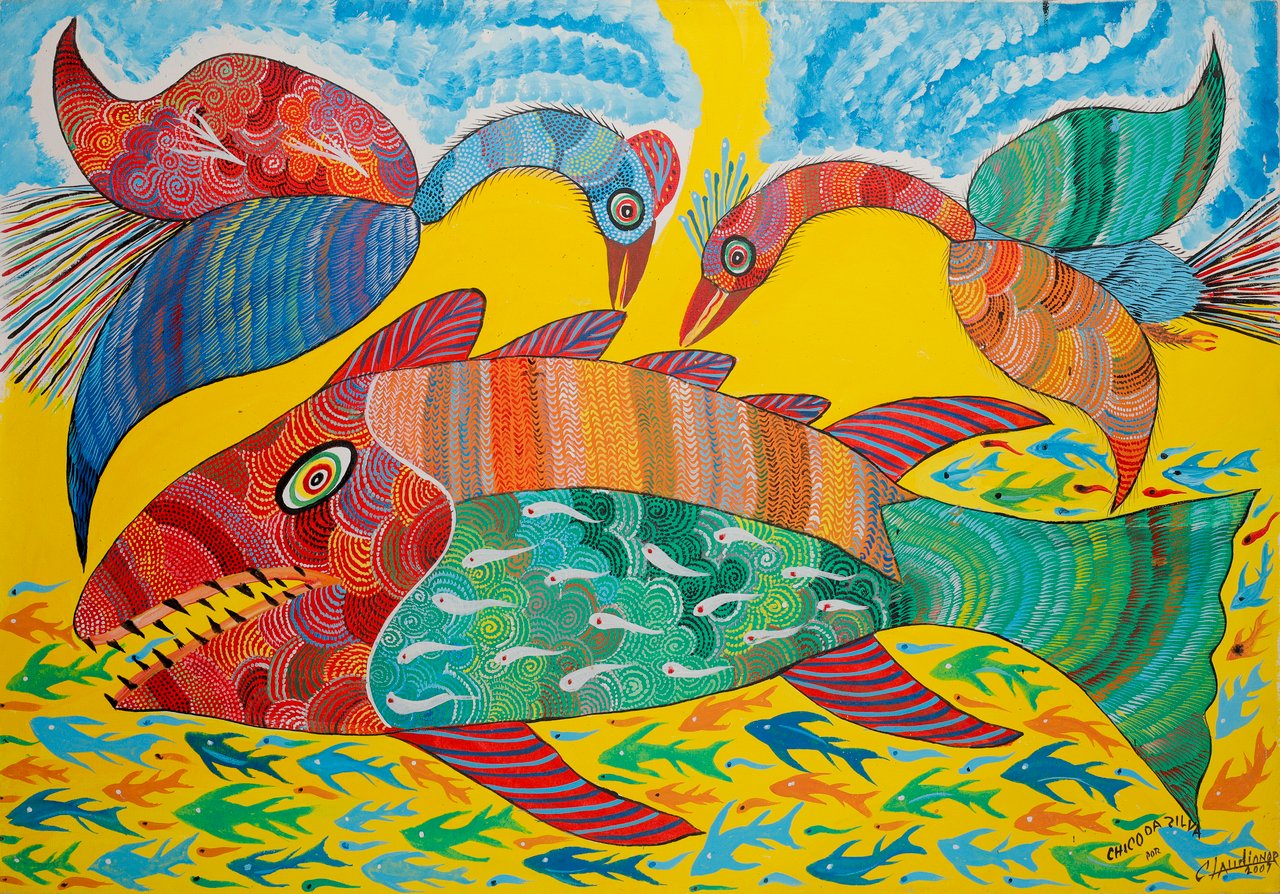
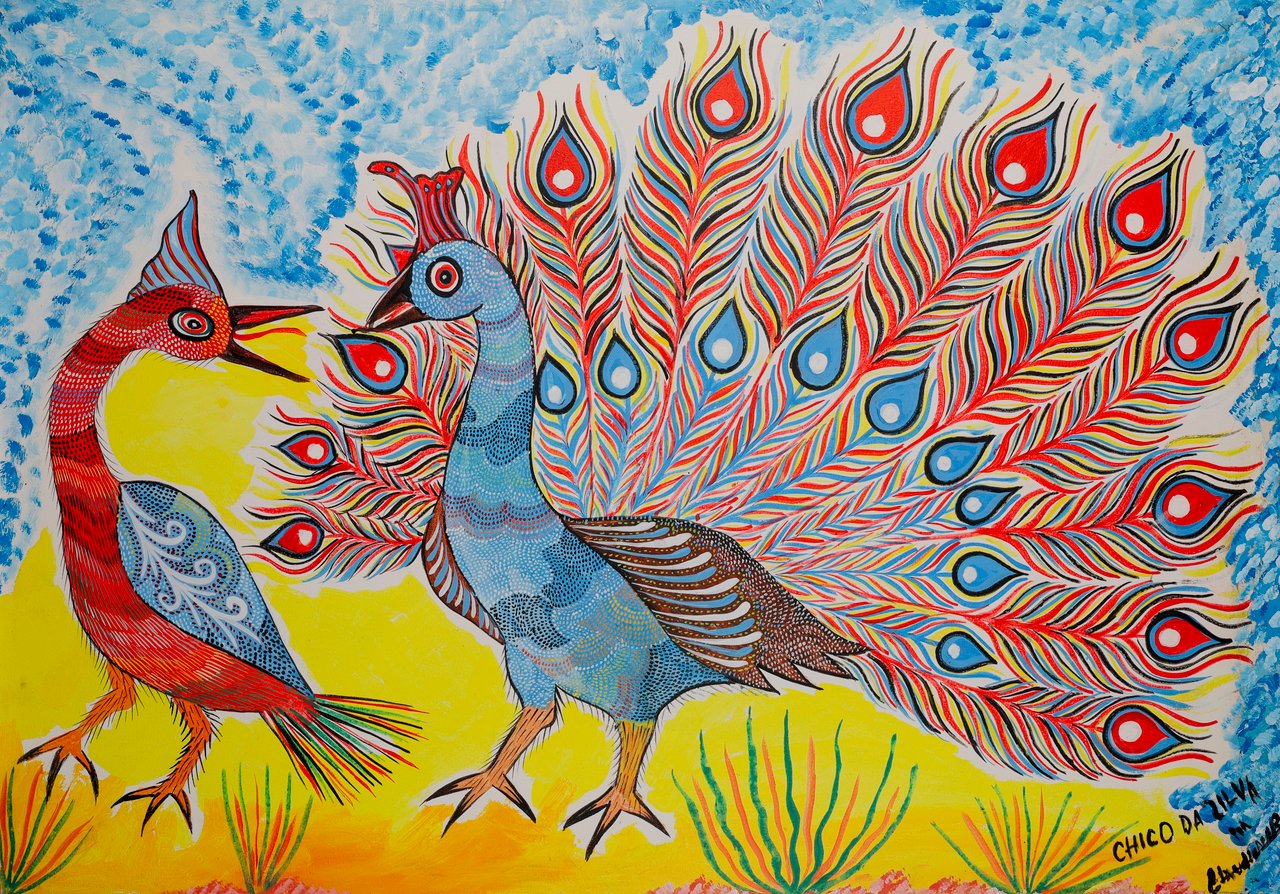
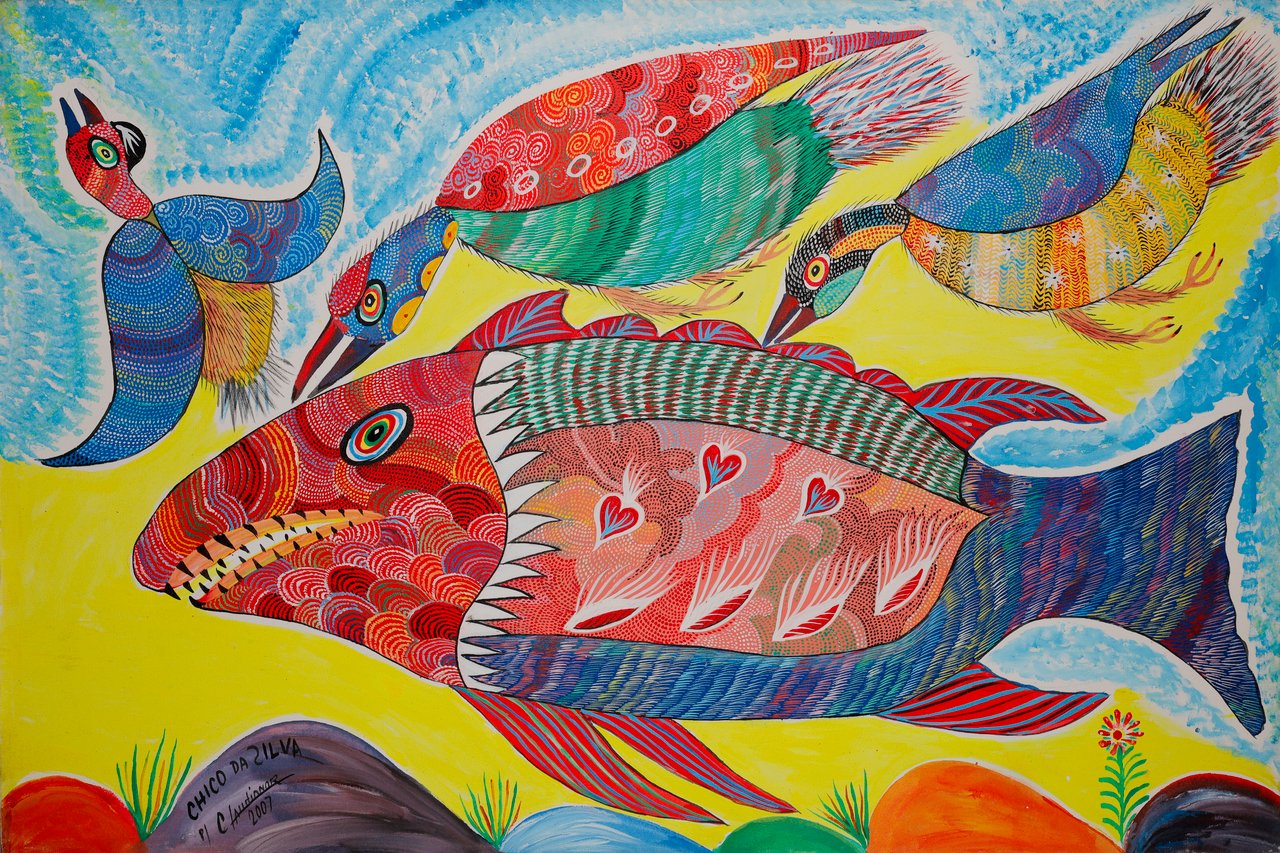
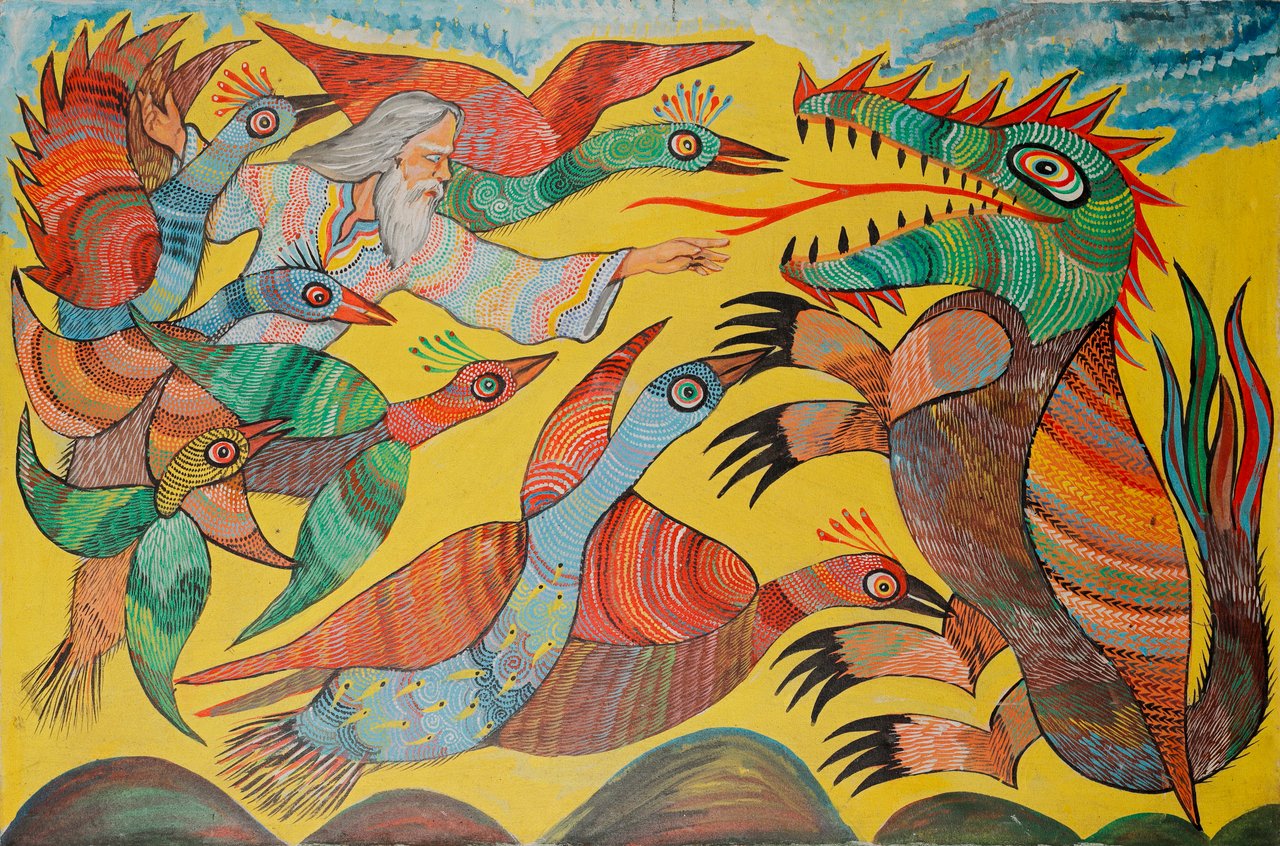
In the catalogue records gathered by the sociologist Gerciane Oliveira, acrylic appears at the end of the 1960s, and canvases painted with it become established from 1970. Roberto Galvão noted what changed with the collective production: the stippling grew colder and the color more contrasted. The black ground, which took over the cockfights, stayed because it sold.
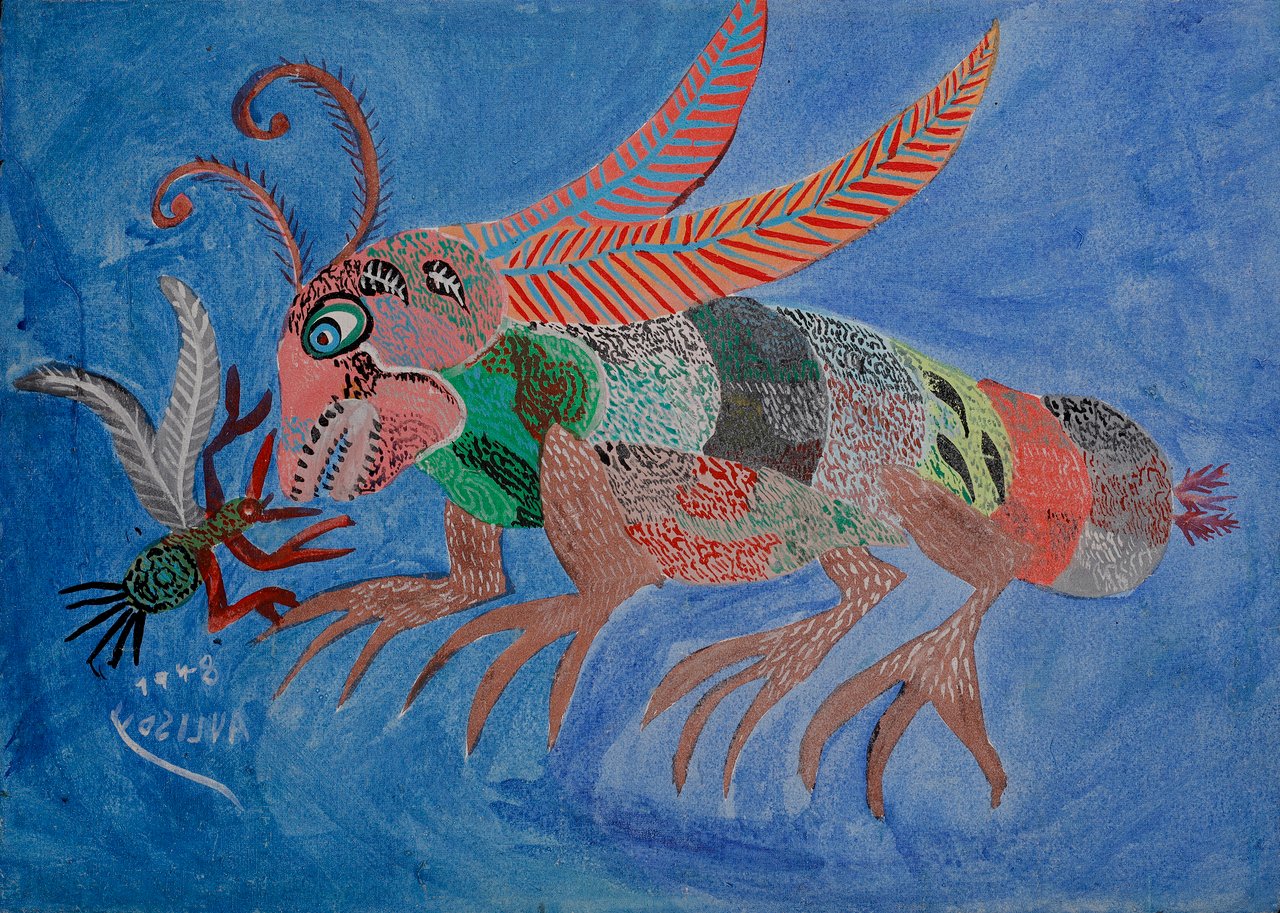
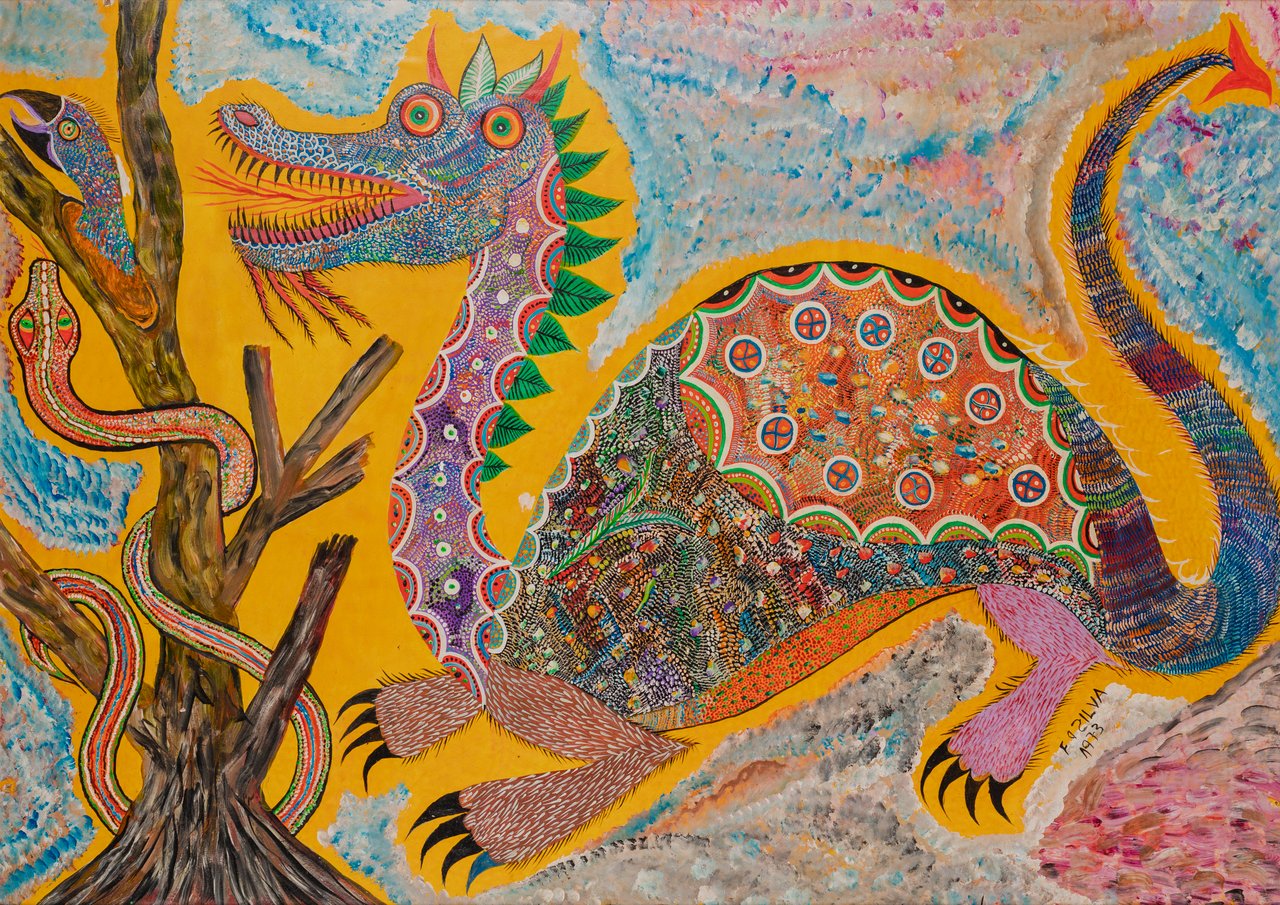
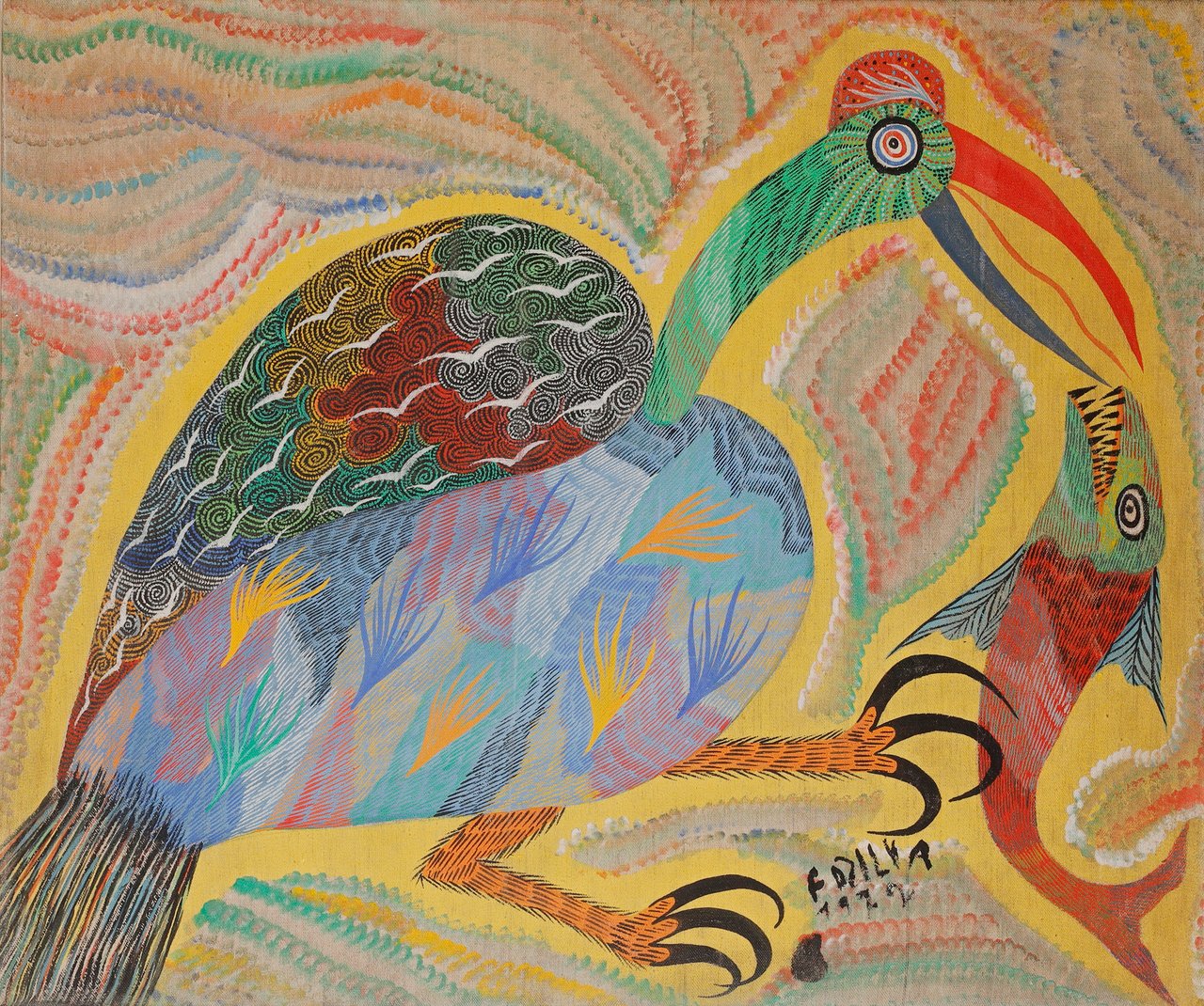
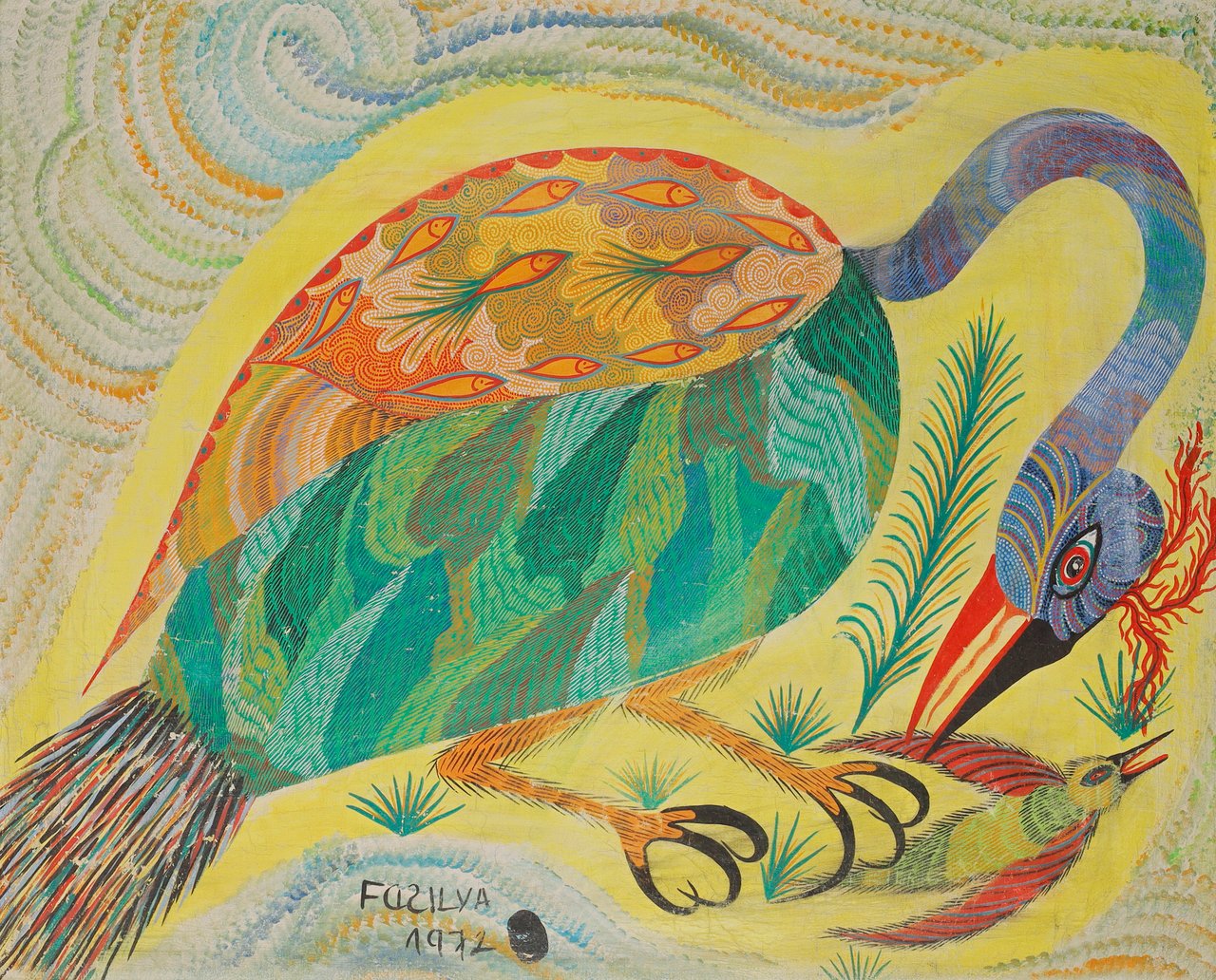
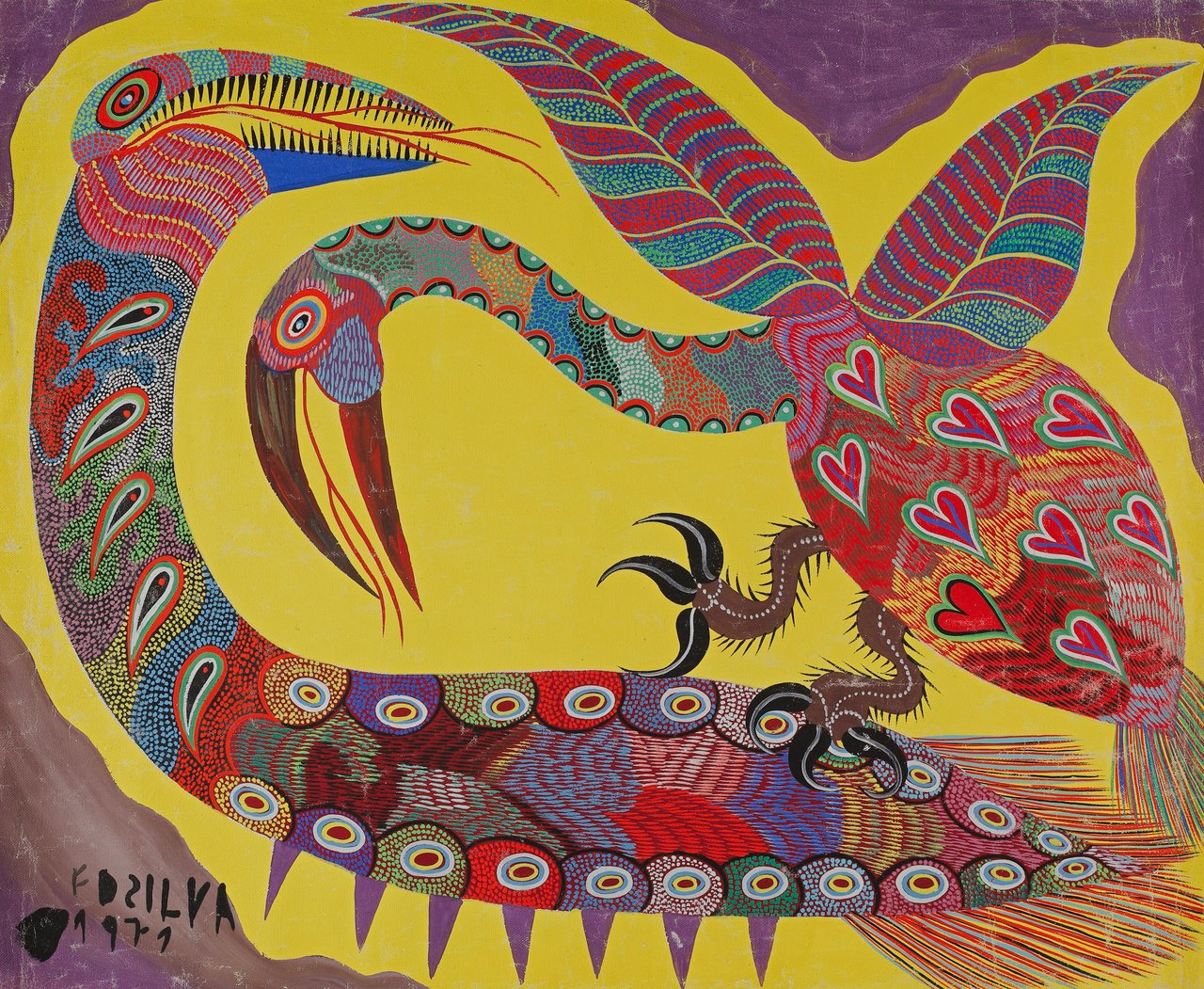
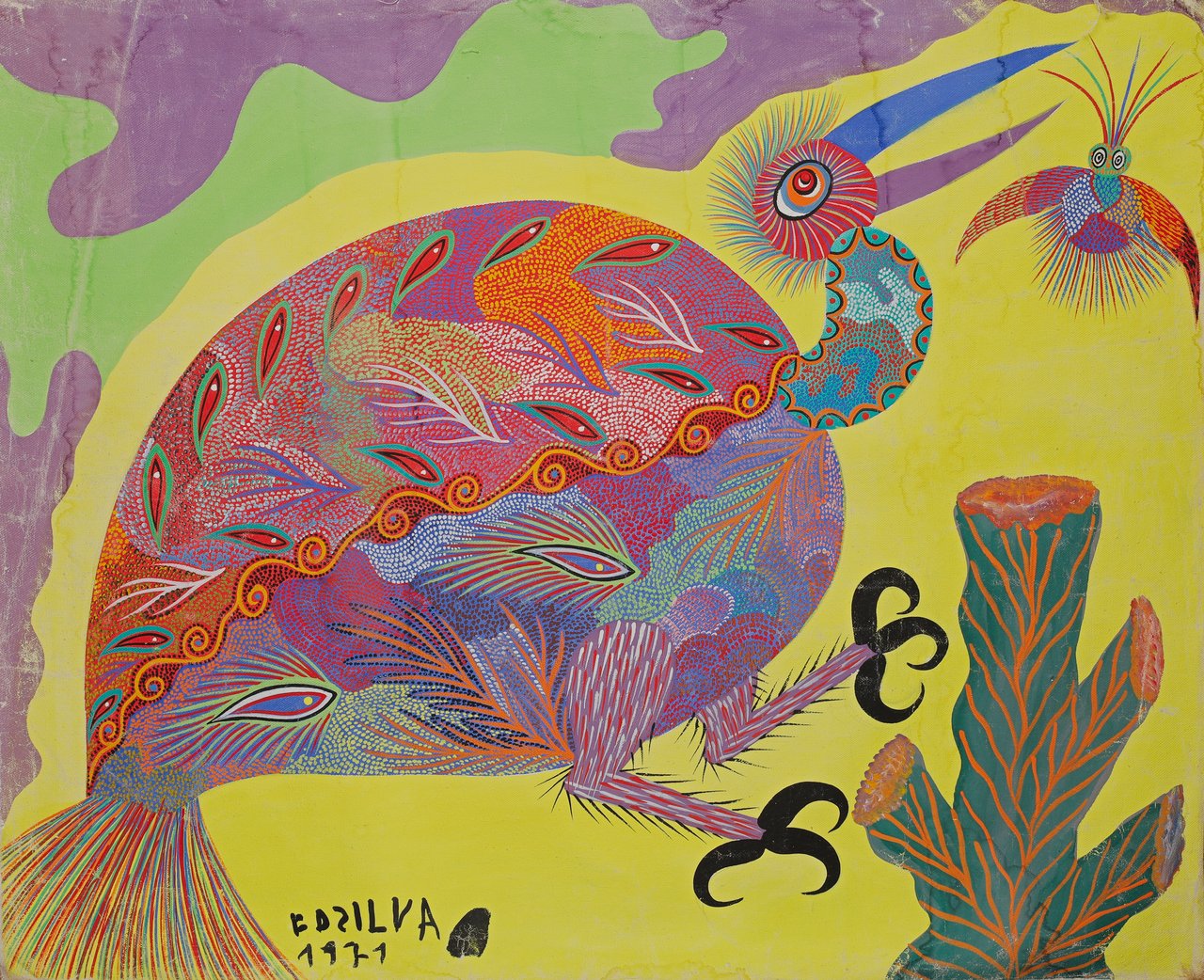
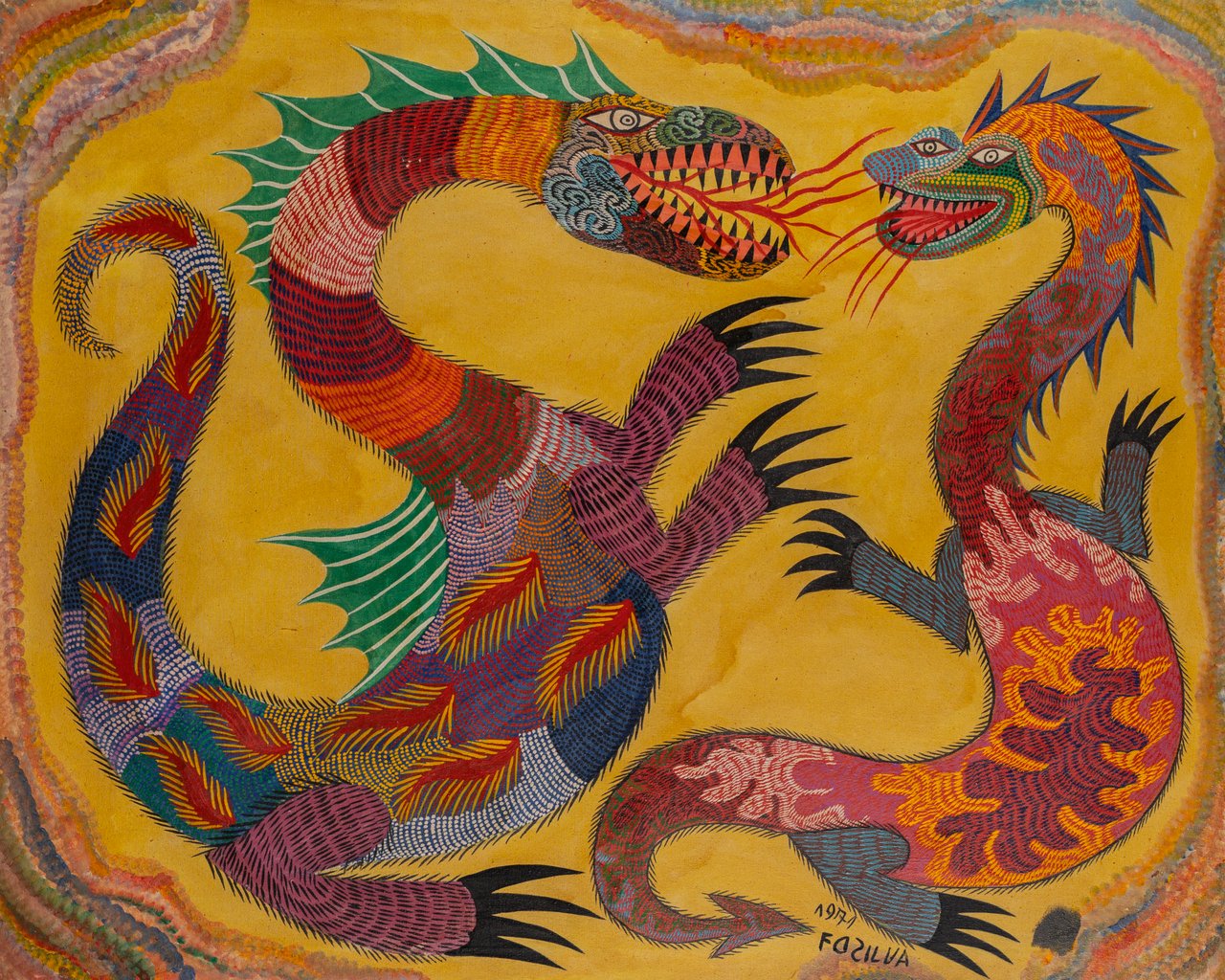
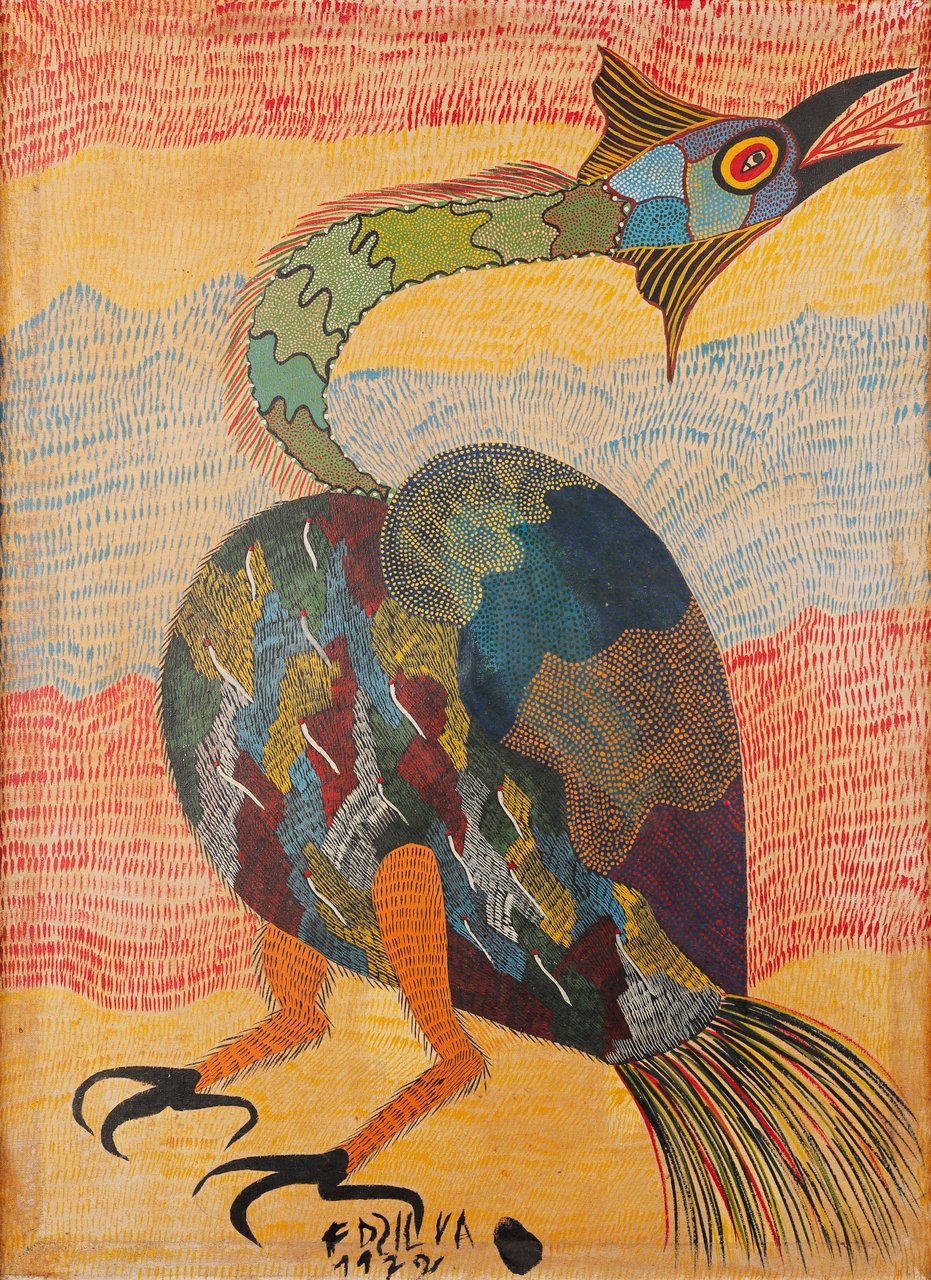
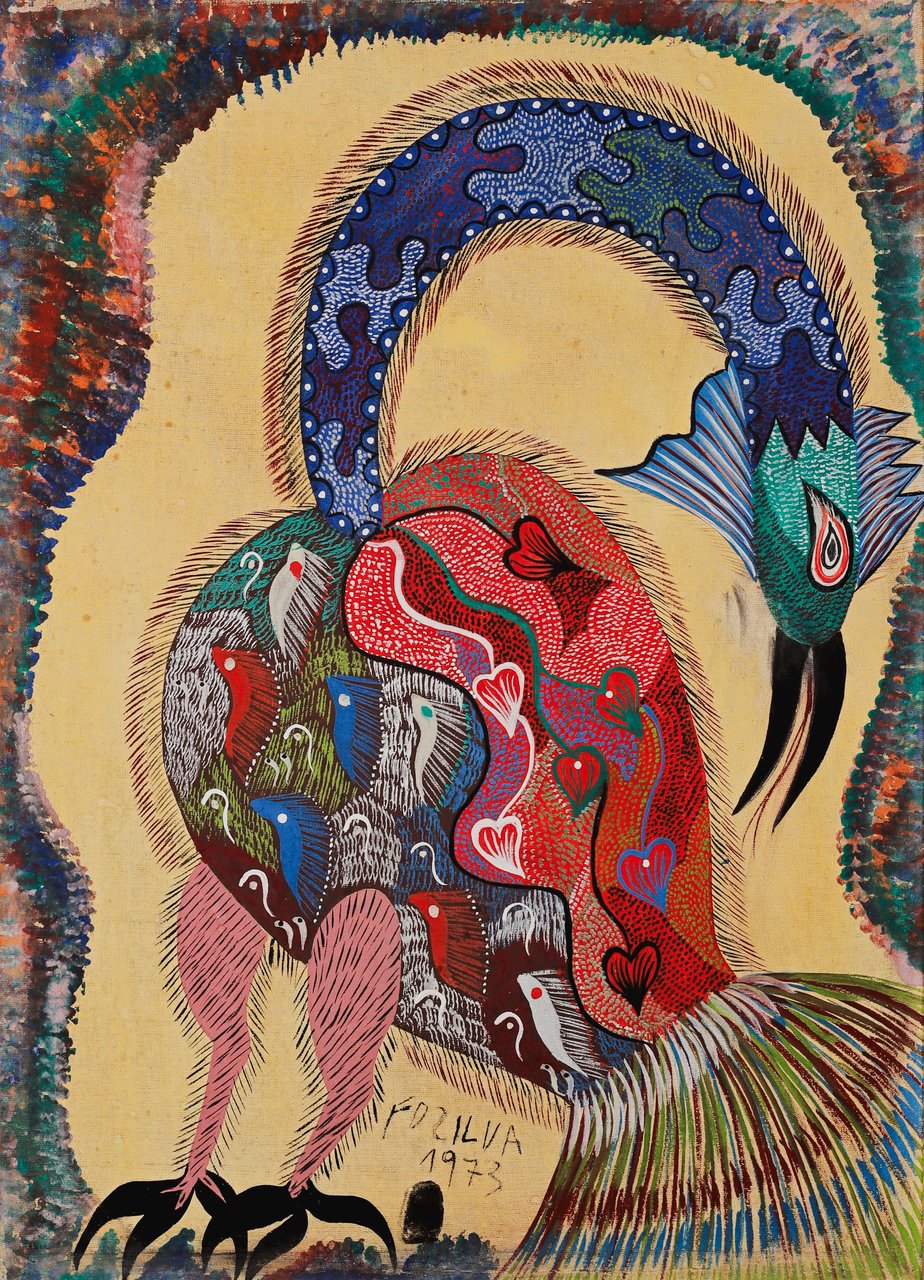
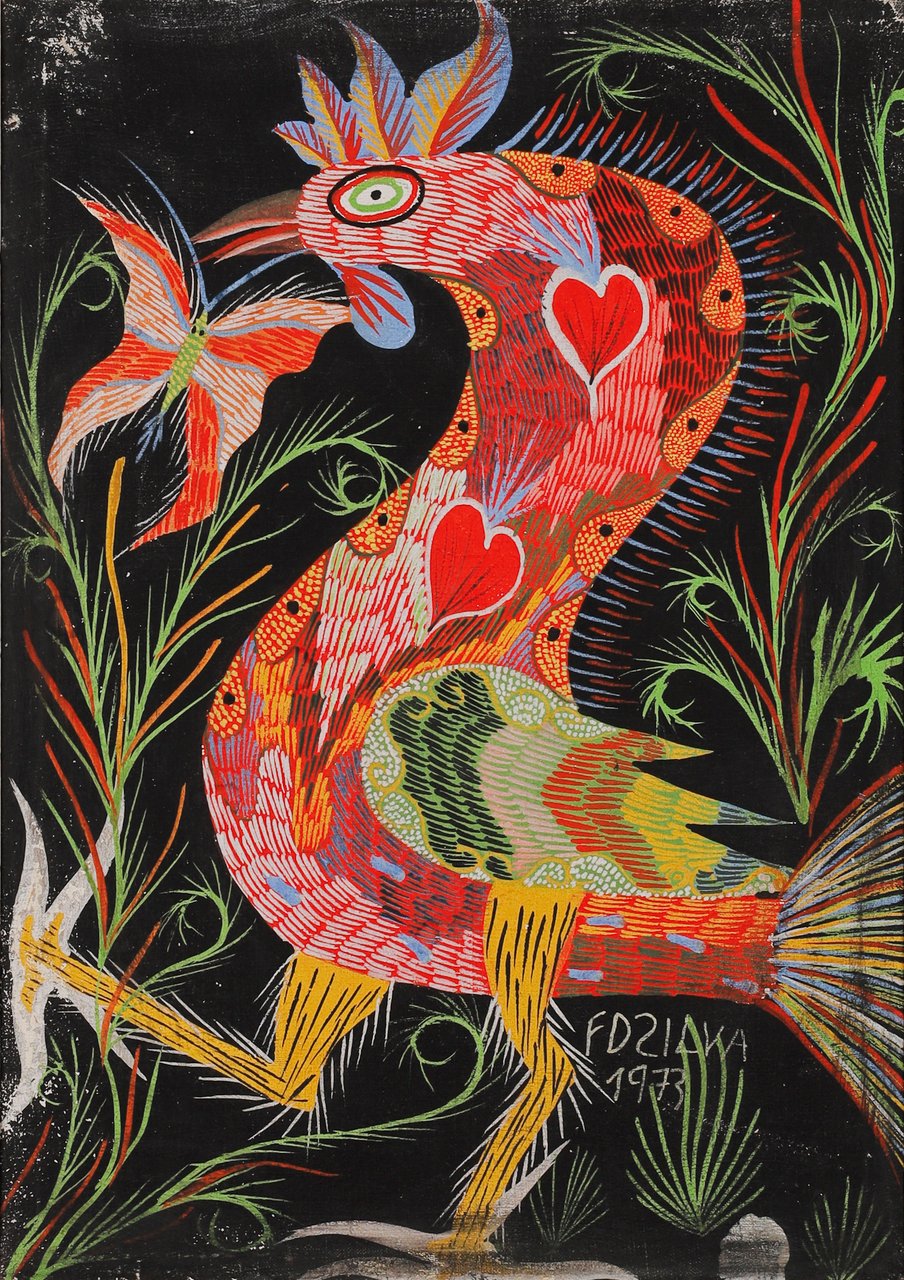
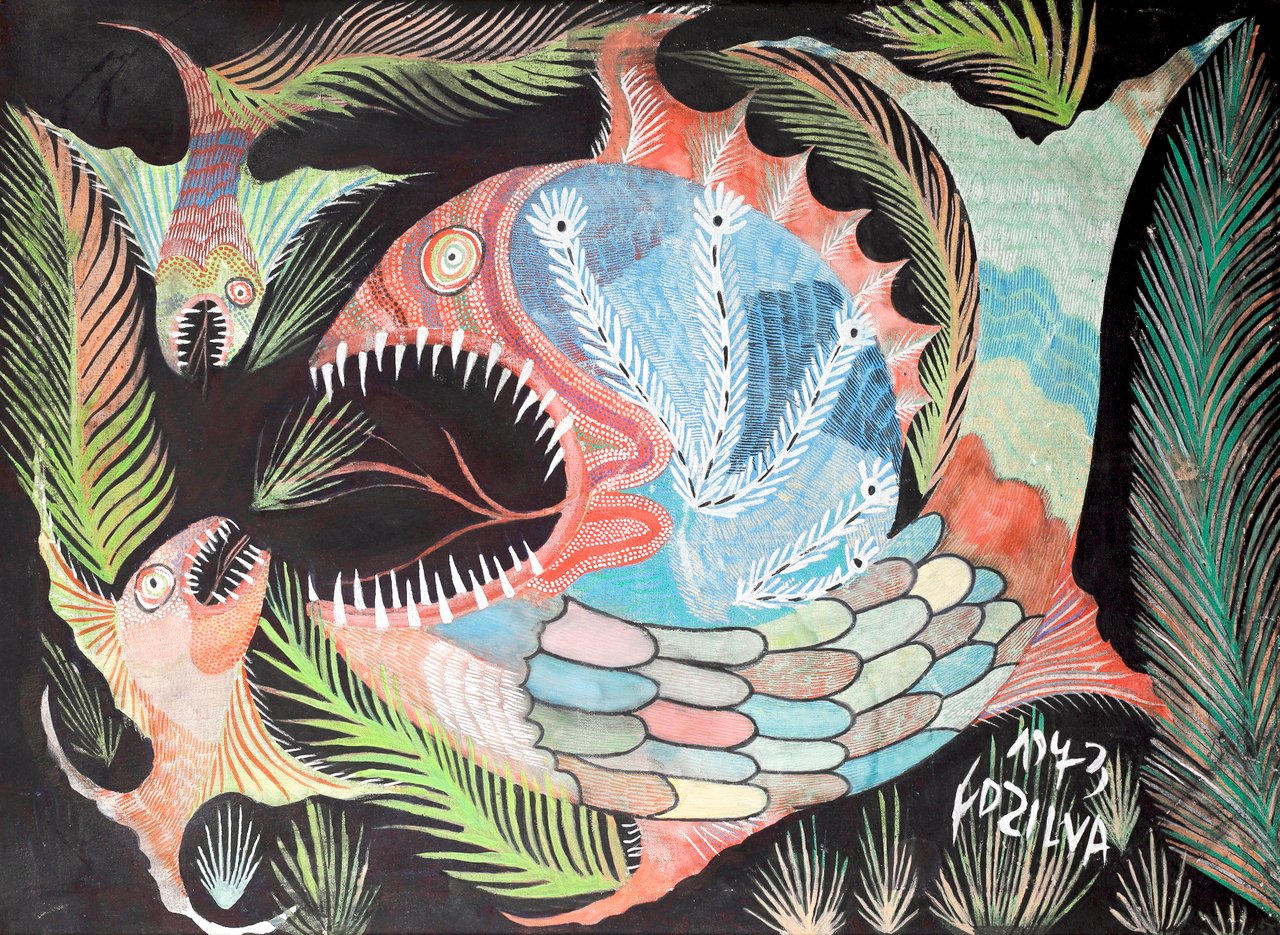
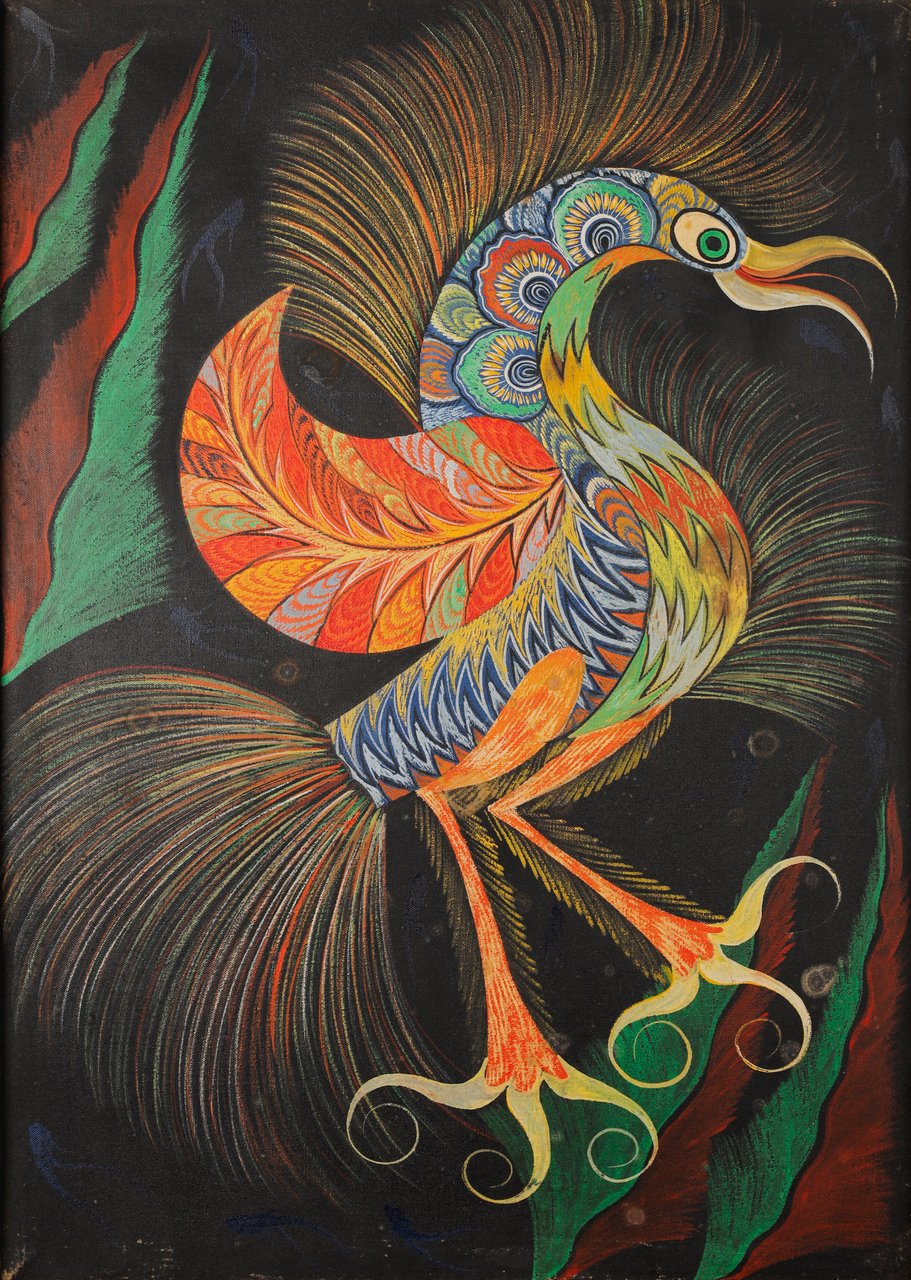
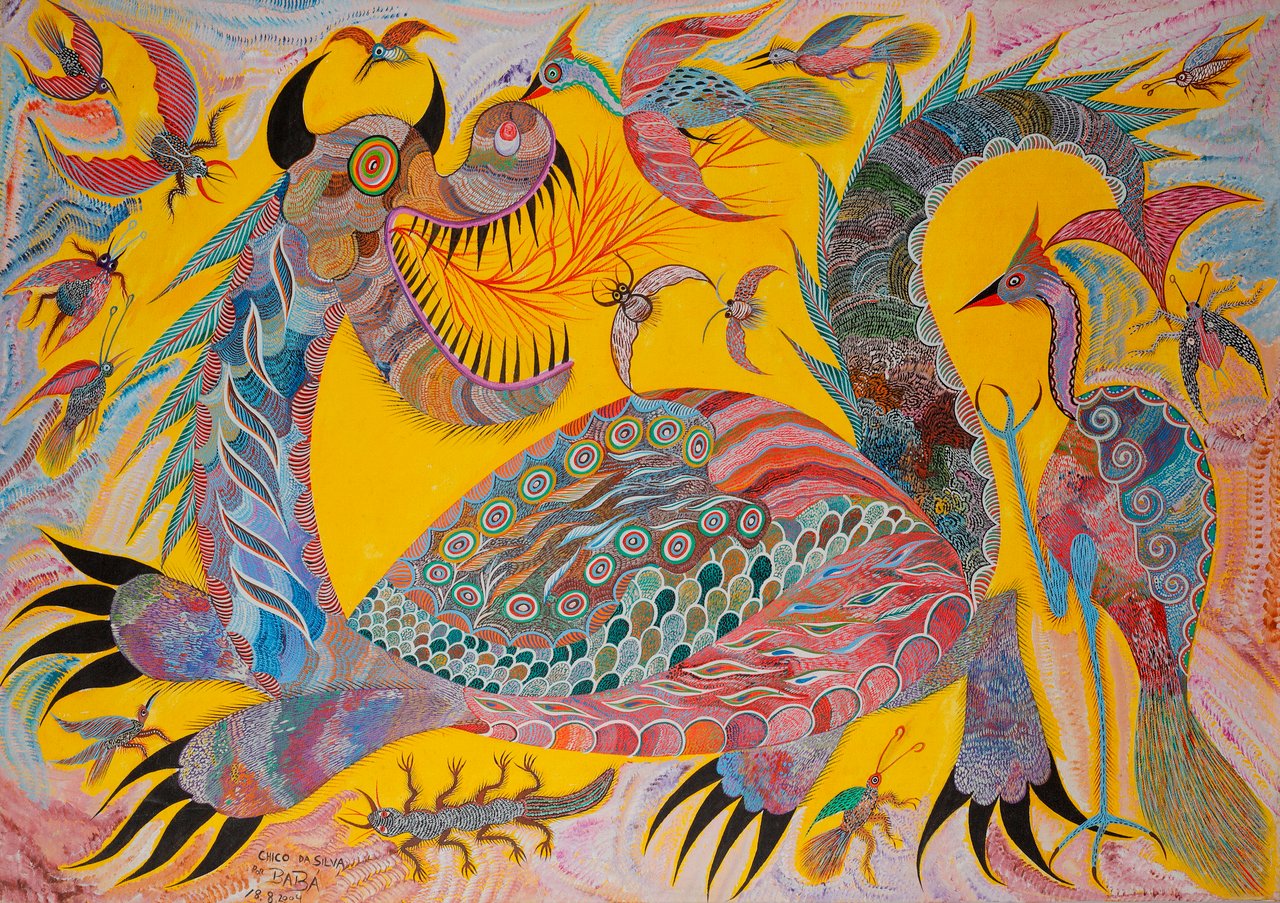
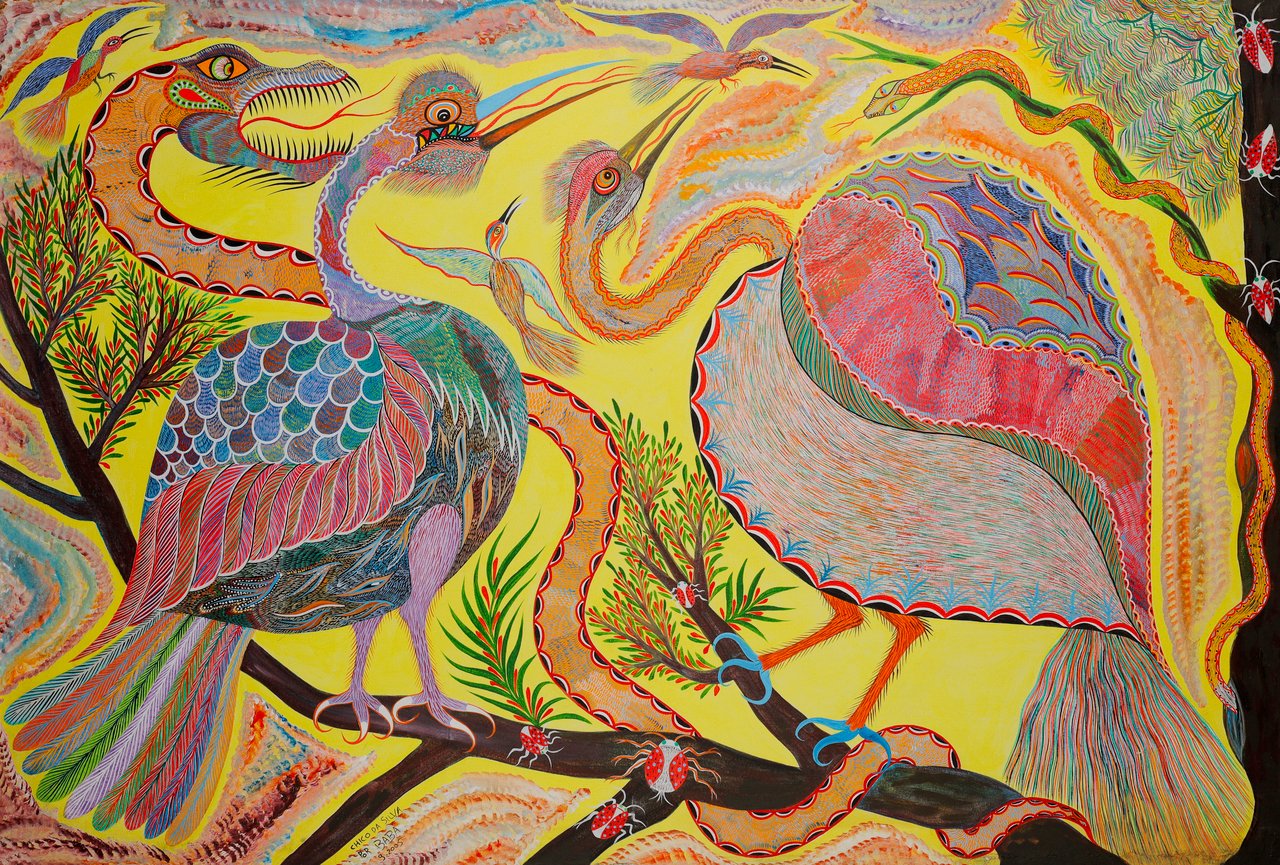
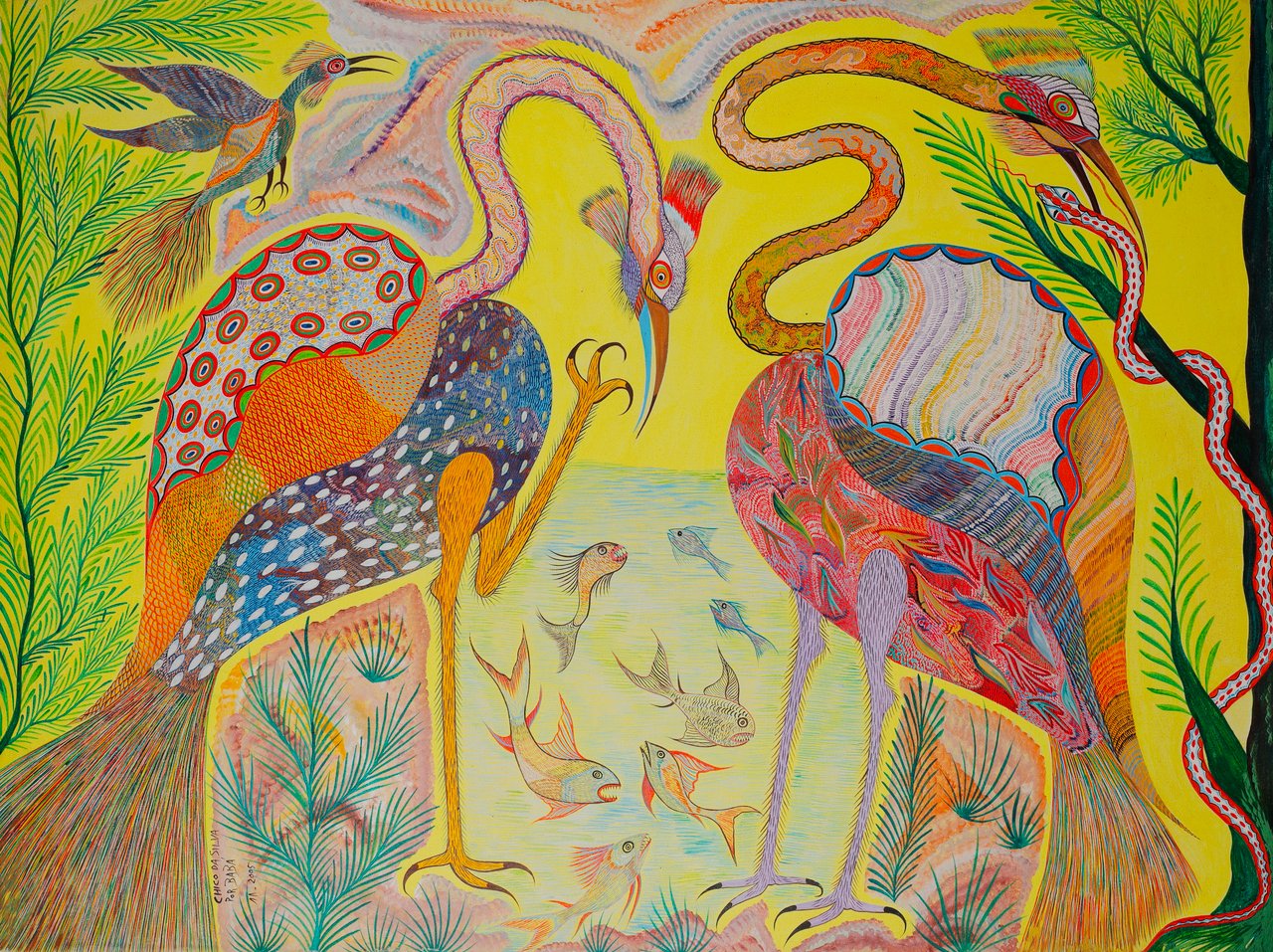
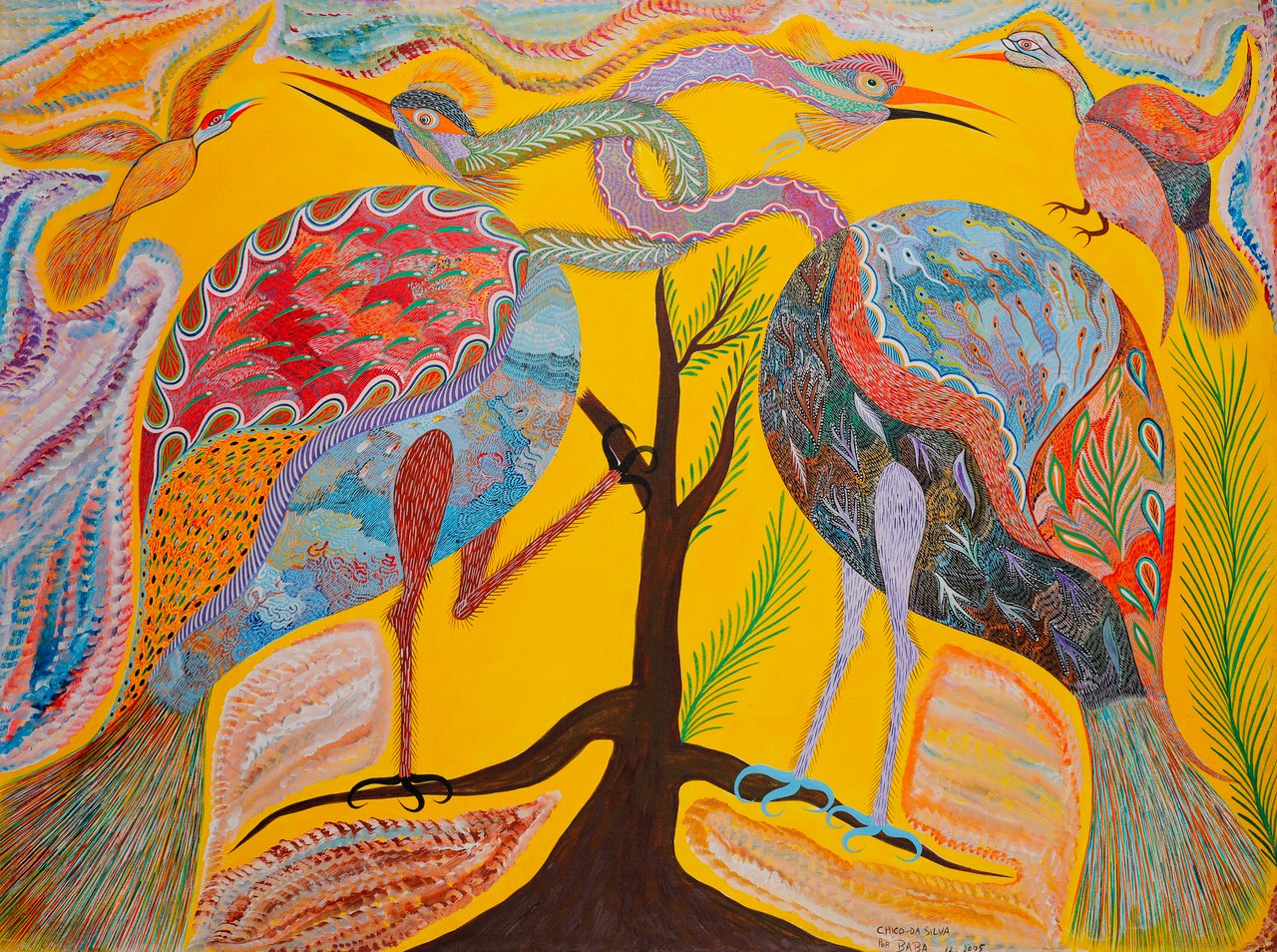
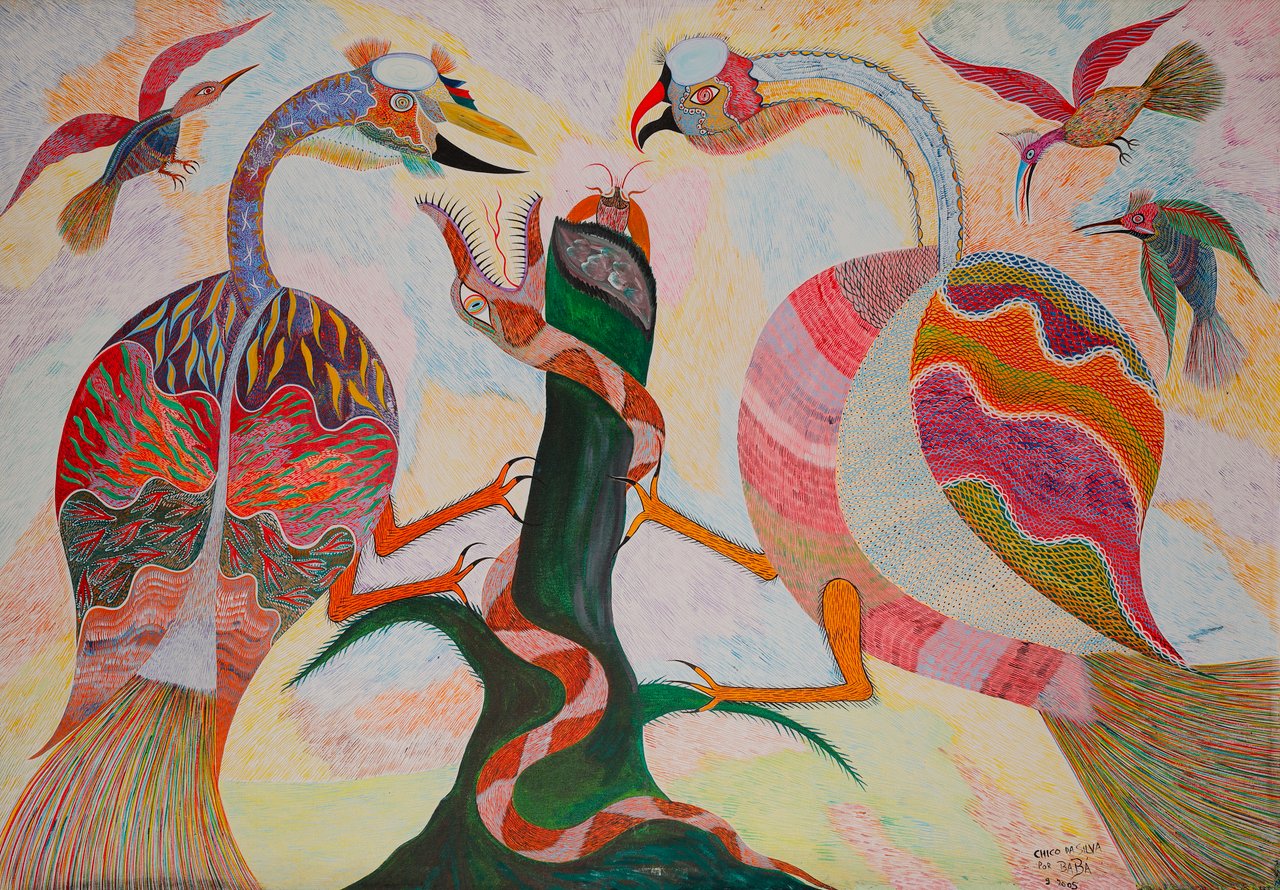
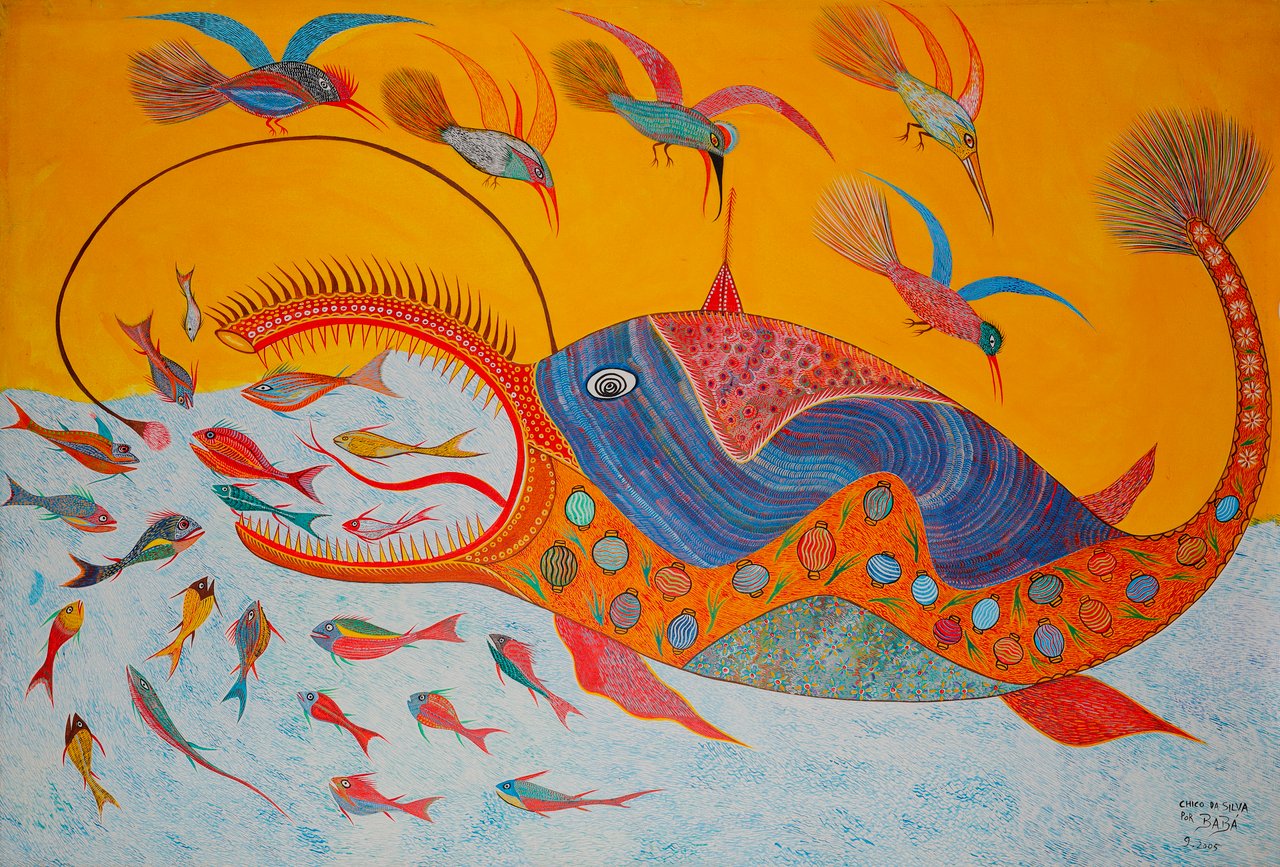
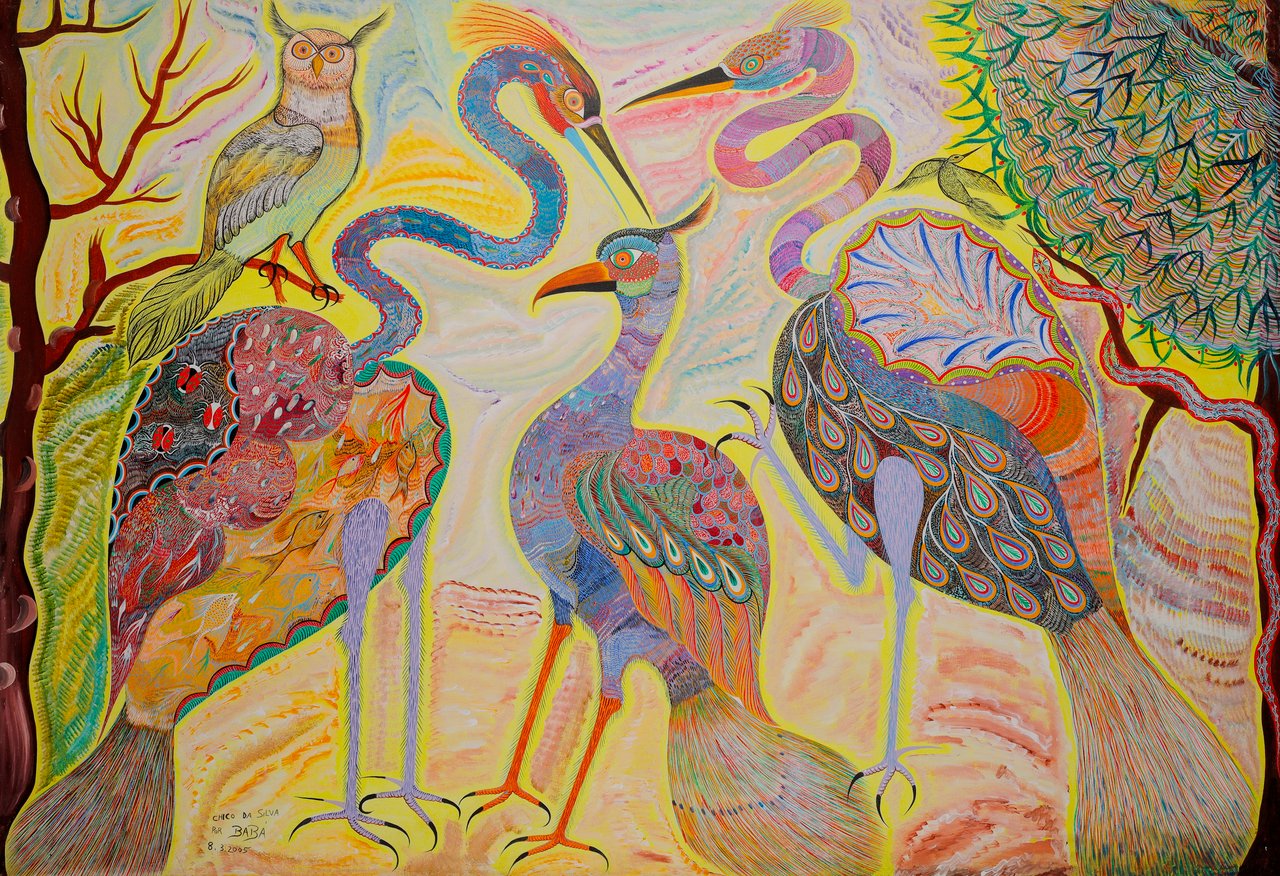
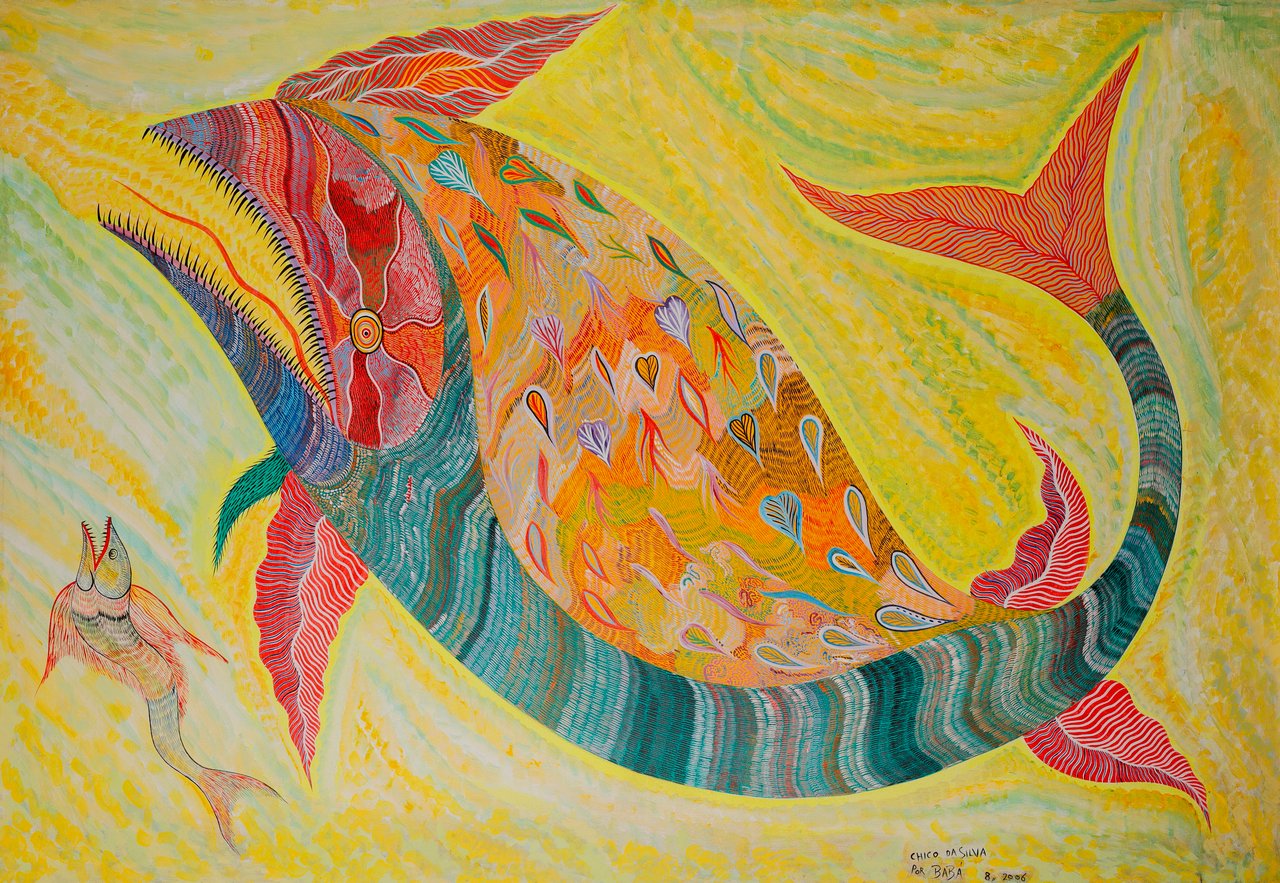
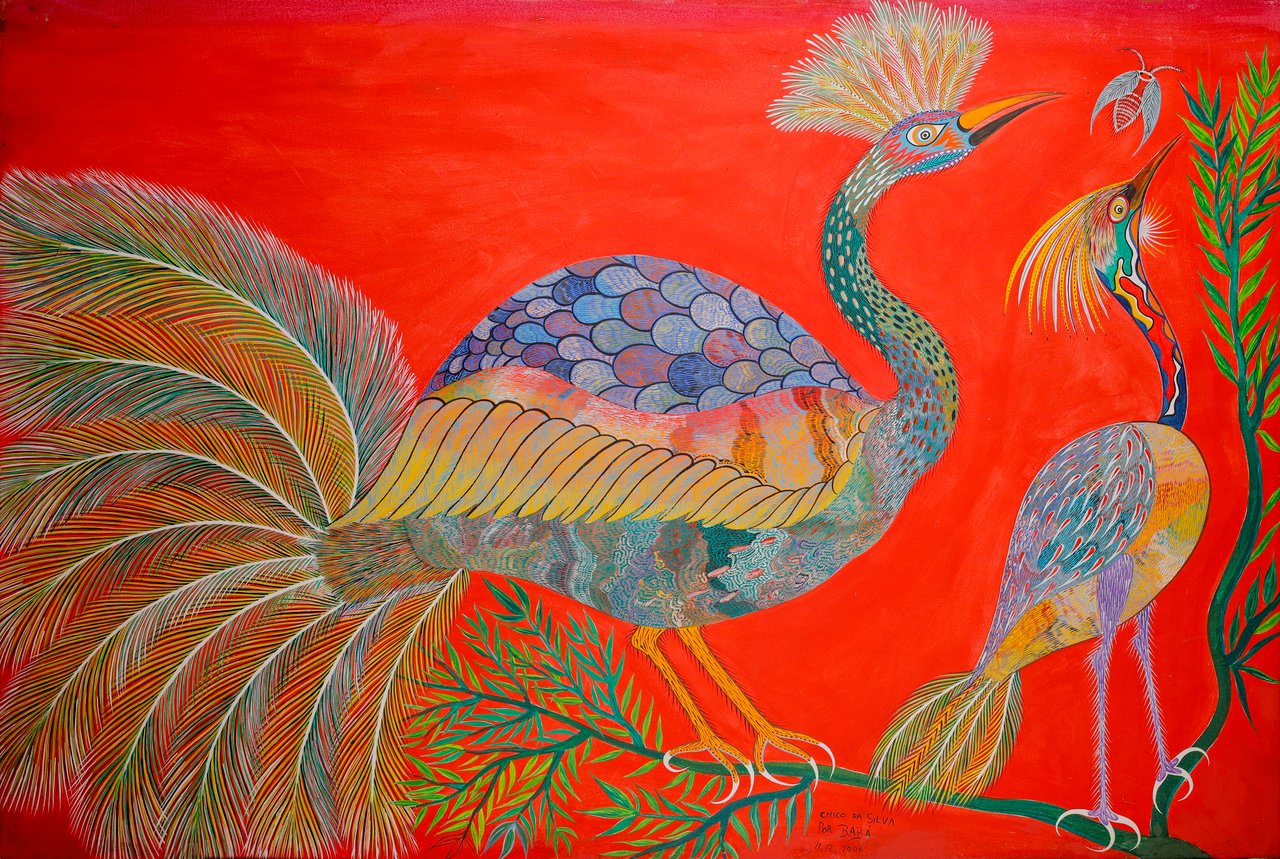
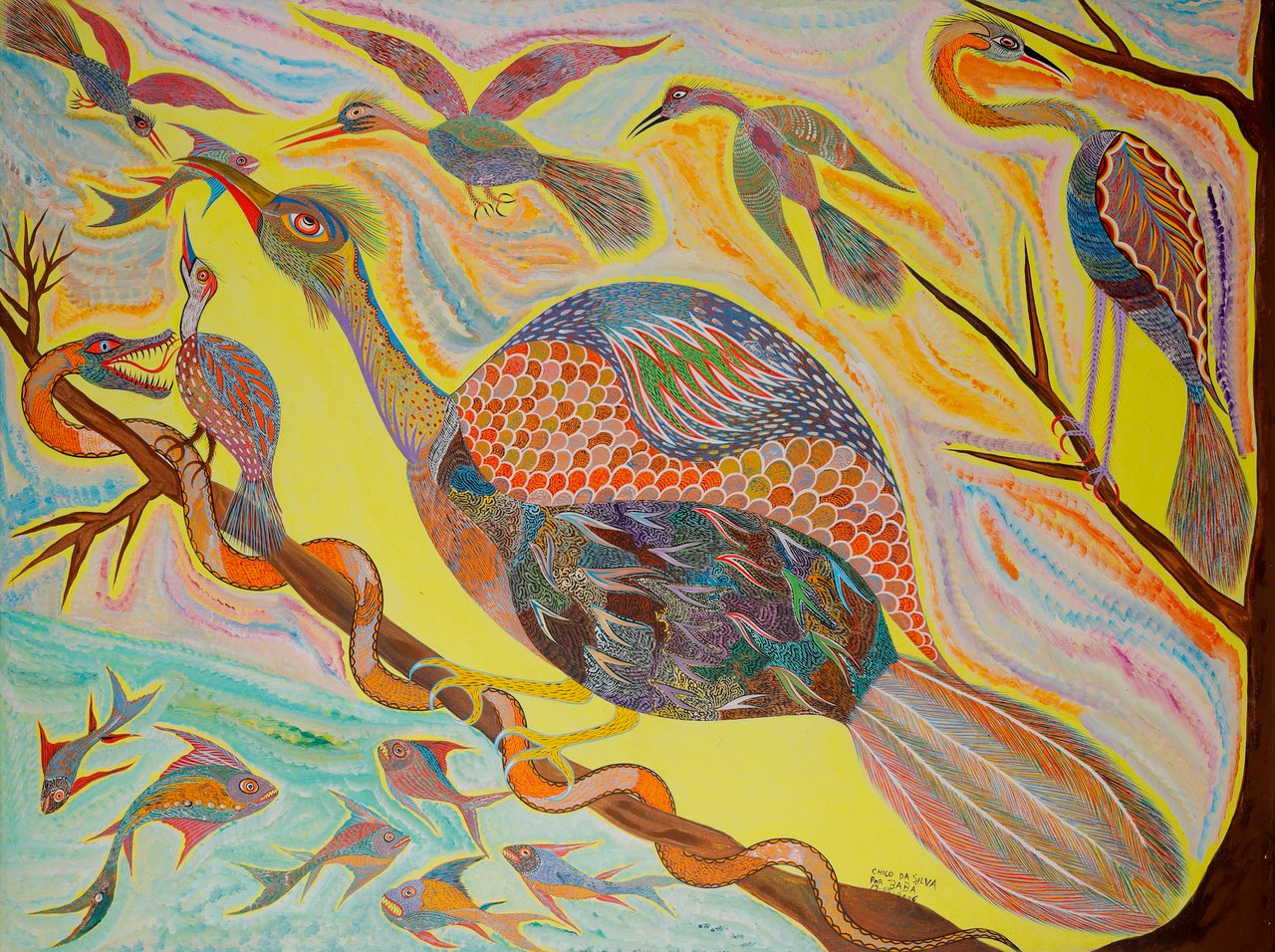
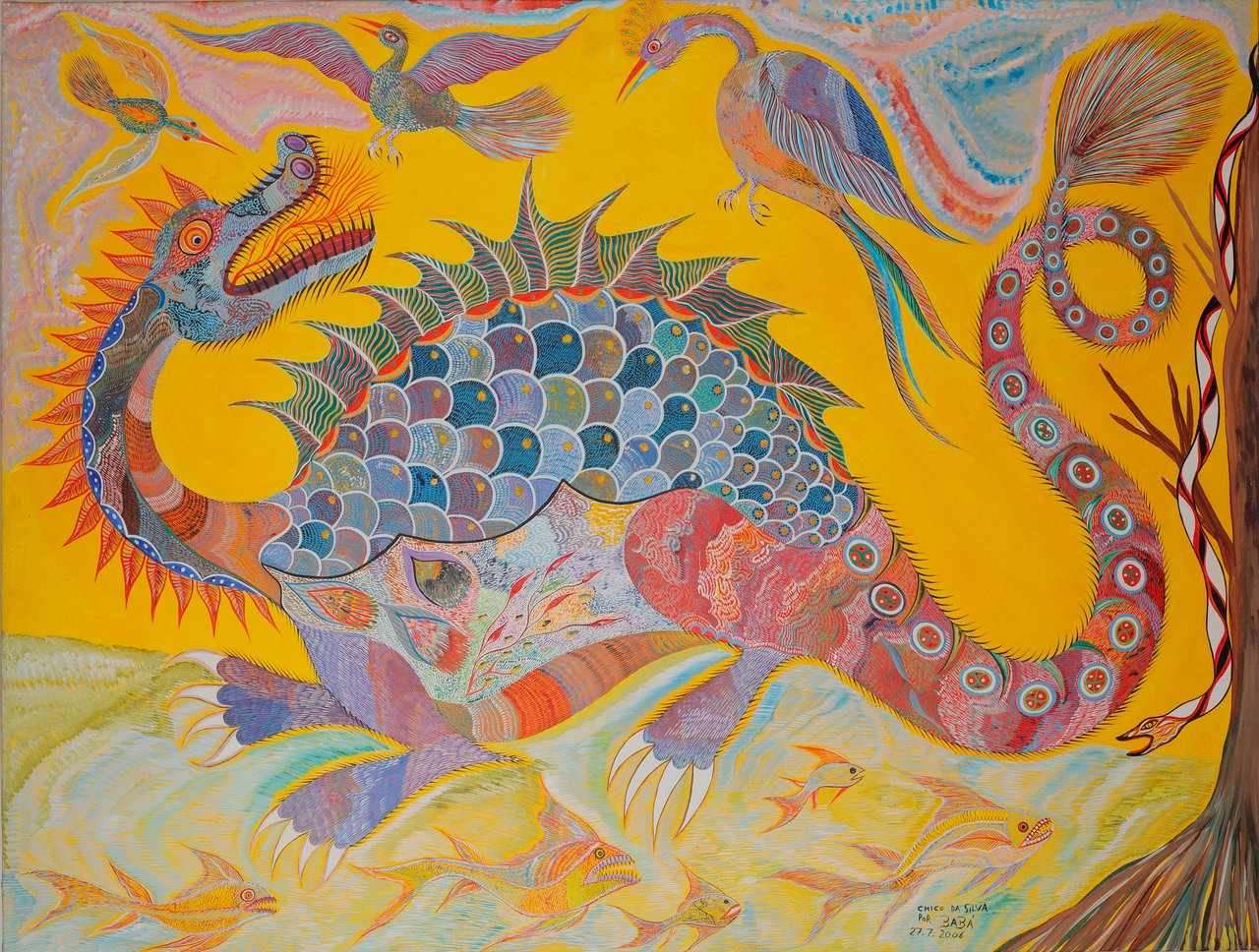
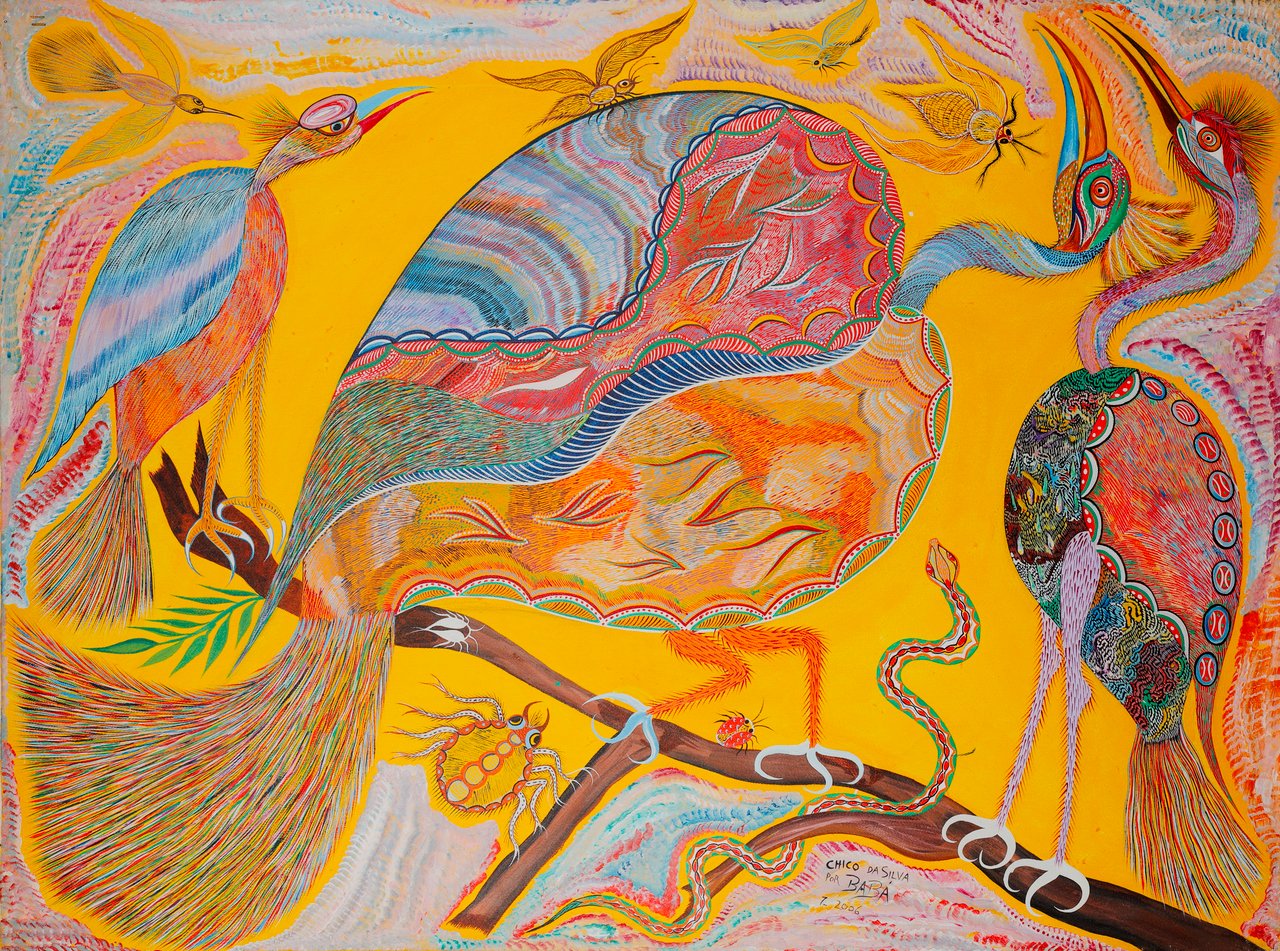
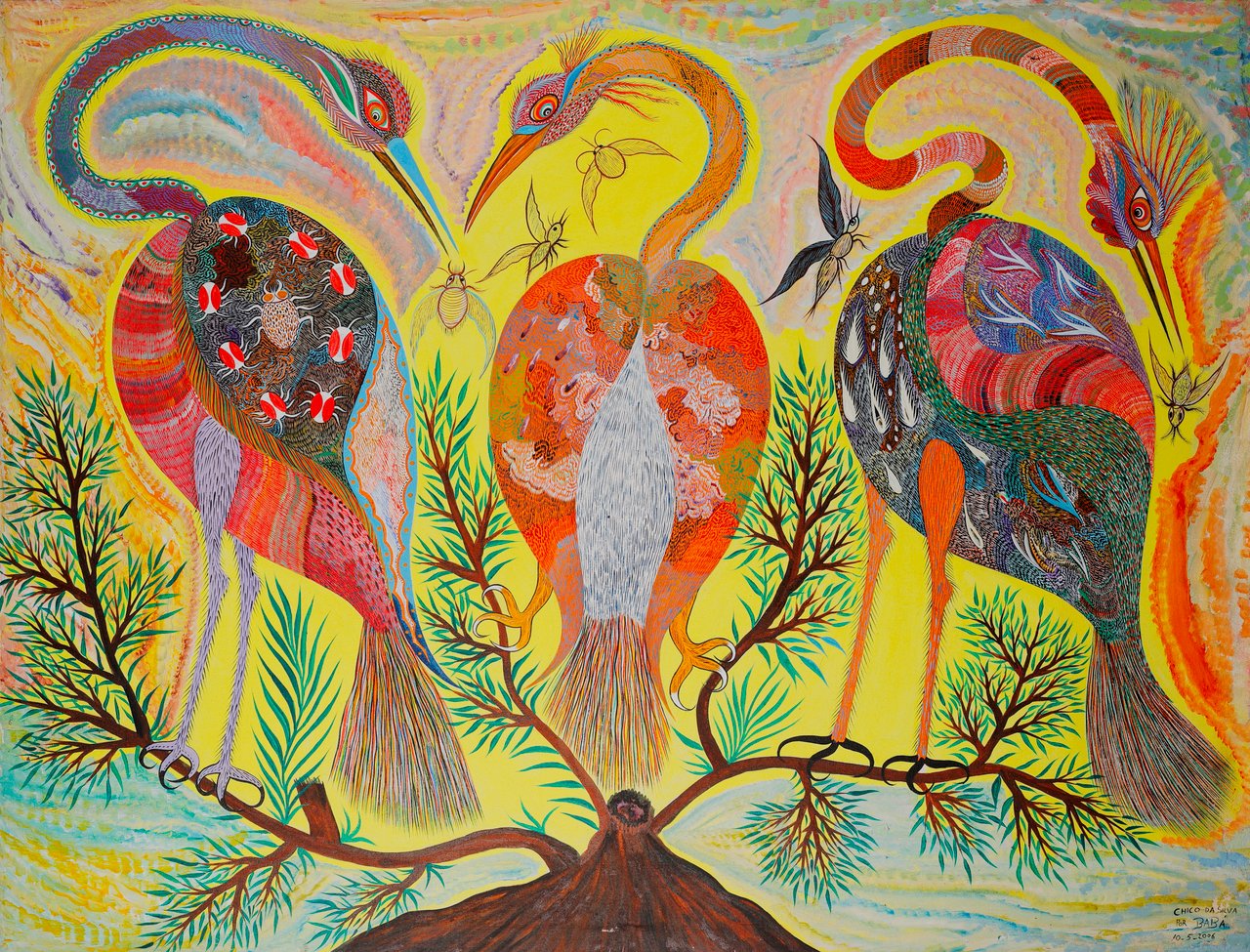
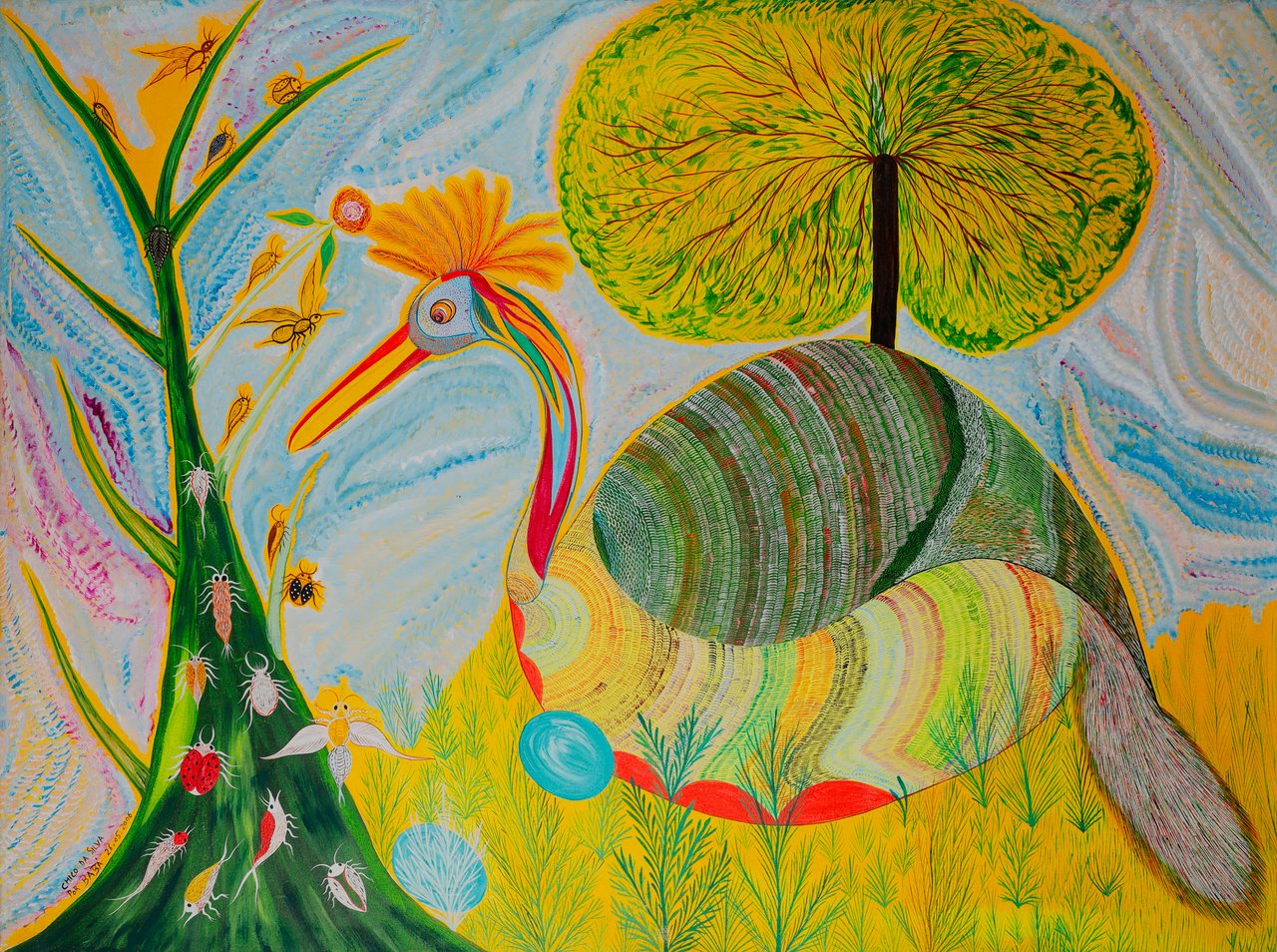
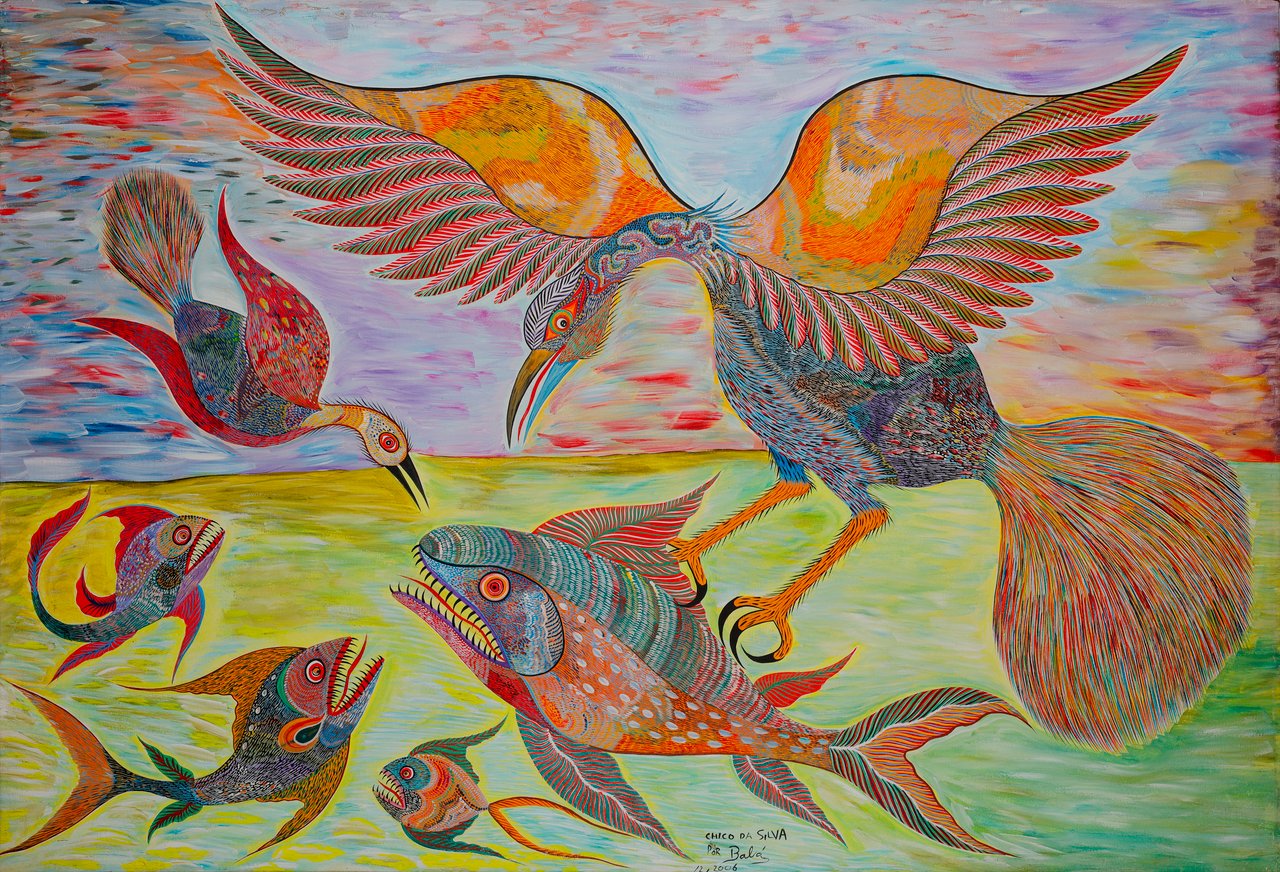
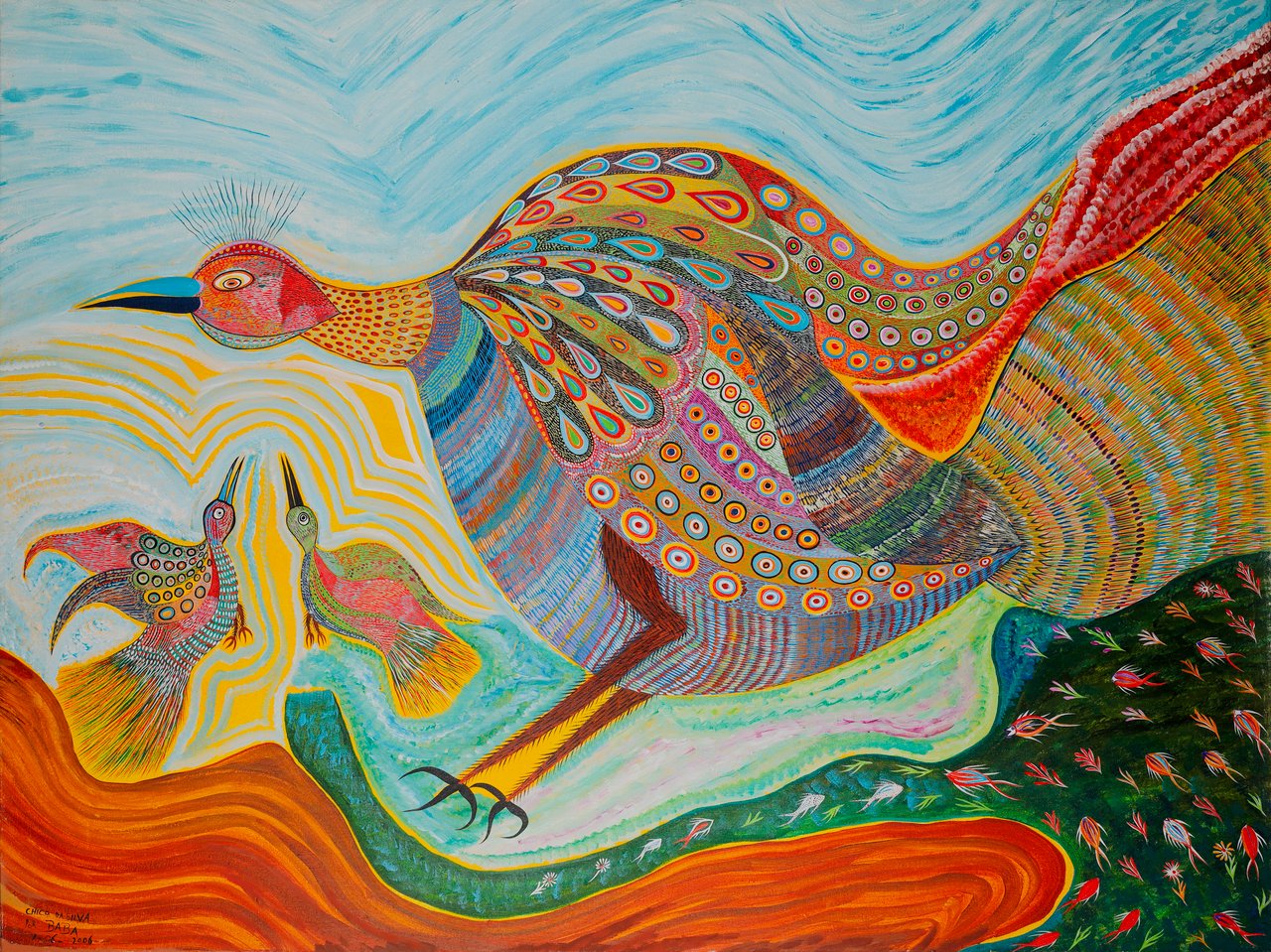
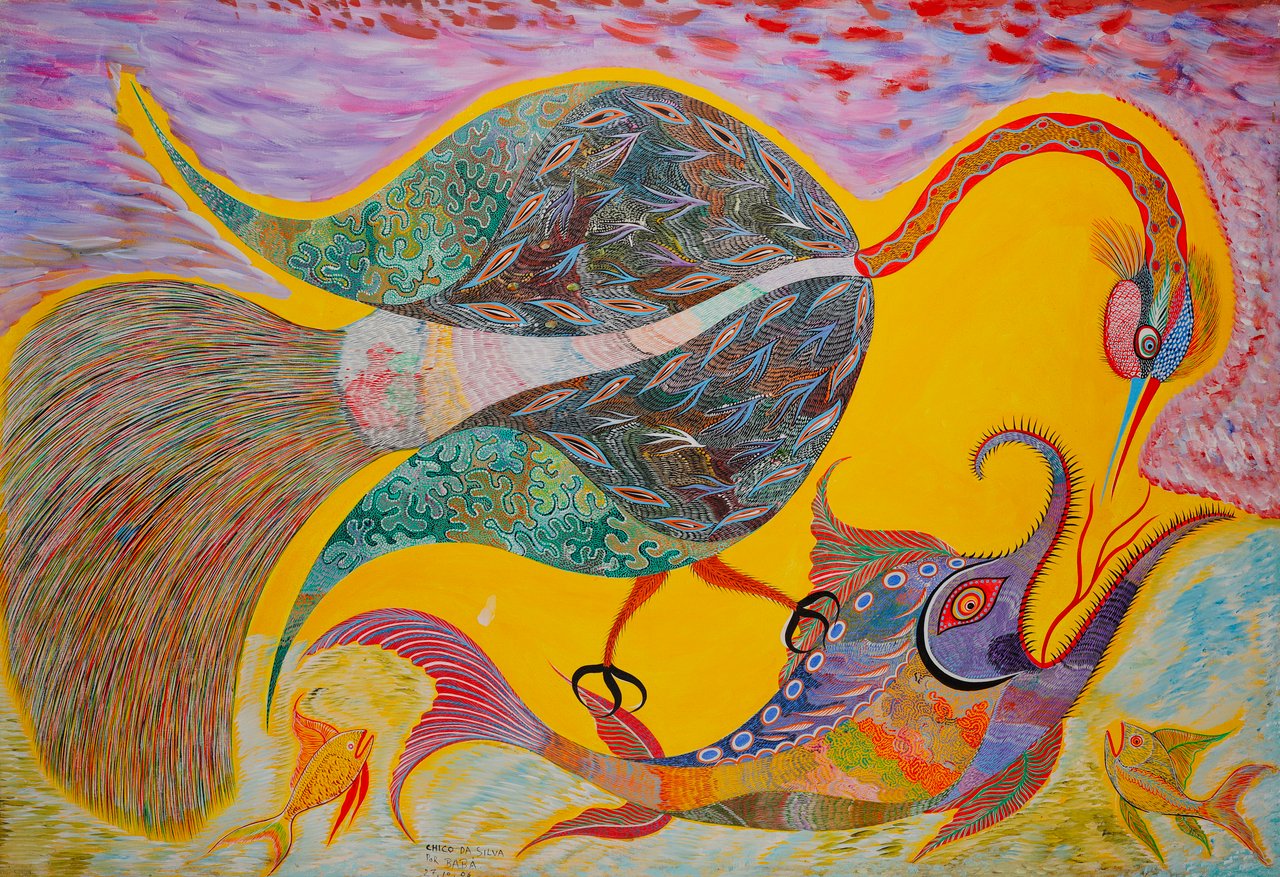
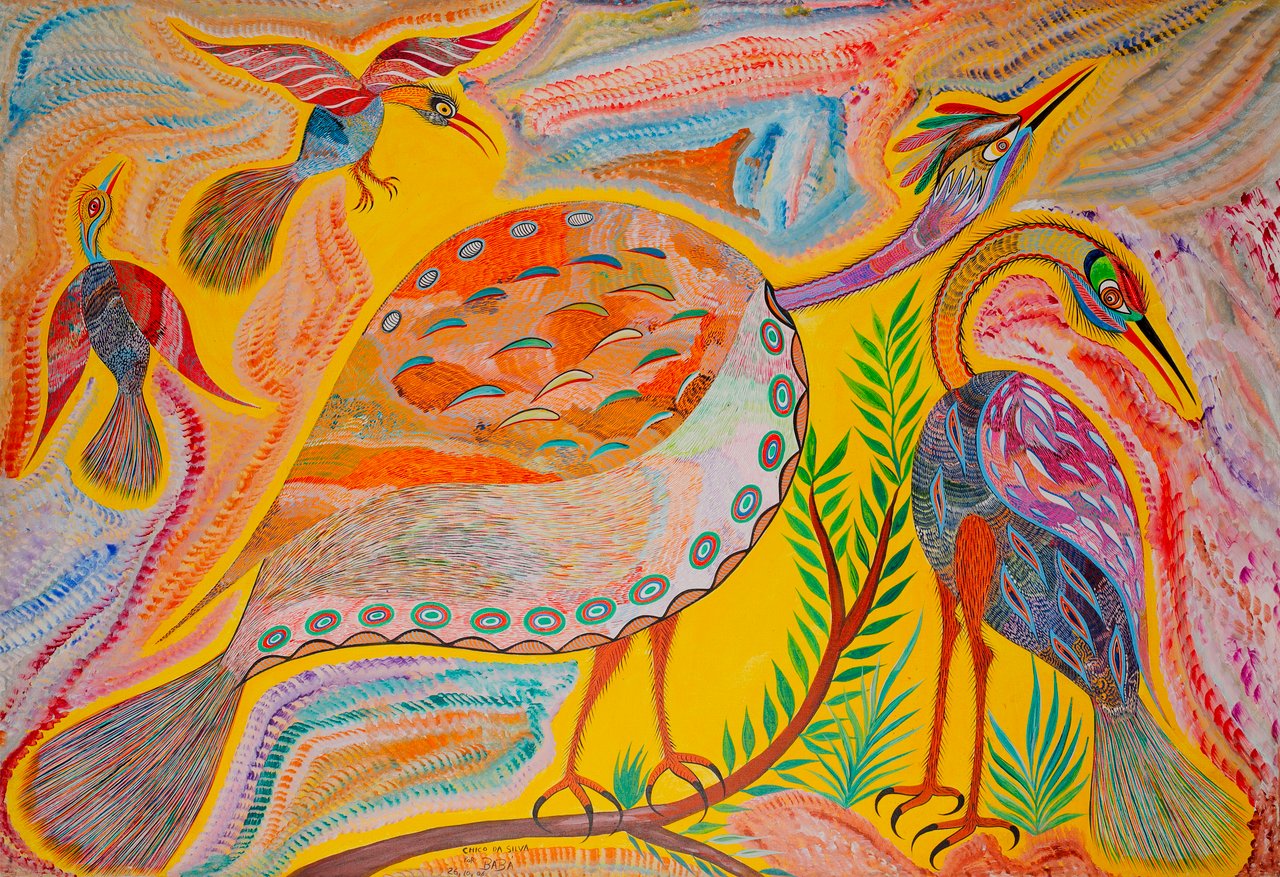
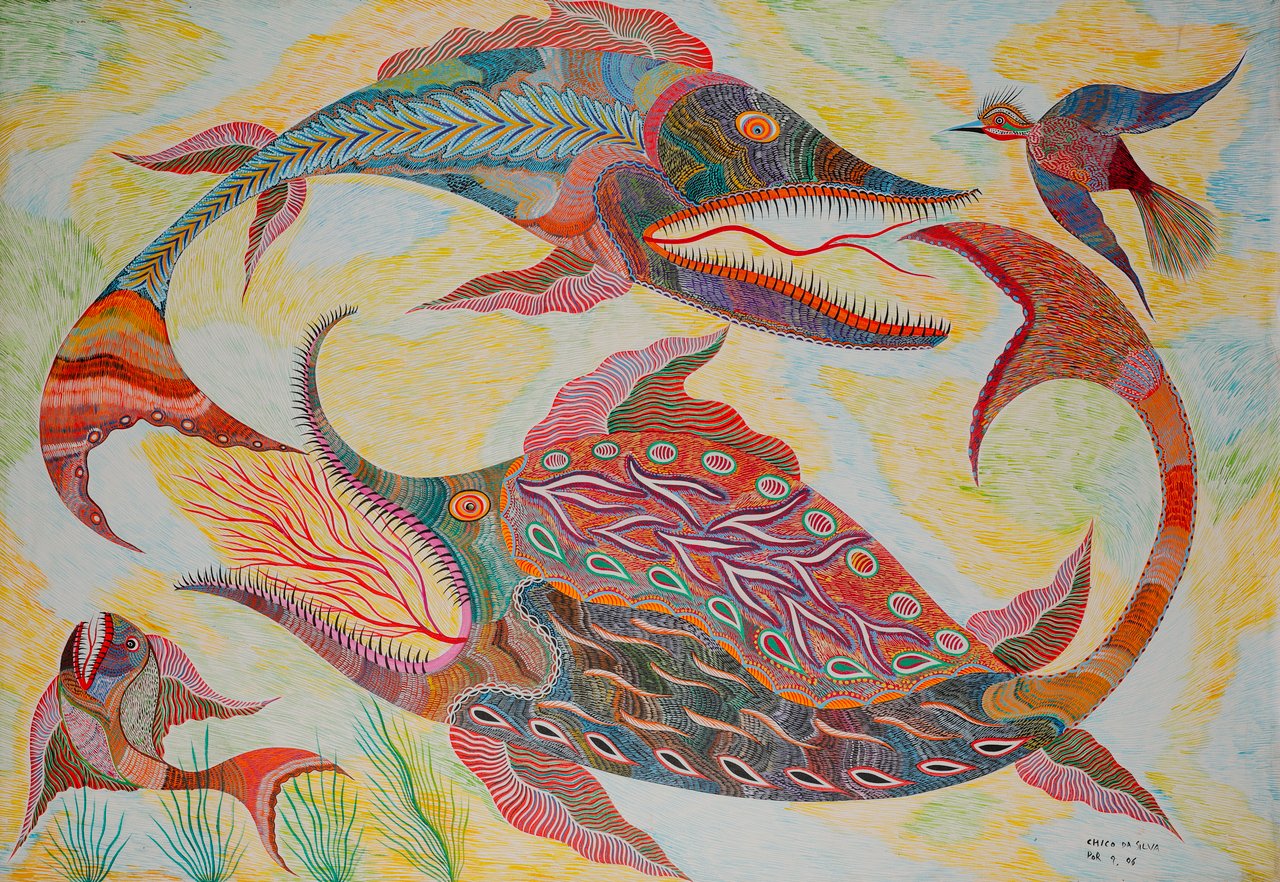
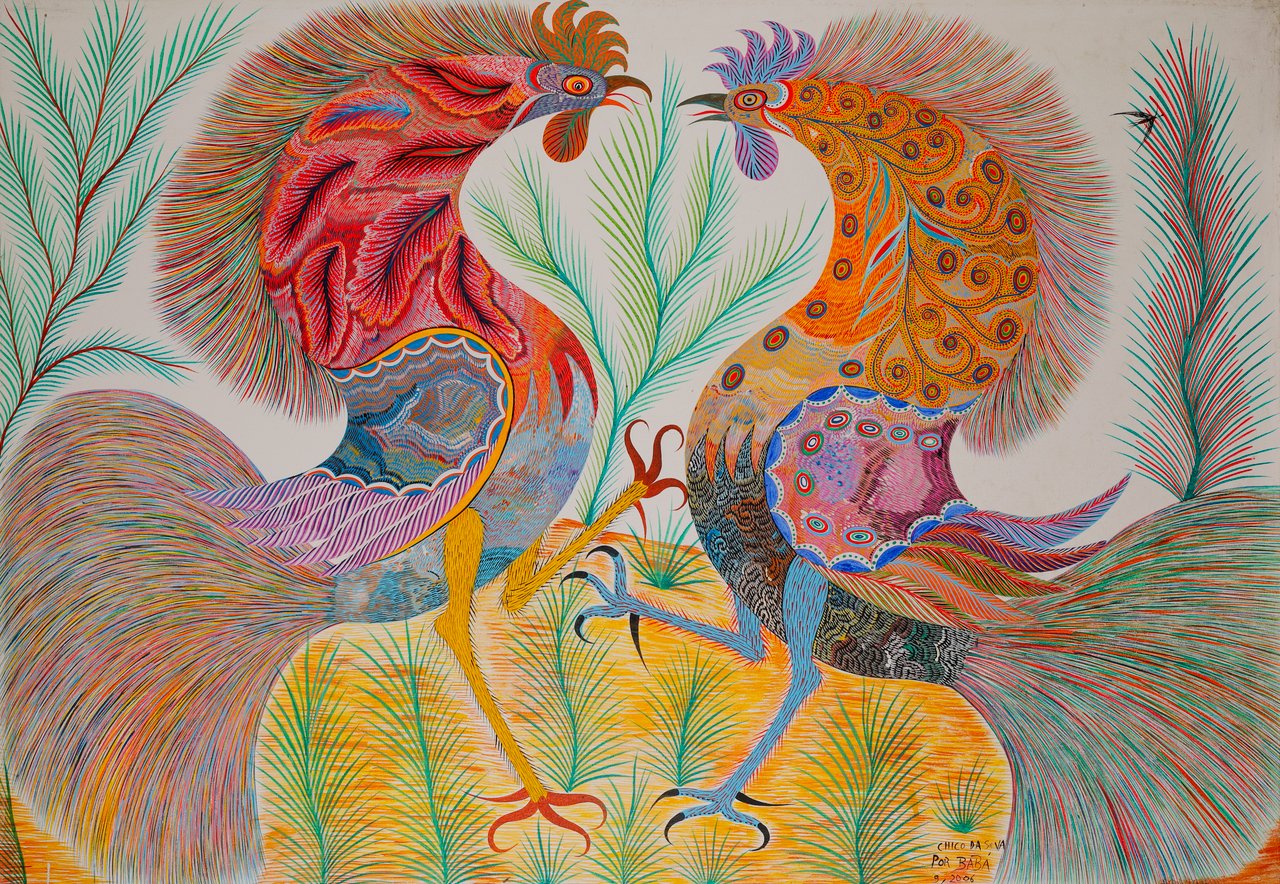
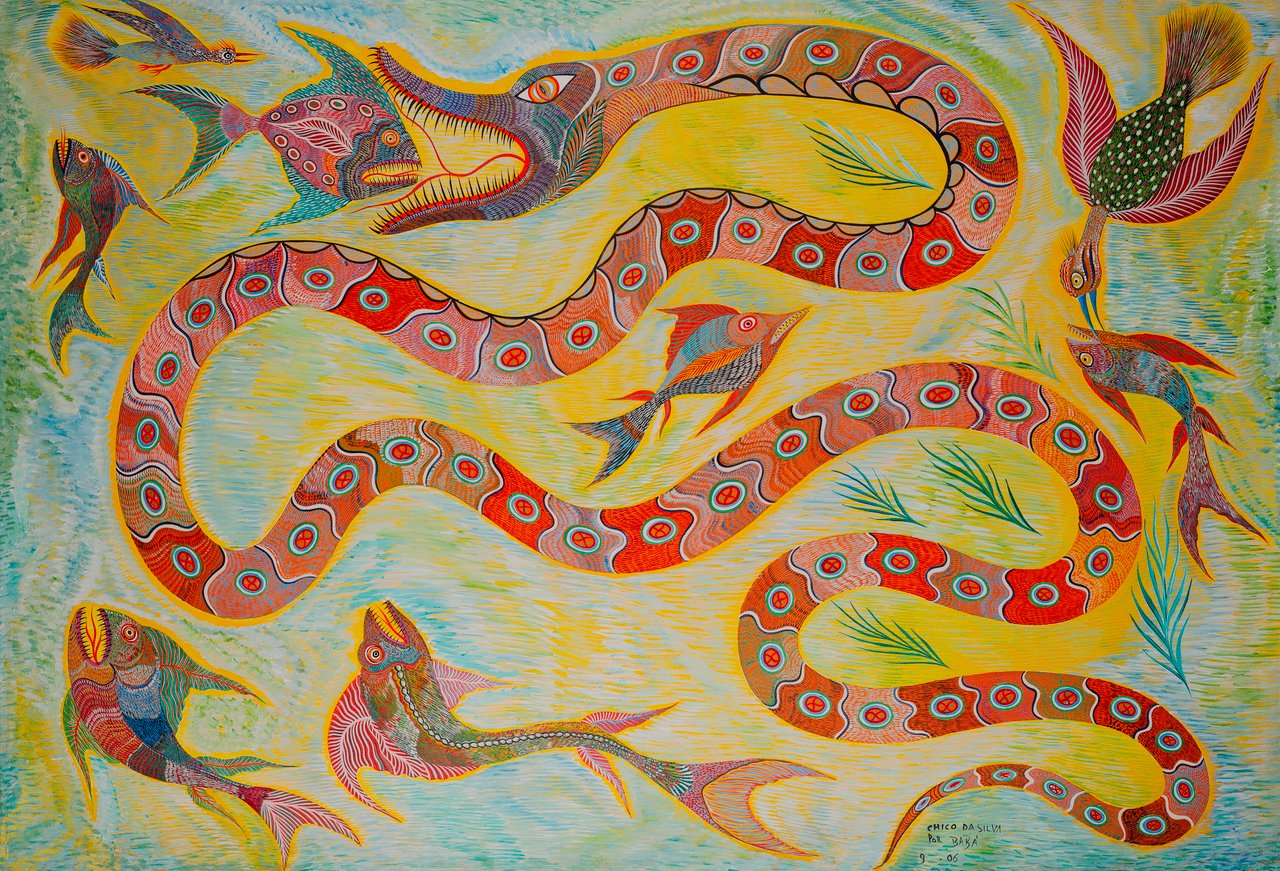
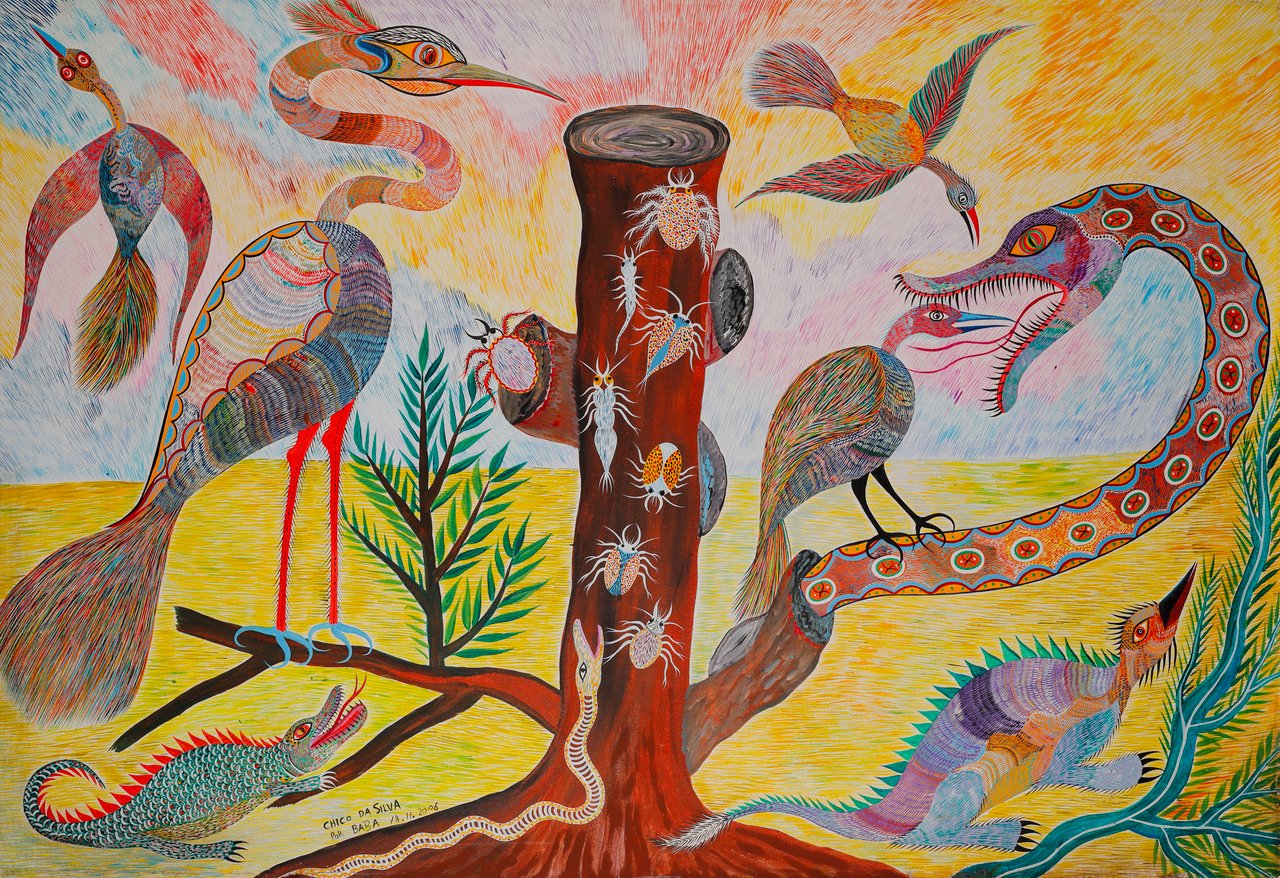
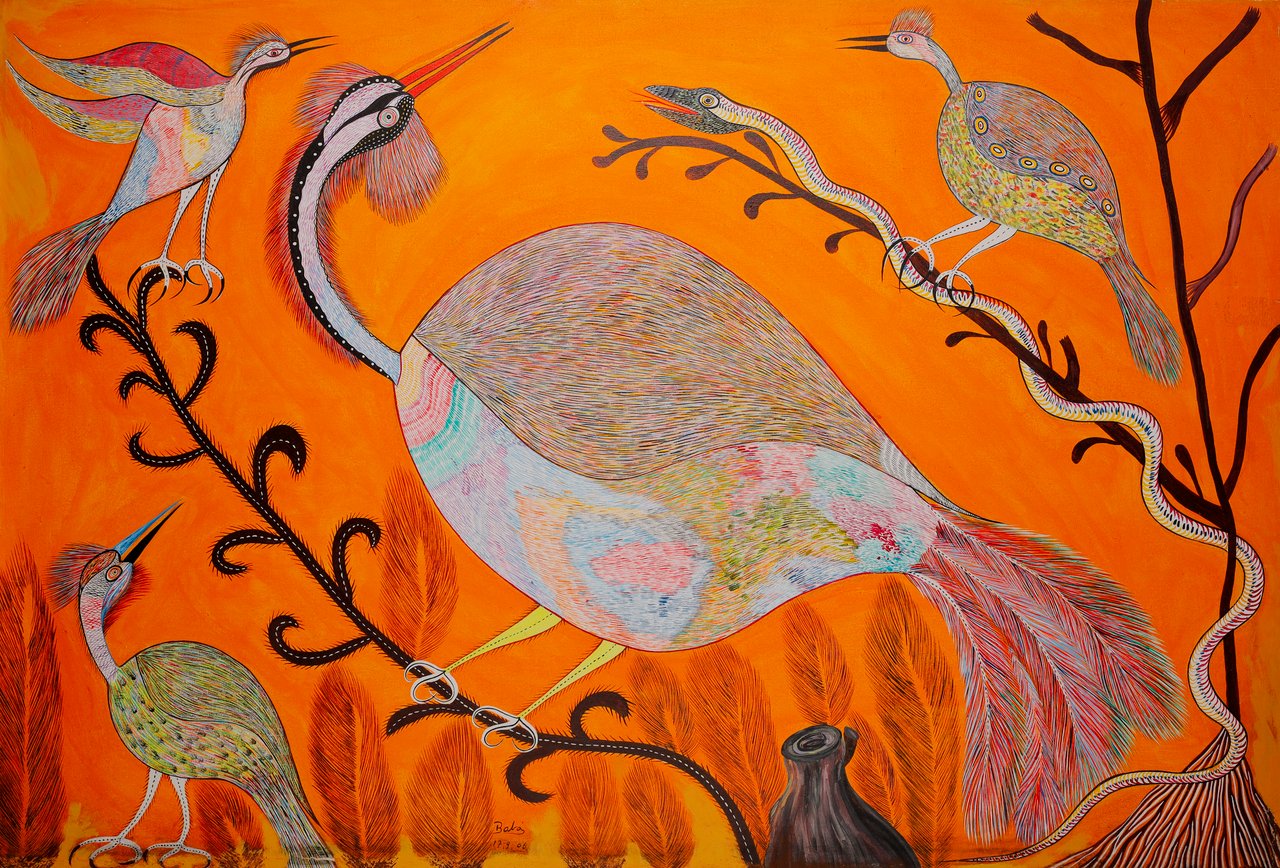
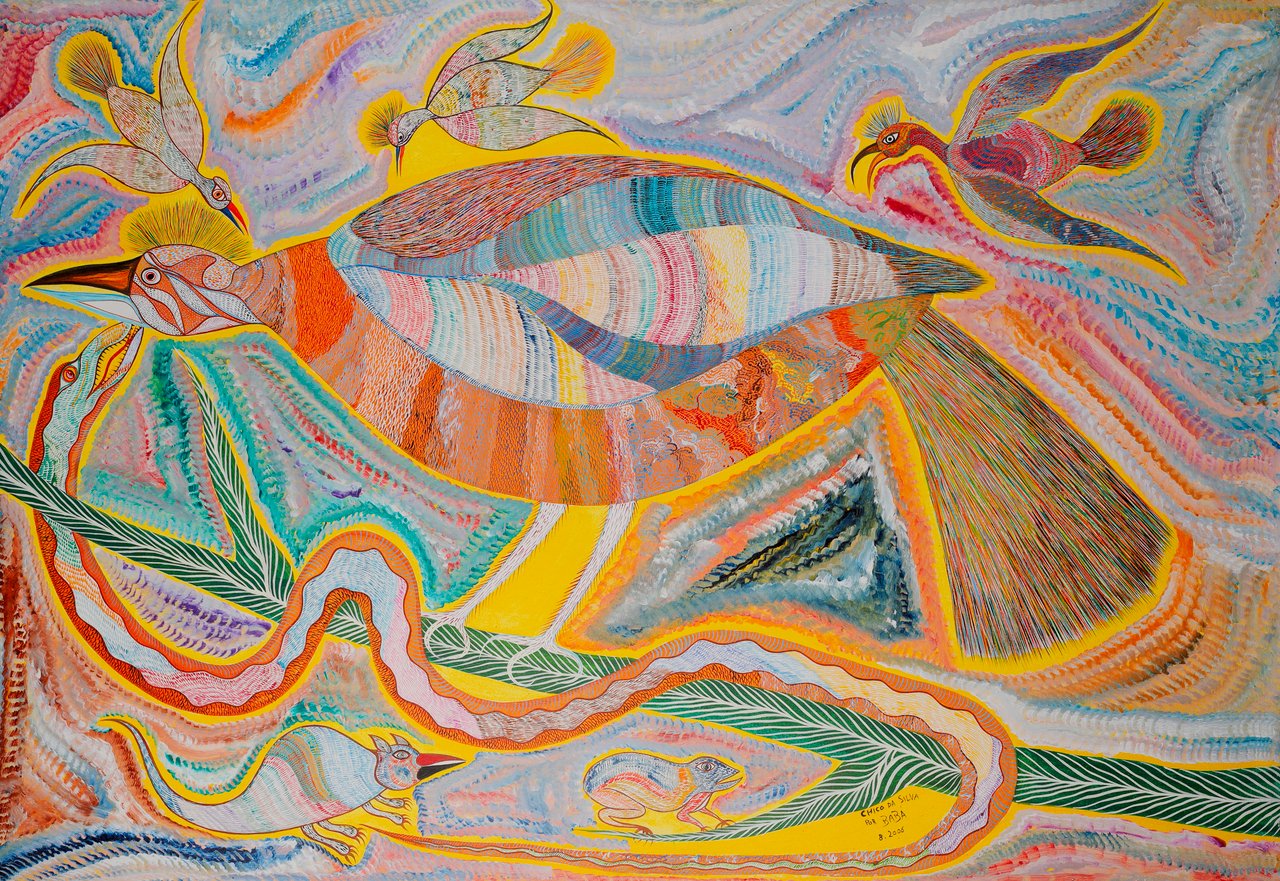
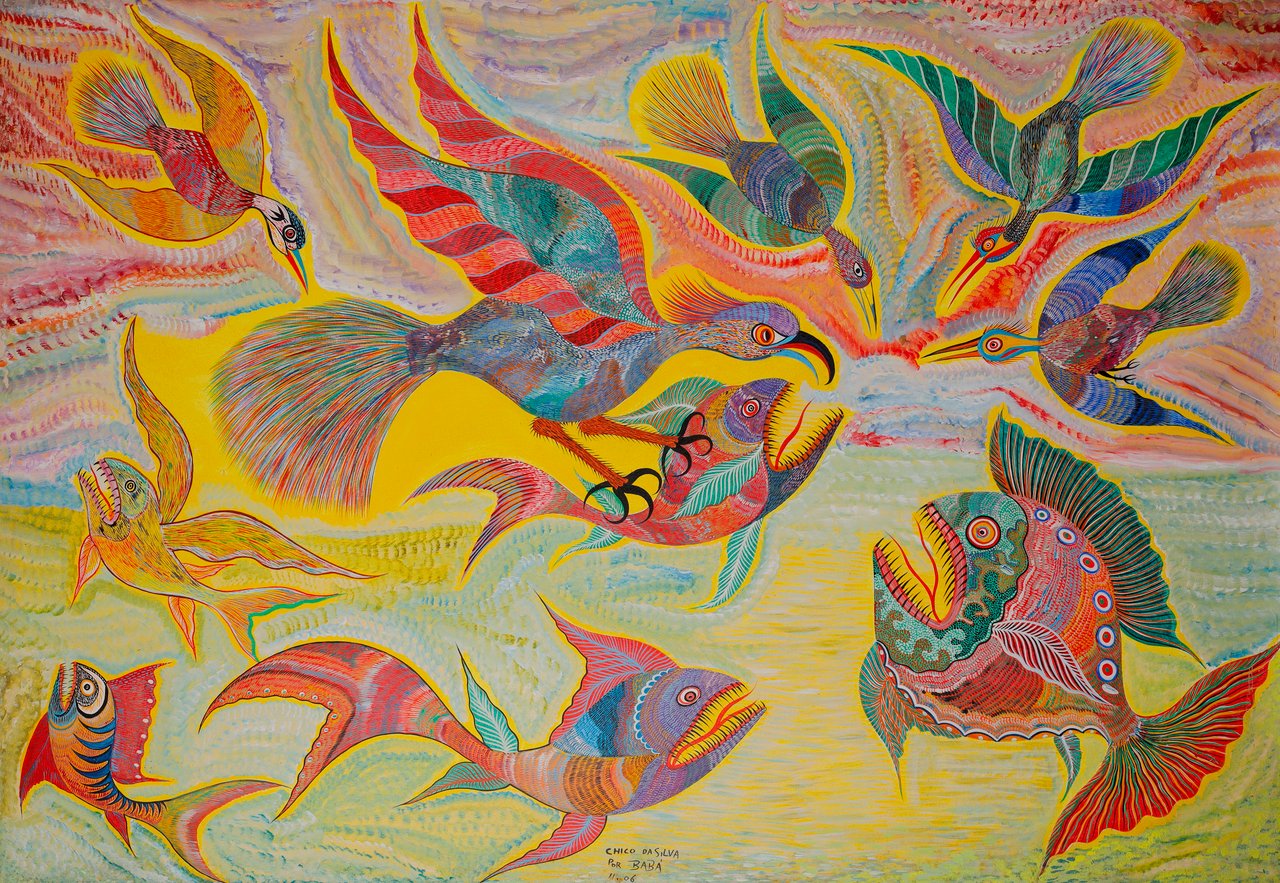
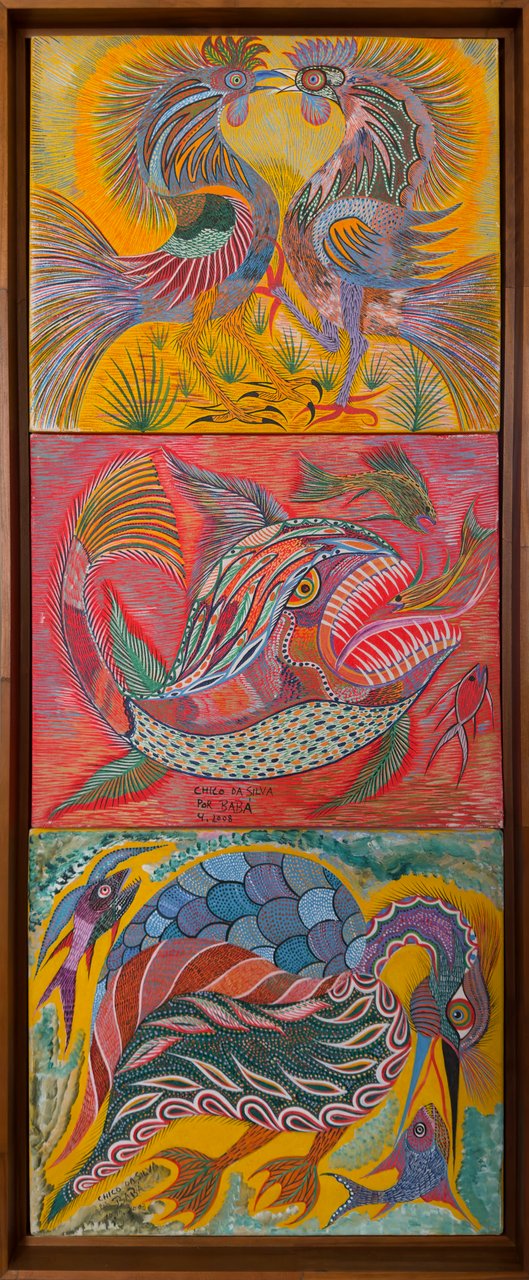
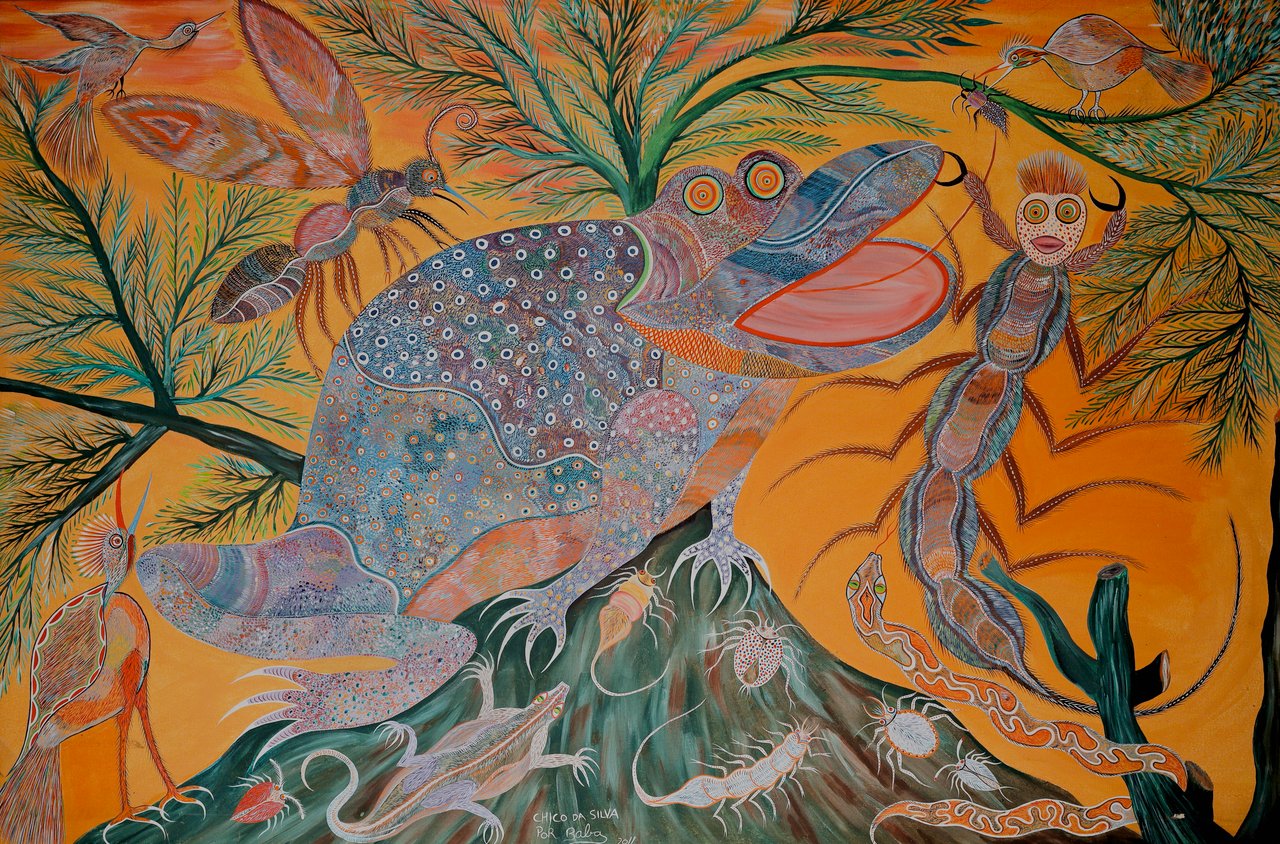
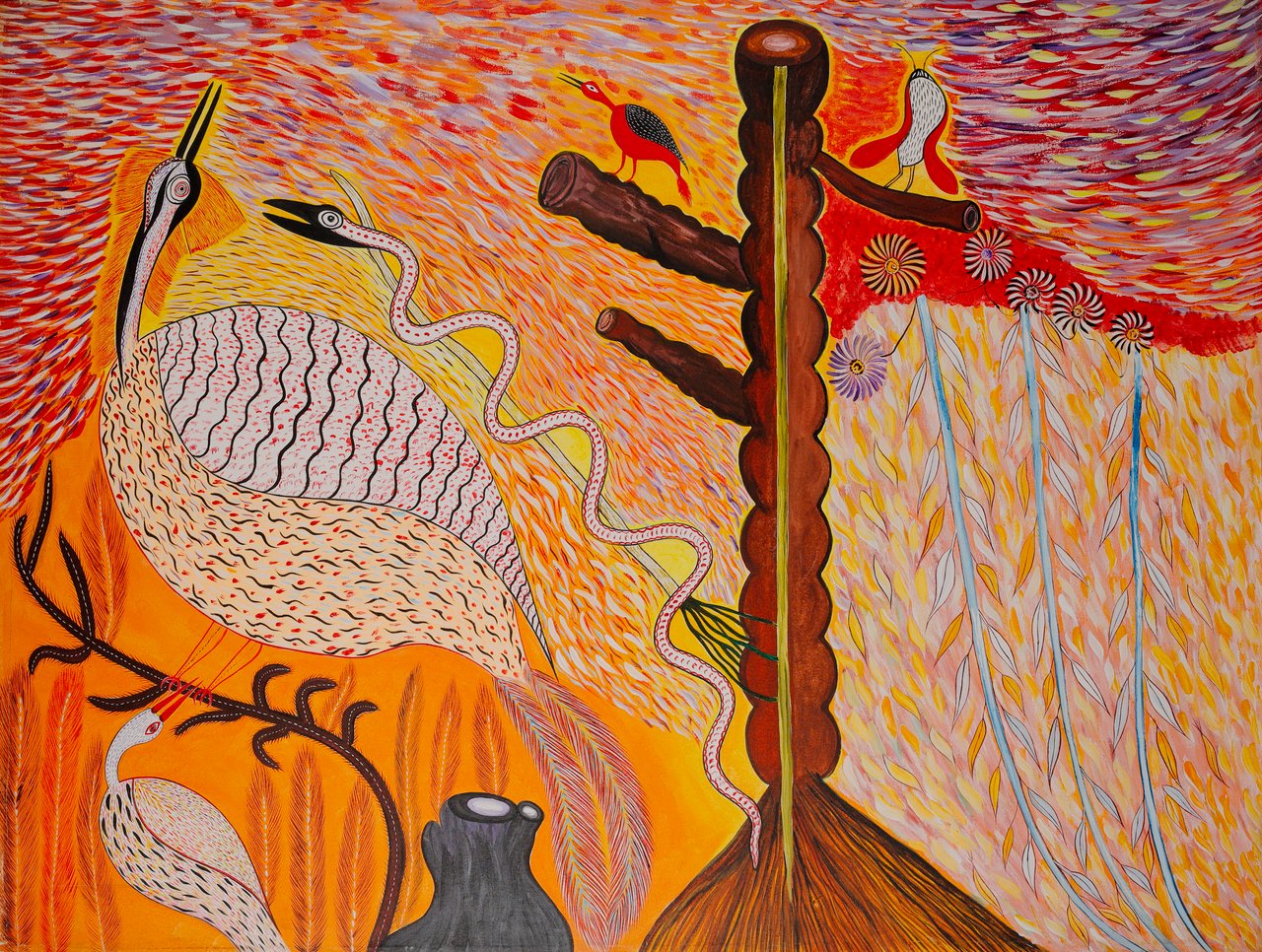
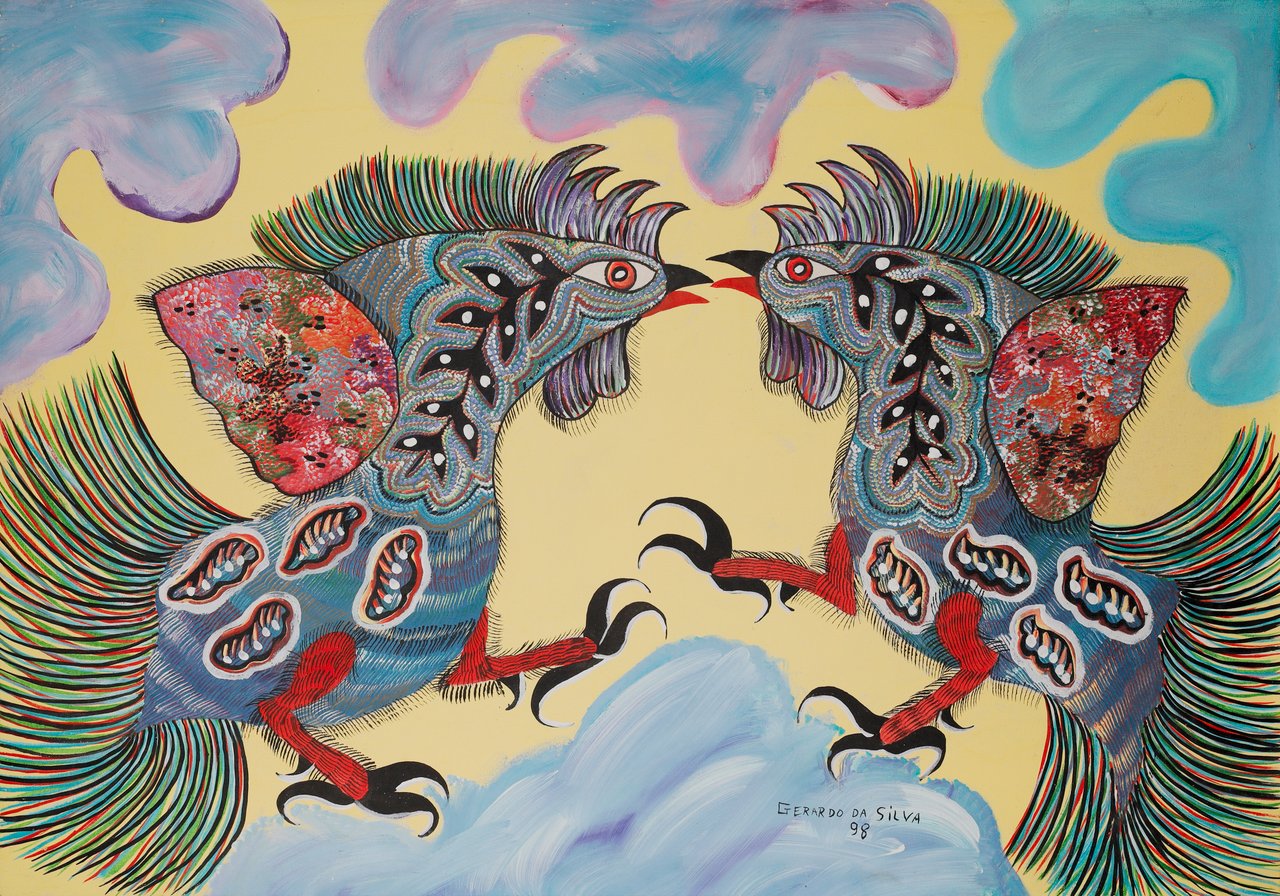
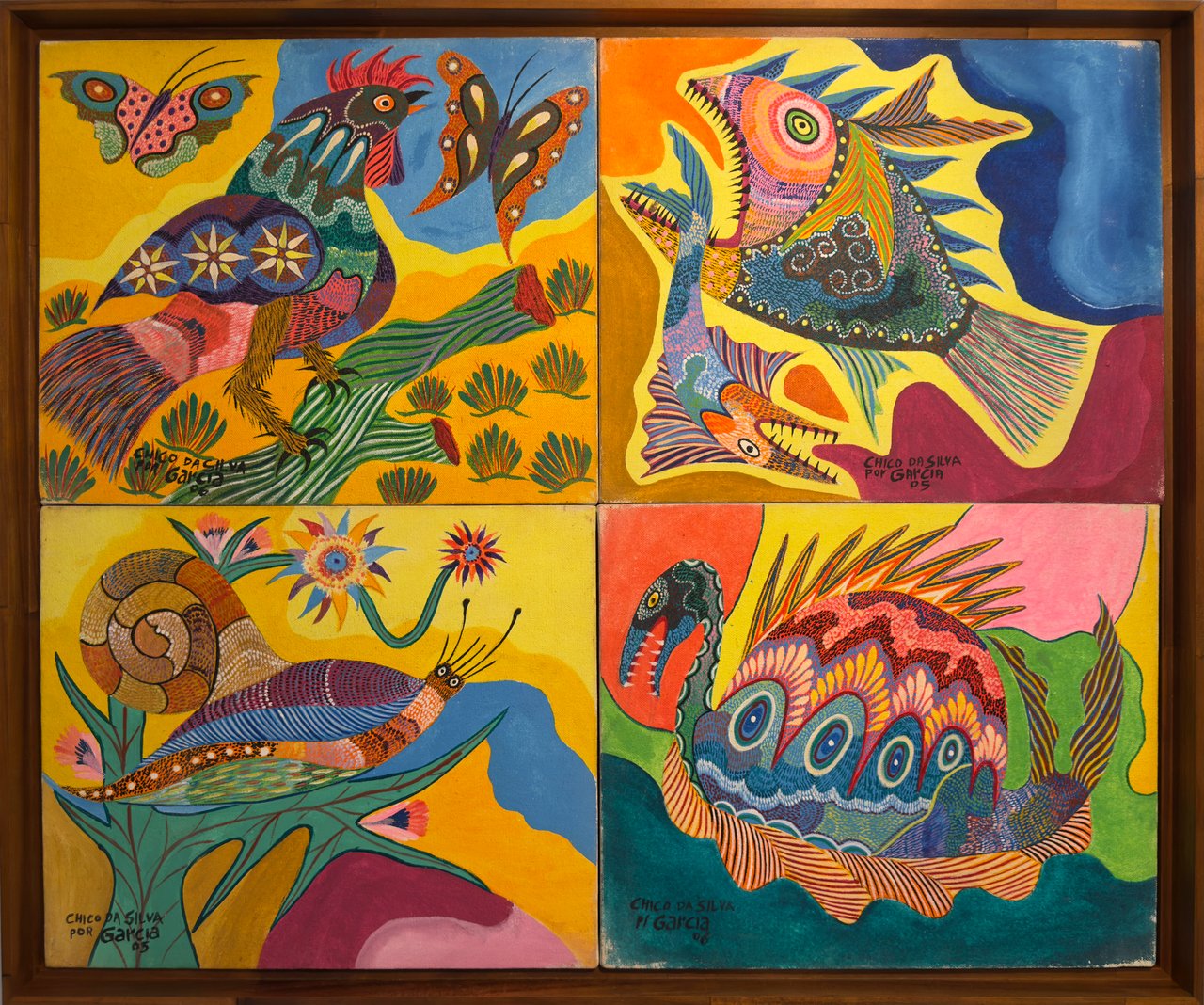
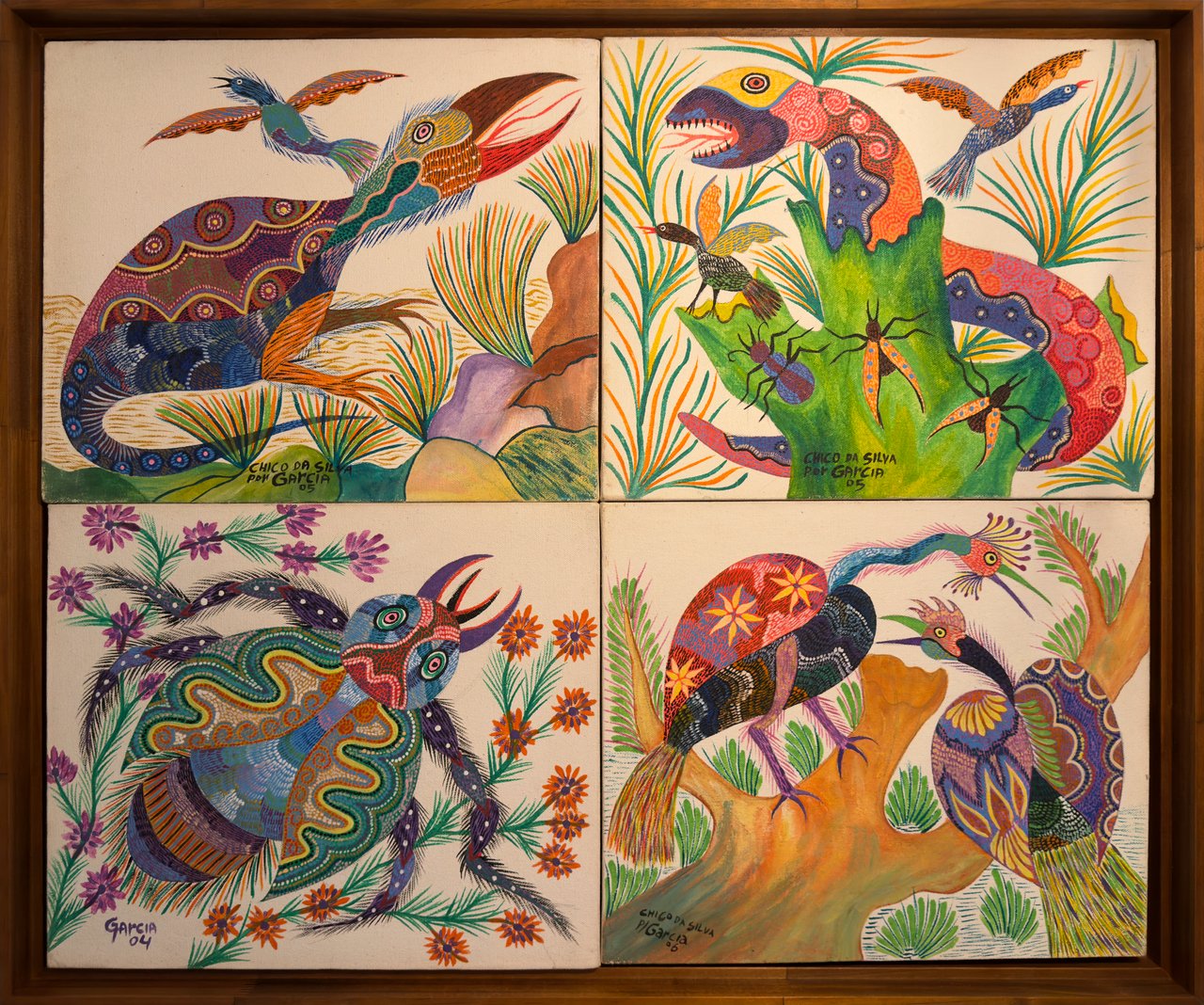
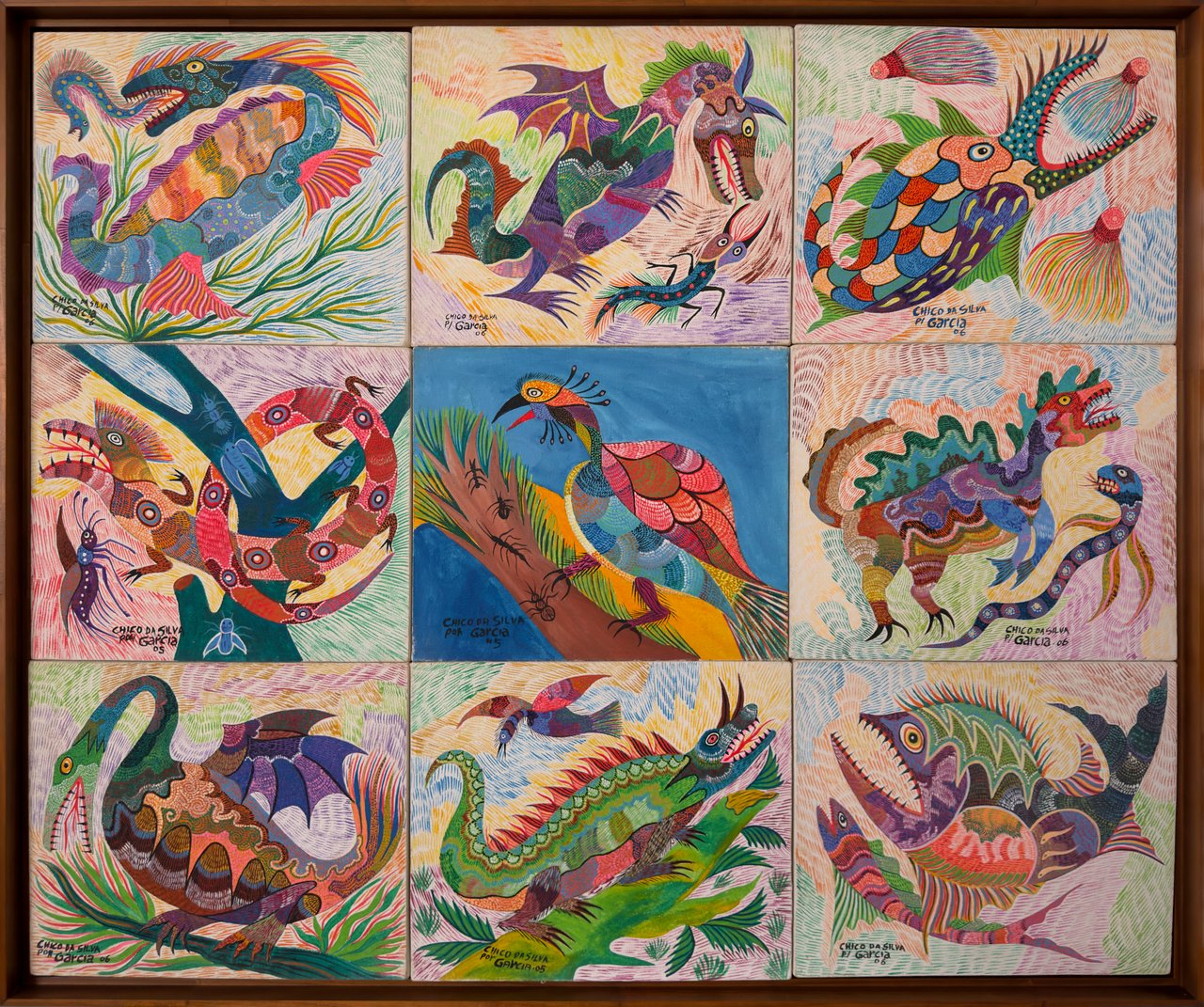
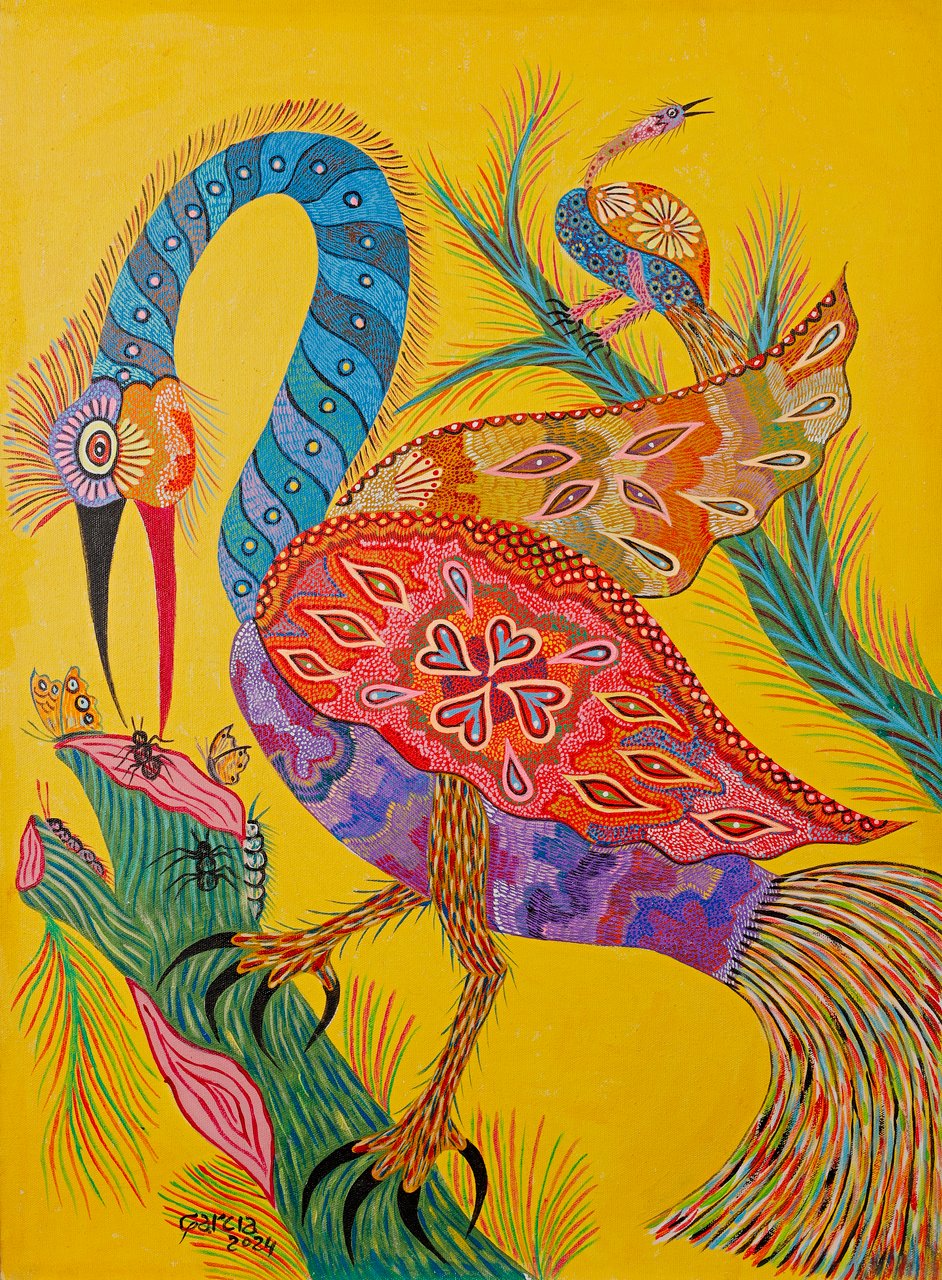
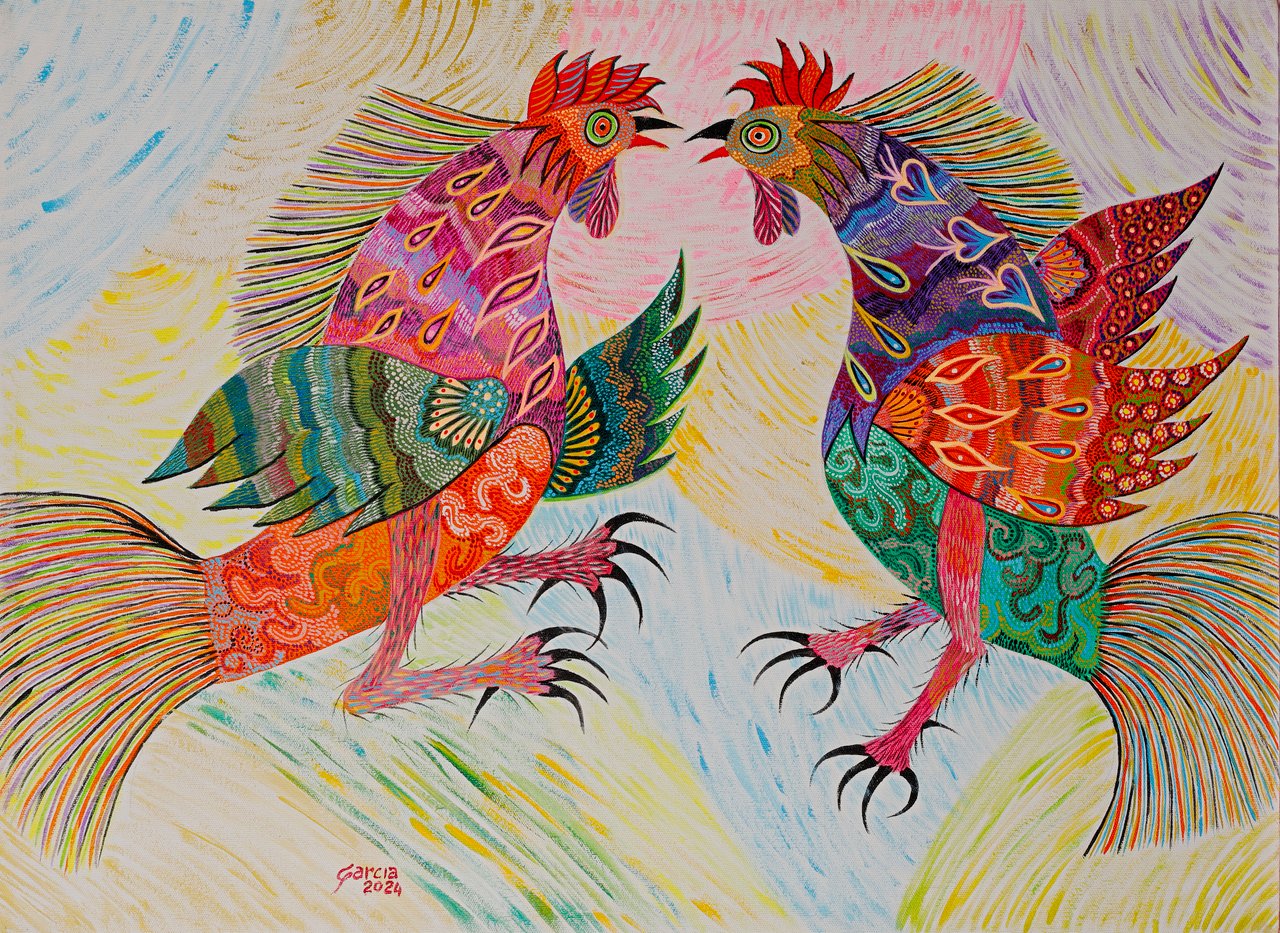
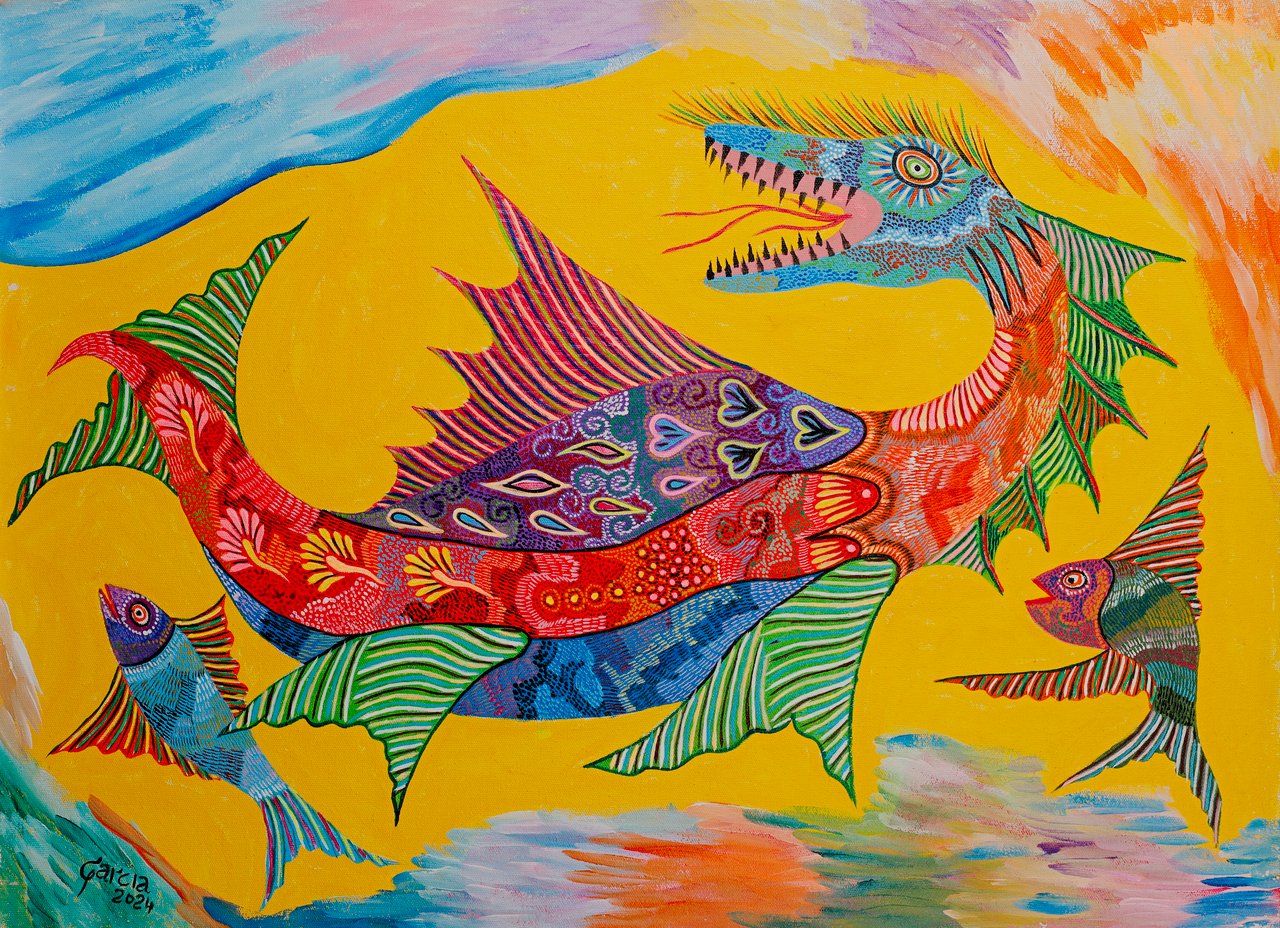
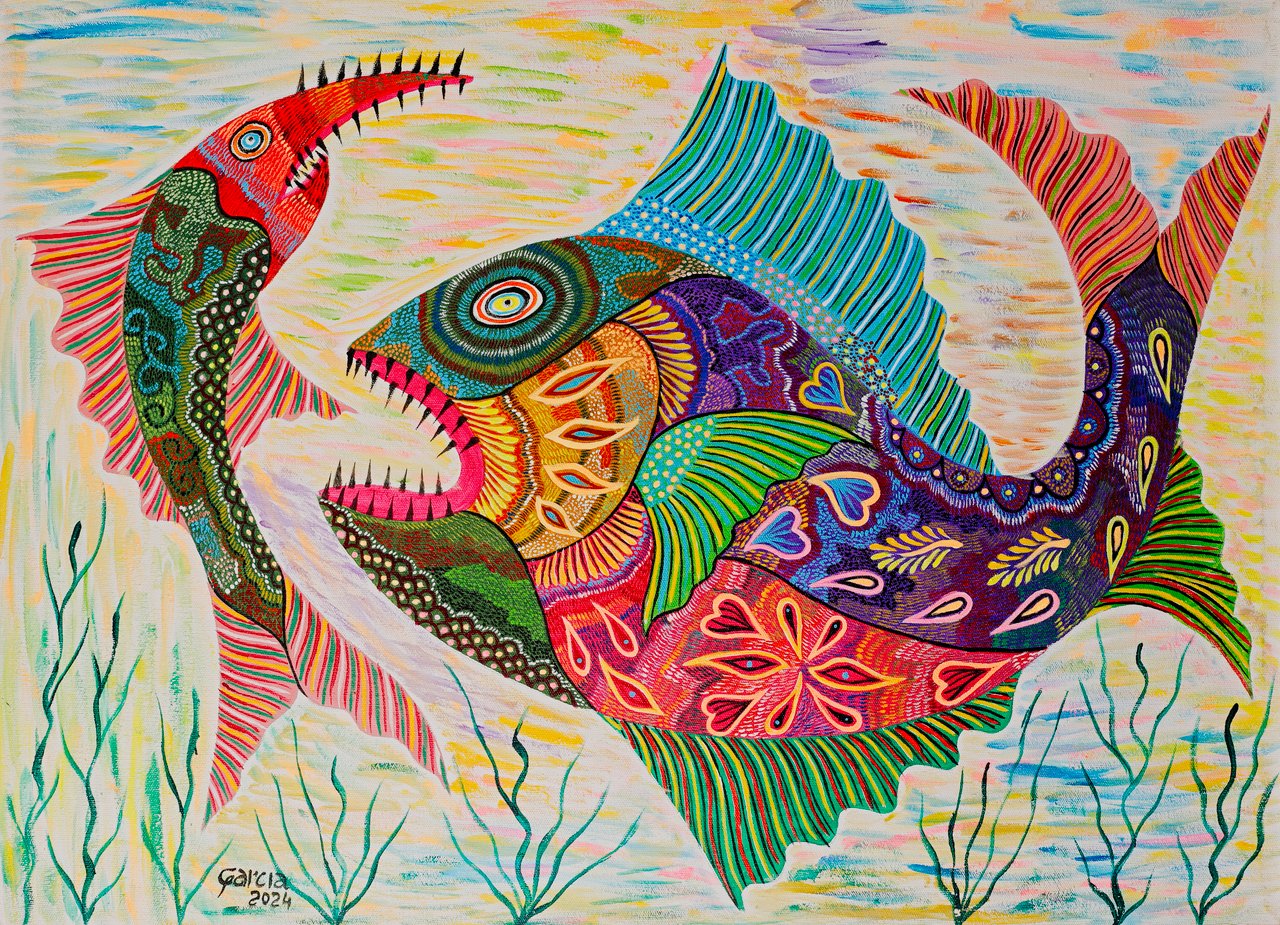
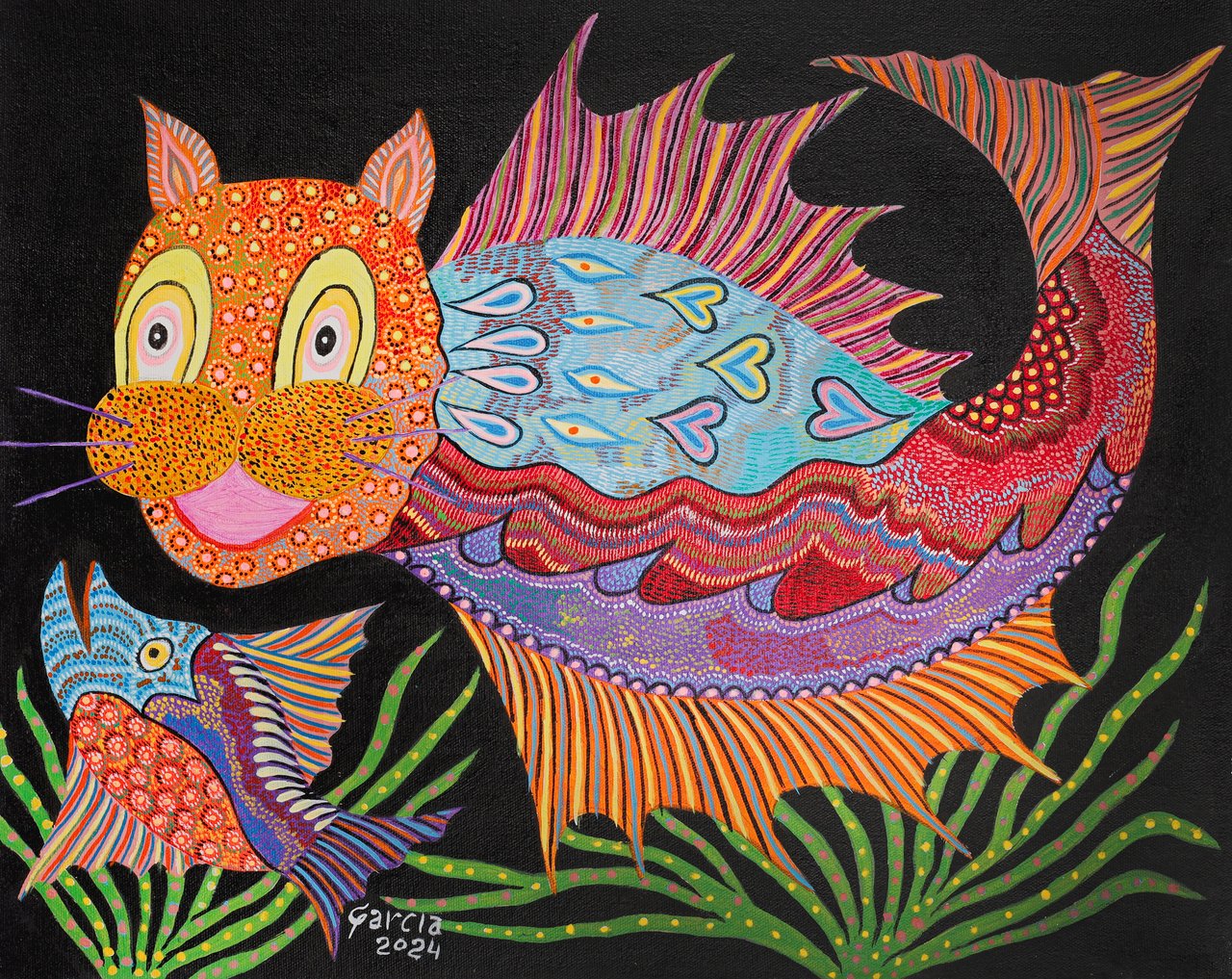
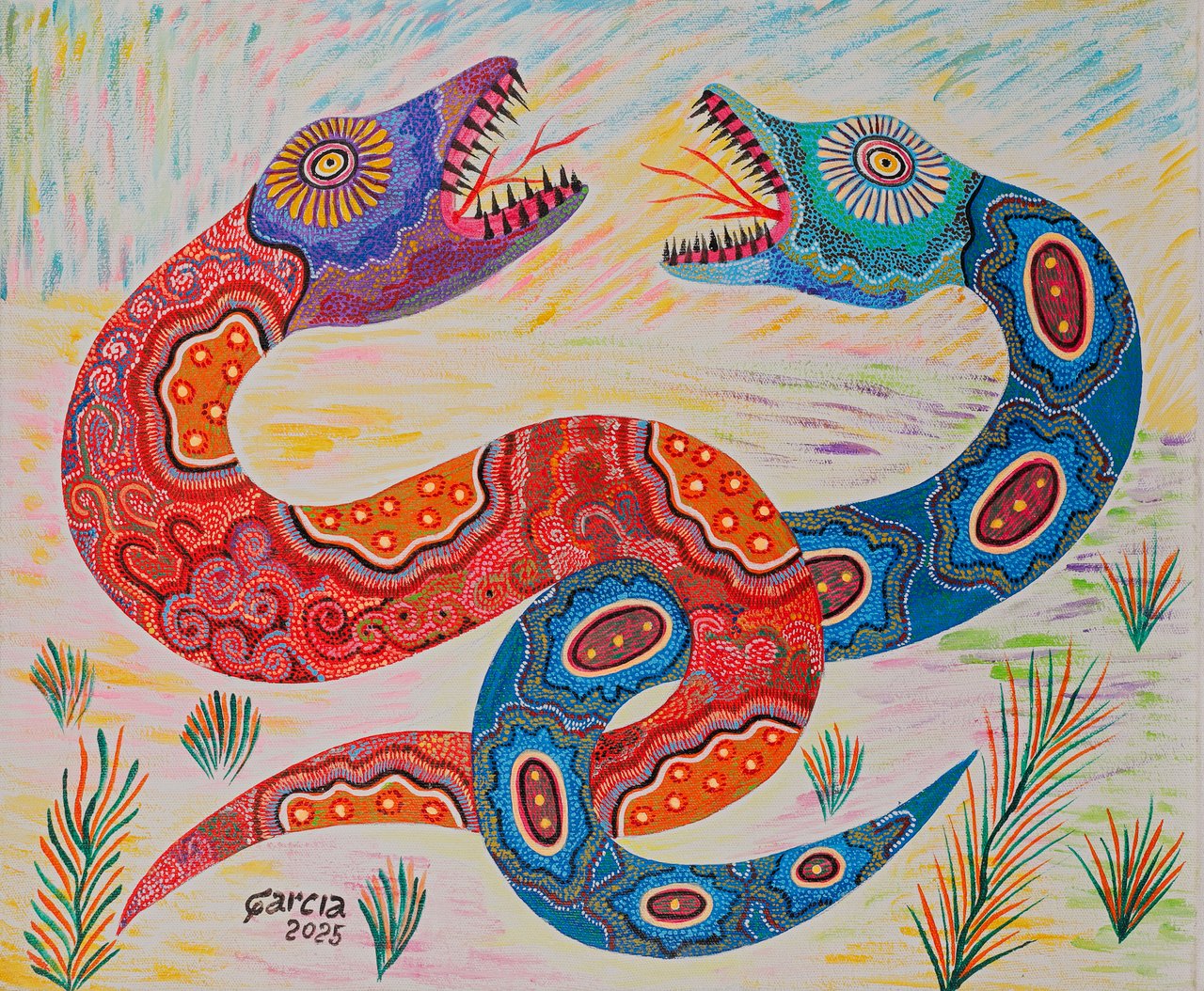
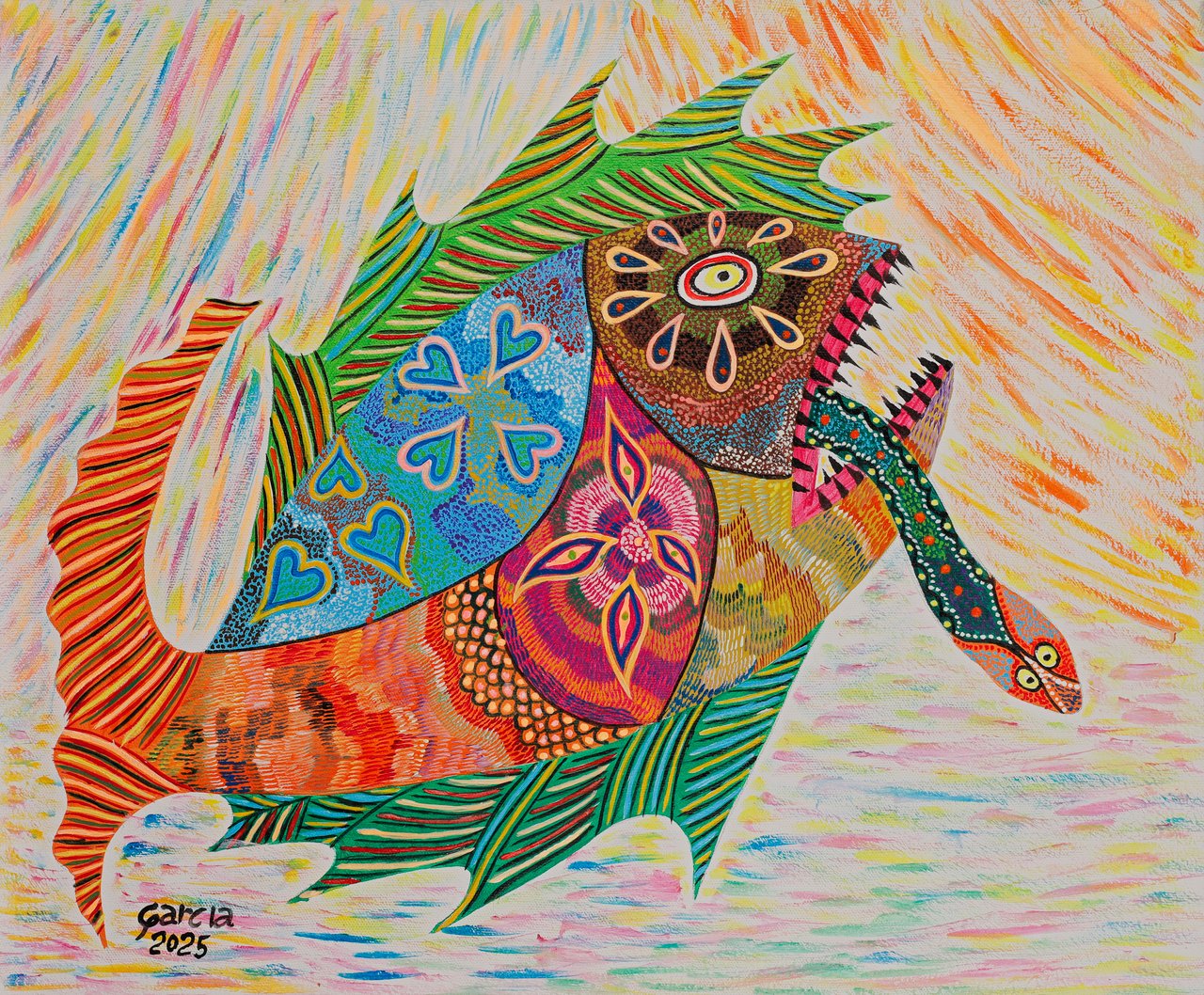
In the master’s acrylics in the collection, the ground is flat and saturated, black in Fish and in Cockfight, yellow in Dragons, and fine hatching covers the creatures entirely. In Babá’s canvases the ground is marbled; in Garcia’s, loosely brushed.
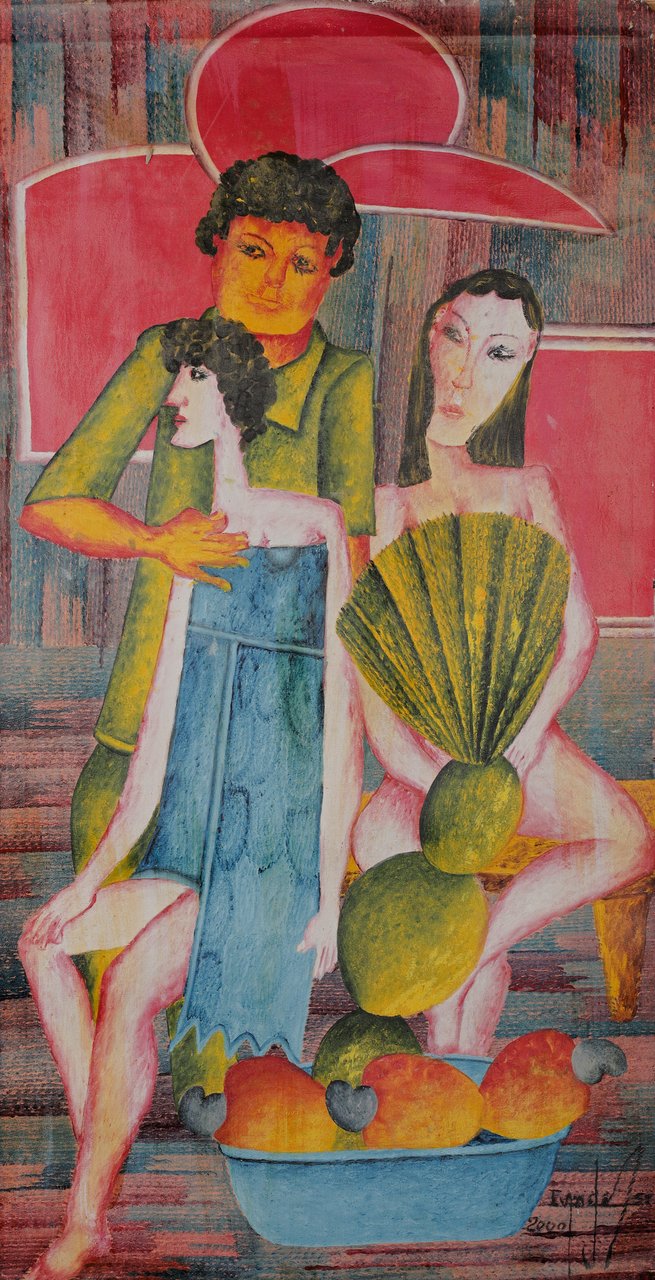
Babá painted the Instituto Oboé cycle, from 2004 to 2011, in acrylic on canvas, in formats of about 75 by 100 centimeters. Garcia also painted in acrylic the polyptychs of Fantastic Animals, in 2006, on unprimed canvas, and the canvases of 2024 and 2025, such as Cockfight.